Final Fantasy VII Remake Intergrade is priced at $7.99 on the Nintendo Switch 2 via the eShop. The sale will last until November 17 at 2:59 AM EST/11:59 PM PST/1:59 AM CST. The game released on the Switch 2 on January 22, 2026. Final Weapon reviewed the new version of Final Fantasy VII Intergrade and gave it a 4.5/5. We described it as an “absolute joy to play on Nintendo Switch 2. This fantastic RPG is filled with memorable characters, an amazing narrative, and an engaging combat system that’s almost impossible to put down. The game runs great and looks excellent, with performance consistent at 30 FPS. While some visuals can appear grainy due to heavy DLSS usage, it’s a small trade-off for having this wonderful game on the go.”
Final Fantasy VII Rebirth will cost $7.49 until November 17. The Nintendo Switch 2 edition of the game released on June 3, 2026. Final Weapon reviewed the port and gave it a 4.5/5. We described it as a “a very impressive port that brings one of the generation’s best RPGs to Nintendo’s new console in great form. Docked mode is where the game shines, with largely stable performance and a level of visual fidelity that preserves the scale of Rebirth far better than expected. Handheld mode comes with more noticeable drawbacks, including softer image quality, DLSS artifacting, and fast battery drain, but none of it stopped me from wanting to keep playing Rebirth wherever I go.”
Final Fantasy VII Revelation launches on April 8, 2027 for Nintendo Switch 2, PlayStation 5, Xbox Series X|S, and PC via Steam and Epic Games Store. Both prior entries in the Remake trilogy are also available on the aforementioned platforms. Final Weapon recently had the chance to speak with Naoki Hamaguchi about Xenogears, Final Fantasy VII Revelation, the current development staff of the remake series, and much more.
Nightdive Studios, Eidos-Montréal, and Atari have announced that Thief: The Dark Project Remastered will release on December 3. Pre-orders for the physical edition are now live.
The game will release on Nintendo Switch, Nintendo Switch 2, PlayStation 4, PlayStation 5, Xbox Series X|S, and PC via GOG, Steam and Epic Games Store. Three physical editions will launch on PlayStation 5 and Nintendo Switch 2. The standard edition costs $34.99 and includes the game and manual booklet. Further, the steelbook edition costs $54.99 and features a steelbook, the standard game, and manual booklet. Finally, the Deluxe Trapezoid Edition includes includes a steelbook, the standard game, manual booklet, Remaster Diary, all packed in a Trapezoid Box which re-creates the game’s original packaging. It costs $64.99.
A digital deluxe edition will also release, and includes a graphic novel, art book, and soundtrack. The Atari store page further outlines the game and its new features:
SHADOWS ARE YOUR ONLY ALLY
With Thief: The Dark Project Remastered, Nightdive Studios brings back the pioneering 3D stealth game from Looking Glass Entertainment. Described by its developers as a “first-person sneaker,” the 1998 title challenged norms with its non-confrontational gameplay at a time when most first-person games prioritized combat. Thief was the first PC stealth game to use light and sound as game mechanics to help you hide from and sneak up on characters, rather than simply attacking them.
Includes all-new narrative campaign, The Tarnished Mirror, from the creators of Thief: The Black Parade. The Tarnished Mirror serves as a bridge between Thief: The Dark Project and Thief II: The Metal Age. With new factions, new environments, and an expanded enemy roster, this premium story expansion is an all-new Thief experience that descends into unsettling, Lovecraftian horror.
Remastered with Nightdive’s KEX Engine, the release includes Thief: The Dark Project and the additional missions, content and updates from the 1999 Thief Gold re-release. Explore unscripted, maze-like levels with advanced NPCs, who can hear, speak, and sound alarms if you make a wrong move. Each mission includes 3 difficulty settings with different objectives for maximum replayability.
Play as Garrett, an orphan rescued from the streets by the Keepers—a secretive, ancient order dedicated to maintaining balance in the world—and trained to become a Master Thief. Using minimal weapons and maximum stealth, you must keep to the shadows and move quietly to complete missions and collect treasure without too many casualties. Use your blackjack to knock enemies unconscious, your sword when you need to battle, and an assortment of unique arrows that aid in your covert quest. Uncover the hidden agendas of your allies and enemies as you play through an unravelling story of deception and revenge.
Thief: The Dark Project Remastered includes enhancements to graphic textures, models, animations, and more. Also includes quality of life improvements, weapons and items wheel, mission selector, and built-in support for custom campaigns.
Astrolabe Games and Indirect Shine have announced that HARMA will release on PC via Steam Early Access on November 17. It will feature 200 hours of gameplay and support for 4-player co-op.
After launch, the developers will maintain a long-term update schedule that will feature ongoing balance adjustments and a steady stream of new content. On November 17, Indirect Shine and Astrolabe Games will release a detailed Early Access roadmap. Check out the new trailer for HARMA via Gematsu:
Here’s an overview of the game, via the Steam page:
HARMA is a retro dark fantasy roguelike deckbuilding game featuring a story-driven campaign.
A Grim Tale of Fate
The knights who returned from their expedition began slaughtering their own people.
On the day the kingdom burned and everything was lost, you were left standing alone in the heart of the tragedy.
In a world filled with betrayal and despair, uncover the truth and stand against the darkness.
Unique and Strategic Battles through the Artifact System
In Harma’s battles, the power of your cards is determined randomly based on the activation of three artifacts.
However, you can spend Focus to forcefully activate artifacts and take control of fate.
Will you leave it to chance, or will you risk it all with decisive focus?
Your choice will completely alter the battlefield.
Combine two playable characters with over 300 unique cards and artifacts to forge your own deck and strategy.
Campaign
Harma’s campaign unfolds across four epic acts.
Experience the fall of the world and the fate of Eden firsthand through dynamic battles, branching dialogues, and cinematic cutscenes.
Dimensional Rift
If you seek pure combat and strategy beyond the story, challenge yourself in the Dimensional Rift mode.
In this endlessly replayable mode, you will face relentless battles without cinematic storytelling.
Take on ever-changing challenges and push your limits to the extreme.
Its safe to say that we are living in a golden age for the Godzilla franchise and character. The consistent release of new movies, each more successful than the last, has given the series a level of mainstream attention it has never really had before. Further, the imminent release of thrilling sequels to some of the most beloved entries in the franchise means that fans have plenty to look forward to in the foreseeable future. Yet, despite the recent success of Godzilla in films and TV, there have not really been any attempts to continue the series’ hot streak in the form of a new video game.
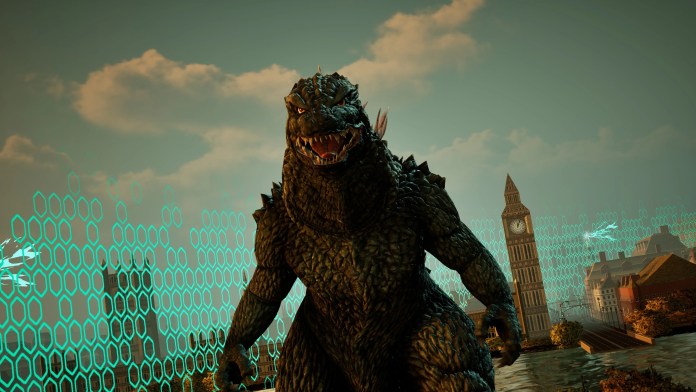
While there have been some recent Godzilla games here and there, none of them have really captured the magic of 2002’s Godzilla: Destroy All Monsters Melee. The fun combat mechanics and great cast of characters made it a formative experience for who played it, and the reason why many even became invested in the character at all. In fact, many still consider it to be one of the best games of the sixth generation of consoles, let alone the best Godzilla game to date. It is only natural, then, that developers would choose to remaster the nearly 25-year old game in the midst of the franchise’s golden age.
Godzilla: Destroy All Monsters Melee Remastered boasts improved visuals and new quality-of-life updates that promise to make this the best way to experience the iconic classic. At the same time, though, it is an experience that occasionally falls short due to its lack of new content.
Monster vs Monster
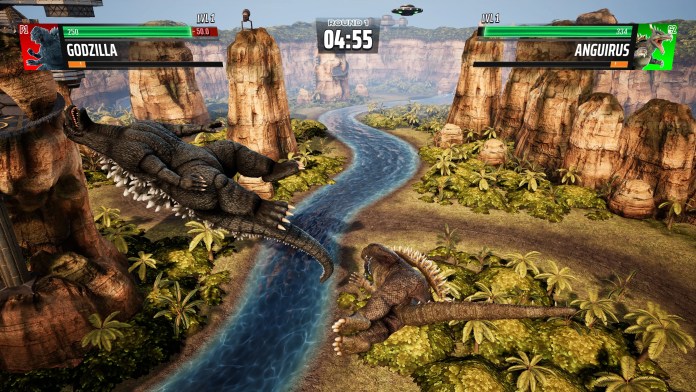
For those unfamiliar with Godzilla: Destroy All Monsters Melee, its premise is quite simple. The game features a roster of 12 playable monsters: Godzilla (90s), Mechagodzilla, Anguirus, Destoroyah, Gigan, King Ghidorah, Rodan, Godzilla (2000s), Kiryu, Mecha-King Ghidorah, Megalon, and Orga. Each monster has a unique moveset, as well as varying levels of attack, strength, speed, and defense. There are various single-player and multiplayer modes that allow players to try out each of the monsters and test their mastery of the game’s numerous mechanics.
The core single-player mode of Destroy All Monsters is the Adventure mode. You pick one of the 12 monsters and are thrust into a narrative that forces you to fight against the other members of the roster. In terms of the narrative, the monster you picked has just escaped from the controlling influence of the Vortaak, an alien race created exclusively for the Godzilla games. They are slightly inept and goofy in their behavior, but the cutscenes in which they show up are fairly charming. Still, this is pretty much the only semblance of the story you can expect from this game. It functions more as an excuse to justify the gameplay loop of continuously fighting monsters, rather than conveying the same complex themes of some of the most beloved entries in the Godzilla film franchise.
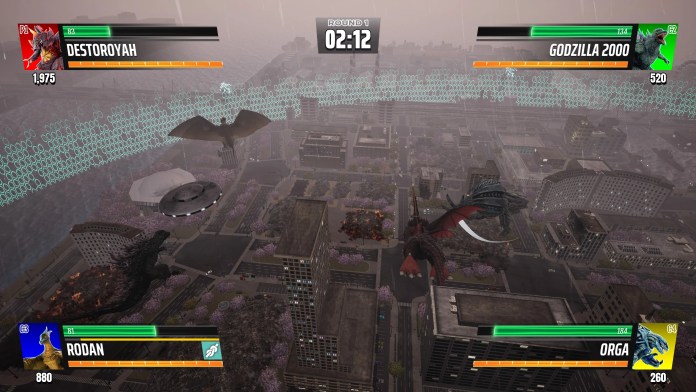
That said, this is a game that does not really need a complex story, as its addicting gameplay more than makes up for it. Destroy All Monsters is a beat-em-up that takes the best aspects of the franchise’s most iconic fight scenes and adapts them into a video game format. Each battleground you fight in adapts some of the most well known cities across the world, and all of the monsters you can pick from tower above them. With your many unique attacks, you can throw other monsters across entire cities and destroy buildings in your wake, all in service of defeating your opponent no matter what. Each battle usually strikes the right balance between fun and challenging.
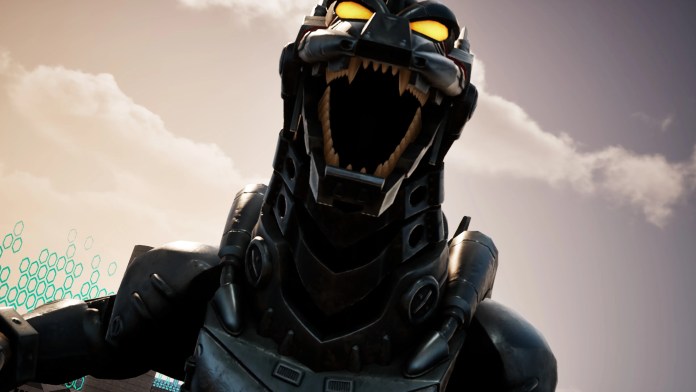
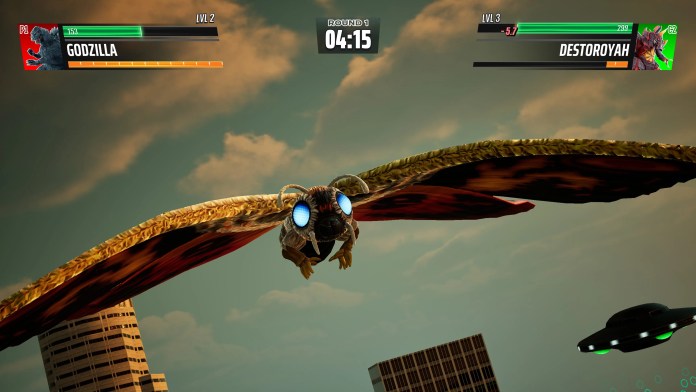
The Adventure mode perfectly captures the combat’s intensity. Whichever character you pick will have a unique route through the story, with each level pitting you against a specific monster. For instance, when I played as Godzilla (90s), I fought monsters like Rodan and Destoroyah initially, before later taking on Ghidorah and Gigan. The final boss of each route will always be Mechagodzilla, which always put my combat skills to the test. I was forced to destroy elements of the environment in order to have more maneuverability, which I could then use to grab power-ups that increased my power level or summoned an air strike courtesy of Mothra. These, alongside the use of the powerful abilities in my arsenal, allowed me to get the drop on my opponent.
Tactical Mothra!
As you play more of each of the game’s mode, your choice of character will level up and gain more increases to certain stats of theirs. In addition, you can also unlock more characters the more you play and progress “research.” Beyond the Adventure mode, there are plenty of additional modes for players to continue to get their Godzilla fix while leveling up and getting more characters.
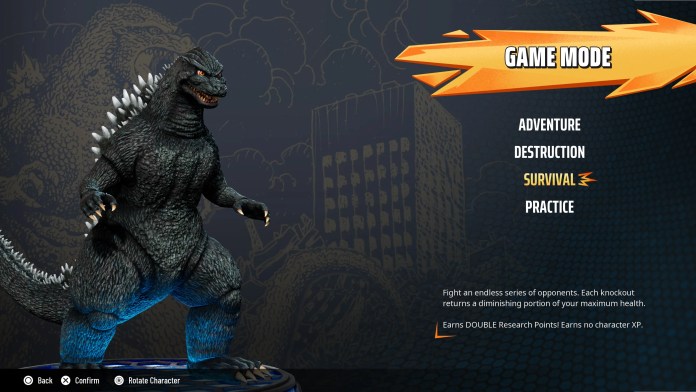
For example, there are the two other core single-player modes: Survival and Destruction. Survival is a gauntlet mode where you fight a new enemy every round, but with no health regeneration between levels. If you die, that is the end of the mode, and you will need to start again. Destruction, on the other hand, asks you to destroy as much of a city as possible before time runs out. There are also plenty of multiplayer options for both fans hoping to enjoy the game with friends locally or online. The multitude of modes are great in how they give players several options if they are getting tired of the same old combat loop.
That exhaustion may become a problem for those who do not have the same nostalgic love for the original release as most. Mashing the same buttons to execute combos and fighting the same enemies back to back can quickly get exhausting, especially when considering the absurd situations the enemy AI can put you in. At times, I found myself getting juggled around by enemy kaiju and humans attacking simultaneously, leaving me with what felt like minutes where my hands were completely off the controller.
There were some other jank happenings, such as some projectiles being fired at my character during the result screen, but these were not enough to detract from the fun times I had with Destroy All Monsters. Overall, even as someone who did not play a lot of the original game as a kid, I had a ton of fun taking control of some of the most iconic monsters in the Godzilla mythos and pitting them against each other in hectic combat. Godzilla: Destroy All Monsters Melee Remastered is a little bit more of a mixed bag, however, when viewed in the lens of a remaster.
A Remaster Lacking in Depth
When developers make the choice to remaster a game that is over two decades old, they must immediately decide whether to make it a faithful recreation or a radical revision. Some may opt to maintain what made the original so great in the first place, down to the last minute detail. Yet, this comes with the risk of alienating new and old players alike, due to a lack of content that feels fresh or exciting. On the other hand, there’s the choice to add in a bunch of new features and updates, which may come at the expense of those who are deeply nostalgic for the original. Godzilla: Destroy All Monsters Melee Remastered opts for the former approach, both for better and for worse.
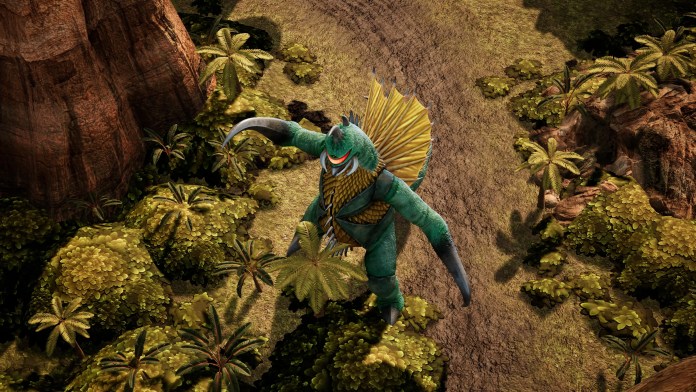
For one, there is the visuals, which have been updated with Unreal Engine 5. Despite my frustrations with the style of other games in the engine, I actually really loved how this game looks. It maintains the character’s designs while also adding a whole new level of detail to them that even the films have not been able to achieve. Take Gigan, for instance: he has not appeared in a movie in over 20 years, and as a result, his design in Destroy All Monsters Melee Remastered is the best he’s ever looked. The same level of detail applies to the other characters, as well as the dozens of battlegrounds available within the game.
The improved animations and textures are especially noticeable with the stages. Each stage is far bigger than ever before, and has different scenarios you can pick from. For instance, with the Seattle stage, you can customize it to be in night time or to have overcast weather, if you do not want your battle to just be set in broad daylight. Beyond that, the addition of online multiplayer is a major upgrade in its own right. Other new modes are available too, such as new variations of the Adventure mode you can unlock as you upgrade your characters. These will be sure to challenge even the most seasoned Destroy All Monsters players, and subsequently reward them with new gallery items.
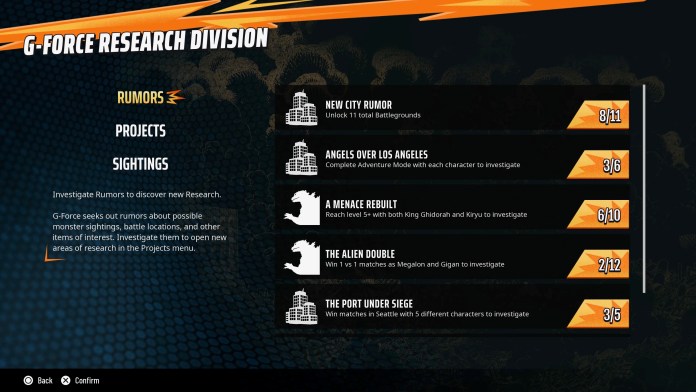
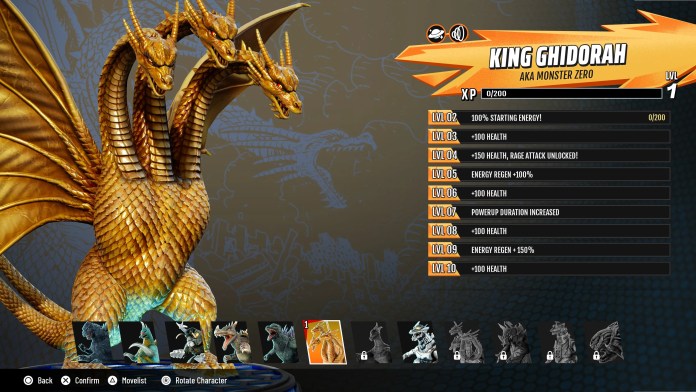
The ability to upgrade characters is arguably the best new feature in Destroy All Monsters Melee Remastered. It made me feel like I was personally making my monsters stronger with each battle I fought, and rewarded me for having a main I was committed to. It also enhanced the new mechanics dedicated to unlocking characters. Instead of just having to beat the Adventure mode with a certain character, you complete “Research” and “Rumors,” which gives you far more control over the monsters you want to unlock. For instance, if you want to unlock King Ghidorah as early as possible, all you have to do is complete his associated research, rather than needing to play as Megalon in the Adventure mode.
There are plenty of other adjustments that go a long way in making this experience feel way better than its predecessor. Even something as simple as the design of Mechagodzilla has been adjusted from his appearance in the Heisei era to his Showa design, in order to correct a continuity error from the original. This is undoubtedly the definitive way to experience Destroy All Monsters, especially if you played the original. But what if you are jumping into the game as a new fan of the franchise? Well, in that situation, you may be a tad disappointed by the lack of content.
A vast majority of the adjustments made in the remaster focus on tuning the original experience, rather than modifying. As such, there are not any new characters or stages added whatsoever. Those hoping to play as recent iterations of Godzilla like Shin or Minus One are sadly out of luck. It is worth noting that the addition of new characters is a somewhat vain hope, considering the amount of effort it would take to rebalance the rest of the roster to fit into the combat loop.
Despite all the new modes added in, you can experience everything that Destroy All Monsters has to offer within the span of a single afternoon. They also do not offer much replayability as well. Even if you play as a different monster, you’ll still be largely completing the same missions, even if it is in a slightly different order. In addition, there are no cutscenes or any semblance of a story featured in the new Adventure modes, nor are there any meaningful rewards offered upon completing them.
This is where the new unlocking mechanic actually falls short, since you will need to replay the same modes over and over again in order to get the characters you want. This made the aforementioned exhausting gameplay loop feel even more monotonous. While Destroy All Monsters Remastered is sure to be fun in multiplayer, the lack of content in general means that those who prefer single-player may not have much to do after a few hours. These frustrations, however, were thankfully not enough to completely negate my enjoyment of this remaster.
Resurrecting a Classic
When I was a kid, I was first exposed to the world of Godzilla through Destroy All Monsters, which I played at a friend’s house. I did not play much of it, but what I did play was more than enough to make me fall in love with the mythos and the many characters that inhabit. Now, Godzilla is one of my favorite franchises to date, yet I still find myself wishing for a new game that attempted to once again highlight its characters in an unconventional format. Thus, Atari has given us Destroy All Monsters MeleeRemastered. While I was initially disappointed that this was to be the first Godzilla game in over a decade, I still had a great time with the remaster, despite some major drawbacks.
Destroy All Monsters Remastered is just as fun as the original release, and is easily the definitive way to experience the beloved classic. The fun combat and great cast of characters is bolstered by the improved visuals and much-appreciated quality-of-life updates that the remaster introduces. At the same time, the lack of much new content means that this game does not really have too much replayability, unless you are playing with other people. In addition, the repetitive gameplay can sometimes get exhausting, especially when the game forces you to do the same modes over and over again in order to unlock new characters.
Destroy All Monsters Melee Remastered is still a really fun experience, though, especially when considering the relatively inexpensive $30-40 price point. At the end of the day, this game may not be the best experience for more recent Godzilla fans, it is an absolute must-play for die-hard fans of the character and the original game. In spite of its imperfections, this manages to be both a great resurrection of the most beloved Godzilla game to date, as well as another worthy to the character’s golden age.
Disclaimer: Atari provided a PlayStation 5 copy of Godzilla: Destroy All Monsters Melee Remastered for review purposes.
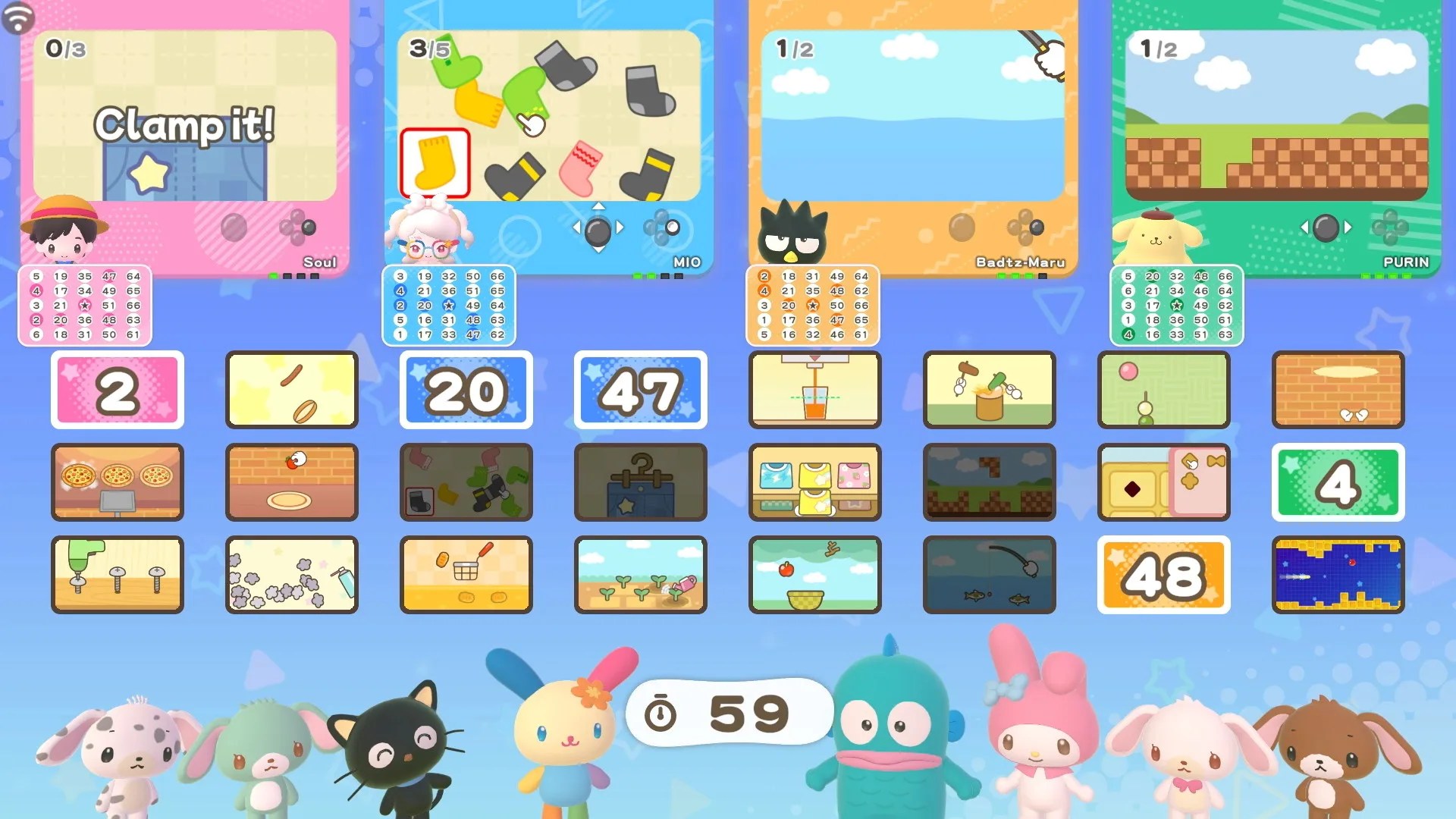
Mario Party has defined the party game genre for decades, and in recent years, many games have put their own twists and take on the formula, including Sanrio Games’ newly released Hello Kitty Party Land. On paper, Hello Kitty Party Land offers a lot of content with the Sanrio characters and cuteness that fans come to expect. However, one major question involves its overall execution, so there’s a lot to get into with this one.
As its namesake suggests, Hello Kitty Party Land takes players to Party Land with their newly created avatar to team up with their favorite Sanrio characters. From solo play to up to 4 players locally or online, you can enjoy an assortment of mini-games both on and off the available boards. Party Land also acts as a hub with its own separate mini-games and activities that you can complete for some extra rewards. So far, this sounds like the making of a great party game for Sanrio fans, but there are some caveats.
Hello Kitty Party Land Takes You to a Sanrio Wonderland
To cut to the chase, Hello Kitty Party Land is a game that feels more grand than it actually is. With over 145 Sanrio characters and more than 45 mini games, you’d think that there’s more than enough to hold you over, especially with friends. I actually played Hello Kitty Party Land with friends for this review, and while it was fun, we quickly ran through most of what the game offers in just a few sessions. This comes down to a number of factors, but one of the most glaring is the lack of distinct boards to play on, with Hello Kitty Party Land only having three.
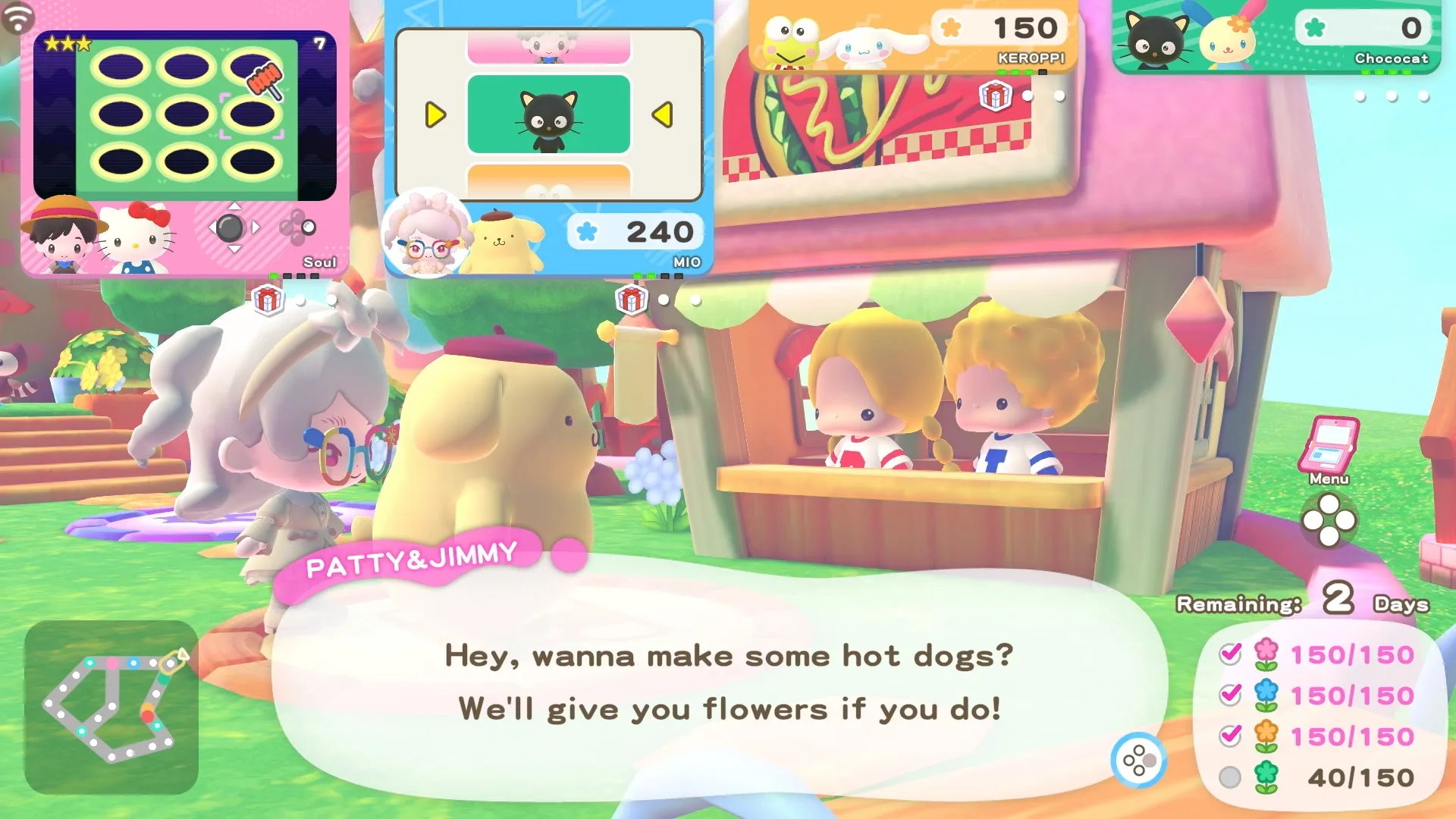
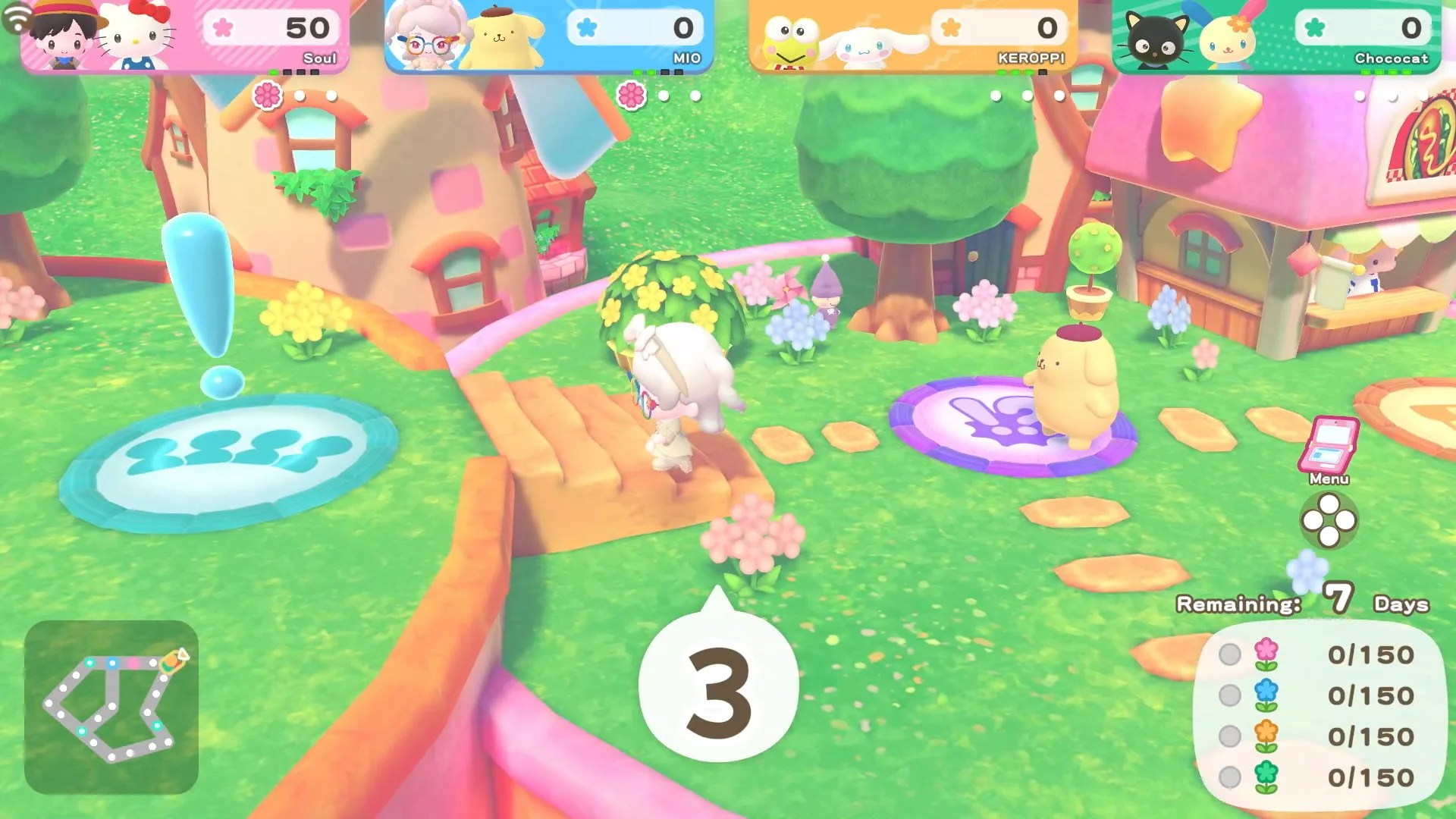
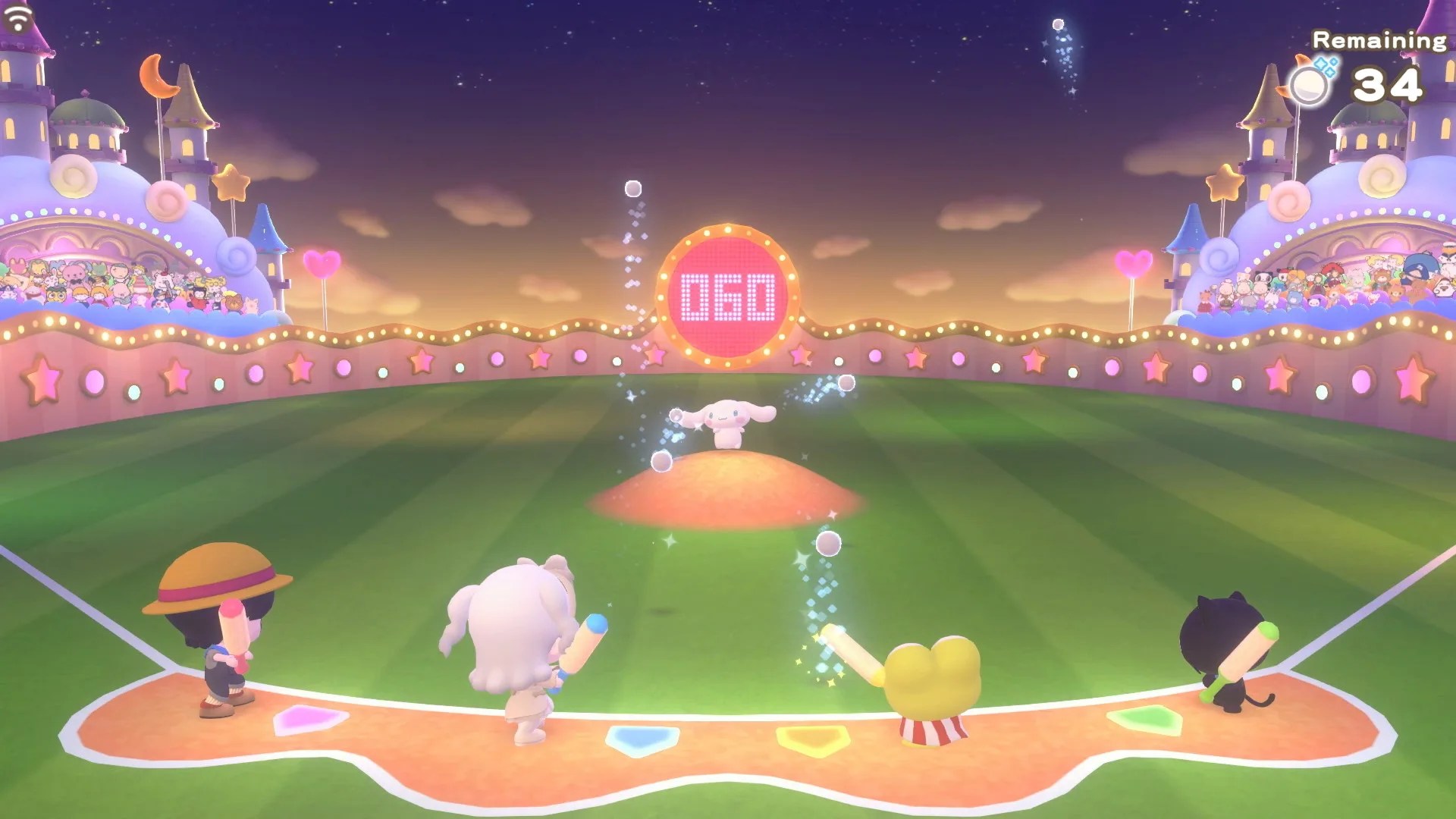
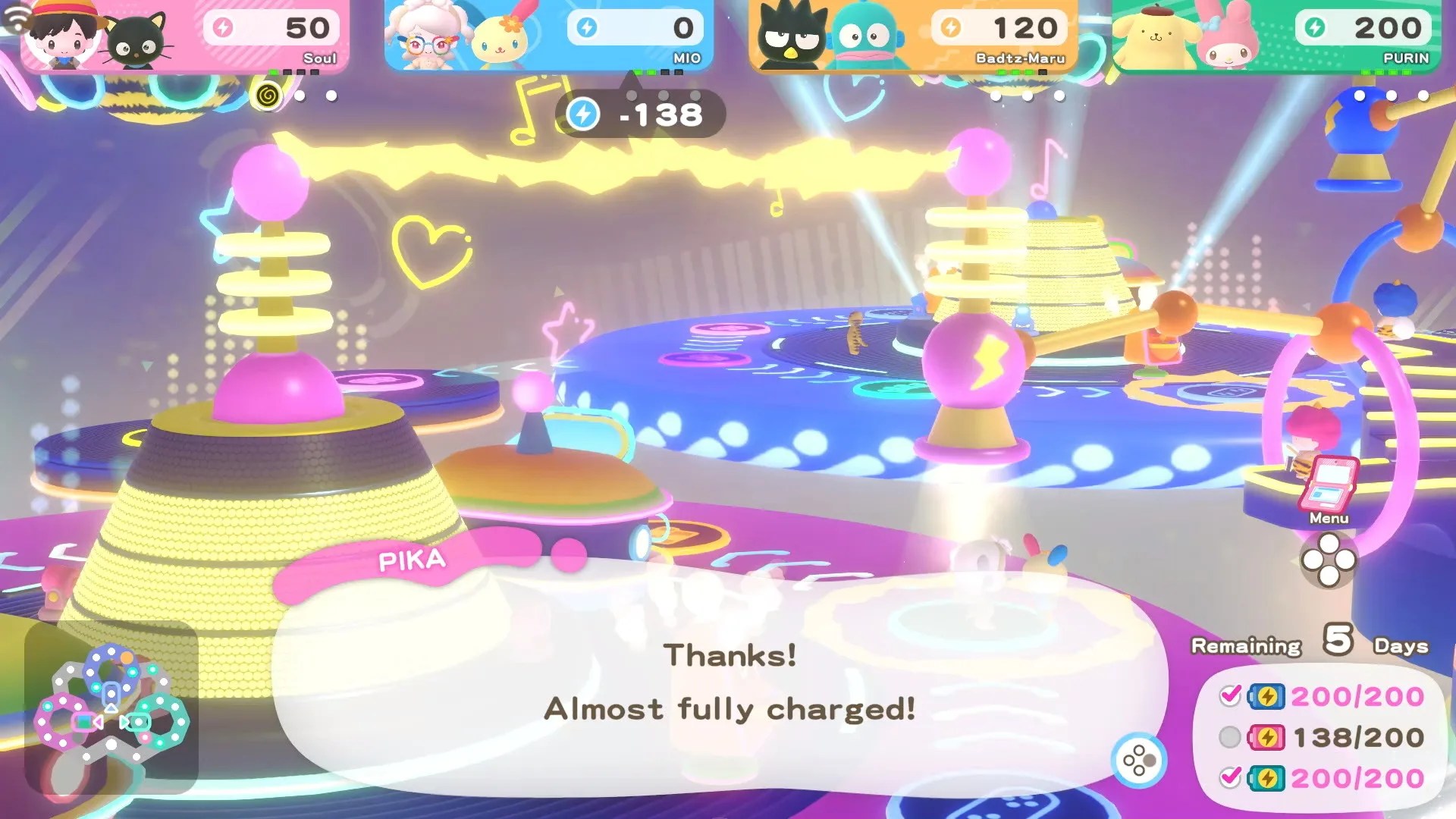
On the boards, you have a goal that all four participants (either local, online, and/or with a mix of CPU and real players) must meet within a certain amount of days, with one day comprising of one turn for each participant. These goals involve delivering a certain amount of items to certain checkpoints throughout the map. These items are acquired by completing mini-games and “Petit Games,” which are smaller individual mini-games that are reminiscent of WarioWare mini-games. Typically, party games are more like a friendly competition to see who wins out at the end, but in Hello Kitty Party Land’s case, this is more like a co-op game where its the collective goal is what everyone is chasing for together.
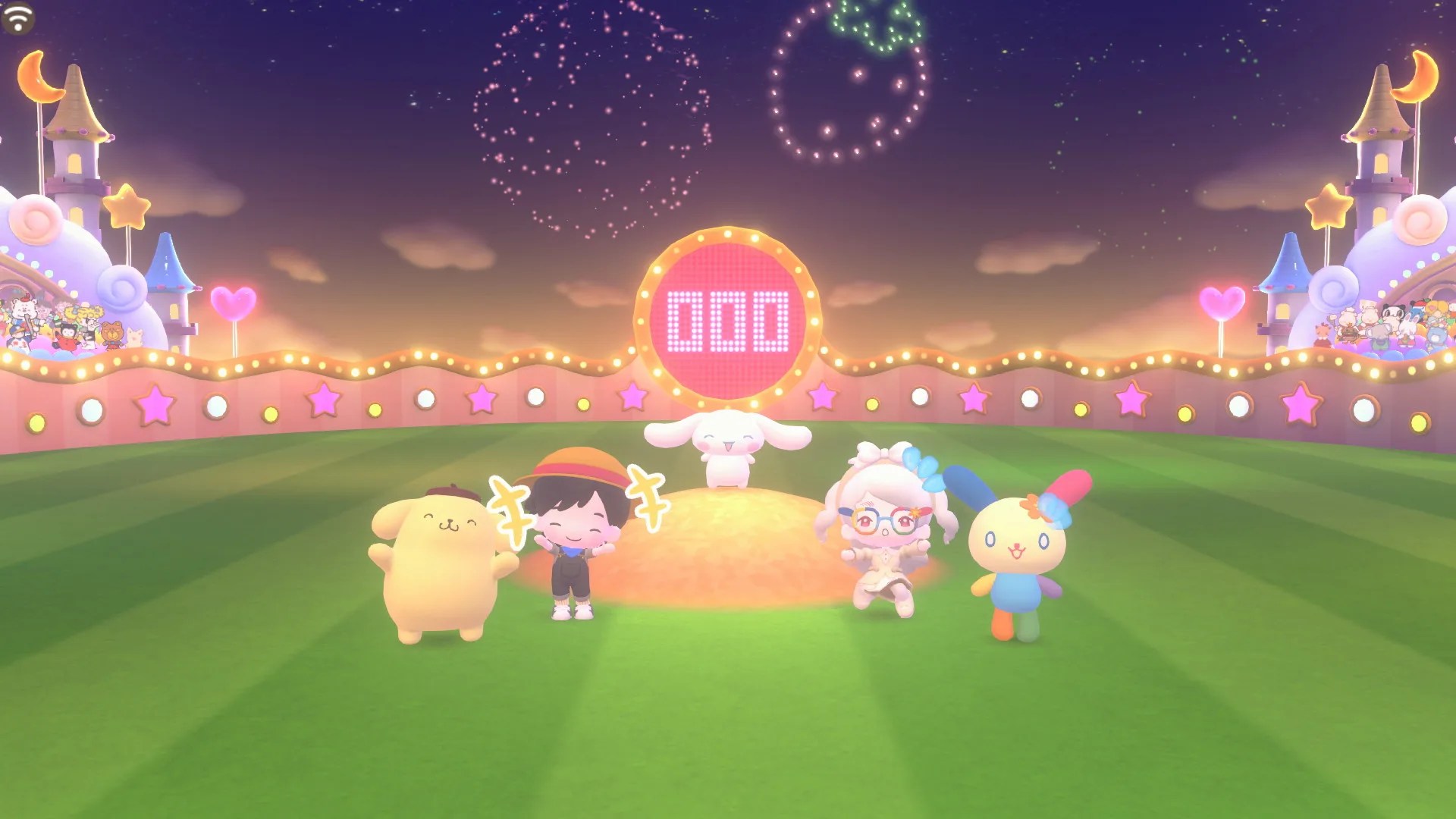
The first board serves as a tutorial, while the other two boards are slightly more challenging with some Sanrio NPCs that get on the board to influence the game for the four main participants, for better or worse. Besides that, the objective is still the same: deliver enough items to each checkpoint on the board before you run out of time. Once the goal is met, there’s one grand mini-game to close out the session and get a look everyone’s results. On boards and mini-games, you’re graded by the group’s overall performance, ranging from Bronze to Platinum.
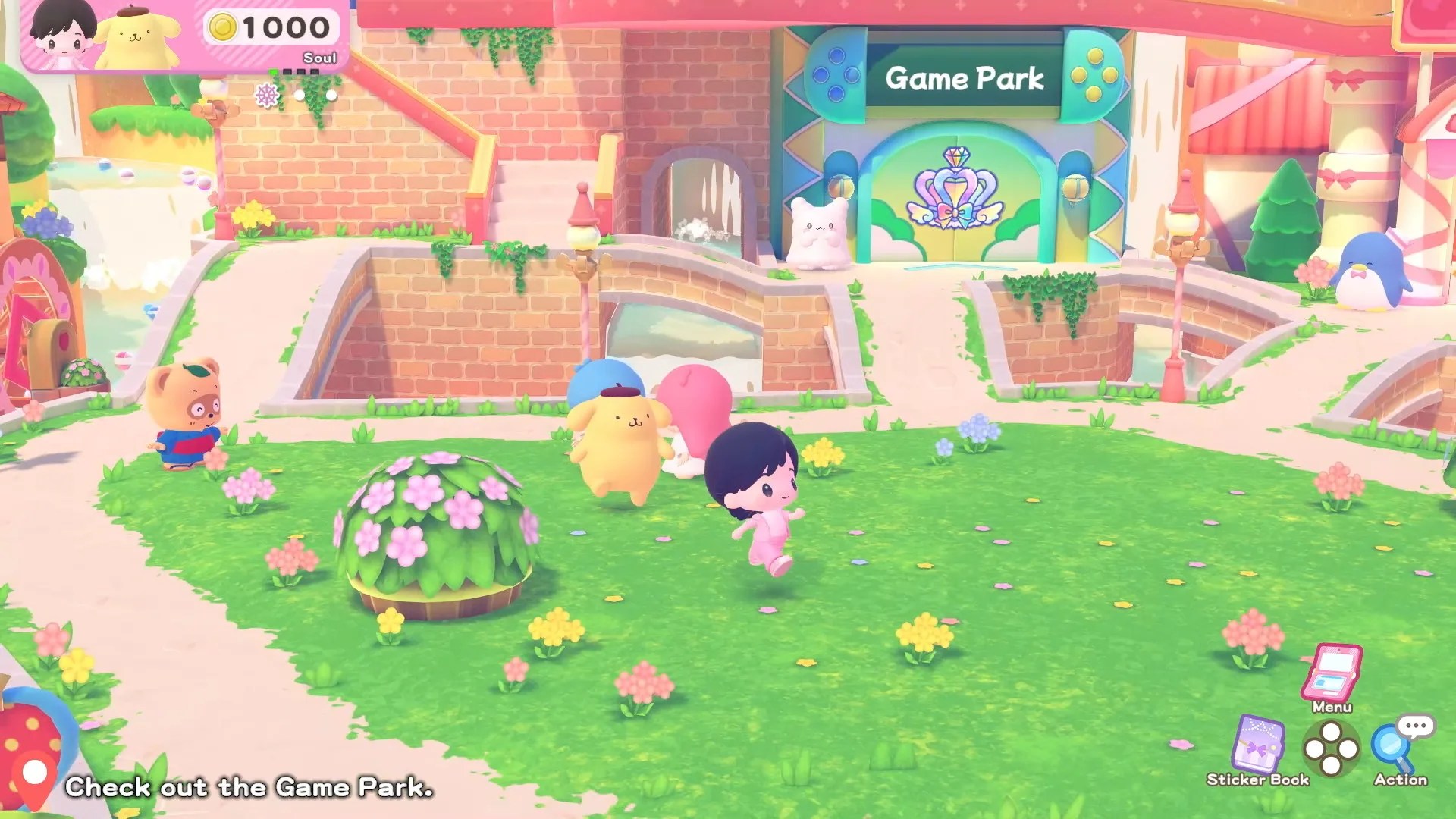
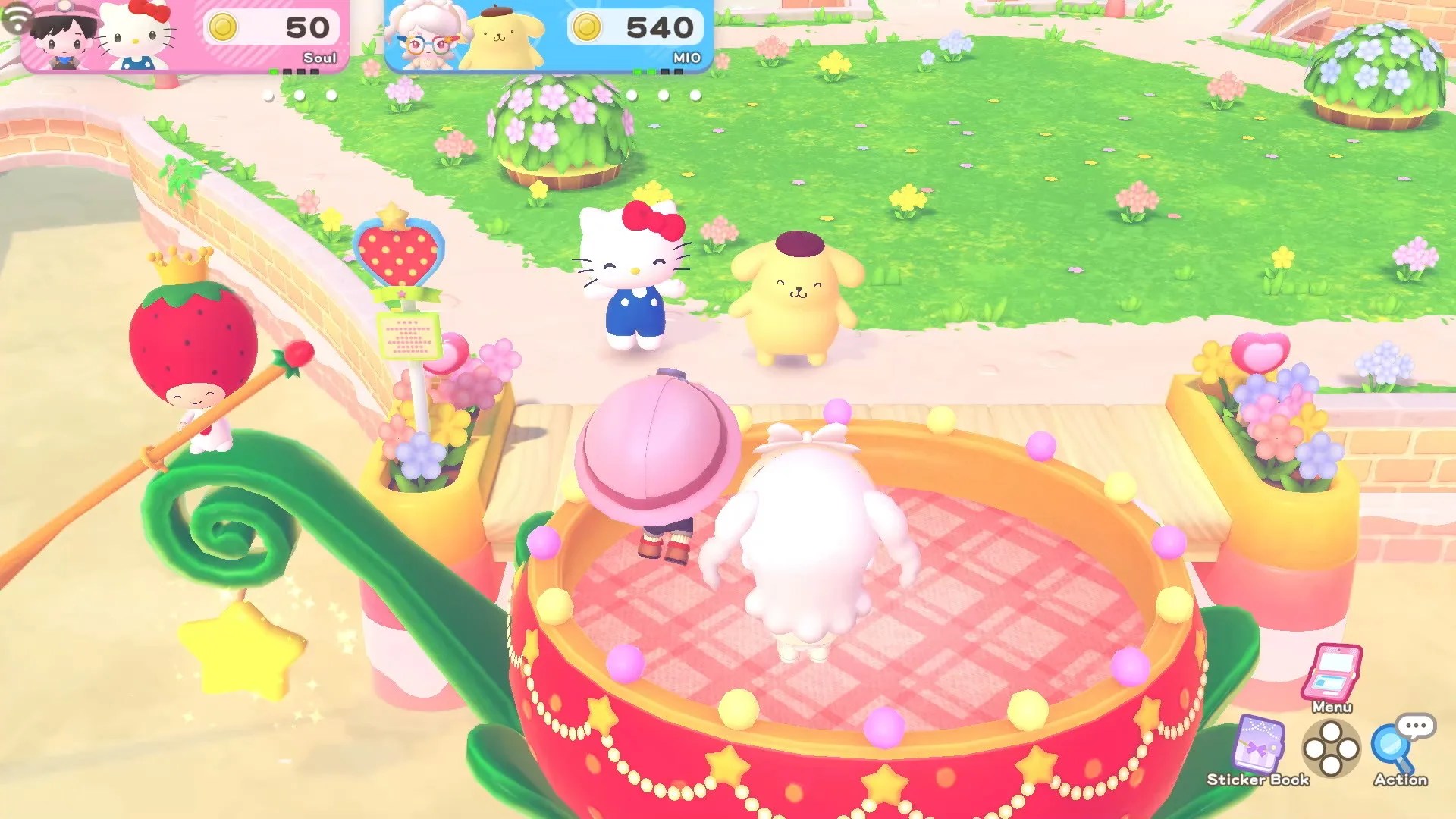
Board games, and essentially everything else in the game, is accessible from various sections in the Party Land hub, which is populated by Sanrio characters. Game Park holds all the board games and Petit Games, Photo Studio lets you switch your Sanrio partners and grants you the ability to take photos, Sky Farm lets you grind farming mini-games for extra coins, Creative Labo offers art, music and puzzle-based mini-games, and the Shopping Mall lets you buy clothes and gear for your avatar.
Over time, the characters that appear in Party Land will refresh, which comes in handy for collecting stickers. Every player has a sticker book consisting of stickers representing the Sanrio characters they’ve talked thus far. With so many characters in the game, collecting all of them will take a long time, so you’ll have to be regularly checking the game every day to find them. Occasionally, there are “Hide and Seek” that show up in the hub world, allowing you to talk to more Sanrio characters.
A Decent Game That Falls Short
I would like to go more in depth, but the fact is that Hello Kitty Party Land lacks depth, and that may be partly due to the game’s main audience being children. There’s nothing wrong with that, but the Sanrio brand appeals to millions of fans around the world of all ages, with many of them being adults. Once you’ve experienced all the content I’ve described, there’s really not much else to do other than maybe going back to the game from time to time with friends willing to play and get more stickers. Of course, party games like this are meant to be replayable with the content that’s already there, which isn’t a bad thing. There’s still something left to be desired in the form of additional contents and modes.
I also had a few gripes with the overall game design for Hello Kitty Party Land. Strangely, you can’t pause or change in-game settings while in the Party Land hub, and there are no clear indicators about when the game is saving, either. In addition, if you decide to start the game in solo, you can invite friends to play mini-games, but you’d have to return to the main menu to start up a room. Since there’s no pause menu, you have to go back to the “exit” sign in the main plaza of Party Land, which isn’t totally inconvenient but it’s also just an extra step you need to take. What’s more, one of the disappointing aspects of the game that my friends had some complaints about were the lack of playable Sanrio character. Despite there being over 145 Sanrio characters, only 16 of them are “playable” as partners, which can be a bummer for fans of particular characters.
Overall, Hello Kitty Party Land is a fun game with a cute, vibrant artstyle and a variety of mini-games, but it’s one that adult gamers will burn through rather quickly with friends. The board games are fun, but there should have been more boards to leverage the varied roster of Sanrio characters. Once you experience the main content that game has to offer, it becomes a test of the game’s overall replayability, which will vary greatly from person to person. For a $50 game, being left with that feeling can be disappointing. For kids and hardcore Sanrio fans, there’s still enjoyment to be had here, but you shouldn’t expect more than a few sessions before seeing all that there is to show.
Hello Kitty Party Land is available now for Nintendo Switch and Nintendo Switch 2 in the Nintendo eShop and physically at retail.
Disclaimer: Bandai Namco provided Nintendo Switch 2 review copies of Hello Kitty Party Land for review purposes.
S-GAME has announced that its new action RPG Phantom Blade Zero has already surpassed 4 million copies sold in just three days, or 72 hours. With already 4 million copies sold, Phantom Blade Zero is one of the fastest-selling games of 2026 thus far.
Phantom Blade Zero has sold over 4 million copies in just 72 hours!🔥
Thank you everyone from the bottom of our hearts for all the love and support! pic.twitter.com/XPhq14v9YN
The Phantom Blade Zero Standard Editionis available for $59.99 on PlayStation 5 and PC via Steam and Epic Games Store with two early unlocks: Treasure Basin (Accessory) and Legacy (Outfit). A Deluxe Edition is available for $69.99 featuring the Standard Edition and various exclusive bonuses, including Outfit: Wulin Legend, Outfit: Blood-Steel Form, a digital art book, and a digital soundtrack. A physical release of Phantom Blade Zero follows up in 2027.
VITURE also released its Phantom Beast XR glasses for $599 at viture.com and IGN Store. These new XR glasses are packaged in a display box and bundled with unique and exclusive Phantom Blade Zero accessories and collectibles. Customers who purchase Phantom Beast by November 5 will receive a collectible map scroll based on the game’s gorgeous ink-wash maps.
Here’s an overview of the game, via Steam:
A Masterful Blend of Traditional Wuxia, Fantasy, and Folk Horror
Explore a world beyond imagination. Shifting realities, echoes of memories long since passed, augmentation, and beings of higher power await in Phantom Blade Zero.
A rumor, a story, a whisper — every thread a trail to unraveling a larger mystery. Navigate through a web of intrigue and lies to uncover the truth.
An Extensive Arsenal is at Your Disposal
A fighter’s worth lies in their weapons.
Over thirty weapons are yours to wield, with more than twenty unique “Phantom Edges” to mix and match to suit your playstyle.
Defeat powerful foes to obtain their weapons, and with it, their signature techniques. Grow your arsenal and defeat all who stand in your path.
Introducing “Kungfupunk”
Inspired by the Golden Age of Hong Kong action films, the world of Phantom Blade Zero blends fierce martial arts with machinery, amplifying an exhilarating clash of steel on steel.
Ancient codes meet iron and smoke; tradition thrums to a modern beat. A new style is forged in this melding of mediums. This is Kungfupunk.
An Authentic Kungfu Experience
Built in Unreal Engine 5 and through the use of state-of-the-art motion capture, Phantom Blade Zero brings together legendary fight choreography from Hong Kong’s Golden Age of martial arts cinema.
Every strike and stance draws from authentic martial arts techniques, captured with the precision of film, is reborn through modern game design.
This is Chinese kungfu reimagined for a new generation.
SHIFT UP has released a new vignette for the Nintendo Switch 2 version of Stellar Blade Complete Edition previewing the game’s Goddess of Victory: NIKKE DLC. Alongside seasonal and content updates, Stellar Blade Complete Edition includes all previously content, including both the NieR: Automata DLC and Goddess of Victory: NIKKE DLC.
In addition to the 32 GB physical game card release at retail, pre-orders for the digital version of Stellar Blade Complete Edition are available now in the Nintendo eShop. Pre-orders include an early unlock of the Planet Diving Suit (White Edition), Classic Round Glasses, and Ear Armor Earrings for EVE.
The following bonuses are also part of this edition:
Stargazer outfit set for EVE, Adam, and Lily
Half-Rim Glasses, Quadruple Rectangle Earring, Planet Diving Suit (Captain) for EVE
Stargazer & Fluffy Bear Packs for the Drone
2,000 SP EXP; 5,000 Gold
Stellar Blade Complete Edition is already available now for PlayStation 5 and PC via Steam and Epic Games Store.
During Summer Game Fest 2026, SHIFT UP announced Stellar Blade: BLOOD RAIN, the long-awaited sequel to Stellar Blade. The story of the franchise will continue after the events of the original Stellar Blade with Evie, the game’s new protagonist.
The Japanese government’s Official Gazette has reported that Toshihiro Nagoshi’s Nagoshi Studio, previously funded by NetEase Games, has officially closed. Nagoshi Studio was officially closed on October 31 in Japan, with Official Gazette reporting the studio’s dissolution on November 2.
The shutdown of Nagoshi Studio felt like an inevitability following reports this past March of NetEase Games ceasing funding for development of Gang of Dragon and the studio. It was widely reported that Nagoshi Studio was seeking external funding to continue the production and the studio’s operations, but with today’s news, it’s clear that all of those plans fell through.
Nagoshi Studio was founded in November 2021 as a subsidiary to NetEase Games, led by former SEGA COO and Yakuza series director Toshihiro Nagoshi. Former SEGA and Yakuza staff also joined the studio, including producers Daisuke Sato and Kazuki Hosokawa.
Originally revealed at The Game Awards 2025, Gang ofDragon was Nagoshi Studio’s first in-house game. South Korean and American actor Ma Dong-seok was slated to star as protagonist Shin Ji-seong.
The Steam page for Gang of Dragon describes the game:
An action-adventure set in Kabukicho, the iconic nightlife district of Shinjuku, Tokyo.
Shin Ji-seong — portrayed by renowned Asian actor Ma Dong-seok — is a high-ranking member of a Korean crime syndicate based in Kabukicho. As he explores the streets of Shinjuku, Shin becomes entangled in underworld conflicts and forges intense, human connections that push him to confront his own sense of purpose.
Combat unfolds from a third-person perspective, centered on Shin’s overwhelming physical power. Engage enemies through brutal hand-to-hand strikes, precise blade attacks, gunplay, and high-impact vehicle action across the city.
Forge your own path through a story where violence and human bonds intertwine.
Epic Games has launched the new “Treasure Hunters” season in Fortnite, which features anime-themed content and characters from the One Piece franchise cosmetics. It has also released a cinematic trailer for the season, made in collaboration with Toei Animation.
As of today, Luffy, Nami, and Usopp are available via the in-game store. In addition, Portgas D. Ace and Nico Robin can be purchased in the new Battle Pass for the season. Zoro, Sanji, and the Chopper Sidekick will be available in the store on November 7. Later, Buggy will release on November 13, while both Kasane Teto and Cap’n Hatsune Miku will launch on November 14. Check out the cinematic trailer showcasing Fortnite “Treasure Hunters” below:
Over the last few years, Fortnite has collaborated with several properties, anime or otherwise. This includes Black Clover, Five Nights at Freddy’s, Persona,Kingdom Hearts, Bleach, Dragon Ball, My Hero Academia, Naruto, Jujutsu Kaisen, and more. Fortnite is available now on Nintendo Switch, Nintendo Switch 2, PlayStation 4, PlayStation 5, Xbox One, Xbox Series X|S, iOS, Android, and PC.
The One Piece anime is currently partway through its Elbaph arc, which began airing on April 5. Crunchyroll is streaming the One Piece Elbaph Arc in North America, Central America, South America, Europe, the Middle East, Indian Subcontinent, Southeast Asia, South Africa, Australia and New Zealand. Netflix is also streaming the anime, and in Japan, the anime aired on Fuji TV. The series will return in 2027.
WIT Studio’s upcoming The One Piece anime remake will premiere in February 2027. The first episode of The One Piece will be titled “Romance Dawn,” and there will be 7 total episodes dropping at once on Netflix. Masashi Koizuka directs the anime at WIT Studio, and Hideaki Abe is the assistant director. Kyoji Asano and Takatoshi Honda are the character designers and chief animation directors.
In addition, two new films, ONE PIECE FILM GOD VALLEY and ONE PIECE FILM BAAD, are in production to release at a later date. ONE PIECE FILM GOD VALLEY opens first in summer 2027, followed by ONE PIECE FILM BAAD in 2029. Further, as the title suggests, ONE PIECE FILM GOD VALLEY seems to focus on lore surrounding the manga’s God Valley Incident Arc.
The Treehouse showcasing the three difficulty levels for Dandori Academy, and reveals that the highest difficulty exam will feature an Empress Bulblax. Check out the Pikmin 4 – Nintendo Switch 2 Edition + Dandori Academy Nintendo Treehouse below:
The demo will allow players to try out a bit of the main story, Dandori Battle, and Dandori Academy modes. Players will be able to transfer their saves from the demo to the full game upon its release. The upgrade to the main game will feature voice controls using the Nintendo Switch 2’s built-in microphone. It will allow the player to directly talk to Oatchi with nine commands. The new Dandori Academy mode also provides challenges across Elementary, Intermediate, and Advanced levels. High scores can be recorded in exams available on Fridays, Saturdays, and Sundays. There will be leaderboards for both friends and worldwide players. 72 stages are planned to come to the mode.
Recently, Nintendo held the Pikmin Day Direct, which focused on updates to pre-existing Pikmin games. Shigeru Miyamoto narrated the direct, who declares November 1 to be Pikmin Day. He elaborates on the choice saying that “In the first Pikmin game…the red, blue, and yellow Pikmin made their debut. If you imagine those three Pikmin as the number 1, that makes November 1st Pikmin Day!”
Its biggest reveal are the new Hello! Pikmin shorts. These serve as a spiritual successor to the Close to You short and focus on the activities of the Pikmin. The first episode is available now, with the second set to release later in November. Subsequent episodes will release monthly on the Nintendo Today app and other Nintendo social media accounts starting in December.
Pikmin 4 is available now for Nintendo Switch. The demo will release on the Nintendo eShop.