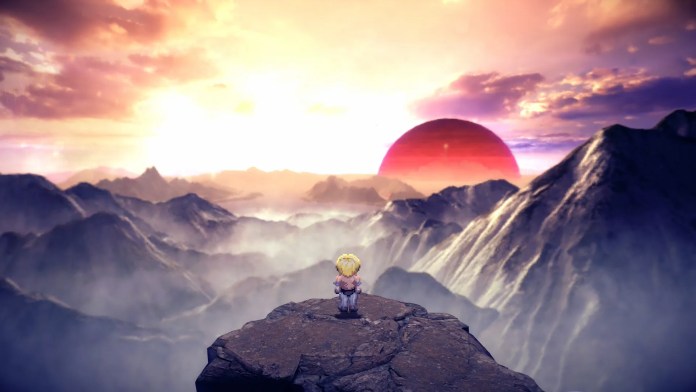
With Vengeance, Sincerely, Your Broken Saintess Season 2 premieres on October 1.
The anime’s cast includes:
Asami Seto as Rua
Sōma Saitō as Sven
Momo Asakura as Arianne
Kazuki Ura as Garrett
Kazuyuki Okitsu as Cezee
Tomoaki Maeno as Prince Sarid
Minami Tsuda as Diana Peridot
Reiō Tsuchida as Luis Riston
Saya Fukase will direct the anime at IMAGICA Infos / Imageworks Studio. Yūichi Imaizumi is the sound director, Hiroki Nozaki and Airi Kobayashi handle sound effects, onoken is the music composer, and Kazuya Takahashi oversees the production.
SORAJIMA and Aminohada’s With Vengeance, Sincerely, Your Broken Saintess vertical-scrolling webtoon is available to read via Pocket Comics.
Pocket Comics describes the series as follows:
Rua is a saintess candidate who possesses the power of healing. But her ability had one flaw: she could only heal others by transferring their wounds onto herself. Because of this, others bullied her, calling her the “Fallen Saintess.” But it didn’t bother Rua because her best friend Arianne always stood up for her.
One day, Rua’s crush, Commander Garrett, was on the brink of death from a beast attack. Rua healed him, which left her on the verge of death. When she woke up, she learned that all the credit was given to Arianne, and she finally saw her best friend’s true color. Devastated, Rua is lost and helpless when the second prince appears in front of her with a tempting offer. What would happen to Rua as she begins her new life as a villainess?
Square Enix has released a new trailer for Final Fantasy Resonance to preview the Cloud Strife Vision. In Final Fantasy Resonance, players can call on a Vision, including Cloud from the Final Fantasy VII series, to unleash a high damaging attack against their enemies.
Final Fantasy Resonance launches October 22 for PlayStation 5, Xbox Series X|S, Nintendo Switch, Nintendo Switch 2, and PC via Steam and Microsoft Store for $49.99. A Digital Deluxe Edition will be available for $59.99 with bonus in-game items, and a Collector’s Edition will be available for $209.99 featuring the game, Digital Deluxe Edition bonuses, an artbook, soundtrack and unique FINAL FANTASY TRADING CARD GAME promotional card.
Final Fantasy Resonance will not have a upgrade path from the Nintendo Switch version to Nintendo Switch 2. In addition to no upgrade path, save data from the Switch version of Final Fantasy Resonance is not transferrable to the Switch 2 version or vice versa.
Lastly, Square Enix describes the game:
The first HD-2D game in the FINAL FANTASY series, FINAL FANTASY RESONANCE is a celebration of classic and modern FINAL FANTASY that evokes the beloved titles of yesteryear.
This tale of Crystals features a strategic turn-based battle system with a modern twist, the return of chocobos, espers and airships, in addition to appearances from beloved FINAL FANTASY characters such as Cloud, Tidus and the Warrior of Light – all presented in stunning, retro-inspired HD-2D graphics that push the limits of pixel art.
FINAL FANTASY RESONANCE is based on the first story arc of the mobile game FINAL FANTASY Brave Exvius. Far from just a direct port, it has been refined and extensively rebuilt as a full-fledged console-quality RPG experience.
NIS America has announced that horror-infused farming sim Village in the Shadelaunches on October 27 for Nintendo Switch, Nintendo Switch 2, PlayStation 5, and PC via Steam in the west.
A Limited Edition of Village in the Shade is now available to preorder for $89.99, featuring a copy of the game, collector’s box, art book, original soundtrack, acrylic block, and a set of metal pins.
Lastly, here’s an overview of the game, via NIS America:
Welcome to Kagatsu, a Japanese mountain village with plenty of secrets. In this brand-new, hand-painted farming sim, you’ll plant crops, customize your homestead, and befriend a cast of intriguing characters.
Relax by the brook, watch the cherry blossoms with your neighbors, or take a stroll through town. With so many ways to relax, you’re sure to feel right at home.
Just make sure to follow a few simple rules: don’t talk to strangers, don’t leave the village, and, whatever you do, don’t go out at night.
Features:
Unsettle Down: Make your new home feel like home! Buy furniture in town to decorate your house, then craft fences and other items with the resources you’ve gathered around your farm.
Festivals and Fun: Experience traditional Japanese festivals and activities, like the summer festival and cherry-blossom viewing. Get closer to your neighbors as you enjoy laid-back living.
Secrets Aren’t Meant to be Shared: Discover the truth about Kagatsu at your own risk, or follow the rules and keep from seeing a part of the village you don’t want to.
Arc System Works has released a new update for Marvel Tōkon: Fighting Souls, which fixes just a few of the issues for the PC version. The game is available now on PlayStation 5 and PC via Steam.
The update comes in the wake of several major criticisms of the PC version of Marvel Tōkon: Fighting Souls, such as the overwhelming lag and latency problems. The recent patch focuses on trying to repair these sore spots, and does the following:
Reduced CPU load to help improve overall responsiveness and reduce lag-related issues
Fixed a bug that could cause sudden performance drops during gameplay
Improved backend crash reporting so we can track down issues and improve stability faster
The launch roster of MARVEL Tōkon: Fighting Souls includes Peni Parker, Storm, Magik, Danger, Wolverine, Captain America (Steve Rogers), Doctor Doom, Ghost Rider (Robbie Reyes), Iron Man, Ms. Marvel (Kamala Khan), Spider-Man (Peter Parker), Black Panther (Shuri), Hulk, Star-Lord, Green Goblin, Carnage, Blade, Loki, and Deadpool, alongside secret character The Champion. In addition, Arc System Works recently revealed Phoenix Cyclops, the first DLC character coming to MARVEL Tōkon: Fighting Souls in fall 2026.
Arc System Works also revealed two new costumes, both of which for Wolverine, that will be available in FightingSouls. One is directly based on his appearance in Marvel’s Wolverine, while another is created by Insomniac Games exclusively for the fighting game. Arc System Works also notes that it has “placed a much greater emphasis on costume development as one of the ways players can enjoy their favorite characters in new ways. We have plans to continue adding a variety of costumes in the future, so please look forward to what’s ahead.”
Square Enix has revealed its financial results for the first quarter of FY2027 and reported an 88% profit growth across the board. The strong performance, perhaps unsurprisingly, is driven by Square Enix’s video game business.
The “digital entertainment” side of Square Enix’s business has seen revenue grow by 51.8% and operating profit grow by 91.8% year-over-year. According to the company, all categories of its game business (HD games, MMO, mobile/PC) has seen improved performance. Square Enix especially cited sales of Final Fantasy VII Rebirth and The Adventures of Elliot: The Millennium Tales highlighted as steady contributors in the console sector.
In addition, in “the MMO/mobile/browser sector,” Final Fantasy XIV has also seen increased revenue and player activity. That said, profit margins increased only slightly due to expenses related to the game’s upcoming expansion. Further, Square Enix highlighted the live-service titles Dissidia Duellum Final Fantasy and Dragon Quest Smash/Grow as high contributors to both revenue and profits.
Most games want to put their best foot forward by placing the parts with the most to do and the most content at the forefront. Big Walkis the newest game from House House, the team behind Untitled Goose Game, and it does something completely different. Instead of putting the focus on the wonderful co-operative puzzles, the title refers to the gaps in between, the natural intermissions between tightly designed challenges. With this approach, it hooked me thanks to the fun puzzles and great multiplayer mechanics.
Where You’re Walking
Big Walk is a multiplayer game that hosts anywhere from two to twelve players, forcing them to work together to make it through the island. For my review, I played the two-player version. The game eases you in with a restrictive first section that guides the group to a station that requires collecting four objects to progress.
Each object is locked behind a puzzle that requires co-operation through signals, actions, and speech, until you bring all the objects back to gain a key. The key unlocks the way forward, and Big Walk has set you up for the rest of the game, as you can now explore a massive island at your own pace. Despite the route opening up and giving you options in every direction, the structure remains the same as the first section. You’ll find a tower with a key in it, then set about completing puzzles until you get that key, which unlocks a new traversal method.
The island itself is bigger than it seems at first, despite what the more streamlined tutorial area would have you believe. I didn’t realize quite how big it was until we found a dedicated map room, which serves well as a hub. The spawn room remains the same throughout the game, which initially scared me with the extra walking it might demand as objectives got further away. Those fears were dashed by Dark Souls-style gate opening, bringing us back to the beginning after one of our long walks. It perfectly hit that note of “oh, we’re back here” with surprise and relief in equal measure.
There is a very small hint of a story that alludes to what is truly happening on the island. A huge ball at land’s end provides an imposing presence in the distance, beyond a large wall. There is a singular cutscene, though only one player gets to see it, and I was not the lucky one in our playthrough. Again, it encourages communication amongst the team, but I can’t help but feel as though I missed out. However, even without traditional storytelling, the environment can communicate the conflict between Big Walk‘s environment and the construction that covers it. Story isn’t the main point, and I couldn’t get a handle on the literal goings on, but it hardly felt essential to the experience.
Walking and Puzzling
Whenever that natural scenery is broken up by the solid primary colors of man-made structures, it means a puzzle is up ahead. There are many, many puzzles scattered around, more than are necessary to complete the game. When we had no clue what to do, we could go elsewhere. Around the next corner would be another opportunity to progress. There is an endgame option if you want the challenge of taking on all the puzzles, but the amount needed to reach the end is a perfect balance of requiring most of them without forcing you to waste time on something which isn’t working.
Puzzles have wonderful variety, many of them using the same building blocks in different ways. The open world doesn’t prevent escalation either. Challenges farther from the starting point can be more complex even if they can’t be put in a specific order. Without using words, the vast majority managed to easily communicate intent, though a few remain mysteries to me to this day. Then, it’s just about achieving those goals. Pattern recognition, memorization, item-throwing, a little platforming, finding things, aural skills, communication both verbal and non-verbal, are all tested by Big Walk.
One of my favorites involved navigating an obstacle course while effectively blindfolded, guided by my teammate. Others put us in soundproofed rooms, requiring us to use the game’s gesture system to tell one another the buttons to press. Even some that may sound like cop-outs, like the ‘puzzle’ which simply required waiting for five minutes, came as a refreshing shake-up and a chance to have a conversation with a friend. However, of course, there were a few misses: having to get an object all the way up a series of platforms, involving climbing the same staircase many times over.
The deviation from the difficulty trend is the endgame, its own section with its own specific challenge. The whole area has a unique atmosphere, even including musical accompaniment which is missing from most of the game. It helps enhance the contrast between the natural and the unnatural, creating a wall not only between you and your partner, but also between you and the whole outside world. I found the whole endgame area riveting, with the epilogue afterwards eliciting all the right emotions.
That said, for a game called Big Walk, the walking itself is the weakest element. Limited inventory, especially early on, means much of the time will be spent walking back and forth to towers. The towers are often on top of hills, which is useful for locating them, but makes reaching them even more tedious. Hills are also covered in stony surfaces. The small rocks catch the player, stopping you for a second until you jump, while larger ones are obstacles to go around. A path is always there, though what looks like the way forward can be nothing of the sort, as inclines that are too steep prevent the player from jumping. Traveling to new areas had novelty, but returning to a tower with our spoils several times over was tiring.
The progression is all about finding ways to skip walking, be that the train system, the ski lifts, or the tunnel system of shortcuts. They are quicker and safer than walking, making it more difficult to lose your way. However, while faster, they are not fast. The game has a ‘sleep’ state when the player hasn’t moved for a while, where their eyes slowly close. It does nothing to disguise the interminable waiting for one of the three trains to make their way around the island. They need to be slow to allow players to board, though the presence of a brake but no acceleration is head-scratching.
More progression comes in the form of inventory upgrades and items. Finding a backpack was a very exciting upgrade, doubling the amount that can be carried at any time. A backpack goes on the back, meaning a partner is necessary to put things on or take things off, keeping co-operation the focus even outside the designated puzzles. These tools never appear in the puzzles themselves; instead, they are used to find your way around the open world. Lights in particular were necessary during the nighttime of a quite short day-night cycle.
Again, it added frustration to my journey with how it limited visibility. On the other hand, it adds value to the light switches found on every man-made structure, marking the completed ones and acting as beacons. Still, in spite of these shortcomings, I think the game still succeeded at what it set out to do: create a satisfying experience best enjoyed with friends.
The End of the Road
Big Walk is a game that clearly communicates itself from the title: there is walking, and it takes place on a big island. However, those aren’t the parts of the game that sold me on it. Instead, the puzzles designed around working together in so many different ways are what made me enjoy spending time with the game. Regular unlocks help create a sense of progression as the map and new ways around it unfold, leading up to an excellent final gauntlet. My time with the game wasn’t without its boredom and frustration. Still, I came away remembering the moments of satisfaction at figuring something out and the joyous feeling evoked by the ending.
Disclaimer: Panic provided a PC (Steam) copy of Big Walk for review purposes.
Level Infinite and SHIFT UP have released a new promotional video for the collaboration between Goddess of Victory: NIKKE and the Persona series, which is set to begin on August 13. The promotional video previews the upcoming collaboration, titled “Persona on Frontline,” which will bring Makoto Niijima from Persona 5 Royal, Aigis from Persona 3 Reload, and Yukiko Amagi from Persona 4 Golden into Goddess of Victory: NIKKE.
Persona 3 Reload, the most recent game in the series, recently surpassed 3 million copies sold worldwide and received a new illustration from character designer Shigenori Soejima. Persona 3 Reload is available now for Nintendo Switch 2, PlayStation 4, PlayStation 5, Xbox One, Xbox Series X|S, and PC via Steam.
Persona 4 Revival will launch on February 18, 2027, for PlayStation 5, Xbox Series X|S, and PC via Microsoft Store and Steam. Persona 4 Revival will be available on Xbox Game Pass on day one. Pre-orders for the Persona 4 Revival Collector’s Edition (console only) are available now at participating retailers.
Persona 6 was announced for PlayStation 5, Xbox Series X|S, and PC via Microsoft Store and Steam. ATLUS describes Persona 6 as “The highly anticipated next chapter of the iconic RPG series delivers a bold, new standalone story blending heartfelt daily life and new characters with pulse-pounding, supernatural adventure. Whether it’s your first Persona game or you’ve been here since the beginning, this one’s for you.”
Goddess of Victory: NIKKE is available on iOS, Android, and PC via Windows and Google Play Games.
Manga creator Masamichi Sato has announced that his manga series, Quality Assurance in Another World, is now on hiatus. This is so that they can focus on recovering from being hospitalized for a hernia.
Masamichi Sato launched the Quality Assurance in Another Worldmanga in Kodansha’s Comic Days service in 2020. Kodansha USA publishes the manga digitally and in print as an ongoing series. The series’ popularity prompted the production of the new anime series in 2024 by Studio Palette. The manga will return at a currently unknown later date.
Despite its location in a remote region south of the continent of Felnarc, the island of Clayborne is made up of five small countries crowded together and in constant conflict. In the most remote reaches of the smallest and most peaceful country on the island, the Kingdom of Bayle, is the small village where a girl named Nikola lives a humble life.
One day, while she’s out gathering firewood as she does every day, a massive dragon—a creature that’s supposed to only live deep in the mountains—appears in front of her. Just as it’s about to attack the village, a man named Haga rushes to the scene. Haga is a member of the King’s Seekers, a top secret investigation team. Nikola has never once felt bored with her peaceful life, even when every single day is practically the same, but after meeting Haga, she’s so intrigued by Haga and his travels that she decides to step out into the world herself… and then the learns the true nature of her world.
Nintendo has revealed Book 3 Chapters 11 and 12, as well as new disciple Yuyo: Timid Mouse, for Fire Emblem Shadows. It will release on August 11 at 11 PM PDT.
The new Book 3 chapters will feature on Rusty, Ananke, and Hanya. Caitlyn Elizabeth voices Yuyo, who wields Crosswind Lock EX, Ennea Wind +, Final Dark Tetrawind, and Self Ward Push. New battle rewards are also available, which feature souls for both Tiki and Yuyo. Check out the trailer showcasing the new additions to Fire Emblem Shadows below:
Lastly, Fire Emblem Shadows is available now on iOS and Android. Here’s an overview of the game, via Nintendo and the game’s respective store pages (Google Play, App Store):
The gameplay of Fire Emblem Shadows combines real-time strategy and social deduction. One of the three allies participating in each battle is secretly a treacherous disciple of shadow. Players choose to take on the role of either a disciple of light, aiming to find their way through the labyrinth, or a disciple of shadow.
After the initial battle, players vote to determine who they believe is the treacherous disciple of shadow. The outcome of the vote affects whether the next battle is more favorable or more challenging. Whether the disciples of light can correctly discover the traitor—or the disciple of shadow can successfully deceive the others—holds the key to how the next battle unfolds.
Consider the ally to your left and the one to your right. One of the three of you will betray the others. Can you manage real-time strategy and social deduction at the same time?
For as long as I can remember, I’ve been a huge fan of RPGs. Being able to get sucked into all kinds of magical worlds with incredible storytelling and fantastic characters is what I always love when starting a new journey. However, despite how many entries in the genre I have engaged with, Star Ocean is one franchise that has escaped my attention.
Star Ocean is a series that I’ve heard maybe a mention here or there online and in some anime, but I’ve never really put much thought into trying it out. So, when I booted up Star Ocean: The Second Story R, a remake of the second game in the series, I was certainly curious. Once I rolled credits on this game, I realized how special it really is, while also noticing some shortcomings that I hope are fixed in any future remakes or new titles.
Space Journey
The plot of Star Ocean: The Second Story R is pretty unique, as it is told from two perspectives. The two protagonists, Claude and Rena, share the same journey but occasionally experience separate story events. As the journey went on, I really enjoyed seeing how each of them developed through the influence of the other. Claude starts as an outsider to the strange world he was teleported to, while Rena has her own reasons for traveling alongside him.
The adventure also features additional characters with their own goals who can join the two, though several of them are entirely optional. This means they can be missed altogether, especially since some events are only available for a limited time. Because of this, the game encourages multiple playthroughs to see how each character’s story unfolds.
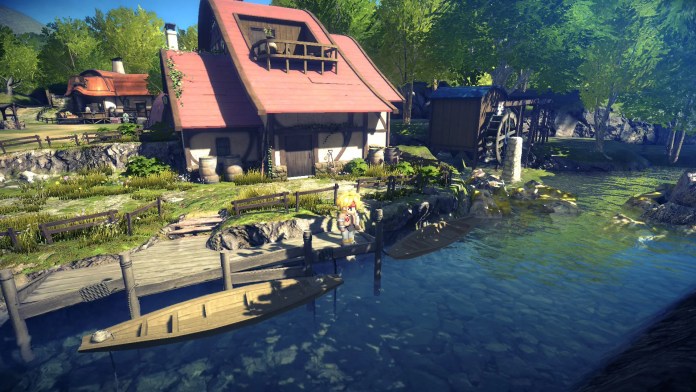
It’s also impossible to talk about this game without mentioning how beautiful it is; the developers of this remake, Gemdrops, crafted such an incredible-looking 2.5D game that looks and runs amazingly on Nintendo Switch 2. The game also comes with some incredible music, which not only encompasses the new recomposed score for the remake, but also the original that is available at any time with the simple adjustment of some settings. That said, one shortcoming of this game is that there is no upgrade path for those who bought the game on Nintendo Switch, meaning if they want the performance boost, the game would need to be bought again. This is really strange to me, as overall the game offers very little besides running better.
Battle of Wits
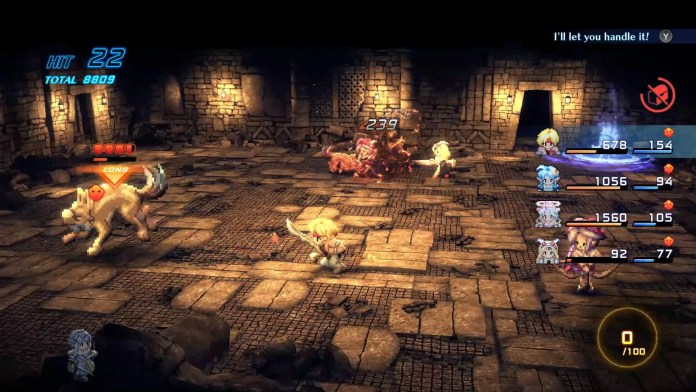
Battles in Star Ocean are in real time in a small arena where everyone can move around freely. At first, I expected this to be turn-based, but I really enjoyed how the gameplay worked here. Especially when the arenas matched the area of the game I was currently in, an example being when in certain mines a minecart would sometimes pass through the middle of the arena, hurting whoever was in its way. While it did minimal damage and never really saved me in combat, I wished more areas had gimmicks like this.
Star Ocean also has a stagger system in place known as “breaks” that work similarly to how it does in other games with the function. Once an enemy’s shield has taken enough damage, they become unable to move for a few seconds, making it easy to deal damage. This worked even better with minibosses, as whenever their shield broke, it would cause a chain reaction, causing all remaining enemies left to also break. This really came in handy in the late game, as by then most battles would almost always have a miniboss.
What I found out later in the game was that breaks could also happen to my character. For example, there were moments when I became surrounded by enemies and dodging was nearly impossible. Whenever this happened, I would become frozen for a few seconds, allowing nearby enemies to deal major damage. Almost every time this occurred, I would get knocked out, requiring me to use a revival item or wait for a healer to cast a revival spell. Unfortunately, as someone who tends to get easily caught up in the action, I often forgot about this aspect of the gameplay, which led to a lot of revivals.
What I also grew to love about Star Ocean was the way it handles leveling up, as it’s tied to the specialty skill mechanic. Whenever a skill like knife or herbology is increased, it not only improves a character’s stats for battle but can also unlock new abilities for them to use to make the game a smoother experience. One example being leveling up the Eye for Detail specialty can help level up crafting and customization, making crafting new weapons and armor all the easier.
This also works alongside combat skills, which can make battles even easier by reducing spellcasting time, increasing movement speed, and allowing you to keep orbs when staggered. Orbs are special items that enemies drop when defeated, and the more you collect, the stronger your attacks become. However, they can easily be lost when knocked out or staggered, which meant I was always keeping an eye on how a battle was going if I wanted to maintain a high orb level.
Another aspect of the gameplay I really enjoyed was how easy it was to swap characters mid-battle. Some opponents I faced were capable of freezing me in place through paralysis or petrification. During moments like these, whether I didn’t have an item that could cure the affliction or simply wanted to end the battle as quickly as possible, the game allowed me to switch between characters. I didn’t use this feature too often, but whenever I needed it, it was nice knowing it was there.
Danger Zone
Despite how much fun I had with Star Ocean, there were also parts of it I either wish were better or outright had issues with. The story, while great at first, began to lose me once the true antagonist was revealed. While it was obvious that there was a bigger threat than the Sorcery Globe that Rena was chasing after, and that a darker entity was pulling the strings the whole time, I really didn’t care for them once they were revealed. The antagonist wasn’t too interesting, and after they showed up for the first time in the story, they only made a few sporadic appearances before the final battle. While that can work in other pieces of media, for me it just made me uninterested in fighting them.
The combat also became slightly annoying once I reached the final third of the game. By then, most encounters, while satisfying, had one major deterrent: the enemies’ targeting. Every few battles or so, an enemy I was in the middle of fighting would randomly decide to run off and chase a different character. Whenever this occurred, I would miss my attack and have to start chasing them. Since my team mainly consisted of two characters on the main battlefield and two on the side who would cast healing and magic spells, monsters would usually target the latter. This caused many battles during this point in the game to end with a minute or two of me chasing a monster while it chased my teammate. It was incredibly frustrating and made me avoid battles during the final part of the game as much as possible.
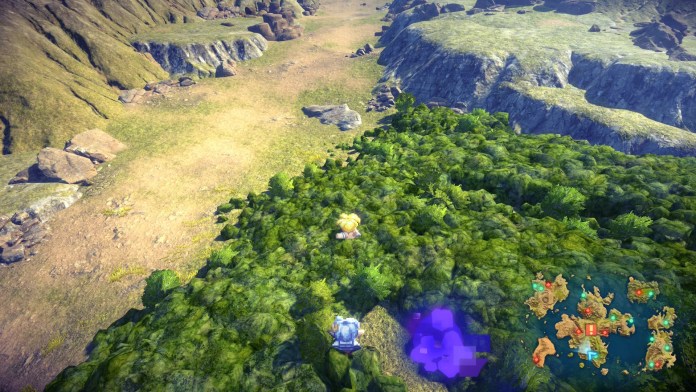
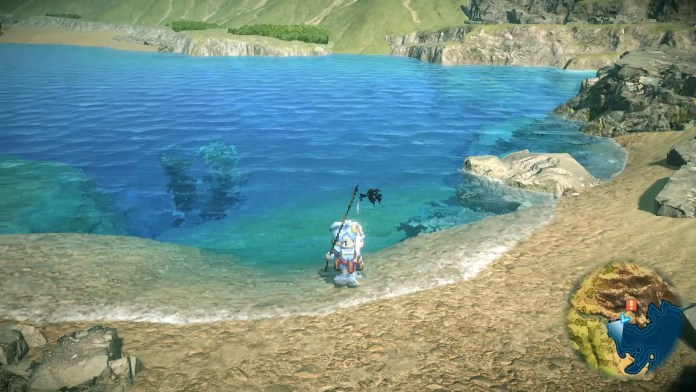
Another part of the game I was slightly underwhelmed by was the lack of anything to do in the overworld. Most of my time during the main story was spent traveling from point A to point B. This was fine at first, as I wanted to dig deeper into the story. However, as I explored the world and took in the beautiful art style, I found little to do aside from opening the occasional chest and finding places to fish. While there are some minor quests to complete, they are few and far between. What makes this all the more odd is that the game does offer some form of extra content through mini-games, but I only encountered these during the final third of the game. As stated earlier, this was also the part of the game where I began to lose interest, so I only tried a few of them. While they were fun, they made me wish this type of content had been introduced much earlier.
What could’ve helped make the game feel more alive was if the item creation abilities or IC were able to be done in the overworld, as they’re mostly done via the menu. While it is far more convenient to craft food and weapons via the menu rather than having to return to a place over and over again, it would’ve made doing the actions feel like a real part of the game instead of just staring at a blue screen for minutes at a time.
This remake, while looking and sounding fantastic, also had some odd sound shortcomings, mainly with the dubbing. When looking at the Japanese audio, it comes with voiceover from the remaster originally released on the PSP as well as newly recorded audio for this remake. Meanwhile, for English, there is only one option for the remaster. This is really odd, as it’s obvious a lot of love and care was put into bringing this remake to life, but they decided not to record a new audio track. Overall, it wasn’t too big a deal for me, as the English dubbing used was still really great, though with a few stilted lines here and there.
Cosmic End
I had an incredible time with Star Ocean: The Second Story R; I became immediately enthralled with the characters, world, and art style. While I did have a lot of criticisms about my time with it, it’s only because of how strongly I felt about the game. This was one of my favorite RPGs that I’ve played this year, and I really wanted to like it more, but so many issues, both minor and major, kept piling up, causing me to have a lesser experience than what I was hoping for.
Star Ocean: The Second Story R is a great game that, while having some things I wish were better, is still worth trying out. However, if you already own the Nintendo Switch version of the game, there isn’t anything new that would require buying it all over again. Those who have never tried out a Star Ocean game will find themselves lost in a beautiful world and will probably end up a fan of the series as I have.