
Onimusha: Way of the Sword Review – A Grand Return

Onimusha: Way of the Sword - thumb

Almost 20 years after its latest entry, Onimusha returns to the spotlight with a new title: Way of the Sword. Why Onimusha in particular was chosen for a revival at this point is mostly not worth discussing. Because the game makes a good case for itself as a solid action title regardless. Fans of the franchise may indeed feel some friction; a lot has changed since the PS2 era. At the same time, Way of the Sword doesn’t disappoint within its premise.

As a franchise, Onimusha was always somewhat close to Resident Evil because of a few design coincidences. Things like both games being survival-horror franchises and their focus on resource management and puzzles to gate your progress. Resident Evil had the luxury of small increments to go from stiff tank controls to over-the-shoulder parrying zombies with a small axe. Meanwhile, given how dated Dawn of Dreams is by now, Onimusha is almost a blank slate. It was surprisingly difficult to set expectations for it.

A Combat-Oriented Chimera That’s Surprisingly Well Balanced

Onimusha: Way of the Sword - Combat 1

In other words, it’s unrealistic to expect something along the lines of the PS2 games. At the same time, it would be disappointing to see an established franchise return only for its formula to be replaced by a popular one in the current industry. So let me be direct: Onimusha isn’t really a soulslike. While I do like the genre, I was hoping that it wouldn’t feel derivative. Sure enough, there are clear inspirations from titles like Sekiro: Shadows Die Twice, but Way of the Sword is best seen as a chimera of multiple action combat mechanics that work together surprisingly well.

The biggest inspiration taken from Sekiro is its “health and posture” system. On top of a traditional HP system where you simply take damage until you die, both the player and enemies have a secondary “posture” resource (which Onimusha calls Stamina) that serves as an alternate win condition. While health may be the primary factor for winning or losing, leveraging this stamina system is the main way you can both cause and mitigate damage. This is where Onimusha’s mechanics start to click together.

It’s something that is difficult to explain but instinctively grasped once you start playing. Way of the Sword has tons of different tells and responses it expects from you. Attacking is as straightforward as it gets, with light and strong attacks as the primary offensive action and some other techniques or gadgets you may rely on from time to time. When it comes to defense, you have seven different techniques to choose from, and each has a unique use case.

Comparing Onimusha With Other Titles Is as Inevitable as It Is Hard

Onimusha: Way of the Sword - Stage Intro

Every single one of those tools has an optimal use case and different properties. Instead of going into detail about each one of them, let me just say that I’m impressed that the game managed to make effective use of all of them in a way that they’re never overwhelming, nor are they easily solvable. Some attacks are optimally dealt with through dodging or reflex dodging, but you can parry or deflect them. You’re incentivized to get the response right, but you can compensate for mistakes with good timing.

At first I kept drawing comparisons to Doom Eternal’s approach to combat, but the more I played, the more I thought that wasn’t it. Eternal is a purely reactive game; you’re expected to always use the correct response to a barrage of attacks done to you. Onimusha: Way of the Sword can be played like that, but more realistically, the game expects a mix of proactive gameplay that’s only occasionally interrupted. You should be attacking anyone who’s within your range and then promptly deal with anyone trying to take advantage when you’re “open”.

Despite having several different mechanics to juggle, it’s amazing how Onimusha still managed to make me feel like I’m in control at all times. How the player approaches every battle is ultimately up to them. You can play with pure aggression while leveraging your resources to never be put on the back foot, or you can always wait for your enemies to make the first move and have them dance around you as nothing connects. Ultimately, I believe the best flow the game can offer is a mix of the two, but it’s very refreshing how you’re never railroaded into a specific playstyle.

Excellence in Boss Design

Onimusha: Way of the Sword - Boss
It’s not about the size, it’s how you parry it.

With these mechanics serving as a backbone, the game doesn’t have much of what you’d expect out of soulslikes. There are checkpoints and autosaves without “bonfires”. You don’t have a wide array of weapons. Combat isn’t meant to be stressful, and you’re incentivized to make risky decisions. The game overall is far closer to an action-oriented title with light RPG elements than the hybrid soulslikes are known for. However, there is one part that some would consider a staple of good soulslikes: the game’s highest peaks are found in boss fights.

When it comes to the average gameplay, Onimusha isn’t particularly hard. Some arenas can kill you if you’re not careful, but the challenge in the game is mostly self-imposed. The same cannot be said for bosses. They aren’t all gigantic walls that will gate progress mercilessly, but they will all “quiz” you on the game’s mechanics up until the point they’re placed. You are still allowed some freedom in how aggressive or reactive you’ll play, but the resource cost for mistakes will greatly increase when compared to regular stages.

Onimusha: Way of the Sword - Boss 2
…don’t miss the timing, though.

To put it another way, most of the game is just a training ground for techniques and reflexes, while bosses are the true trials. What really pushes them into impressive territory is how expertly the line was built around being challenging and fair. They will throw a variety of approaches at you, but not without proper telegraphs. Memorizing patterns can help, but they’re never hard requirements to progress. This results in bosses that always feel exciting to fight and defeat.

Difficulty-wise, the game strikes a sweet spot between putting up enough challenge to make things fun without ever becoming too frustrating. Those who enjoy harder games might find Way of the Sword slightly on the easier side, with some moments of increased tension. The game does have a higher difficulty setting called Carnage, but it requires finishing the game once before being selectable. Overall, it’s a game that has potential for a bigger skill ceiling, but it hasn’t reached that potential yet.

Amazing Presentation and Spectacle

Onimusha: Way of the Sword - Scenic

Another part that immensely helps the gameplay is how well animated everything is. A mechanically perfect game is fun, but it can only be improved with the right combination of visuals and audio design. For example, parrying is mostly meant as a repositioning tool. You negate stamina damage done to you, but you don’t deal much stamina damage back. However, you do throw the attacker off-balance, and they may just bump into another mob or wall and break their posture.

Weaving every option as flair or strategy will always provide cool results. Unless you’re playing on Story mode, the game doesn’t bog you down with excessive assists in combat. So long as your timing is right, you can pick your defensive options, and they’ll almost always result in something that rewards your reflexes. When you finally learn the optimal choices for every occasion and shape your muscle memory to always give the right answer, Onimusha feels like an interactive action movie.

In regard to graphical quality, the game is more or less what you’d expect from any RE Engine title. It’s not particularly impressive for benchmarks or dramatic walking clips. However, that didn’t stop the devs from making the game look absolutely gorgeous whenever possible. A perfect blend of strong artistic vision with Capcom’s own flair for over-the-top action makes it stand out. The game has a photo mode, which isn’t the most impressive implementation I’ve seen, but there’s no shortage of very cool-looking shots to be taken for those with an eye for it.

Taking Lessons from Kunitsu-Gami

Onimusha: Way of the Sword - Dialogue

Visually, the game takes clear inspiration from classic samurai movies. Capcom went out of their way to get the permissions required to use the likeness of the deceased actor Toshiro Mifune for the main character Musashi Miyamoto. With the lead decided as the sort of “scrappy, yet talented hero with a heart of gold”, Onimusha adds the fantastical and mystical to the classical samurai aesthetic. In short, if Ghost of Tsushima was a love letter to Kurosawa’s movies, Onimusha: Way of the Sword is a funny audio message from an old friend.

It’s a game with a clear artistic vision, adapting the classic series into a new era of visual technology. Kunitsu-Gami showed that the engine can support fantastical and colorful scenarios while still keeping a mild photorealistic look, and Onimusha leveraged that to the best of its abilities. Every boss not only looks impressive, but they also have readable animations that help in gameplay. A great blend of flair and functionality.

The story also doesn’t take a backseat. While it’s not the game’s strongest suit, it’s surprisingly well presented. Early on, the dialogue tethers dangerously close to the kind of overly ironic writing that plagues some modern titles, but the game quickly finds its footing. The plot mostly serves as a backdrop to explain what we’re doing and why, but a couple of memorable moments caught me by surprise. The only real gripe I had is that the overall plot felt content with leaving some threads open, likely as a setup for future adventures.

Boring Puzzles and Stiff Exploration

Onimusha: Way of the Sword - Laboratory
Great atmosphere. Underwhelming puzzles.

Sadly, Onimusha did have a couple of noticeable downsides. The puzzles and exploration. The former is a staple of the series, a very common element from Capcom games at the time they were released. The latter is specifically for how Way of the Sword structures its gameplay. Both are just “there,” and engaging with them never feels good. There’s plenty of room for improvement if the series is to truly make a comeback.

The problem with the puzzles is that they can almost be described as “contractually obligated.” There aren’t enough of them across the game, and the few that do show up have the same complexity as a “match the picture” puzzle or lower. I could even see the argument that phasing them out completely might be necessary given the new focus on combat and presentation. However, having them present and be this basic feels worse than not having them at all. It doesn’t harm the game’s quality as a whole, but it’s a noticeable blemish in it.

Onimusha: Way of the Sword - Does not open from this side.
Wait, did I say it wasn’t a soulslike? My mistake.

Exploration, on the other hand, is the more pressing issue most players will feel throughout. As I said before, combat is never a drag, but walking around the main hub stage can be. The game does one particular stunt that I hate: it locks speed upgrades behind valuable resources. You can unlock faster sprinting to make the chore of walking around less annoying, but only if you forsake upgrades that can make a real difference in actual gameplay. Adding insult to injury, the upgrade also only works within the main city area.

It all boils down to the fact that moving around isn’t nearly as enticing as fighting things. The linear stages with clear progression are usually fast to move through and provide great pacing for the game. The hub where you start taking quests and looking every nook and cranny for possible hidden paths and chests slows things to the point where it just doesn’t feel fun. It’s a game you can finish in 20 to 30 hours, and while most of it is amazing content, there are a few sections where it just feels like you’re going through the motions and not having the fun you know the game can provide.

Well Worth the Title and Prestige

Onimusha: Way of the Sword - Combat 2

It’s also worth mentioning that this is a very solid PC port. My rig is roughly within the average shown at Steam’s hardware survey, and the game ran at a stable 1080p 60 FPS in medium settings, with no frame generation turned on. The game could even run on high settings with minimal performance drops, which is sadly rare in the AAA space lately. Overall, Onimusha is fairly well optimized. Not entirely related to the PC port, but it’s also worth noting that the visuals have accessibility settings for colorblindness and motion sickness as well.

Even the mouse and keyboard controls are great. While the game is likely better played on a controller since it already has a good lock-on system, stubborn PC gamers (like me) can easily play it without one. Robust rebinding options, a wide array of graphics options, stable performance, and everything working out of the box. It comfortably meets the standard one should expect from a title of this size.

Onimusha: Way of the Sword - Combat 3

All things considered, Onimusha: Way of the Sword is a very good title. It doesn’t quite reach the status of a generational “must-play,” but it gets a lot right and very little wrong. As a continuation of the series, there are a couple of friction points that might disappoint some fans, but there’s also enough reverence shown to the original lore and mythos. Everything is fairly well polished, from art style to gameplay.

Minor gripes can be had with each of these elements, but none that drastically affect the experience. I think it’s a title many will be pleased by and eager to see what’s next in store. Either as additional content for Way of the Sword or as further entries to the franchise, the potential for Onimusha to become one of Capcom’s staples is clearly here.

Disclaimer: Capcom provided a Steam copy of Onimusha: Way of the Sword for review purposes.

Crazy Taxi: World Tour Preview – Thrilling Insanity

Crazy Taxi: World Tour Preview - Thrilling Insanity

The Crazy Taxi series has been in hibernation for quite a long time. The last mainline entry was released in 2002, and ever since, it has been relegated to mobile spin-offs and appearances in the Sonic racing games. Now, though, the franchise is back with Crazy Taxi: World Tour. It appears to be a major upgrade for the series, adding in open-world elements and five explorable cities, as well as a massive amount of multiplayer features. How do these new additions to the Crazy Taxi formula hold up? After playing it for myself during Gamescom 2026, I’d say that World Tour has the potential to be an incredible addition to the series.

Ironically enough, the segment I played through took place in Germany, one of the five cities that will be present in the full release. The region is remarkably well-constructed and features a wide variety of buildings that those familiar with the region may recognize. As someone who is not too familiar with Germany, I was still in awe of the Gothic castles, pumpkin patches, and wide open roads. These were not just pretty to look at, though: they also served as the perfect playground for protagonist Axel and his taxi. 

Crazy Taxi GermanyGameplay in World Tour is an absolute blast. The controls and crazy actions, like a boost and drift, feel really natural to use. Within seconds, despite my relative inexperience with the franchise, I found myself pulling off complicated turns and completing small side missions in quick succession. Speaking of side missions, that was the brunt of my activities during the demo.

Throughout the world, I found civilians standing around waiting for a taxi ride. When picking them up, it led into a short mini-segment, where you have to pick up as many civilians as possible, then quickly deliver them to their destinations in a specific amount of time. These were the perfect appetizer to introduce me to the gameplay loop of this new Crazy Taxi, as it not only further acclimated me to the controls, but it also gave me a better look at the world I would be exploring for the next half-hour.

Crazy Taxi Gameplay

These missions also highlighted the charm of this game. For instance, the soundtrack brings back a lot of the tracks from the original Crazy Taxi. These include “All I Want” by The Offspring and “Ten in 2010” by Bad Religion, among others. These perfectly immersed me in the game’s tone, which has more in common with the likes of the old Tony Hawk games rather than the average driving simulator. This even applies to the gameplay, with the wide variety of quirky characters that will employ you for “Odd Jobs.”

These Odd Jobs function a little bit more elaborately than the average “deliver citizen from point A to B.” They traditionally highlight a specific NPC and feature strange objectives, with a variety of different challenges that you can complete to gain more stars on your ranking for said mission. For instance, there was one where I was forced to race against someone in a fast supercar, and my challenges were to not use the boost more than 3 times, avoid hitting 10 cars, and gain a consistent combo of 60 points. These were fun to complete, and made replaying these Odd Jobs all the more enticing. I am quite curious to see what I can use the earned currency and stars for when the full game releases. 

Crazy Taxi Odd Jobs

Overall, despite my limited time with the game, I had an absolute blast with Crazy Taxi: World Tour. The world is fun to explore, and the gameplay is consistently thrilling, thanks to both the Odd Jobs and other side missions. Control-wise, it is easy to pick up and play regardless of whether you are a long-time fan of the series or a relative newcomer. In addition, the tone is exactly what you expect, and maintains that quirky style of the classic game to a T. 

I cannot wait to see what else Crazy Taxi: World Tour has in store as more details are revealed, and when the closed network tour goes live in early September. As for the full release, the game will launch in 2027 for PlayStation 5, Xbox Series X|S, Nintendo Switch 2, and PC via Steam.

Persona 4 Revival Preview – The Remake Persona 4 Deserves

Persona 4 Revival Preview

Despite my adoration of the Persona franchise, and especially Persona 5 Royal, Persona 4 has always been a blind spot for me. The release of Persona 4 Revival is exactly what I have been waiting for, but even considering my love for the series, I have had some concerns about what the game would hold. Specifically, I feared that it would suffer from the same problems as its predecessor, Persona 3 Reload, and have lackluster dungeon exploration. I was also unsure about how it would evolve the “remake formula” after Reload. Recently, I had the chance to find out if my concerns were well-founded or not during Gamescom 2026. After playing it for myself, I am thrilled to say that this seems to be the remake this beloved entry deserves. 

I played three separate parts of the game: Yu and Yosuke’s first encounter with shadows, the dungeon exploration leading up to the Shadow Chie boss fight, and day-to-day life from 4/18 to 4/20. To start with, the initial part of the game perfectly highlights just how gorgeous this game looks. As much as I loved the art direction of Reload, this feels like an upgrade in every single way, and is easily the best-looking Persona game thus far. MAPPA’s cutscenes also perfectly bring Yu’s persona awakening to life, and I cannot wait to see what they have in store for some of the later cutscenes. 

Persona 4 Reload Cutscene

Both the initial segment and the dungeon exploration highlight one of the most discussed elements of the new remake: the voice acting. While I completely understand fans’ attachment to Yuri Lowenthal as Yosuke, Erin Fitzgerald as Chie, and Johnny Yong Bosch as the Protagonist, I think Paul Castro Jr., Anne Yatco, and Nazeeh Tarsha do fantastically as their respective characters. Anne Yatco in particular stands out as both Chie and Shadow Chie, with the latter delivering some particularly menacing lines. Although I have to admit, I am a little unsure about Teddie’s currently unconfirmed voiceover. It sounds completely different from Sam Riegel, and I am quite curious to see what the purpose of the change in direction is. 

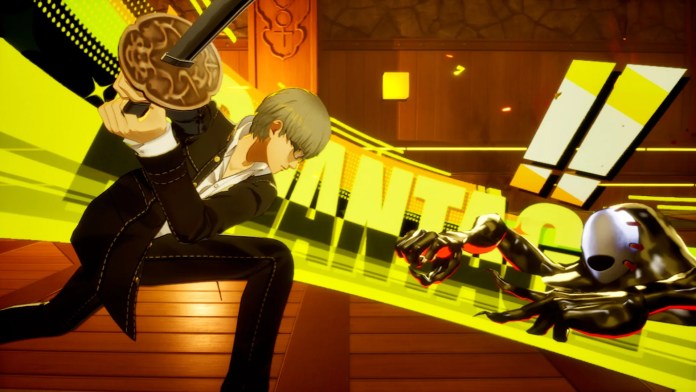
That being said, despite my love of the visuals and voices, the gameplay took a while to convince me. Initially, the dungeon exploration in Yukiko’s Midnight Channel felt a little too similar to Reload, and it felt more like a reskinned Tartarus rather than something that feels genuinely new. However, what hooked me back in was the actual combat. Mechanically, it also bears many similarities to Reload and Persona 5, but visually, the style is so much better. The way the party members run around their opponent when doing an all-out attack, and how they push away the camera when they win a fight, is such a perfect encapsulation of their respective characters and the overall theming of the TV world. 

Persona 4 Revival Combat

I would also be remiss if I did not mention the music. The new compositions sound amazing, with the new battle theme being a standout. Further, the new mechanic where each battle will start the track from where it left off is brilliant, due to how it gave me more time to appreciate each theme. Even though I still have some doubts about the dungeon exploration and combat gameplay in the full game, I had a great time with it in this slice. When it came time to experience the Protagonist’s day-to-day, though, is when Persona 4 Revival completely won me over. 

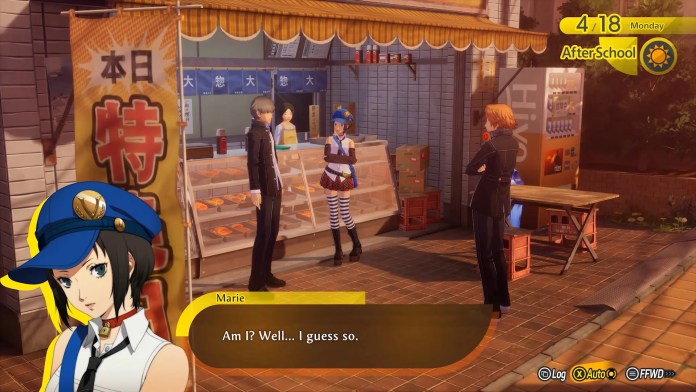
Inaba has been rebuilt from the ground up, and this new iteration manages to be faithful to the original release while also making sure it feels vaster than ever before. School life is about what you would expect, with quiz questions popping up that you can answer to increase your stats. As for the social links, these have been adjusted in some subtle ways that further highlight the new visuals. Namely, the camera is far more dynamic and zooms right into characters’ faces during key moments, allowing you to see each expression on characters like Marie as the Protagonist flirts with her. 

Persona 4 Revival Social Links

I may still have my doubts about everything Persona 4 Revival has to offer, and how well it will be able to remake one of the most beloved entries in the series. However, as I played, I started to feel that same love for the franchise that has defined so much of my life come surging back. The overall changes are subtle and do not go for any major changes, but that might be for the best in the long-run. After all, the gameplay still feels great in both dungeon crawling and during school days, even if it is a bit derivative of prior entries. Plus, the music and voice acting sound incredible so far, as are the new visuals. 

All in all, by the time my preview of Persona 4 Revival was finished, it went from a game that I was somewhat nervous about to one that I couldn’t wait to play more of. Thankfully, I will not have to wait too long, as Persona 4 Revival launches February 18, 2027, for PlayStation 5, Xbox Series X|S, and PC via Microsoft Store and Steam.

Aniplex to Publish Fate/EXTRA Record, Director Kazuya Niinou Resigns

TYPE-MOON has announced that upcoming Fate/EXTRA remake Fate/EXTRA Record will be published by Aniplex with Meteorise (Bleach Rebirth of Souls, Atelier Resleriana: The Red Alchemist & the White Guardian) taking over the development reins. There will also be an organizational structure change with TYPE-MOON Studio BB, the original developers of the remake.

In addition to Aniplex stepping in as publisher, Fate/EXTRA Record director Kazuya Niinou confirmed that he has resigned from his duties at TYPE-MOON Studio BB. Niinou apologized on X (formerly Twitter) for letting down fans and their expectations. He will be taking a break from game development to focus on current health issues he’s facing. Niinou also decided to remove himself from the staff credits for the game.

Fate/EXTRA Record is currently in development for Nintendo Switch, Nintendo Switch 2, PlayStation 4, PlayStation 5, and PC via Steam. The remake was originally announced in 2020 with a slow drip of details being revealed over recent years. At one point, Bandai Namco was set to publish and release Fate/EXTRA Record in spring 2026, but the game was indefinitely delayed, and the publisher pulled its involvement on the project.

Fate/EXTRA Record includes a number of new additions, and one of the remake’s key characters is Arcueid Brunestud, the main heroine of Tsukihime -A piece of blue glass moon-. 

Medalist Anime Film Opens on February 19

Medalist anime film 2027

The staff of the TV anime adaptation of Tsurumaikada’s Medalist manga have confirmed that the new anime film will open on February 19 in theaters in Japan. The new anime film will follow up after the events of Medalist Season 2.

Medalist Season 2 premiered on January 24, and Hulu is streaming the anime outside Japan. 

HANA performs the opening theme song “Cold Night.” Conton Candy will perform the ending theme song “Rookies.”

The anime’s new cast members include:

  • Natsuko Abe as Yūna Yagi
  • Mao Itou as Rinna Sarukawa
  • Maria Naganawa as Roba Manaka
  • Minami Tanaka as Yotsuha Ushikawa
  • Hikaru Tōno as Kurumi Risu
  • Takako Tanaka as Sakina Anaguma
  • Yūko Natsuyoshi as Sana Niwatori
  • Hibiku Yamamura as Iruka Okazaki
  • Kotomi Aihara as Riina Kojō
  • Ai Kayano as Marika Kurione
Medalist anime film key visual
©つるまいかだ・講談社/メダリスト製作委員会

Hazuki Nakamura is the art director of Medalist Season 2, and Kentaro Kashiwagi is the compositing director of photography. Japanese figure skater Rika Hongo will take part in the anime’s motion capture film alongside former Olympic skater Akiko Suzuki, who choreographed the skating routines for the first season. Suzuki collaborated with retired figure skater Yuhana Yokoi and active figure skater Hinano Isobe. 

Tsurumaikada launched the manga in May 2020 in Kodansha’s Afternoon magazine, and it’s still ongoing. Kodansha USA Publishing licenses the manga in the US.

Lastly, here’s an overview of the manga, via Kodansha:

Tsukasa, whose dreams were crushed. Inori, left to fend for herself. These two share a dream…and their tenacity may be the only thing that sees them through. Their destination? The ice…on the world’s stage!

Baki Gaiden: Retsu Kaioh Spinoff Manga is Getting an Anime

TMS Anime has announced that the Baki Gaiden: Retsu Kaioh wa Isekai Tensei Shitemo Ikkō ni Kamawan (Baki Side Story – Kaioh Retsu Doesn’t Mind At All If He Gets Reincarnated in Another World) spinoff manga is getting a new TV anime adaptation. A new teaser trailer for the Baki Gaiden: Retsu Kaioh anime was also released.

Eiji Mutsui, Keisuke Itagaki, and Daisuke Ihara launched the Baki Gaiden: Retsu Kaioh wa Isekai Tensei Shitemo Ikkō ni Kamawan manga in Akita Shoten’s Monthly Shōnen Champion magazine in 2020. The manga focuses on Kenpo-style master Retsu Kaioh, who was reincarnated in another world after being defeated by Musashi Miyamoto. 

BAKI-DOU: The Invincible Samurai, the latest anime in the franchise, is streaming on Netflix worldwide.

Chevon performs the opening theme song “MUSASHI,” and J SOUL BROTHERS III performs the ending theme song “KATANA.” 

The staff and cast of BAKI-DOU: The Invincible Samurai includes:

  • Staff
    • Director: Toshiki Hirano
    • Series Composition: Tatsuhiko Urahata
    • Character Design: Shingo Ishikawa
    • Prop Design: Yasuhiro Moriki, Masahiro Sugiyama
    • Art Direction: Seiko Akashi, Sachiko Kigasawa
    • Background Art Seiko Akashi
    • Color Design: Hiromi Miyawaki
    • Director of Photography: Tatsuo Noguchi
    • Editing: Yuriko Sano
    • Sound Director: Yasuyuki Urakami
    • Sound Production: AUDIO PLANNING U
    • Sounds Effects: Masahiro Shoji (Fizz Sound Creation)
    • Music: Kenji Fujisawa (Team-MAX)
    • Animation Production: TMS Entertainment
    • Production: BAKI-DOU Production Committee
  • Cast
    • Baki Hanma: Nobunaga Shimazaki
    • Yujiro Hanma: Akio Otsuka
    • Musashi Miyamoto: Naoya Uchida
    • Sea King Retsu: Rikiya Koyama
    • Kaoru Hanayama: Takuya Eguchi
    • Doppo Orochi: Takayuki Sugo
    • Katsumi Orochi: Yoshihisa Kawahara
    • Goki Shibukawa: Bin Shimada
    • Jack Hammer: Kenta Miyake
    • John Horner: Tetsuo Kanao
    • Hitoshi Nonomura: Jin Domon
    • Sea Emperor Kaku: Kenichi Ogata
    • Chiharu Shiba: Tatsuhisa Suzuki
    • Kureha Shinogi: Ken Narita
    • Gaia: Ayumu Murase
    • Narration: Toru Furuya

Final Weapon previously had the chance to learn more about what’s in store for Baki’s next chapter by interviewing Yuki Yokoi, the Assistant General Manager of the Business IP Department at Akita Shoten. Yokoi has worked closely with the Baki title and its creator, Keisuke Itagaki, and 2026 is shaping up to be a pivotal year for the franchise. Our interview delves into these topics, along with Yokoi’s experience working with Itagaki, the outlook on the Baki franchise from the Japanese fandom, Baki 35th anniversary plans, and much more.

Rascal Does Not Dream of a Dear Friend Anime Film Reveals New Trailer, Visual and Theme Song

Rascal Does Not Dream of a Dear Friend anime

Kadokawa has released a new official trailer for the Rascal Does Not Dream of a Dear Friend anime film, revealing the new theme song “Suihei-sen wa Boku no Furukizu finale (The Horizon Is My Old Wound: Finale)” by character Tōko Kirishima. A new key visual was also revealed ahead of advance screenings for the film, which are set to take place on October 4 at the Shinjuku Wald 9 theater in Tokyo.

Rascal Does Not Dream of a Dear Friend key visual
©2025 鴨志田 一/KADOKAWA/青ブタ Project

Based on the final volume of Hajime Kamoshida’s Rascal Does Not Dream series, Rascal Does Not Dream of a Dear Friend will open on October 16 in Japanese theaters.

Tōko Kirishima performs the insert song “Turn the World Upside Down.”

The cast of the anime film includes:

  • Kaito Ishikawa as Sakuta Azusagawa
  • Asami Seto as Mai Sakurajima
  • Sora Amamiya as Uzuki Hirokawa
  • Aya Yamane as Ikumi Akagi
  • Konomi Kohara as Sara Himeji
  • Manaka Iwami as Miori Mitō
  • Reina Ueda as Nene Iwamizawa
  • Nao Tōyama as Tomoe Koga
  • Atsumi Tanezaki as Rio Futaba
  • Maaya Uchida as Nodoka Toyohama
  • Yurika Kubo as Kaede Azusagawa
  • Inori Minase as Shōko Makinohara

Sōichi Masui directs the new film at CloverWorks. Masahiro Yokotani oversees and writes the script, and Satomi Tamura is the character designer. fox capture plan will compose the music, and Aniplex is distributing the film. Aniplex describes the film as taking the story toward its finale.

The previous part of the story, Rascal Does Not Dream of Santa Claus, premiered on July 5, 2025, and Crunchyroll is streaming the series outside Japan. The English dub premiered a few weeks later on July 26 on Crunchyroll. Conton Candy performs the opening theme song “Snowdrop.”  The cast members for Uzuki Hirokawa, Ikumi Akagi, Sara Himeji, and Tōko Kirishima perform the ending theme song “Suiheisen wa Boku no Furukizu (The Horizon Is My Old Wound).”

Tides of Annihilation Preview – The Biggest Surprise of Gamescom 2026

Tides of Annihilation Preview - I Am So Hooked

When Tides of Annihilation was initially revealed, truth be told, I felt nothing towards it. I was starting to get exhausted by the dark fantasy genre, and the gameplay seemed slightly boring at a glance. So, when given the opportunity to play the game for myself during Gamescom 2026, I wasn’t sure what to think. I was certainly curious, especially considering the recent announcement that Angela Sant’Albano would be taking over as the voice of the protagonist instead of Jennifer English, but I didn’t really know what kind of game I would be playing. After playing it for myself, though, I now realize that if the demo is any indication, Tides of Annihilation has the potential to be a smash hit. 

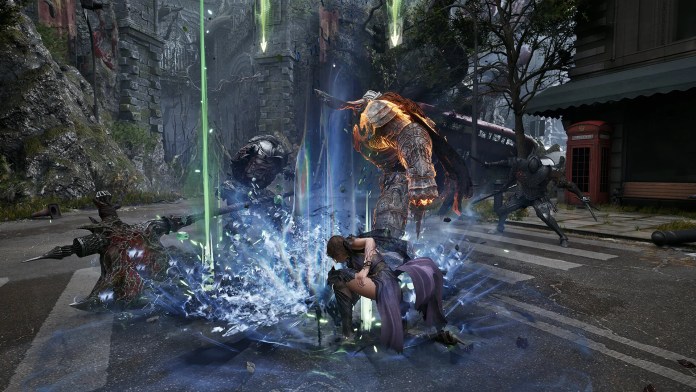
Immediately, I found myself adoring the gameplay mechanics. I was initially expecting something in the same vein as a soulslike, but instead, I found a borderline love letter to Platinum Games. As Gwendolyn, you can do aerial combos, parries, dash-dodges, and numerous special attacks. Better yet, each knight of the Round Table has a role in your arsenal. You can summon one of two primary knights, or one of two secondary knights. You can switch between your knights with the push of a button, and also use all of them to solve puzzles. 

Tides of Annihilation Combat

In terms of combat, you can use your primary knights to deal damage as you maneuver around the battlefield. For instance, one of the knights deals heavy damage with his fists, and can charge up for a massive AoE attack. Another specializes in fast movement and quick attacks, potentially giving you more room to quickly strike multiple opponents in quick succession. There will likely be plenty more ways for players to refine their build in the full game. 

I loved how combat encounters felt. It gave me flashbacks to games like Astral Chain, where you are using your summons in tandem with your own attacks, in order to deliver maximum devastation to any opponent standing in your way. Even if I died a few times to some bosses here and there, I constantly wanted to jump back in and play more. Part of what makes that intrigue so prevalent is the world and characters that Tides of Annihilation established in the demo.

Tides of Annihilation World

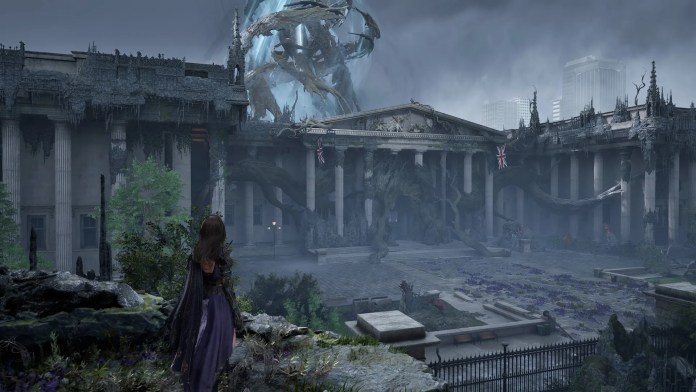
Tides of Annihilation primarily pulls from Arthurian legend as the core theme, but that does not mean that it takes place in the Medieval area. In fact, it takes place in modern day, with the Arthurian influence emerging as the result of a cataclysmic apocalypse. During the demo I played, Gwendolyn is wandering through the Great Russell Museum alongside one of her key allies, Niniane. She’s seeking more pieces of the Holy Grail, but the museum is teeming with threats that allow Gwendolyn to highlight her abilities. 

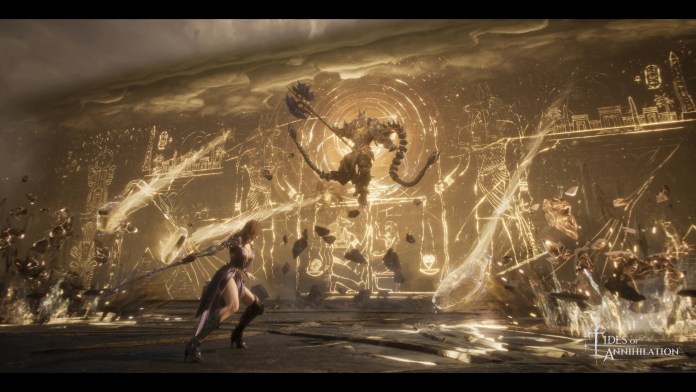
Beyond the Arthurian influences, the demo also reveals that Gwendolyn will be forced to fight against threats from other mythologies. After stepping through a mysterious portal, she is forced to confront the Egyptian God of the Dead, Anubis, in a fittingly sandy arena. The fight is thrilling, in part because of the aforementioned combat, but also due to the sound design. The soundtrack is great, and aptly represents the sounds of the different mythological influences. As for voice acting, Angela Sant’Albano unsurprisingly shines as Gwendolyn. She portrays a great amount of vulnerability and kindness in her voice, while also highlighting the character’s more serious side when she or a loved one is threatened. 

Tides of Annihilation Anubis

I feel like I only got a small taste of what Tides of Annihilation has to offer. There were other demos on display that I was not able to try, such as one that further explores the Egyptian environment, and another that features a “despair-level” difficulty. Yet that has only made me more eager to try out the full game when it eventually releases. I could not believe how good the game was, at least from the demo I played. The gameplay feels brilliant and hearkens back to the best of the hack-and-slash genre. The story is rich and already seems to be teasing further mysteries down the road. Finally, the sound design perfectly fits the world and the characters that inhabit it. 

The best thing I can say about Tides of Annihilation is that the moment the demo ended, I immediately wanted to go back and play more. I cannot wait to see what the game has in store when it eventually releases for PlayStation 5, Xbox Series X|S, and PC via Steam in the coming years. 

Mega Man: Dual Override Preview – This Could Be the Best Mega Man Yet

Mega Man: Dual Override Preview - The Super Fighting Robot is Back and Better Than Ever

Mega Man is a franchise that has frequently gone in and out of hibernation since 2010. What was once a series that released new entries every few years completely disappeared until Mega Man 11 released in 2018. Then, it went dark again, and the future of Mega Man was relegated to collaborations and collections. Now, the series has returned with its first new entry in 8 years: Mega Man: Dual Override. I had the opportunity to play it for myself during Gamescom 2026, and I can confidently say that this new return of the Blue Bomber has the potential to be the best entry yet. 

Within moments of starting the first of three levels I played through, it immediately felt natural to control. All of the classic Mega Man gameplay features are present and accounted for. Charge blasts and E-tanks are both key parts of your offensive and defensive kit, respectively, while a slide and jump help to give you an edge in mobility. However, several new additions make Dual Override feel excitingly fresh for both new and old players.

To start with, there’s the chip customization. I could choose between three loadouts, each geared towards different playstyles. One, for instance, emphasized defense and allowed me to use a shield and more E-tanks in the middle of battle. There is also one that removes all of the chip enhancements and brings it closer to a classic Mega Man experience. The one I ended up utilizing focused more on offense, as it auto-charged projectiles and gave me more combat potential throughout each level. This was especially needed in some of the harder parts of the three levels.

Beyond the new customization options, special weapons also make an unsurprising return. The only one that I had access to is the new jet weapon, which allowed Mega Man to attack enemies with a damaging dash. It can be used to cross large gaps, and can be used repetitively to cross greater crevices. The biggest new addition is the “override,” which sort of functions like a power boost that can be triggered when you are low on health. It is one last opportunity to defeat a boss that has the upper hand on you, but is still low on health. In general, all of these new gameplay modifications made the Dual Override experience feel nothing short of thrilling.   

Capcom Announces Gamescom 2026 Lineup

Further, the overall level design is really solid. Each highlights a central theme that is directly connected to Dr. Wily’s latest creation, Twinkle Girl. Initially, the first of the three levels had the same sort of factory vibe that players have come to expect from the series. But later, there is an entire party going on in the background, with fireworks going off and displays showing Twinkle Girl’s face. The fight itself is quite tough, and it took me a little bit to figure out how best to outmaneuver her firework attacks. Yet, despite how many times I died to her, I still had a ton of fun with the encounter. The same applies to the mini-bosses in prior levels. 

Overall, even with all of the new elements and additions that Mega Man: Dual Override introduces, it still feels like quintessential Mega Man. The override and chip customization mechanic feels like an extension of the core franchise experience. The level design tries new ideas, while still being a natural continuation of Mega Man 11‘s levels. The visuals are also upgraded from Mega Man 11, but do not try to reinvent the wheel unnecessarily by going for an entirely new graphical style. Finally, the combat is so much fun due to how satisfying the controls are, as well as the increased power you can gain depending on your playstyle. 

I cannot wait to see more of Mega Man: Dual Override, especially with the introduction of Proto-Man as a playable secondary protagonist. The game will release for PlayStation 5, PlayStation 4, Nintendo Switch 2, Nintendo Switch, Xbox Series X|S, Xbox One, and PC via Steam in 2027.

Jujutsu Kaisen Season 4 – The Culling Game Part 2 Gets New Super Teaser Visual

Jujutsu Kaisen Season 4 The Culling Game Part 2

The staff of Jujutsu Kaisen Season 4 – The Culling Game Part 2 revealed a new “super teaser visual” for the anime, which follows up right after Jujutsu Kaisen Season 3 – The Culling Game Part 1. A release date for Jujutsu Kaisen Season 4 – The Culling Game Part 2 was not confirmed yet.

Jujutsu Kaisen Season 4 The Culling Game Part 2 key visual
©Gege Akutami/Shueisha, JUJUTSU KAISEN Project

Jujutsu Kaisen Season 3 – The Culling Game Part 1 is currently streaming on Crunchyroll with English subtitles and an English dub.

King Gnu performs the opening theme song “AIZO.” jo0ji performs the ending theme song “Yoake no Uta.”

The Japanese cast includes:

  • Junya Enoki as Yuji Itadori
  • Yuma Uchida as Megumi Fushiguro
  • Daisuke Namikawa as Choso
  • Megumi Ogata as Yuta Okkotsu
  • Kōji Yusa as Naoya Zen’in
  • Yoshiko Sakakibara as Tengen and narrator
  • Kazuya Nakai as Kinji Hakari
  • Yuki Sakakihara as Kirara Hoshi
  • Tomokazu Sugita as Hiromi Higuruma
  • Satoshi Tsuruoka as Fumihiko Takaba
  • Yutaka Aoyama as Reggie Star
  • Neeko as Kogane
  • Hiroki Tōchi as Ryū Ishigori
  • Nana Mizuki as Takako Uro
  • Yukihiro Nozuyama as Kurourushi

The staff includes:

  • Director: Shota Goshozono
  • Series Composition and Script Writer: Hiroshi Seko
  • Character Design: Yosuke Yajima and Hiromi Niwa
  • Deputy Director: Yosuke Takada
  • Art Director: Junichi Higashi
  • Color Design: Eiko Matsushima
  • CG Producer: Yusuke Tannawa
  • 3DCG Director: Daisuke Ishikawa (Monster’s Egg)
  • Director of Photography: Teppei Ito
  • Editor: Keisuke Yanagi
  • Music: Yoshimasa Terui
  • Music Producer: Yoshiki Kobayashi
  • Sound Director: Yasunori Ebina
  • Sound Production: dugout
  • Animation Studio: MAPPA

The English dub cast includes:

  • Adam McArthur as Yuji Itadori
  • Kayleigh McKee as Yuta Okkotsu
  • Anairis Quinones as Rika
  • Ray Chase as Choso
  • Alan Lee as Naoya Zen’in
  • Jamie Simone as Ogi Zen’in
  • Anjali Kunapaneni as Maki, Mai’s Mother, and Yuki Tsukumo
  • Jamie Simone as Furudate
  • Robbie Daymond as Megumi Fushigoro
  • Anne Yatco as Nobara Kugisaki
  • Kaiji Tang as Satoru Gojo
  • David Vincent as Kento Nanami
  • Lucien Dodge as Takuma Ino
  • Xander Mobus as Aoi Todo

The English dub crew includes:

  • Voiced Director: Kirstie Simone
  • Producer: Jamie Simone
  • Adaptation: Jeff Nimoy
  • Mixer: Ernie Sheesley
  • Engineer: Ernie Sheesley

Here’s an overview of the Jujutsu Kaisen anime, via Crunchyroll:

Yuji Itadori is a boy with tremendous physical strength, though he lives a completely ordinary high school life. One day, to save a classmate who has been attacked by curses, he eats the finger of Ryomen Sukuna, taking the curse into his own soul. From then on, he shares one body with Ryomen Sukuna. Guided by the most powerful of sorcerers, Satoru Gojo, Itadori is admitted to Tokyo Jujutsu High School, an organization that fights the curses… and thus begins the heroic tale of a boy who became a curse to exorcise a curse, a life from which he could never turn back.

Gege Akutami’s original Jujutsu Kaisen manga is a complete work with over 150 million copies in circulation.