Bandai Namco has announced that the Digimon Story Time Stranger Additional Digimon & Episode Pack 3: Anti-ParadoX DLC will launch on March 12. Additional Digimon & Episode Pack 3: Anti-ParadoX introduces a new special quest line that “transcends time and space” and five Digivolution routes for new Mega Digimon in Digimon Story Time Stranger. The DLC is included with the Season Pass and copes of the Deluxe and Ultimate Editions of Digimon Story Time Stranger.
Bandai Namco previously released the Digimon Story Time Stranger Additional Digimon & Episode Pack 2: GAKU-RAN DLC on January 22. Additional Digimon & Episode Pack 2: GAKU-RAN includes new Digivolution routes for Mega Digimon including BanchoLillymon, BanchoStingmon, BanchoGolemon, BanchoMamemon and Omnimon: Merciful Mode. What’s more, the new DLC includes a special questline where players delve into an alternate dimension to meet the Banchos and rescue Hiroko Sagisaka from Parallelmon.
Digimon Story Time Stranger is available now worldwide for PlayStation 5, Xbox Series X|S, and PC via Steam, and the Nintendo Switch and Nintendo Switch 2 versions launch on July 10. Final Weapon reviewed Digimon Story Time Stranger and gave it a 4.5/5 score, noting that the game is “the boldest entry in the franchise to date, delivering a thrilling narrative, stunning environments, and over 450 Digimon to collect. Its deep combat system, expansive quality-of-life improvements, and superb English voice acting elevate it alongside the best RPGs of the year. Minor issues aside, this is the definitive Digimon experience fans have been waiting for.”
A new official trailer for the TV anime adaptation of WSS playground and Xemono’s Needy Streamer Overload game has confirmed the anime’s April 4 premiere at 24:30 / April 5 at 12:30 JST on Tokyo MX, BS11, Gunma TV, and Tochigi TV. The ending theme song of the Needy Streamer Overload anime was also revealed.
Aiobahn +81 and “KAngel” (“Chōten-chan”) perform the opening theme song “Internet Angel,” with lyrics written by nyalra. Tatsuya Kitani performs the ending theme song “Levitation.”
Masaoki Nakajima directs the anime at Yostar Pictures. Needy Streamer Overload scenario writer nyalra is credited for the original idea, scenario, and supervision. Ohisashiburi is credited for the original character design, and Kenji Saikai, Akari Takei, and Umito Shimizu are the main character designers.
Previously, WSS Playground released spinoff typing game Needy Streamer Overload: Typing of The Net for PC via Steam. Additionally, a Digital Deluxe Edition “Internet Angel Pack” is available with both games, a digital artbook, two soundtracks, and access to the spinoff Petit Game Collection Vol. 1.
Lastly, Needy Streamer Overload is available now for Nintendo Switch, PlayStation 4, PlayStation 5, and PC via Steam worldwide.
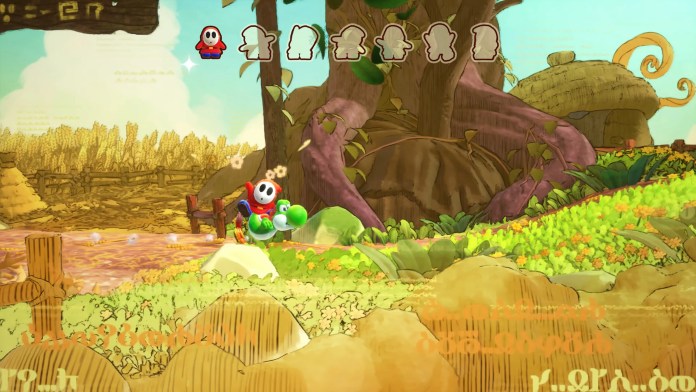
Nintendo has officially announced that Yoshi and the Mysterious Bookwill release for the Nintendo Switch 2 on May 21. Additionally, it released a new trailer for the game, titled “Creature Discovery!”
The latest trailer outlines the major mechanic of the game, which entirely revolves around the creatures within the Mysterious Book. You can interact with certain creatures, find secrets in their behaviors, and even place them on Yoshi’s back. Once you make all the discoveries about a creature, you can even name them, or let naming responsibilities go to the sentient book, aptly named Mr. E. The trailer also teases the game’s multiple worlds and the inclusion of Bowser Jr.
Check out the “Creature Discovery” trailer for Yoshi and the Mysterious Book below:
Both Yoshi and Bowser Jr. will play a major role in the upcoming film, The Super Mario Galaxy Movie. Tickets for the film are now available before it premieres in theaters on April 1. The recent trailer revealed that Luis Guzmán (Wednesday, Punch Drunk Love) will voice Wart and Issa Rae (Barbie, Spider-Man: Across the Spider-Verse) voices the Honey Queen. Most notably, Donald Glover (Solo: A Star Wars Story, Atlanta, Community) voices Yoshi. It is unknown whether he simply does the sound effects for the character, or if he will provide full dialogue for him.
The Super Mario Galaxy Movie will release in theaters on April 1. Brie Larson, the Academy Award winning actress from Room and Captain Marvel, will voice Rosalina. Benny Safdie, director of The Smashing Machine and Uncut Gems, who has also acted in Oppenheimer and Obi-Wan Kenobi, will voice Bowser Jr, who dons his Super Mario Bros. Wonder design. Lastly, the film will feature elements from both Super Mario Galaxy and Super Mario Odyssey.
When SEGA and Ryu Ga Gotoku Studio first announced Yakuza Kiwami 3 & Dark Ties, I was deeply curious about how the story of the original Yakuza 3 would be translated into the Dragon Engine. Despite its flaws, the original Yakuza 3 is a game that I enjoyed greatly back on the PlayStation 3, and the series would realize more of its potential in story and gameplay in subsequent entries. After finally playing the remake and ruminating about its new content, I can safely say that Yakuza Kiwami 3 & Dark Ties is a polarizing game in many respects, from the story to the gameplay. At its heart, this is still a good Yakuza game, but whether it’s a solid remake is an entirely different question within a sea of questions I have for this game.
Yakuza Kiwami 3 & Dark Ties are two experiences in one game—a remake of Yakuza 3 starring series protagonist Kazuma Kiryu and a Gaiden-style game starring antagonist Yoshitaka Mine. Set in the years 2007 to 2009, Kazuma Kiryu is faced with having to bail out the Tojo Clan once more when Daigo Dojima, the sixth chairman, is shot by an unknown assailant who looks just like Kiryu’s adoptive father, Shintaro Kazama. A shady land deal in Okinawa threatens to uproot the Morning Glory Orphanage, where he and Haruka, along with the rest of the children, live relatively peaceful lives after leaving Tokyo behind. In Dark Ties, Yakuza fans finally delve into the backstory of Mine as he’s let go from an IT company and decides to pursue a journey of self-discovery with the Tojo Clan’s Nishikiyama Family.
There are going to be heavy spoilers from this point on, so I certainly suggest that you have played the original Yakuza 3 before going any further. My entire outlook on Yakuza Kiwami 3 & Dark Ties is, for the lack of a better word, tied to the main story of the remake and the game’s overall content compared to the original. This is a game I both enjoyed and questioned greatly at times, and it’s due to the direction RGG Studio went with this game. By this point, I’m sure a lot of people who’ve already beaten Yakuza Kiwami 3 & Dark Ties are having the same questions in my mind right now, but let’s really delve into what raises them to begin with.
Yakuza Kiwami 3 is a Wild Remake in More Ways than One
“Faithful” is a word that often comes up when there’s a discussion of remakes, but in the case of Yakuza Kiwami 3, it gets rather ambiguous. Kiryu’s side of the game’s story begins and progresses as one might expect from a Kiwami title, staying true to the story of Yakuza 3 through most of its course. The first chapter is sort of an epilogue to Yakuza Kiwami 2, where Kiryu and Haruka say their goodbyes to the people that supported them, Kaoru Sayama included. There’s a lot more attention to detail and more scenes that make this opening chapter of the game feel more fleshed out and cohesive than the original Yakuza 3, and this also applies to subsequent chapters in various scenes.
There are certain scenes and sequences in Yakuza Kiwami 3 that are still in line with what happened in the original game but are slightly different and offer more context. I definitely appreciate the new scenes that were added, too. Learning about Rikiya’s tattoo and helping him gain the confidence to have Utabori complete it was definitely memorable and added to Rikiya’s character, for example. Many set pieces and scenes from the original game have been faithfully adapted into the Dragon Engine in all their glory, including Kashiwagi getting shot up in the Millennium Tower and Richardson’s “roof (pronounced as ‘ruff’)” comment.
There’s much more to discuss regarding the story, but I do want to touch on the gameplay of Yakuza Kiwami 3 before going further. RGG Studio managed to improve the Dragon of Dojima: Kiwami fighting style while making it feel reminiscent of Yakuza 3’s combat and building on Gaiden’s overall combat improvements. Many of Kiryu’s signature abilities, including the double-handed strike, are back, and enemies offer a modicum of challenge as you make further progress. Combos are really satisfying to pull off with more variation, especially as you upgrade attack damage and unlock more attacks and abilities from the skill tree. Dragon Boost is especially powerful and feels like a vastly improved version of Yakuza 6’s Extreme Heat Mode, too. Kiryu can even wrestle opponents at the end of certain combo strings in Dragon Boost.
Personally, I think Yakuza Kiwami 3 is the most balanced game in the series, and those who are new to the series and have just played Yakuza Kiwami 2 will likely be pleased with the quality of life improvements and adjustments. Kiryu feels like a force to be reckoned with while being quick on his feet, but if you aren’t careful, crowds of enemies can get plenty of hits in, especially on Professional difficulty. Surprisingly, there’s no Legend difficulty this time, which was also omitted from Like a Dragon Gaiden: The Man Who Erased His Name. At the very least, difficulty is not locked behind New Game+ like it was in Infinite Wealth, but this game’s similarities with Gaiden don’t end yet.
The new Ryukyu fighting style is very Gaiden-coded, to put it aptly. It’s very reminiscent of the Agent style but with a much heavier emphasis on the weapons that Kiryu uses. Weapons are tied to button presses and button holds, so you could start out using tonfas for heavier attacks and switch to nunchakus to deal damage to enemies that are crowding around you. The trend I’ve noticed from RGG Studio’s action-based game is that one fighting style is more suited for one-on-one battles, while the other is more suited for crowd control. In the case of Yakuza Kiwami 3, Dragon of Dojima and Ryukyu styles are really good in both scenarios, with a slew of abilities that can work well for single-target and crowd-controlling purposes.
Ryukyu is definitely leaning more toward multiple-target damage, but the disparity between what the two fighting styles can do has been minimized to an extent. That being said, I do enjoy Ryukyu style a lot since you can string some swift combos and alternate weapons quite easily without breaking up the pace of attacks. Ryukyu style has some of the most powerful abilities in the game as well, including Tiger Drop. Miyazato, the Ryukyu dojo leader at Chura Bar, will offer Kiryu the chance to learn these abilities after the player reaches enough training points by completing in-game achievements. Once the player has reached enough training points, Kiryu may accept an exam at Miyazato’s dojo, which just involves a boss fight with the dojo’s trainers. Each exam is more difficult than the last, but these fights aren’t too challenging.
If there is one area of combat I wish was better, it would have to be the skill tree itself. The skill tree uses the money and training points you earn throughout the game, but you likely won’t unlock half of the upgrades if you’re playing at a normal pace toward the end. It requires a lot of money, so you’ll be spending a lot of time doing side activities to get the pricier upgrades. This isn’t entirely a bad thing, but I appreciated how past games involved Komaki Training and other methods to unlock abilities. In general, the upgrade system feels very Gaiden-like, as if RGG Studio took cues from there instead of Yakuza 3. There also aren’t that many Heat Actions in the game, which is due in part to the omission of Revelations from Yakuza 3. I only used a handful of Heat Actions throughout the game, and I seriously wanted some of the old ones to come back.
Where Yakuza Kiwami 3 Falters
Regarding the story, the biggest moments of Yakuza Kiwami 3’s main story still play out the same way as the original, with many cutscenes having nearly identical dialogue to the original game. One example that gave me flashbacks was the intro sequence where Kiryu and the crew are at the hospital with Saki to wait on word about Nagahara’s condition, since it plays out exactly how I remembered it. For the most part, Yakuza Kiwami 3’s story follows the same bullet points of the original game, but the execution and structure, and at times recontextualization, are where I raise an eyebrow.
To use an example, the introduction of the Bad Boy Dragon side activity in the story slows down the pacing early on in the game. You’ll be aiding the Haisai Girls gang for about an hour and a half in Ryukyu before you are allowed to get back to progressing the main story. It’s a double-edged sword, because Yakuza Kiwami 3 gives you more incentive to spend time in Ryukyu and explore, but the game makes you have to do side content as a mandatory part of story progression. I think this particular aspect of story progression could have been handled better, but that’s not to say I dislike Bad Boy Dragon, as that’s far from the case. Besides the required Bad Boy Dragon progress and early introductory portions of the game, Yakuza Kiwami 3 doesn’t really drag on.
A story can be defined by its cast, and a big question mark and point of contention going into this release pertains to the updated cast members for Goh Hamazaki, Rikiya Shimabukuro, and Shigeru Nakahara. Personally, I actually grew into liking the new Rikiya and Nakahara, and I thought they were portrayed quite well in Yakuza Kiwami 3. I still felt the same emotions about Rikiya that I had the first time I played Yakuza 3. However, I really can’t say the same about Teruyuki Kagawa as Hamazaki. Rikiya and Nakahara don’t deviate from the originals in terms of characterization, but Hamazaki’s characterization does due to Kagawa’s less-than-stellar performances. Yakuza 3’s Hamazaki was more formidable and intimidating, plus the new Hamazaki is actually much shorter, so he doesn’t even stand toe-to-toe with Kiryu or Rikiya, for that matter.
Hamazaki was a creepy and seedy character in the original, but his character feels flat and uninspiring in this game after the scene in the Chinese restaurant in Yokohama. I just don’t think he’s a great fit for the character, and the controversy surrounding him doesn’t help his case either, since Kagawa’s inclusion is sort of the antithesis of what the Yakuza games stand for. This is one aspect where RGG Studio should have acted on the feedback that players were giving right after the reveal, especially with all the information that has come to light about Kagawa.
However, there’s still so much more to this that revolves around the story and isn’t limited to it. If you played Yakuza 3, this is far from the ideal remake that makes this game “definitive,” like I’m sure many fans would have wanted it to be. A lot of characters, including Komaki and Mac, simply aren’t present in the game this time. In the case of Komaki, he’s been replaced by Miyazato. Miyazato is actually a really great character, but instead of being an addition to Yakuza Kiwami 3, he directly replaces an ally and mentor of Kiryu that was last seen as far back as the original Yakuza game on PlayStation 2, to as recently as Like a Dragon: Infinite Wealth.
Substories have intersected with the main story from time to time in the Yakuza series, and when it’s completely missing in this case, it really takes away from some of the essence of the original Yakuza 3 in this case. In fact, Yakuza Kiwami 3 does away with more than 70% of the substories from the original game, along with the hostess club activity entirely. I do know that this isn’t indicative of the main story itself, but the absence of these substories and features, including Murder of Cafe Alps, takes away from the Yakuza 3 experience itself. These substories still play a role in building Kiryu’s character in the setting of this game.
Along with the missing substories, Yakuza Kiwami 3 drops the ball when it comes to the culmination of its story. If you played Yakuza: Like a Dragon and Like a Dragon: Infinite Wealth, you’ll know that both Kashiwagi and Richardson are still alive somehow. There’s an element of mystery there, but it didn’t greatly affect the story of that particular game. However, Yakuza Kiwami 3 really hits you with a butterfly effect deal at the very end, now that we know Hamazaki didn’t stab Kiryu at the end of the remake, and Mine is still alive and persuades Hamazaki to join him in the Daidoji Faction, a now-recurring force in the modern Like a Dragon games.
Now, I’m not particularly outraged by this ending, but I do think it does negatively impact those final moments of Yakuza Kiwami 3. Mine’s self-reflection and redemption at the end of Yakuza 3 elevated him as one of the most beloved characters in the entire franchise, and while I do think he’s actually even better as a character in the remake, the new ending really breaks up the continuity of the series as we know it. Kiryu’s stabbing and subsequent recovery, along with Hamazaki’s incarceration, directly lead into the plot of Yakuza 4, so these events not happening really open up a can of worms, especially when the Daidoji Faction is very influential in Kiryu’s life in the most recent games. If we know that the game was going to head into a different direction and not follow the Kiwami model that fans know and love, I wish it had been communicated differently. At the very least, we now know what director Masayoshi Yokoyama meant when he said Kiwami 3 could be the “last Kiwami title” for the series. We may be on an unknown journey of our own, for better or worse.
There are a few more points of contention that I thought were worth bringing up, and those pertain to the lack of an equipment system and the game’s original soundtrack. Personally, I’m mixed on the equipment system’s absence, since the skill tree and phone accessories sort of make up for it as an alternative. However, the equipment system was actually quite useful and offered unique bonuses that aren’t really present in this game. As for the music, I do want to say that Yakuza Kiwami 3 has a lot of great music that remixes some of the classics from the Yakuza 3 soundtrack by the legendary Hidenori Shoji. The Kiwami 3 versions of “Ogre Has Returned” and “Fly” were especially memorable, but various other BGM tracks in this game don’t feel as impactful compared to the original. I know it’s subjective, but I can definitely see others feeling the same way if you compare the two soundtracks. Plus, there are some tracks that are just missing entirely, such as “illtreatment.”
There’s Still Really Good Content and Features Here
There’s still a lot of good content in Yakuza Kiwami 3 that I thoroughly enjoyed, despite some of the gripes I have. The Life at Morning Glory content is a really fun life-sim diversion from the main story, and it’s quite rewarding when you spend time playing it. Cooking is back from Like a Dragon: Ishin, and there are a slew of mini-games and activities that will help the kids at the orphanage grow closer to Kiryu, including sewing, bug-catching, homework quizzes, and Dragon Reversi. Life at Morning Glory especially hits different now after playing Gaiden and Infinite Wealth, especially with the bonding events where Kiryu begins to help everyone feel more comfortable at home.
Bad Boy Dragon is also really fun and adds Musou-like elements to the game. As I’ve touched on before, Kiryu will aid the Haisai Girls gang in order to protect Ryukyu and earn some street cred. He teams up with Miyazato’s daughter, Tsubasa, and vows to help them fend off the Tokyo Night Terrors, a ruthless organization of gangs that show no remorse for anyone in their path. To combat them, Kiryu can recruit new Haisai Girls members by completing substories and meeting certain milestones in-game. With squadrons full of gang members, Kiryu will lead them into battle on motorcycles to capture strongholds and defeat gang leaders in style. In essence, Bad Boy Dragon is this game’s version of Clan Creator but with a more hands-on and combat-oriented approach, and it also has its own intriguing storyline, too.
Besides Life at Morning Glory and Bad Boy Dragon, there’s a ton of side activities and content to engage in, including the returning Coliseum, Karaoke, darts, arcade games, and even a vast selection of Game Gear games that you can collect and play. It seems like SEGA and RGG Studio really upped their game when it comes to emulating classic titles, as there’s a collection of classic arcade games to choose from whenever you head to the nearest SEGA arcade in Kamurocho—Virtua Fighter 2.1 included.
There are also a few slightly repurposed features that make a return in Yakuza Kiwami 3, including an outfit menu that lets you dress up Kiryu as you see fit with the number of different apparel found throughout the game. Aloha Links from Infinite Wealth are also back in the form of Lalala Loveland, which is tied to one of the remake’s new NPCs. Early in the game in Kamurocho, Kiryu upgrades his phone at the insistence of Haruka at the Lalala Loveland stand. After getting his new flip phone, players can collect accessories and other cosmetics to decorate the phone and earn some more bonuses in combat, such as improved Heat regeneration. Kiryu can also make friends by aiming his phone at an NPC and becoming a Lalala Friend. Besides the quirky change here, it’s essentially the same feature as Aloha Links, and you’ll be rewarded for doing it.
Photo Rally also makes a return from Infinite Wealth. Winnie-chan, the young woman who runs downtown Ryukyu’s raffle, will task you with taking photos of landmarks in Kamurocho and Ryukyu to earn prizes. I didn’t find Photo Rally to be as interesting this time around, though, but that’s likely due to how many times I’ve explored Kamurocho at this point. Hawaii in Infinite Wealth felt so new and interesting since that was the first time the series explored that location. While you are searching for those landmarks, you can also pick up locker keys to obtain music CDs from various other SEGA games, along with a number of different bonuses and items, at the coin lockers in Kamurocho and Ryukyu.
The Reapers are back in Yakuza Kiwami 3, serving as optional bounties that you can take on to receive millions of yen. Once more, Kashiwagi tasks you with taking out the Reapers to bring some measure of stability to the Tojo Clan. They’ll appear all across the map in Kamurocho and Ryukyu, with Kiryu simply needed to walk up to them in order to fight and apprehend them. A final Reaper boss fight awaits if you complete all 30 previous Reaper fights, and overall, the Reaper fights are definitely worth doing if you want to unlock upgrades at a faster pace. However, there’s not much of a story with Reapers this time, as the Honest Living Association and Ibuki aren’t involved. You’ll simply get text messages when new Reapers have been located on the map.
Overall, Yakuza Kiwami 3 has a good amount of content to engage in. It’s not to the breadth of a game like Like a Dragon: Infinite Wealth, but it’s definitely more in line with Gaiden and Yakuza Kiwami 2. You’ll probably spend around 45 to 50 hours on the road to 100% completion, and generally, I did have a good time with the side activities and content. Just for the sake of comparison, I spent around 60 hours in Kiwami 2 back when it originally launched, so Kiwami 3 did feel like a shorter game.
Inside the Dark Ties
Yakuza Kiwami 3 & Dark Ties is quite a unique release in the series in that it includes two games in one. Dark Ties is much more substantial in its narrative, gameplay, and content compared to Kiwami 2’s Majima Saga bonus scenario and Lost Judgment’s The Kaito Files DLC. Dark Ties is more in line with Gaiden, so I think RGG Studio’s got the messaging straight with this game. What’s more, RGG Studio seemed to have listened to a lot of player feedback over the years and finally implemented some features that the community has been wanting in these shorter Yakuza/Like a Dragon games.
As I touched on previously, Dark Ties is a prequel that focuses on Mine before the events of Yakuza Kiwami 3. The story delves into Mine’s start in the yakuza underworld and his rise up the chain of command of the Nishikiyama Family with Tsuyoshi Kanda, a foot soldier for the family that got released from prison. After being pushed out of his own IT company in Tokyo, Mine drinks his sorrows away in Kamurocho and stumbles into a shoot-out in the middle of town. There, Daigo Dojima is being protected by Tojo Clan members who are putting themselves in the line of fire to protect him. Being a witness to that event, Mine develops an internal monologue about why people would go as far as to give up their own lives to protect Daigo. Mine’s curiosity for Daigo and the need for a purpose in a world that seemingly failed him at every turn are the catalysts for his arrival in the Tojo Clan. This makes for an intriguing premise for Mine’s backstory, and it actually fits his character perfectly.
The story of Dark Ties is around the length of Gaiden’s story, but it’s structured within fewer chapters. There’s a lot of content that’s jam-packed into a 20 to 25-hour game here, including Kanda Damage Control. In Kanda Damage Control, Mine will help Kanda build up good PR in the Tojo Clan by helping the citizens of Kamurocho under Kanda’s name, with the help of the Nishikiyama Family’s IT specialist, Zenba. There’s a suite of content, including Good Deed Quests and requests scattered all throughout the map, which involve finding lost objects, handing in items, or fighting thugs and yakuza members. Overall, it’s very similar to Gaiden’s Akame Network, but I honestly enjoyed the Good Deed Quests a lot more here. These substories really do a great job building on Mine’s character as an anti-hero who still knows what’s right from wrong, even if he’s lost sight of that at a given point.
I enjoyed Mine’s fighting style just as much as the story, which means to say both are really good for the most part. Mine’s fighting style in Dark Ties incorporates some shoot-boxing along with some of the signature moves that fans might remember from his boss fight in the original Yakuza 3. At first, Mine’s fighting style seems a little on the weaker side due to some initial low damage output, reminiscent of early game Akiyama from Yakuza 4 and 5 in some regards. Once you get some upgrades from the skill tree, his fighting style clicks in and feels really fun to use. Mine has some really good Heat Actions that become even more powerful and devastating when Dark Awakening is enabled. Similar to Dragon Boost, Dark Awakening is a special, powered-up state that makes Mine more deadly. Dark Awakening consumes the Shacked Hearts gauge, which can be upgraded for a total of three hearts in order to extend the duration and deal more damage. Dark Awakening comes in clutch later into the playthrough, especially since difficulty seems to ramp up much more quickly compared to Kiwami 3.
You’ll get a solid feel of Mine’s fighting style once you have access to Hell’s Arena, a roguelike activity where you battle through underground Kamurocho and clear out objectives within a time limit. As you defeat enemies and open treasure chests, you’ll get damage upgrades and other useful A boss battle awaits at the end of each Hell’s Arena Survival run, and if you win, you’ll earn a lot of money and gain access to a slew of rewards from the shopkeeper for the activity. Hell’s Arena also has its own storyline, and there’s a separate Brawl section for those who enjoy coliseum-style battles. In general, I think this is a solid mode that RGG Studio experimented with, and it could definitely be improved in future games, if they decide to reuse the concept.
As I mentioned previously, RGG Studio has followed up on feedback and changes for features that were highly requested for titles of this scale. Like Kiryu, Mine has access to Karaoke and various side activities that are also in Kamurocho in Kiwami 3. Dark Ties also has New Game+ and Premium Adventure. In short, Dark Ties has the features you would expect from a fully-fledged Yakuza game, avoiding the faults of Majima Saga and The Kaito Files before it.
I unfortunately have to echo some of the same gripes I had with Yakuza Kiwami 3 in Dark Ties, and that’s again due to what the story means for Mine going forward. Dark Ties does an amazing job telling the story of Mine and Kanda, and the returning Drink Links feature does wonders in making them feel more grounded and emotionally diverse as characters. Daigo also gets his time to shine, since Dark Ties shows how he and Mine got really close as relatively new figures in the Tojo Clan. However, the ending of Dark Ties only exacerbates the issues presented by Kiwami 3’s ending, as it actually shows how Mine survives the fall from the Millennium Tower. I can’t for the life of me defend Mine surviving one of the tallest skyscrapers in Tokyo by falling into shrubs. Sometimes, leaving some mystery is for the better.
Dragon Engine Levels up on Switch 2
Story aside, Yakuza Kiwami 3 & Dark Ties is looking really great on Nintendo Switch 2. The game runs at a solid 30 FPS with virtually no frame drops, and the input latency is super low. When playing mini-games and emulated titles, Yakuza Kiwami 3 & Dark Ties will bump the frame rate up to 60 FPS. I especially noticed this in the bowling mini-game, and in general, the game’s frame pacing also felt superb, thanks to DLSS.
The image quality is also seriously great in docked mode, and I only noticed a few oddities throughout my playthrough. Since DLSS is enabled on Switch 2, there will be some strange fuzziness around hair textures, and I also encountered some graphical glitches in certain areas of the game, particularly when you’re on the elevator at Touto Hospital. I also noticed that close-up shots of Kiryu and the Haisai Girls during the intro sequence for Bad Boy Dragon missions looked extremely fuzzy, too. In portable mode, Yakuza Kiwami 3 & Dark Ties takes a more notable hit in overall presentation, but the performance remains steady at 30 FPS. You’ll notice that Kiryu looks incredibly blurry if you open up the cell phone menu, which is strange since this issue doesn’t occur as you are playing the game regularly in the cities.
Besides that, I had no issues with the Nintendo Switch 2 version, and I’m glad that the pre-launch issues with the demo were solved by the time I started playing. Yakuza Kiwami 3 & Dark Ties is another sign that the Dragon Engine is becoming more optimized for Switch 2, and I’m hopefully in seeing Stranger Than Heaven potentially push the hardware even further, though this isn’t confirmation that the new game will be heading to the portable platform.
Yakuza Kiwami 3 & Dark Ties is the Epitome of a Mixed Bag
After spending roughly 50 hours in Yakuza Kiwami 3 & Dark Ties, I can definitely say it’s a mixed bag. I’ve had a lot of fun, but I’ve scratched my head at the design choices and omissions. When I think of the “Kiwami” title, I want a Yakuza title that goes above and beyond as a truly complete and “extreme” version of itself. Although the cuts from Yakuza Kiwami 2 were worthy of a debate, it didn’t change the context of the story or greatly subtract from what Yakuza 2 brought to the table. At the time, I was really pleased and overjoyed with Yakuza Kiwami 2, but I don’t feel the same way about Yakuza Kiwami 3 now, despite what I did enjoy from it.
There’s too much missing from Yakuza Kiwami 3 that is fundamental to Yakuza 3 itself, and that involves content surrounding the main story, the actual implications of the main story for Kiryu, and, at times, the overall presentation of the game with its cast and story pacing. On the other side of the coin, Dark Ties does an amazing job with Mine and Kanda, but the ending falters due to the issues of Yakuza Kiwami 3’s new ending and the issues that it presents for the continuity of the series at the time of this writing. This is in addition to the fact that Yakuza 3 Remastered isn’t available as a separate title anymore, so there’s now a barrier to entry in the series that shouldn’t be there.
I think RGG Studio could have knocked this one out of the park if they had honored Yakuza 3 more closely and understood that Yakuza fans really do appreciate what that game brought, substories and quirks included. Yakuza Kiwami 3 & Dark Ties does a lot to improve the combat and offer some really fun and engaging new experiences, and while 90% of the remake’s story is accounted for, the 10% can sour you on what is otherwise one of the Yakuza franchise’s most emotional and impactful tales.
Yakuza Kiwami 3 & Dark Ties isn’t a bad game, and at its core, it’s Yakuza 3, but it could be so much better. I certainly recommend newcomers play through the first Kiwami titles and the rest of the series before coming to Yakuza Kiwami 3 & Dark Ties on sale, especially after experiencing Yakuza 3 to understand what the purest essence of that game is. Yakuza Kiwami 3 & Dark Ties does a lot of good to improve on what Yakuza 3 couldn’t, but it’s not at the high standard I expect from one of Japan’s most beloved developers. For better or worse, Yakuza Kiwami 3 & Dark Ties is the beginning of a new chapter for RGG Studio, and it’s up to them to recoup some of the goodwill that fans lost.
Yakuza Kiwami 3 & Dark Ties is available now on Nintendo Switch 2, PlayStation 4, PlayStation 5, Xbox Series X|S, and PC via Steam.
Disclaimer: SEGA and Ryu Ga Gotoku Studio provided a review copy of Yakuza Kiwami 3 & Dark Ties for review.
Nintendo has released a new disciple, Uka: Friendly Fox, to Fire Emblem Shadows, alongside Book 2 The Final Chapter. A trailer showcasing both has also released.
Alan Lee voices Uka: Friendly Fox. He wields Fragility Fire EX, Self Ward, Sword Fighter +, and Dark Stabbing Fire. Further, Book 2 The Final Chapter wraps up the story of Book 2: Wolf Brother. The story features characters such as Estel, Joachim, and Erma attempting to find the shadow disciple responsible for the death of several bandits. Check out the trailer showcasing the new disciple and story chapter in Fire Emblem Shadows below:
Lastly, Fire Emblem Shadows is available now on iOS and Android. Here’s an overview of the game, via Nintendo and the game’s respective store pages (Google Play, App Store):
The gameplay of Fire Emblem Shadows combines real-time strategy and social deduction. One of the three allies participating in each battle is secretly a treacherous disciple of shadow. Players choose to take on the role of either a disciple of light, aiming to find their way through the labyrinth, or a disciple of shadow.
After the initial battle, players vote to determine who they believe is the treacherous disciple of shadow. The outcome of the vote affects whether the next battle is more favorable or more challenging. Whether the disciples of light can correctly discover the traitor—or the disciple of shadow can successfully deceive the others—holds the key to how the next battle unfolds.
Consider the ally to your left and the one to your right. One of the three of you will betray the others. Can you manage real-time strategy and social deduction at the same time?
Riot Games has released update 1.1.3 of 2XKO, which features new balance updates, bug fixes, a new event, a new emote, and more. The full patch notes have also released.
The major highlights of the 2XKO update 1.13 patch notes are as follows:
New Event
There’s a new event for all players, which will be live March 10-30, 9am PT / 5pm UTC. Navigate to the missions icon on the homepage to view the event. Complete missions to earn:
An exclusive avatar outfit.
A player title.
Three emotes.
Pixel art-inspired player cards.
New Missions: “First Step”
There are now missions that grant rewards for exploring the Learning hub.
Completing 25+ Combo Trials for a champion unlocks a new player title.
New accounts must now play 15 games of any type to unlock Advanced Lessons.
Spending 30+ minutes in Training mode unlocks a new player title.
All rewards will be granted retroactively if you’ve already completed the requirements.
Duo Emotes
Ever wished you could show off your team synergy in the lobby? Now you can, with Duo Emotes.
There’s a new weekly mission that will challenge you to play a match in a duo to earn the new emote. Use it around the same time in the same part of the lobby, and your avatars will sync up.
Weekly missions stay active until the end of the season. Even if you don’t finish this mission within one week, you’ll still have time to complete it.
Attract Mode
A short cinematic will now display when launching the game or while idling on the “Play” screen, featuring the song “Let’s Go” by Polyphia. Check it out below:
System Changes
Our main system changes this patch will smooth off the edges on bugs that affected our core system mechanics. We’ll continue to clean up Happy Birthday consistency and see how those changes land with each patch.
Core Gameplay
Assist and Point hitboxes will now be closer together during Happy Birthdays.
To get in the weeds: Assists are now pulled in towards the Point champion on every hit, so their hitboxes get closer and closer together.
Frame Data Cleanup
We’ve cleaned up the startup, active, and recovery states across the entire roster. This list is long and nitty-gritty, and you can feel free to skip over it unless you’re a data nerd. The TLDR is that getting an Interrupt or a Punish should now be more consistent across all champions.
Bug fixes
General
Fixed a bug where the jump cancel after a launcher sometimes tracked the Assist instead of the Point champion.
Juggernaut Fuse
Fixed a bug that made advantage on Eject vary between champions.
Fixed a bug that prevented champions using Juggernaut from canceling Super attacks into each other.
Sidekick Fuse
Fixed an issue where Ekko with Sidekick equipped could Replay during his Assist champion’s Super Assist.
Anti-airs
Fixed the collision pills of the following champions when they perform Down H: Ahri, Braum, Darius, Ekko, Illaoi, Jinx, Vi, Warwick, Yasuo.
This should make anti-airing more consistent for most of the cast.
Assists
Hitting an opponent after they perform a Freestyle Assist now causes the proper 6-second Assist cooldown.
Fixed a bug with Push Assist that applied blockstun from subsequent attacks incorrectly.
Fixed an issue where Tag Launcher would launch Point and Assist champions to different heights.
Break
Fixed a bug that caused the wall bounce from blocking an opponent’s Break to be interrupted by another attack hitting on the same frame.
Fixed a bug that caused Assist champions to retain collision after a Fury Break.
Fixed a bug that unexpectedly shortened the wall bounce position after blocking a Break when an Assist was on screen.
Fixed an issue where using Fury Break with Juggernaut Fuse selected would occasionally make champions face the wrong direction.
Fixed a bug that caused unintended Break meter gain when using Break to escape Illaoi’s back diagonal S1.
Limit Strike
Fixed a bug that prevented Limit Strike from consistently awarding Super meter and Break meter bonuses on opponent KO.
Meter
Fixed a bug that caused meter loss when canceling into a Super after the opponent Point champion was already KOed.
Parry
Fixed a bug that prevented parry from buffering properly when performed after a H attack.
Throws
Fixed an issue preventing throw techs during Handshake Tag screen freeze.
Training mode
Fixed an issue where resetting immediately before a throw caused bots to break the rules of fighting games and actually block throws.
Fixed an issue with the “After First Hit” option.
Fixed an issue where Super meter would not refill with “Auto-Refill” turned on.
Backrise and forwardrise ground tech for bots will now track the champion position.
This makes it easier to lab with champions that change position during their moves, like Yasuo.
Starting a recording in Training mode no longer clears the input history.
Champion Adjustments
Ahri
Ahri is performing very well, but not so much that we need to drastically alter her gameplan. We’re adjusting some of her strongest neutral tools, specifically mid-air down H and S1 Super. These moves will still be just as strong offensively, but will be easier for opponents to interact with.
Caitlyn
Some of these bugs allowed Caitlyn to do some really disgusting things. With these removed, we’ll keep an eye on where her spot in the meta nets out.
Darius
Darius isn’t perceived as a top-tier champion, but we’re adding a gap to right S2 > S2. As a true blockstring that applied Bleed, removed defensive options, and could be performed while tagged out, this move was too strong.
Ekko
Ekko’s okizeme and neutral presence has proven to be too strong. We’re reducing his okizeme by making down S2 only invulnerable to projectiles, reducing the duration of S2 Super, and removing the ability to kara-cancel into S2 Super whenever Ekko has an Afterimage out. We’ve also done a pass on Ekko’s hitboxes to bring them more in-line with the rest of the cast, particularly on his aerial suite, where mid-air H and S2 took up too much space.
Illaoi
Our Frosty Faustings champion is losing her blockstring infinite in the corner. Her health pool has also decreased to better match her archetype.
Jinx
We’ve seen some amazing Jinx tech, but we definitely want to add a little bit more power to her. We have some more buffs for Jinx in the chamber once we see where she lands with the lower overall power level of this new patch.
Vi
Vi is making an impact in the meta, but there are some leftover pain points with her S1 and mid-air S1 suite. We’re adjusting the hitbox and hurtbox on S1 to make it easier to interact with, and mid-air S1 is no longer an overhead.
Yasuo
Yasuo continues to overperform. We’re going to be adjusting three major pain points around the champion that will bring down his overall power level, and build a healthier strength/weakness profile.
We’re reducing the duration of Wind Wall (left S2) and Wind Wall > S2 and increasing the cooldown. This, in combination with the Freestyle bug fix, means Yasuo can no longer endlessly stall a match.
Calm stance (S2) is too difficult to counterplay. We’ve made minor adjustments to startup and height to help counterplay, as well as nerfing his aerial normals.
Mid-air down H being an overhead is very hard to counterplay at all but the highest levels. We’re removing its overhead properties to allow Yasuo to be a focused cross-up based champion.
Quality of Life Updates
All champions are now unlocked in Local Versus when online, similar to how Local Versus functions offline.
Fixed several bugs with virtual devices. Team select screen should now assign P1-4 based on who hits a button first, rather than arbitrarily assigning to peripheral slots.
Rematch countdown has been added to the post-match screen. When the timer runs out or the opponent chooses to end the set, remaining players can read their mission progress or leave the post-match screen.
You can now cancel looking for a lobby when entering the Casual Lobby or Ranked Lobby by pressing the back button.
Alternate skin options now persist through rematches.
When duoing online, if either teammate has unlocked a tutorial-locked Fuse, it will be available for the entire team to pick.
Juggernaut and Sidekick Fuse tutorials have been updated and expanded to teach more unique tech.
Bug Fixes
Screen tearing on consoles has been reduced.
Fixed an issue where keys re-bound to L3/R3 or the Share/Touchpad button on gamepad would not function properly while playing online.
Fixed the champion select controls menu to correctly show whether or not the player has Pulse Combo enabled.
Fixed an issue where the first Limit Strike counter below the combo counter was not displaying in Offline mode.
Fixed a bug that prevented fully rewinding in match replays.
Fixed an issue with the “play with <insert champion>” weekly missions that prevented mission progress.
Fixed a bug that double-counted Ultimate usage for certain achievements or trophies on consoles.
Fixed several rare audio crashes.
Fixed several issues with sound effects across the game.
Fixed an issue that would repeat the sound of Caitlyn’s projectiles.
Store and Cosmetics
Snow Moon Megabundle
Featuring Snow Moon Ahri, Warwick, and Illaoi, plus a lot more—available for purchase for a limited time starting March 12, and may be available to purchase through other means at a later date. Check the in-game store for more details.
Aureate Megabundle
Featuring Aureate Warwick, Vi, and Darius, plus a lot more—available for purchase for a limited time starting March 19, and may be available to purchase through other means at a later date. Check the in-game store for more details.
Crime City Megabundle
Featuring Crime City Jinx, Darius, and Braum, plus a lot more—available for purchase for a limited time starting March 26, and may be available to purchase through other means at a later date. Check the in-game store for more details.
Nightdive Studios has announced SiN Reloaded, a re-release of the 1998 first-person shooter from 3D Realm. It will be available on Xbox One, Xbox Series X|S, PlayStation 4, PlayStation 5, Nintendo Switch, and PC via Steam.
Check out the first trailer for SiN Reloaded, which releases in 2026, below:
Enter a near-future dystopian world as security consultant Colonel John R. Blade as you take on the seductively evil Doctor Elexis Sinclaire. When Elexis, the CEO of SinTEK Industries, begins injecting the streets with a DNA-altering drug, it’s time to reassess the laws of morality. As Blade, you’ve made a religion out of fighting crime. Now you’re going to make Elexis pay for her sins by taking on her unholy army of genetically-engineered mutants.
SiN was celebrated for introducing a groundbreaking amount of interactivity in every level. Hack your way into computer terminals using DOS-style code, use elevators and security cameras to wreak havoc, you can even zip around in a forklift, patrol boat and a helicopter. Your actions have consequences, creating branching paths as the game progresses. SiN also helped to pioneer the ability to knock weapons out of an opponent’s hands and take area-specific damage from their attacks.
SiN: Reloaded includes the Wages of SiN extra mission pack, where you take on a diabolical mafia boss with a new army of dangerous mutants. Both games have been optimized using the KEX Engine to play on modern systems. The graphics throughout have been beautifully remastered with new textures, control schemes have been modernized, and maps have been improved with Nightdive’s established precision.
Features
Play the original SiN and the SiN: Wages of Sin extra mission pack, optimized using the KEX Engine.
Beautifully remastered graphics with HD textures and models, (up to) 4K resolution at 144 FPS, anti-aliasing, and upgraded 2D screens and menu art.
Overhauled control schemes and modernized UI.
Improved maps throughout the game.
Swap between remastered visuals and the original SiN Gold version.
Brand-new achievements.
Higher resolution Zak Belika tracks mixed/engineered by Chris Mock.
Nightdive Studios has announced that the “Death Wish” expansion will be available for Blood: Refreshed Supply as a free update in March 2026. A Nintendo Switch 2 version of the game is also in development and planned for an early 2026 release.
The “Death Wish” expansion will add remastered visuals, new maps for episodes 1-3, and a new episode 4. The re-release of the late 90s first-person shooter initially released in December 2025 on PC via Steam, Xbox One, Xbox Series X|S, PlayStation 4, PlayStation 5, and Nintendo Switch. It features high-resolution, modding support, improved frame rate, and more.
Check out the trailer for the “Death Wish” expansion coming to Blood: Refreshed Supply later this month below:
Lastly, the Steam page describes the game as follows:
Blood: Refreshed Supply follows Caleb, an undead gunslinger on a quest for revenge against his former demonic master, Tchernobog. Despite his once powerful position as a fearsome Cabal commander and one of Tchernobog’s “Chosen” few, Caleb and his fellow Chosen are betrayed by the dark god and slain for reasons unknown. Seeking answers and vengeance, Caleb rises from the grave to put a stop to Tchernobog and his murderous lieutenants once and for all.
Grab your Pitchfork and get ready to stab your way through 42 blood-soaked levels, while unlocking even more creative and effective implements of destruction along the way. Incinerate foes with weapons like the Flare Gun, Aerosol Can, and Napalm Launcher. Blast enemies straight to hell with bundles of dynamite, shoot them full of holes with the Tommy Gun and Sawed-Off Shotgun, or tap into darker methods of annihilation with the game’s powerful Voodoo Doll and Life Leech offerings.
Use your arsenal of weapons to survive Tchernobog’s evil Cabal of loyal Cultists, Fanatics, Zealots, and Acolytes, along with swarms of hellish creatures from ruthless Zombies and flying Gargoyles, to water-dwelling Gill Beasts, screaming Phantasms, and firebreathing Hell Hounds.
Blood: Refreshed Supply – Enhancements
High-resolution support, including 4K monitors
Unlocked framerates
Customizable keyboard and controller gamepad support
Extended modding support, including existing mods
Rewritten netcode supporting up to 8 players
Local split-screen and online co-op
CD and MIDI music support
Includes new Marrow scenario (available at launch) and Death Wish scenario (planned future update)
Koshi Nakanishi, director of Resident Evil Requiem, has announced in a new video that a DLC story expansion for the game is in development. Further updates for the game will also release in the coming months.
In the video, Nakanishi thanks fans for their support after the game sold 5 million copies in just five days, making it the fastest selling entry in the franchise. He also confirms that future updates will add photo mode and a “mini-game,” with the latter being available in May. While details for the mini-game are scarce, it’s possible that it will continue the tradition of the beloved Mercenaries mode releasing in an update after the launch of a major Resident Evil game.
Finally, he officially confirms that a DLC expansion will release that “will delve deeper into the world of Requiem.” The release date for the expansion is unknown, though Nakanishi notes that it will “take some time.” Check out the video which outlines the future of Resident Evil Requiem below:
Resident Evil Requiem launched on February 27 for PlayStation 5, Xbox Series X|S, Nintendo Switch 2, and PC via Steam. A Deluxe Edition is available with the Standard Edition ($69.99), alongside a Premium Steelbook Edition ($89.99). A special edition Resident Evil Requiem Nintendo Switch 2 Pro Controller ($99.99) with designs from the game and a gunmetal-black finish are also available via Nintendo.
The official website for Tatsunoko Production’s new TV anime adaptation of Chie Shinohara’s Red River (Sora wa Akai Kawa no Hotori) shoujo manga has confirmed the anime’s July 2026 premiere. Red River will air on NTV and BS NTV channels in Japan.
The main cast of Red River includes:
Mirai Tachibana as Yuri
Wataru Katō as Kail Muršili (later King Muršili II)
Hiroki Nanami as Satoshi Himuro and narrator
Kōsuke Kobayashi directs the anime at Tatsunoko Production. Yoriko Tomita oversees the series scripts, and Kenji Fujisaki is the character designer. Historical researchers for the anime include Kimiyoshi Matsumura and Daisuke Yoshida, who are members of the Japanese Institute of Anatolian Archaeology for the Middle Eastern Culture Center in Japan.
Shinohara first serialized the manga from 1995 to 2002 in Shogakukan’s Shōjo Comic (Sho-Comi) magazine. VIZ Media released the manga in English in 2024, and 28 volumes were published. Six omnibus volumes were released this far, with the seventh omnibus volume set to release on April 21 in English.
Here’s an overview of the manga’s first volume, via VIZ Media:
Yuri, a pretty Japanese girl, is ecstatic after passing her college entrance exam and having her first kiss with her childhood friend-turned boyfriend. However, her luck soon changes. She starts to notice that water becomes agitated whenever she goes near it. One night, hands appear out of a puddle on the street and drag her into the water! Transported to an ancient village in the Middle East, she is then captured by armed troops and taken to the Queen’s palace for a human sacrifice.