


Falling cherry blossoms, budding relationships, freshly watered lush crops, and dragon-filled skies: what more could an Earth Dancer ask for? If that sounds interesting to you, then Rune Factory: Guardians of Azuma is a game that should absolutely be on your radar. Originally released last year as a Nintendo Switch 2 launch title, this amazing game is now available on PlayStation 5 and Xbox Series X|S as of February 13.
Throughout the last year, Guardians of Azuma received many free post-launch updates. For this new re-release, all of the updates are available in one version. Of course, there is still paid DLC you can get, too. Regardless of whether you’re heading into this Rune Factory adventure for the first time or jumping back in for a second round, Rune Factory: Guardians of Azuma has so much to offer.
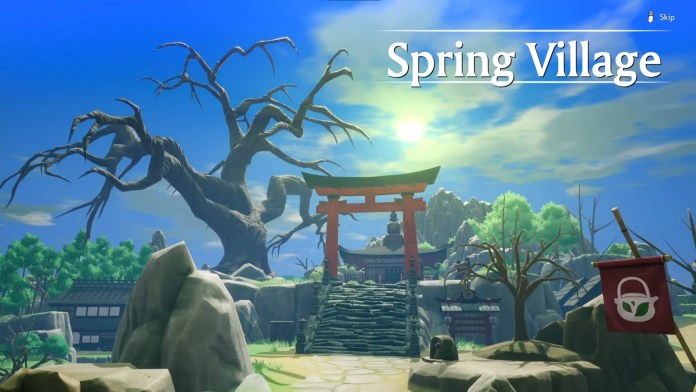
Where It All Begins: The Village of Everblooming Flowers
Right from the get-go, we’re introduced to the Eastern lands of Azuma, where we learn of the Runes. The Runes are a fundamental source of energy that maintains balance between the lands, the Gods, and nature. This is a force that sustains life, allowing fields to flourish and villages to prosper. Sadly, a calamity known as The Celestial Collapse caused massive objects to come crashing down from the skies, which disrupted the rune flow. Without this vital source of energy, the lands withered. Soon, much like the dying crops, the villagers were gone, alongside the nature gods that once dwelled there.
Rune Factory: Guardians of Azuma opens up with a heated airborne battle with your character on the backs of massive white and black dragons. When you start, your character has no memory of who you are or where you truly came from. You can choose whether to play as a leading lady, Kaguya, or Subaru, a leading gentleman. The first villager we have the pleasure of meeting is Iroha, a cheerful teahouse proprietress. She recaps how half a month earlier, you came crashing down from the sky, right through the shrine roof.

Since then, you’ve been trying to settle into town and help the townspeople clean up and restore the village, and Iroha can’t help but think you must be someone special. Shortly after, you’re greeted by the village elder, Sakaki, and Suzu. (Best girl, thanks!) Together, you see off another villager, sadly leaving the spring village in hopes of a brighter future. But it would seem there’s nowhere left to go that doesn’t bear the ugly scars of The Celestial Collapse.
Sakaki explains that it’s been nearly 50 years since the celestial collapse and that, ever since the calamity, the plants and animals have suffered from a land starved of runes. Once, the sacred tree at the center of the village had given beautiful blooms yearly, winning the village the moniker “Village of Everblooming Flowers.”

However, following the collapse, the ‘Buxom’ goddess residing within has lost her power, and now the roots rot. They plan to cut it down before it can hurt anyone, believing the goddess that once lived within had left. This information is much to the dismay of the villagers, especially Iroha and Suzu, who vow to help restore the village by offering the world the best dango to be found.
That night, a weakened voice reaches you in a dream. Ulalaka, a goddess on the edge of fading, begs you to listen. She gives you a Sacred Treasure—a drum—and asks you to wield its Kamiwaza to bring salvation in her stead. Poor gal can get no rest, as it’s that morning that you’re shook awake by your fluffy little pal, Mokoshiro, who is a descendant of the great dragon god Mihoshi Habaki (and holds back nothing in how often he reminds you of this lineage!) He urges you to get a move on with finding the black dragon before it drains all the remaining runes from Azuma.
Almost as if summoned, the black dragon shows up and begins to drop Blightbloom spores. plants that absorb the land’s runes. What follows sets the tone for the whole game: your role isn’t just to survive—it’s to restore.

Blossoming Romance and Growing Roots: The Bond System
I’ve been into life sims, farming games, and town builders for basically my whole life. When the first Rune Factory came out, I was obsessed in that very specific “This is my personality now” way. It wasn’t just farming plus combat; it was the complete shift in vibe that grabbed me by the collar and drew me in. Suddenly, the cozy genre wasn’t trapped in the same quaint, American-country-town template, and even as a kid, I thought that these characters felt different. This world felt bolder, the characters had more bite to them, and it was overall way more exciting to my younger self.
That said, even back then, I always noticed something: that spark didn’t always stay lit. The novelty faded fast. I didn’t just want to toss gifts at someone until a heart meter filled up; I wanted a long-lasting connection. I wanted the sense that these weren’t NPCs waiting in place for my daily check-in, but were instead people living in a community with routines, opinions, relationships, and actual moments. Sure, it gave me just enough to get attached, but that attachment was never fully fed. I really started to dislike dropping a gift, watching the meter move, and repeating the same loop over and over again. I didn’t want to manage relationships; I wanted to experience them.

That’s why Guardians of Azuma really clicked with me and landed me exactly where I wanted to be. It doesn’t feel like you’re “maintaining friendships” like some endless chore as you wait for the next big cutscene. It feels like you’re part of a village that is living and breathing. The social side has more movement, more purpose, and a greater sense of community. This made the bonds feel so much richer and earned, which matters a lot for someone like me.
In these sorts of titles, the combat was only a means to an end to get back into what made the series so special: the people, the bonds between characters, the cutscenes, and the dialogue. Overall, Guardians of Azuma did a great job of instilling the feeling that you’re building a life in a place that would still exist even if you put the sword down for a while. The feeling that you’re actually building a life and relationships rather than being an aimless hero in a town of NPCs that only need to complete quests.

While you can still raise your bond with your favorite villagers through your tried-and-true gift giving and just chatting with them daily, there are now way more ways to improve your friendship with characters. The way Guardians of Azuma felt more like actual bonding between friends was my favorite addition to the game. Some of the activities you could do include swimming with your best friends, eating lunch/dinner together, visiting shrines and exploring caves, and going on adventures as party members. You could also unlock outfits like swimsuits, yukatas, wedding attire, and some additional outfits available through DLC purchases. Each activity has a time cost, which I really enjoyed, as it made my every choice of activity feel more meaningful.
Keeping up with information for your villagers is made easy with their unique profiles. These are organized into sections such as hobbies, favorite things, and more. You can also see their personal preferences, like their loves, likes, dislikes, and most hated items. This information will be filled out as you collect information about them through various interactions. More than that, after you reach a set bond level, characters can join your party and hit the fields to defeat or befriend some monsters. You can also raise their bonds through this, and get new, unique dialogue as you explore a majestic, lush, colorful open world map.

The romanceable characters here are also fantastic. I had a lot of favorites, starting with the “Boisterous God of Summer and Swords,” Matsuri. Anne Yatco voices the character, who never fails to light up each interaction with her fiery personality. She enjoys things like Anmitsu Festive Jelly, Hibiscus, Grilled Squid, Onigiri, and discussing weapons, while fearing ghosts and “brainy” stuff is quite endearing. I found her character extremely endearing, and it certainly helped that she is a formidable fighter.
The chief director, Shiro Maekawa, mentioned during an interview that “Matsuri is a popular character among the staff, regardless of gender, and she’s actually my top pick (laughs). She’s what you might call a ‘lively girl,’ but I think you’ll be surprised by her personality when you play.” I would have to agree with her assessment of this character. Then there’s the electrically colored, mysterious leader of the oni, Kai.
Beloved voice actor, Alejandro Saab, portrays the handsome suitor. He elicited feelings that I’ve been searching for ever since the first time I picked up the very first Rune Factory. He enjoys Hellfire Dango, Oni-Giri, Azuma Sake, Sukiyaki, and, similar to Matsuri, discussing combat. I found myself enraptured by his likes and his dialogue, such as “Life’s been way more exciting ever since you rolled into town. Let’s keep this party going and raise some more hell together!”


He also serves as an excellent Defender when added to your combat party. In that same above-mentioned interview, Maekawa talked about Kai as well, saying, “The design with the mask was decided upon at the request of Tsukuda, who said, ‘I want a somewhat mysterious character.’ When you first meet him, you can’t see his face, but something happens, and you can see his true face when he removes the mask, so you can experience this dual nature of the character. By the way, his real face is incredibly handsome. I gave him the request to ‘make him the most handsome of all the characters.’ However, you can’t see his real face unless you progress through the romance scenario.”
You may have noticed that Rune Factory: Guardians of Azuma has some interesting food recipes that the characters have strong preferences for. Some of these include Matsuri’s favorite Anmitsu Festive Jelly or Kai’s Hellfire Dango. There are over 400 recipes to learn, obtained through various means like interacting with frog statues/wayside shrines, side quests, or random drops. One of my absolute favorite additions is how you can unlock 2 new “Unique Dishes” per romanceable villager or child when you cook with them.

These dishes offer new abilities when prepared with a villager of a minimum bond level 6. This feature is available at any public eatery in Azuma, such as Iroha’s Teahouse or Yachiyo’s Izakaya. One of the examples is a “Classic Omelet,” which has a complete change in stats when cooked with Iroha. Usually, it heals 100 HP, but with Iroha, it creates “Iroha’s Omelet, which heals 130 HP, 20 RP, and auto-heals spirit +0.5%. There’s even a new icon with a unique flair from the characters who helped you.
With that said, I thought the cooking UI was a mess. While I loved that there were tons of recipes, I hate that there isn’t a filter where you can sort by main ingredients or at least a search bar, something. I shouldn’t need a prophecy to make soup. I also wish Tsubame were a romance option, but at least we got to hang out with her and make use of her lovely pop-up shops. The romance and cooking options are only the tip of the iceberg of everything Guardians of Azuma has to offer, though. There’s also the mechanics associated with the villages themselves.

Homesteading – How Ya Like Those Apples?
The four seasonal villages we, as the Earth Dancer, will call home in Rune Factory: Guardians of Azuma are packed with things to do, build, and experience. Each village has an assortment of different shops and carts which offer a variety of items. My only complaint there is that I wish the items offered weren’t so repetitive across shops or easily obtained through crafting on your own or collection through exploring.
Each village has a village happiness score that functions like a 0 to 100 percent “how satisfied is this village” meter, which can change day to day. Low happiness levels can cause villagers to start leaving (with some exceptions tied to villager qualities). The biggest things that raise or tank the happiness score are your housing capacity and daily upkeep funds, used to feed your villager.

There is also a large variety of local contests to enjoy that vastly help raise village happiness levels. There are harvest contests, cooking contests, curry contests, and four different fishing contests in which participants compete by submitting food or other items. The higher the level, the better, but also be sure to consider what your judges might enjoy as well.
Happiness levels can also be affected by the state of your village, which leads me to the decorations you can acquire. There are over 100 unique decorations to be added to your village, which provide plenty of ways to personalize it to your specifications. Plus, each decoration offers unique stat boosts. Using sets of decorations together offers even greater bonuses, though some items are only effective in specific seasonal villages.

To make use of the magnificent lands, the player is given the Terra Killer. This is a tool that enables Village Builder Mode, which allows you to remove debris, farm, add terrain tiles, and place buildings in development zones. I adored the fact that you’re able to really terraform your villages with hills and waterways/waterfalls, among others. The overhead view option makes editing your lands an absolute breeze. The dual uses of the Sacred Treasures as both farming tools and weapons are a lovely addition. The Sacred Drum can be used on crops for accelerating growth, the Sacred Sword can obtain high-level seeds, and the Sacred Fan is good for rapidly harvesting crops.
I also adore that, as you restore the villages, new neighbors start to fill in, each with unique abilities and needs. Every new village has stats specific to it, such as Soil Specialist, which gives villagers a Farming+20% boost. Another is Big Eater, which, as you might imagine, means it takes quite a lot of food to sustain said villager daily. With work outputs being leveled from 1 to 5, and a general daily cost to feed, assigning your villagers to the right job becomes crucial.

You can freely reassign which villages each resides in, or even evict some of those villagers with the ‘Slacker’ quality. You can also change their jobs between working the fields, logging, fishing, mining, herding, or running a variety of different shops and carts. However, I did have major issues with the Villager farm AI. While I appreciated the help, I didn’t like how they plant seeds wherever they feel like it. Let me control those set zones or lock the rows they could work in. They ended up destroying the carefully constructed vibe that I had created for the village.
On the other hand, though, Guardians of Azuma excels at creating one of the most important parts of any life simulator: cute critters and farm animals. The game offers a wide variety of themed monsters based on Japanese folklore, including monsters like the Tanuki, Kappa, and Mushsprites, just to name a few. Barns allow you to house monsters you befriend outside of the village walls while adventuring with your friends. You can even befriend monsters and add them to your party as a rideable mount and attacker. Speaking of which, I also really enjoyed the combat.
Purifying the Lands and Sky

Combat in this game feels far more intentional compared to previous entries. In Guardians of Azuma‘s predecessors, I found the combat to be usually stale, repetitive, and rigid. This game manages to thankfully avoid those issues, thanks to the wide variety of different weapons, the addition of the Sacred Treasures, and a variety of different abilities. The balance between fighting, looting, crafting, farming, and socializing is far more purposeful. Your success does not hinge on your individual success, but instead, on that of your entire village(s). Combat isn’t just “the part you tolerate”; it is instead part of what makes the world feel active and belongs perfectly in the overall formula.
We’re given three combat difficulties to choose from, as well as 7 different kinds of elemental attributes. These include Earth, Wind, Fire, Water, Light, Dark, and Love. Much like in other RPGs, some have strong reactions to one another, with some pairs even dealing more serious damage. That said, if you attack an enemy with the same elemental attribute, it will reduce or even negate damage. There is also an assortment of different weapon types to suit your play style, such as short swords, dual blades, and bows, which make combat feel more like a treat rather than a chore.

Further, there are the Sacred Treasures weapons, which are used not only for farming but also in battle with abilities that keep combat from getting stale. Through the skill tree, you may grow your Sacred Treasures abilities in combat. One of these includes the Sacred Drum’s Shockwave ability, which uses the Drum Dance to generate shockwaves that send enemies flying.
Combat runs smoothly with timing dodges, evasive attacks, means to stun your enemy, and also a simple way to switch between your main and secondary weapons on the fly.
It’s easy to keep up with your adventures with the Bestiary menu, which is put together in such a useful way. It gathers information on each monster separated by region as well, as details about how many you’ve slain, whether they can be befriended and ridden, and what size they’ll take up in the various barns you erect across your villages.
We’re also given a list of what items each beast may drop, which is, of course, extremely helpful in a game with so many recipes, decorations, and various items to craft from such materials. On the note of collectibles, we’re also gifted the PescaPedia along with a fishing pole by our would-be-fishy friend, Watarase, to track our fishing activity. There are 45 different fish in various sizes to catch in astoundingly designed locations across the lands of Azuma.


Rounding back to the glory that is the bond system in Guardians of Azuma, characters need a level 1 bond or higher to join in the field of battle. You start with a max of 4 party members, which then changes to 6 (not including your player character). You can also cycle through your 6 party members with simple controls during battle, each of which has its own role. These are: Attackers, Defenders, Healers, Buffers, or Debuffers.
You can tag in attackers, or play it safe and swap to defenders. This system offers a lot of freedom in combat on the fly, including using the aforementioned befriended monsters as attackers and mounts. Then there’s the aforementioned skill tree, which allows you to grow and buff your weapons, Sacred Treasures, and practical abilities (such as cooking and social activities). More branches and skills unlock over time, keeping your combat feeling fresh and exciting.
Euphonious Shamisen Delights: The Music That Makes Azuma Soar

The game’s music is splendidly done by Japanese composer and vocalist Noriyuki Asakura. Asakura is best-known for a very distinctive blend of traditional Japanese instrumentation with rock/jazz/world-music textures, a style that people often associate with his work on Tenchu/Way of the Samurai. Having him score a Rune Factory entry adds a fresh musical identity to the franchise, especially since Guardians of Azuma is also thematically Japan-forward. My favorite track in the soundtrack is “Summer Shores,” which flaunts a truly layered, summery vibe that makes me long for a fruity, colorful, icy drink in my hand and sand between my toes.
In another interview, Maekawa was asked about how Asakura came to be involved with the project. Maekawa answers, “General producer Tsukuda had previously worked with Asakura. Also, he was in charge of composing the music for the anime Rurouni Kenshin: Meiji Swordsman Romantic Story (1996 version), so we approached him with the idea of asking him to create a sound that would fit the taste of the Japanese worldview of this work.
As Asakura originally comes from the game industry, he is familiar with the theory required for creating game sound, and when we told him, ‘I’d like a song for a tense boss battle,’ he was able to create a sound that perfectly matched it. If you don’t know this theory, you’d have to start by explaining ‘what is a boss?’ so the exchange went incredibly smoothly.”

When asked about words that made an impression during their exchanges, Maekawa responds: “In fact, the sound for this game was recorded with an orchestra. It was Asakura-san who suggested using live sound. Fujii and I were also present at the recording, and… how can I put it, we thought, ‘Professionals are amazing.’
That’s a privilege only developers have. From the sound played in the trailer, it was a wonderful piece of music that matched the worldview, and it really gave off the feeling that it was ‘definitely a hit.’ I can’t wait to play and hear all the songs.” It truly made me happy to hear what joys the team felt during the production of Rune Factory: Guardians of Azuma.
Restoring the World, One Bond at a Time

Guardians of Azuma feels like Rune Factory finally cashing the checks it’s been writing for years: vibrant villages, meaningful bonding, and a world where combat supports the fantasy instead of interrupting it. The town-building tools are genuinely satisfying, and the social systems are the most “alive” the series has felt. Its biggest win is that bonding feels like doing life together and not bribing people with turnips until they love you.
My main issues with the game were pacing, as the main story can feel like a long tutorial. There were also UI difficulties, especially with cooking, and I also found myself wishing that shops had more exciting inventory variety. Still, if you want a cozy action-RPG where restoring the world and dancing through beautifully voiced bond scenes is the true adventure, this one’s absolutely worth your time.
As we know, Rune Factory as a franchise is a long-running cult favorite among fans. It often gets applauded for its rich character interactions and bonding systems, while at times also being criticized for being a bit overambitious in its abilities to actually follow through on its ambitions. Here with Rune Factory: Guardians of Azuma, though, we see the shift that we’ve all been begging for as fans. It’s a truly polished game with great bonding systems, town building, and an open world where combat feels more fun than ever before.

I love that Guardians of Azuma feels like a delightful coming together of action-RPGs with some of the best village/town building tools I’ve experienced from Rune Factory thus far. I love that building bonds with villagers and farm life is treated less like a side dish and more like an intentional addition to an otherwise already wonderful game. It’s reminiscent of bonding systems I enjoyed from other games, like the option to have tea with your students and friends in Fire Emblem: Three Houses, but taken to new heights. Though I yearn for the freedoms in crafting that titles like Stardew Valley have to offer, Rune Factory: Guardians of Azuma does not leave much to complain about.
Sure, the pacing and amount of systems funneled at the player in what can feel like a frazzling, rapid-fire at times, did sometimes hinder my enjoyment, as well as the aforementioned issues with the game. However, if you enjoy luxuriously colored landscapes in an open world, rich character interactions, tons and tons of ways to build your bonds while also having creative freedom over the growth of your villages, then this is the game for you.
Disclaimer: Marvelous provided a PlayStation 5 copy of Rune Factory: Guardians of Azuma for review purposes.

