


At Tokyo Game Show 2026, I sat down with Final Fantasy VII Revelation Director Naoki Hamaguchi after checking out the game’s latest demo. Having now played Revelation across two separate preview sessions, I wanted to use this opportunity to explore some of the topics surrounding the game beyond its narrative. In this exclusive interview, we dive into the iconic Xenogears reference and its inclusion in Revelation, the legacy of the Remake Series, lessons from Kitase-san and Toriyama-san, and more. Please enjoy, and a huge thank you to the team at Square Enix for helping coordinate and translate this interview on the show floor!
There’s a small Xenogears reference in Cloud’s dialogue while he’s recovering in Mideel in the original game. I played the preview in Los Angeles, and he was referencing a few of the lyrics from “Small of Two Pieces”, the main vocal theme of the game. What went behind the team keeping that in Revelation?

Naoki Hamaguchi (hereafter referred to as NH): So, to be perfectly frank, I had no idea that was in there. That was probably Toriyama-san or Nojima-san who put that in there just as a bit of fun to include. They were also on the original too.
I don’t know if you played it, but do you have any thoughts on Xenogears and potentially the possibility of that game being made playable on modern platforms, from a preservation standpoint?
NH: I do kind of remember playing it back in the day when it first came out. Remaking something that came from that era, as an experienced person who has gone through the Remake series, sounds like a tough game to make.
At PAX West, you described The Remake Project as a way to pass Final Fantasy VII on to the next generation, and the presentation talked about shaping Final Fantasy VII into an IP with an ever-evolving future. With the Remake Trilogy itself ending with Revelation, what does an ever-evolving Final Fantasy VII actually look like to you? Is that a world you personally want to continue creating within after the trilogy, or is Revelation where you want to hand it off to the next generation of creators?
NH: So for Final Fantasy VII Revelation specifically, we’re really doing everything we can, leaving it on the table, and giving our all. So in terms of future installments, we’re really not thinking that far ahead at the moment. Right now, it’s just about Revelation.
I myself played the original Final Fantasy VII 20 something years ago, and at that time, it had such an influence on me that I thought “let’s rebirth this as a remake worthy for the current generation”. That experience became the seed that eventually grew into the Remake Series. Lately, something I’ve heard often is that, well of course from the younger people as well, but those who touch this remake, the FFVII Remake series, feel inspired to become game developers or to create games of their own.
The reason we said to have the IP live on through other people wasn’t so much because we have plans to make games or anything; really, it is about the younger generation experiencing these games. Let these games impact them in some way, and maybe in 20 or 25 years we’ll see Final Fantasy VII return in some form.

After spending years developing this combat system, do you feel the trilogy has explored its full potential? Could you see it becoming the foundation for a brand new game outside of the Final Fantasy VII umbrella? Or is it too closely tied to these characters and their abilities?
NH: Final Fantasy VII Revelation is the conclusion of the series, and in that sense it is also the conclusion of this kind of combat as well. It is the most refined it can be, so we wanted to leave everything on the table in terms of what we’re capable of doing with the combat system. For Final Fantasy VII Remake‘s combat system, we really looked at the previous ATB system that came before, and then fused it with this action system in the Final Fantasy series. This was just a whole new series of battle systems, and for whatever comes next, we could look back at the previous games and take inspiration from those as well.
The circumstances behind this trilogy may never exist again. One of the most influential games ever made, reimagined across three full-scale titles nearly 30 years later with many of the original creatives still involved. As Revelation brings that project to an end, how do you hope that the trilogy is remembered in the history of both Final Fantasy and video games? And do you believe that we’ll ever see another remake attempted under circumstances like these again?
NH: I mean, this is just my perspective, but I think the popular titles that came before, I think they will be remade. I think that will happen. However, that being said, a game like this, splitting it across three titles… I’m not so sure there will be that many; if there are any, very few.
That was all from a creative perspective, but from a business perspective, it’s a totally different story. For example, if the first title had sold really poorly and been poorly reviewed, I mean, what do you do with the rest of the titles? There’s also this need to keep the team as similar as possible across all of the titles, and that’s another huge headache, especially for people who control the strings. Those are big risks that you have to take, and I don’t think many will.
In terms of its impact on entertainment, I think this will definitely be a memorable series. Not only is Final Fantasy VII huge and the scale of the Remake Series is just enormous, but in a way, I don’t think a game will ever compare in terms of scale across three titles ever again. And in that way, I think the Final Fantasy VII Remake series will be looked at as kind of like this outlier. That’s something I’m gonna be proud of.

Building on that, you mentioned keeping the team together. You’ve demonstrated with this trilogy that retaining a team and its technology can allow Square Enix to produce enormous RPGs faster than starting over each time. Has the Remake project itself changed how Square Enix thinks about developing Final Fantasy, and are there lessons from this production model that you want the company to carry into completely new games?
NH: There isn’t like one specific way we, as Square Enix, can develop games or anything like that. But for this one specific title, I do think there is a success level here that I think can be replicated now. In the old way of doing things, things were obviously very hard, and once a game was done, the team would separate and do their own thing, but obviously we have a dedicated team working on this right now. And while it is really hard to develop games now, I think the level of expectation is just so high, and the difficulty is just so great, but the way we are doing things, I think, could be sort of a lodestar for the company.
You’ve spent much of your career working alongside creators like Kitase-san and Nomura-san who have helped define not only Final Fantasy VII, but an entire era of Square and Final Fantasy. As that generation gets closer to the later stages of their careers, do you ever think about the responsibility of eventually becoming part of the generation many expect to carry that legacy forward? What have you learned from working with them that you feel is important for the next generation of creators at Square Enix not to lose?
NH: These epic creators like Kitase-san and Toriyama-San, they didn’t necessarily pass down this information. It was sort of like looking at what they’re doing and kind of mimicking it, and sort of like trying to keep up with them a little bit. It’s how I learned, really.
Even with all of these creators that we just mentioned, everyone is different. They’re creators at the end of the day. And so, each one has their own unique style. There’s a lot to learn from everyone, their process, and how they do things. I think I slowly realized, ‘Oh, I had kind of adopted some of their lessons and what they were doing as well.’
I don’t necessarily feel responsible for the entire Final Fantasy series. That’s not a burden that weighs on my shoulders. Similar to Yoshi-P’s stance, he works to get people excited about the franchise. And so, just people, just getting people to acknowledge it, to learn it, to play it, to experience it.
As I respect Kitase-San and Toriyama-San, the team really respects me, and they fell in my direction. So it’s not just the team, obviously; it’s Final Fantasy fans who also like put this kind of respect on me as well. And so, I do feel this is a responsibility about bringing Final Fantasy into more people’s lives and into much of this next generation. I’m just being really clear: Yoshi-P and I do not feel like, “oh, the Final Fantasy franchise is ours, it’s all ours!” *laughs*
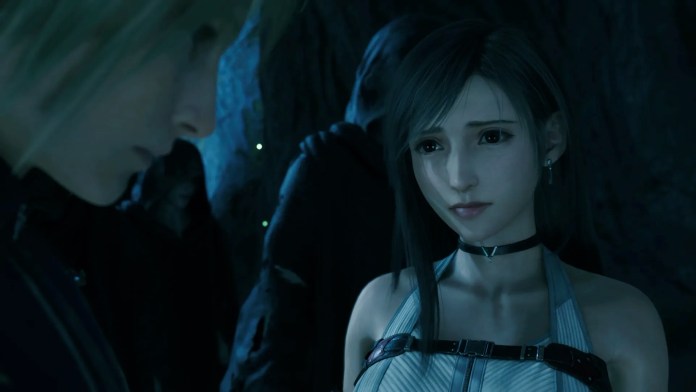
Tifa fights with incredible confidence, even though she often struggles to express herself outside of battle, especially with characters like Cloud. When designing her movements, how do you distinguish between Tifa as a trained martial artist and Tifa when her emotions take over?
NH: That’s a difficult question.
For the setting and stuff, obviously Nojima-San writes the script, and we read through everything and learn more about the character to really understand who they are. Then, we try to incorporate that into every asset of the game. You know, obviously we have a lot of respect for these characters, but yeah, at the end of the day, it’s kind of Nojima-San who makes the calls about characterization and things like
that. But yeah, in short, we read the script, then try to incorporate that into every aspect of the game.
For Tifa specifically, it’s not like we really think about everything that she’s experienced, what she’s holding onto inside, but more so the torment, the conflicting emotions that she’s dealing with when you try and incorporate that into every situation that she has placed in the story.
You’ve said previously that Red XIII was your favorite character. Who wins in a fight, Tifa or Red XIII (Nanaki)?
NH: Hmmmmmmmm…….
I mean, unlike a character like Aerith, who perhaps would look at an animal and be like, “Oh my god, so cute!”, Tifa doesn’t have the same
hang-ups, really. So she would probably go in and beat him up.

