

It’s a big day for Castlevania fans. With more than 10 years since the franchise’s latest non-remaster entry, Lords of Shadow 2, and almost 20 years since its last 2D title, Order of Ecclesia (let’s pretend Mirror of Fate doesn’t exist), Castlevania: Belmont’s Curse arrives. Spearheaded by Evil Empire, the studio behind Dead Cells (which has also collaborated with Castlevania in the past), the title makes use of the team’s experience with 2D titles to deliver what was once a specialty of the franchise: a pure metroidvania title.
The game follows Rose Belmont, with events taking place between Curse of Darkness and the first Castlevania in the chronology. As France is assaulted by the forces of darkness, the church asks Trevor Belmont for help, and he accepts, bringing his daughter Rose to learn the family trade. She’s the first to combine the powers of both the Belmont and Belnades families, but she still has to deal with the curse Dracula passed to her mother.
A Mix Of Gameplay Styles

Despite having a few pillars in its identity, I think everyone will have their own list of what is essential to a Castlevania title and what isn’t. After all, the series has dabbled in many unique structures over the years (even within its 3D counterparts). In this regard, Belmont’s Curse plays a little too safe. It mostly centers around combat, but there’s a fair share of jumping puzzles and exploration tricks, too. The problem is that, save for the combat, these always feel a bit “been there, done that”.
Let’s start with the game’s strongest suit: the combat. For those who have played Dead Cells, the easiest way to describe it’s that Belmont’s Curse is that the game is a slower and more intentional version of that. While Dead Cells’ roguelite structure allows an absurd range of weapons and skills, this Castlevania, more akin to a traditional metroidvania, focuses more on enemy patterns and placement. Instead of the fast-paced “breach and clear” style, you’re constantly put in back-and-forth with enemies.

Alongside that, the game has an increased focus on its defensive abilities. You start the game off with a slide and back-hop (both bound to the same button and contextual to whether you’re moving or not) and ducking. Yes, ducking. It’s a testament to how creative Evil Empire was with their enemy design that you’re forced to think of that option constantly. Some enemies have attacks that would hit you had you jumped or slid behind them, but ducking avoids it and allows you to counterattack immediately.
It’s this kind of interaction that dictates the entire combat of the game, bosses and mobs alike. Belmont’s Curse is just as hard as the series average, but the difficulty has shifted a bit from its usual style. Players used to action games will likely have an easier time overall because of this design. Sadly, the game does have a leveling system and ATK/DEF boosting pickups that may trivialize some endgame content by letting players power through attacks.
Traditional difficulty options aren’t available, but right from the start you can adjust modifiers like XP gain, damage dealt, damage received, among other options. The default settings felt like a standard Castlevania experience, but the game is malleable enough to be as hard or easy as the player prefers. The overall challenge level shouldn’t be an issue.
Standard In Exploration and Platforming

On the other hand, what is less remarkable about Belmont’s Curse is its overall interactions with the castle. The core gameplay loop revolves around Rose’s tarot cards, each of which represents an arcana you can recruit. Most arcana come in the form of bosses, but some are just riddles that require a particular path to be explored or an ability to be acquired. To find them, you have clues scattered throughout the map in a system that feels more like a mystery game than a metroidvania. Sadly, if you’re familiar with the genre, most of these tricks will be familiar to you. False walls, paying attention to the background, contextual clues with dialogue, and so on and so forth.
There are very few surprises for fans of the genre. If you played even Mina the Hollower, it is likely that nothing in Belmont’s Curse will really surprise you. That eureka moment of “I can’t believe this is required to progress” or of accidentally discovering an entirely new biome never came. Of course, that’s a high bar to clear, but one I’d personally consider pretty central to the Castlevania experience. Overall, the title feels like it was crafted more as a reintroduction than a full return to roots. It’s a perfect title to explain what makes Castlevania special, but an average one for those who already believed that.

Something similar can be said for plataforming. Rose’s moveset is pretty modest by the genre’s standard. While Alucard in Symphony of the Night had an ever-expanding repertoire of movement and exploration techniques, Rose never really goes beyond the double jumps and air dashes. The whip and grappling points are the stars of the show, with many of its puzzle rooms requiring stringing them together in a fluid motion. Complexity-wise, they sit somewhere between Order of Ecclesia and Hollow Knight. In other words, standard for the series, but not really pushing the genre forward.
These other aspects of the game sit in a sweet spot of being good enough to be fun but not enough to be memorable. It’s a rather safe approach, which I found to be slightly disappointing, although maybe for the better after the franchise had such a big hiatus. For anyone who has been playing their share of indies trying to fill the gap these monolithic franchises left behind, it’s hard to shake the feeling that there should’ve been more to the game overall. Although I also have to be fair and say that the game never reaches “bad” or “boring” either.
Pristine Art Style

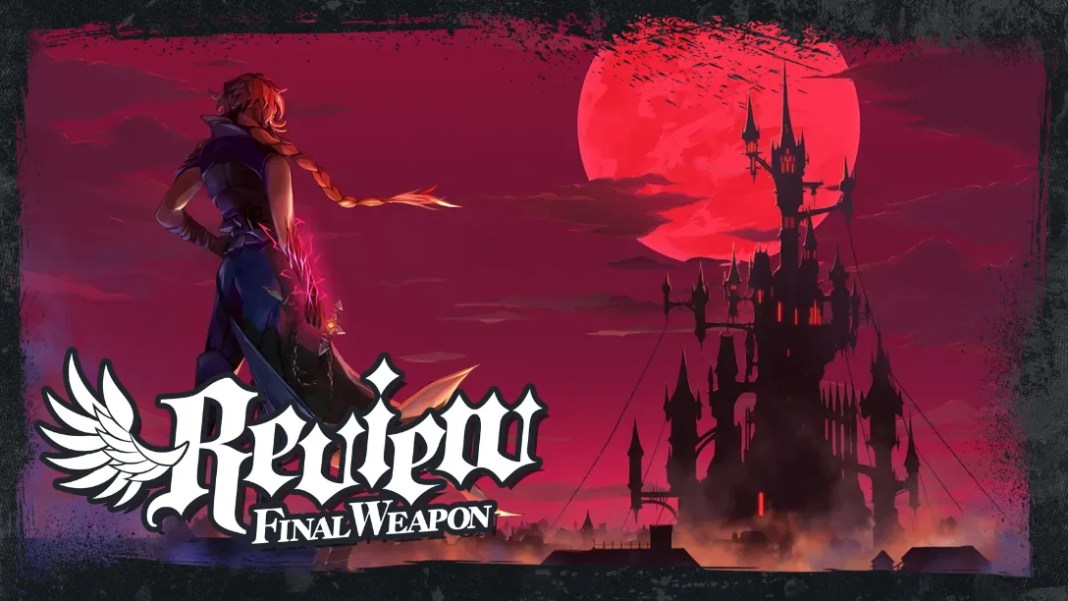
Nitpicks aside, one area where Belmont’s Curse excels is in its presentation. The game uses 2D character portraits and cutscenes to tell the story and a stylized 2.5D aimed at maintaining the same aesthetic for gameplay. All within the series’ iconic gothic imagery, including chapels, clock towers, and grand halls with mirrors and/or paintings everywhere. From the smallest HUD elements to the dramatic cutscenes, this game oozes a style that screams Castlevania. A great example of high-definition visuals without sacrificing artistic style.
The same can be said about the soundtrack, which perfectly encapsulates that Castlevania feeling fans know and love. Besides the mandatory Bloody Tears and Vampire Killer remixes, there are plenty of songs that are unique to Belmont’s Curse that immediately feel iconic. Great songs accompany great visuals and level design, working in tandem to create a strong and cohesive artistic style. If there is one thing that can’t be said about Belmont’s Curse, it’s that the game doesn’t respect the franchise it’s in.

From story to visuals to the overall presentation and feel, pick any out-of-context part of this game, and people could still feel the Castlevania in it. While the series’ lore has been a bit inconsistent over the years, Belmont’s Curse also tries to tie some strings together, bringing important events from other games into play. In a way, it feels like one of the most grounded titles in the entire franchise and offers a solid foundation for upcoming titles to make use of.
One thing I also thoroughly enjoyed in the game was its animation work. As someone with a sweet tooth for fighting games, I think the importance of animations is usually underrepresented in video game discussions. Sometimes it’s just about flair, like Rose pulling Street Fighter poses when using her knuckle weapons. More importantly, it’s about informing an attack’s timing and orientation. Crucial to any game that requires precise responses from the player, which this Castlevania does.
A Solid Return For A Legendary Franchise

The bottom line for Castlevania: Belmont’s Curse is that it’s a great return for a long-dormant and highly beloved series. Few games boast the immense influence that Castlevania had in the industry. An entire genre name carries its namesake for the innovations it brought. Evil Empire had very big shoes to fill, and I do want to emphasize that even reaching the “almost legendary” status is already impressive. If I had to rank my favorite games in the series, Belmont’s Curse would easily fit in my top 5, but would maybe stay out of the top 3.
It takes around 15 to 25 hours depending on how much of it you want to complete. It has the perfect length for replayability as well, despite a somewhat slow first quarter. The PC port is decent, with full support for mouse and keyboard controls and rebinding, although with the slight nitpick that the map still requires WASD instead of using the mouse pointer (of course, most people will default to controller for this title, myself included). I ran into one weird issue with a piece of equipment that caused the fast travel to glitch out, but overall it was a stable game in both performance and stability.

With three different endings to acquire, the game does demand that you explore it a fair bit to see what it has to offer. At the same time, the structure also allows for speedrunning, with some endings being rather quick to reach. Sadly, there don’t seem to be many glitches or sequence breaks that people might abuse to improve their times. For better or worse, Belmont’s Curse is fairly rigid in its structure, offering a great curated experience, although not the most fun of sandboxes to push the boundaries of what’s possible.
All in all, Castlevania: Belmont’s Curse is a title worth its salt. Unmistakable style, reverential to the franchise, iconic designs both visual and auditory, a higher focus on combat than most titles, but at least competent in everything it tries to do. It’s a perfectly solid revival for a series that made fans wait almost two decades for a title like it, and, hopefully, a sign of what’s to come. Castlevania still has a place in the current gaming scene, doing exactly what it always did. Even if some may not consider it a full return to its roots, Belmont’s Curse is definitely a return to form.
Disclaimer: Konami provided a Steam copy of Castlevania: Belmont’s Curse for review purposes.

