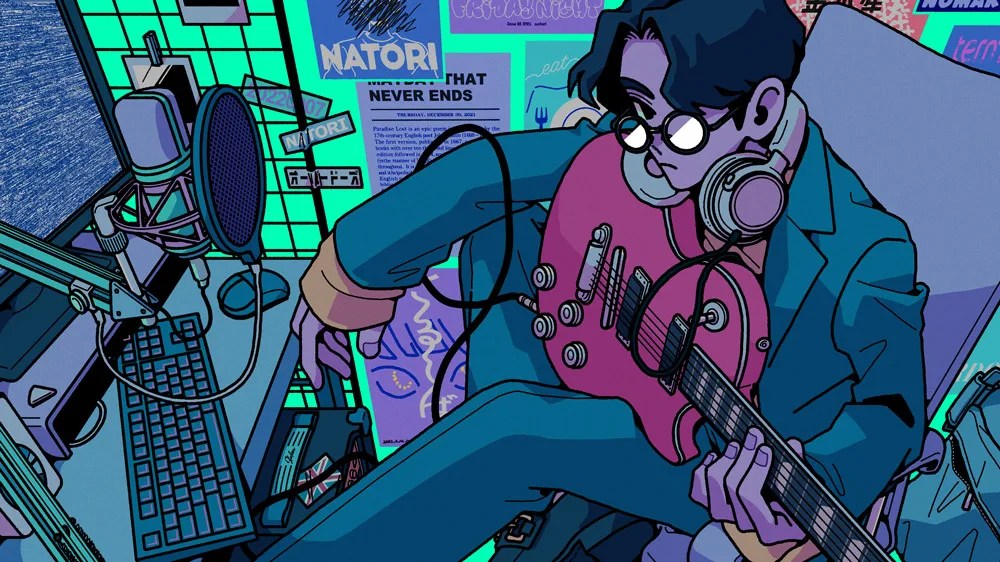
B-Komachi is about to get a big break in Oshi no Ko Season 3 as Ruby Hoshino continues to pursuit the truth behind Ai and Gorou’s deaths. Final Weapon has everything you need to know about the Oshi no Ko Season 3 anime, including the weekly schedule and release dates for all episodes.
Oshi no Ko Season 3 picks up six months after “POP IN 2” was released. MEMcho’s hard work has elevated B-Komachi, Aqua is now an ambitious talent and entertainer, and Akane’s acting career is going very well. Meanwhile, Kana has lost the cheerfulness she is known for, and Ruby continues to rise in the entertainment world while lying and using deception to find the truth she seeks.
Oshi no Ko Season 3 Release Dates, Exact Premiere Time and Schedule
New Oshi no Ko Season 3 episodes will release on Wednesdaysat 8:00 a.m. PT / 11:00 a.m. ET on Crunchyroll and HIDIVE. Episodes will be released with English subs and an English dub. Oshi no Ko Season 3 will air for at least 11 episodes this season, starting with episode 25. The finale episode will be a one-hour special.
Here are the release dates and schedule for Oshi no Ko Season 3(subject to change):
Episode 25 – January 14 – OUT NOW
Episode 26 – January 21 – OUT NOW
Episode 27 – January 28 – OUT NOW
Episode 28 – February 4 – OUT NOW
Episode 29 – February 11 – OUT NOW
Episode 30 – February 18 – OUT NOW
Episode 31 – February 25 – OUT NOW
Episode 32 – March 4 – OUT NOW
Episode 33 – March 11 – OUT NOW
Episode 34 – March 18 – OUT NOW
Episode 35 – March 25 – OUT NOW
New episodes of Oshi no Ko Season 3will premiere at the following times (subject to change):
Pacific Daylight Time (PDT): 8:00 a.m.
Mountain Daylight Time (MDT): 9:00 a.m.
Central Daylight Time (CDT): 10:00 a.m.
Eastern Daylight Time (EDT): 11:00 a.m.
Greenwich Mean Time (GMT): 3:00 p.m.
OP/ED, Cast and Staff
CHANMINA
natori
CHANMINA performs the opening theme song “Test Me” and natori performs the ending theme song “Serenade.”
Chief animation directors for the third season include Kanna Hirayama, Ayaka Muroga, Kimiaki Mizuno, Shuri, Rina Morita, Haruka Inade, and Hirono Nishiki. Kenji Sawada is the main animator.
The cast of the first two seasons, including Takeo Otsuka as Aqua, returns in Oshi no Ko Season 3. New cast members include Mamoru Miyano as Hikaru Kamiki, Hina Kino as Tsukuyomi, Yuto Takenaka as Shun Yoshizumi and Yōji Ueda as Tetsu Urushibara.
Crunchyroll will stream Oshi no Ko Season 3 in North America, Central America, South America, Europe, Africa, Oceania, the Middle East, CIS, India and Southeast Asia. HIDIVE will stream Oshi no Ko Season 3 in U.S., Canada, U.K., Ireland, Australia, New Zealand, and other overseas markets. In Japan, Oshi no Ko Season 3 will air on Tokyo MX and 35 other channels in Japan, along with ABEMA and various streaming services.
What is Oshi no Ko Season 3 About?
The final volume of the Oshi no Ko manga series by Aka Akasaka and Mengo Yokoyari released on December 18, 2024 in Japan. All chapters are available to read right now on Manga Plus in English.
Lastly, here’s an overview of the series, via Manga Plus:
“In the world of showbiz, lies are weapons.” Goro works as an OB-GYN in the countryside, a life far removed from the entertainment industry. Meanwhile, his favorite idol, Ai Hoshino, has begun her climb to stardom. The two meet in the “worst possible way,” setting the gears of fate in motion! The amazing Aka Akasaka and Mengo Yokoyari team up to depict the world of showbiz from a completely new perspective in this shocking series!
Looking back into Capcom’s release catalogue, they’ve released a lot of game collections. Not that I’m complaining, mind you. It’s always nice to see these beloved titles from their catalogue make their way into more modern platforms, especially so that new players can enjoy these games, given that even getting a DSi or a 3DS has been outrageously overpriced on eBay.
The Mega Man Star Force series is certainly a part of the long list of games I enjoyed back on my old DS Lite. So getting the opportunity to replay these titles was just something I couldn’t resist. But strap down, and let’s see if this collection truly does the franchise justice, and maybe we can all peer pressure Capcom into making a new Star Force game…
Mega Man Star Force 1: Attack of the FM Aliens
Starting our list, we have Mega Man Star Force, which is divided into three versions: Pegasus, Leo, and Dragon. Our story begins with humanity attempting to form a sort of friendship bond called a Brother Band with aliens on another planet. For this purpose, the space station Peace was constructed. However, things didn’t go so well, as the station was attacked, and communications were lost, with no one knowing what happened to the crew inside.
And unfortunately, one of the crew members was Kelvin Stelar, the father of our protagonist, Geo Stelar. When the investigation efforts to find Peace and its crew members were written as a loss, Geo was traumatized and shut himself off from interacting with friends, and as a result, he doesn’t commute to school anymore. Three years after the incident, Geo comes home to find a friend of his father and co-worker at AMAKEN space agency, Aaron Boreal, conversing with his mother, Hope Stelar. Aaron gives Geo a glasses-like item called the Visualizer, which used to belong to his father. Wearing these glasses, it gives the user the ability to see EM Waves and the EM Wave World.
This, in turn, caused Geo to meet with an alien who is on the run from Planet FM, Omega-Xis, or Mega, for short. When fused together, he and Geo are able to transform into an EM being called Mega Man, allowing him to go inside any electronic device and delete any of the viruses causing them to malfunction. And so begins Geo’s journey to defeat the FM aliens from destroying Earth, and maybe, just maybe, make some new friends as he gets out of his shell, so to speak.
Now, I’ll have to say that I have never played the first game that much as a kid, and initially, I couldn’t really remember why. But that memory resurfaced as soon as I saw a very… interesting game design choice, let’s say. You see, it can be very easy for you to just get stuck and not be able to progress due to something you must do in order for the story to move forward. There are many instances where you must talk with every single NPC and interact with every object in that given scene before you get the cutscene that progresses the story. While you can press L at any time to get a “hint” from Mega, these hints are often too vague, and I can’t recall a single time this was actually useful.
Furthermore, Star Force 1 currently has a pretty major oversight, and that is the fact that Capcom has kept the text as-is from the DS version. Now I know what you’re thinking: That’s a good thing, isn’t it? And you’d be right. But that meant two major issues were carried over. The first is that the horrible font from the DS, which caused the text to be split into multiple text boxes, causes the text in Legacy Collection to be awkwardly split, when you can clearly see that this new font can support more text. Another issue is that keeping the text as-is means any typos from the original release have not been fixed, such as the Card Trader SP in Dream Island erroneously claiming he’ll give you 10 cards in exchange for 10 cards, when actually it’s 10 cards for 1.
Mega Man Star Force 2: Artifact Hunting
Next up, we have Star Force 2, which is divided into Zerker x Ninja and Zerker x Saurian, making it the first time we’ve had two games on a single cartridge. The story takes place two months after Mega Man’s battle with the FM-ians, and Geo has upgraded to the new mobile terminal called the Star Carrier. During his trip to see the sights and sounds of the IFL Tower in Wilshire Hills, they come across a new threat. A mysterious EM being that is eerily similar to how Geo can turn into Mega Man. There are also mentions of three mysterious tribes that once ruled over the world, but were mysteriously defeated… and that’s just scratching the surface.
One of the biggest additions to Star Force 2 is the Link Power system, which allows you to equip several different abilities, and many parts of the story will refer to that. Now, I may sound incredibly biased here, but I do think that the second game of the series is when it feels like it started to get its own identity. The first Star Force game still borrowed a lot of concepts from the Battle Network franchise, but by the second game, it seemed the developers knew about the shortcomings of the first. The amount of quality of life improvements that were made from the second game is staggering, and there was truly a lot of polish made to the experience.
The story isn’t scared of touching on much darker topics. But I must say that the buildup for it is absolutely fantastic. It’s also the Star Force game with the best soundtrack, in my opinion, because you visit way beyond the confines of Echo Ridge and its nearby areas. There’s also a very challenging post-game story, which I won’t spoil you on what it is, but I do recommend you are prepared for it, because “challenging” might just be an understatement.
Mega Man Star Force 3: A True Big Bang
And last but not least, we have the third game: Mega Man Star Force 3, which is divided into Black Ace and Red Joker. After the events of the second game, advancements in EM technology have progressed dramatically to the point that people use EM bodies as what are now called Wizards. But, though they seem to be at peace, a new threat looms over Earth… an ominous red meteor by the name of Meteor G.
The main mechanic of Star Force 3 is, to put it simply, Noise. After reaching a certain part of the game, Mega Man can be subject to Noise interference, and this can cause him to transform into an alternate form that can change how the Mega Buster performs in battle. You also have loads of Noise Gates that are scattered across the overworld, which, if you can brave the hordes of Viruses inside, you can find some neat items.
Out of the three games in the legacy collection, Star Force 3 can be a bit of a mixed bag. Its gameplay is perhaps the best we’ve seen from the series yet, but its story does have its weird moments, and there are so many “intermissions” where it feels like it’s padding for time. But the ending offers a satisfying conclusion to the series, so it’s a title that I still hold dear to my heart.
This version of Star Force 3 also has lots of content that was previously exclusive to Japan, too! First, we have the Noise Mod Gear, where you can input up to five Noise cards from a list and equip them. These cards follow the rules of poker, and matching them up accordingly will give you an extremely powerful boost during combat. And if you just mix and match them willy-nilly, the game will actually penalize you for doing so. These cards may seem like they completely destroy the game balance, but with how many cards there are, it’s actually a neat little addition to the game.
Another new feature that was previously exclusive to Japan is the Secret Satellite Server, or SS Server for short. On your brother’s screen, you can add access ports to this server, and it will randomly appear as an option for you to select in battle. Once you tap it, you’ll be asked to select from a folder: A, B, or C. And your Battle Cards selection will change to the ones from that server for the given turn. As you progress through the main story, the server will unlock even stronger folder lineups, and you’ll also gain extra access ports to use it more often.
An Action-Packed Combat System
One of the biggest aspects of the Star Force series is its combat system. As you walk in the overworld, you’ll come across a number of EM viruses. The way it works is pretty simple. Remember the Battle Cards I mentioned? Here, you’ll be given six of them at random, and you must pick them following specific rules. Each of the games varies a bit, but to summarize, the cards you pick can then be used to delete these viruses. You also have access to the Mega Buster, which doesn’t do a lot of damage, but some games introduce Abilities and Weapons that can be equipped to Omega-Xis to change the stats.
The best part about the combat system has to be editing your Battle Cards folder. There are a lot of them, so trust me when I say it is a lot of fun to change up your deck often, especially since the games don’t exactly feature a leveling system in the traditional sense. In the overworld, you have these items called HP Memories, and they increase Mega Man’s HP permanently. And also, to complete your Library, you’ll need a lot of Zenny, the in-game currency, so regardless, you’ll have to do some grinding for 100%.
With that said, the Star Force games aren’t exactly gargantuan in size. Each game took me about 11 to 12 hours to complete the main story, with the post-game potentially taking an additional 6 to 7 hours per game. Although if you stop to think about it for a second, I guess if you want to 100% every single version, some quick maths puts this at about 80 hours, so you’re set for content.
Connect to the ‘Net And Battle!
As someone who lives in Brazil, I was sadly a bit late to the party when it came to using the DS’s network capabilities. At most, I would maybe trade Pokémon with my sister using local communication, but that meant I had no way of experiencing the Network functions of the Star Force series. However, in a similar manner to the Mega Man Battle Network Legacy Collection, the Mega Man Star Force Legacy Collection adds online and local multiplayer, so you can relive those days.
By connecting to the ‘Net, you can choose either a Casual Match or a Ranked Match. The former will match you up against a random player, and whether you win or lose, you won’t lose anything, and it is meant to be more in the spirit of fun. As for the latter, winning will earn you cumulative points, which increase your Rank. Unfortunately, cross-platform play is not possible, so you will have to be careful on which platform you’ll pick up the game.
It’s incredibly easy to set up an online match with someone, because you can set your preferences to look for a match for all three games, and you technically don’t really have to beat any of the games to get started, as pre-made folders are available at your disposal to use.
Amazing Quality of Life Features
Capcom has done a lot of work with Mega Man Star Force Legacy Collection to make the experience pleasant on modern platforms, and they did a lot more than just slapping the Nintendo DS ROMs as-is and calling it a day.
First, we have an Assist Mode. By pressing ZR, you can either change the rate at which enemies spawn while ZR is held down, or have it so you can toggle it on and off. You can even turn off battle encounters with this. This is something I definitely abused quite a bit, especially for Star Force 2. Don’t get me wrong, while the battles are something that can take a minute at most to conclude, there are many times when I’m thinking how to solve a puzzle, and I lose my train of thought because of an enemy encounter. You can also add a speed multiplier, so that Geo and Mega Man can walk faster in the overworld.
Furthermore, you have a plethora of multipliers you can change under the Difficulty menu. You can toggle how much damage the Mega Buster deals against enemies, how much money you’ll earn, and even completely reduce the damage you take from a percentage. While there isn’t a way to make the game harder, just easier, this is a great feature for more casual players, especially for some of the post-game bosses, since those can be rather tough, even if you have a strong Battle Card deck.
Japanese Content Now Made Available
It’s no surprise that, in a similar vein to Battle Network, the Star Force series had a lot of content that was sadly exclusive to Japan. But with the Legacy Collection, Capcom has gone truly above and beyond to translate and make that content available throughout each of the three games. For example, in the first game, there was a collaboration with the Boktai games from Konami that was exclusive to Japan, and any mention of it was removed in the English releases. But this quest has been translated, and you can even add the cards from that collaboration to your folder.
Not just that, but the extra accessories that were also Japan-exclusive can also be used in Star Force 1 and Star Force 2. This includes the Wave Command cards that will give you special gifts. It is worth noting that since a lot of these items are incredibly strong, they can make the early game rather easy. But honestly, I had so much fun doing this that I’m quite glad they implemented such a feature.
Finally, though this is more of a side note than anything, from the main menu you can change the text language to Japanese or Chinese. While it’s a shame they didn’t take the opportunity to add more languages other than those, I’m all in favor of allowing fans the option to be able to change the language without having to pay for a completely separate version…
A Gallery Full of Pictures
As is the custom of many of Capcom’s Legacy Collections, Mega Man Star Force Legacy Collection also has a Gallery mode. Here, you can take a look at a plethora of art, including design documents, all divided across the three games. As an avid collector of art books, I always love paging through all these early drafts and thinking about how the design process was for these characters. The only minor gripe is that all the design documents are in Japanese, unlike the English-translated ones we’ve had in books such as the Mega Man Star Force Official Complete Works art book, but for me, this wasn’t too much of an issue.
You also have the Music Player, containing both the original and arranged soundtracks. One neat feature that I found was that you can favorite a song you like with X, and then later, you can press the Minus button while in a game to change the song that is currently being played. So if you’re like me and you like to listen to the Sky Wave soundtrack on repeat, you can do that!
However, it may be due to nostalgia bias, but I wasn’t a huge fan of the arranged versions of the soundtracks. I was constantly just going back to the Original soundtrack, but I feel that’s because… While I understand that the intention was to modernize the amount of instrument samples, there’s just something about the DS’s soundfont that makes my ears happier. Even as I write this specific section of the review, I just can’t stop listening to this game’s soundtracks. They are, and forgive the overused word, certified bangers.
A Truly Legendary Collection
Without a doubt, Mega Man Star Force Legacy Collection is one of the biggest highlights of 2026. I could go on and on about how much fun I’ve had replaying the games, and I’m still reeling from the fact that we finally have them on a modern platform. The assist features, the vast gallery, and of course, the online connectivity all allow for newbies and veterans alike to dive into this amazing world finally, and I urge anyone who is even remotely interested in playing Star Force to give the Legacy Collection a try.
Disclaimer: Capcom provided a Nintendo Switch copy of Mega Man Star Force Legacy Collection for review purposes.
The Game Rating and Administration Committee of Korea has rated an unannounced Definitive Edition of Sonic Frontiers. Currently, it is unknown what platforms or what features the unconfirmed new edition of Sonic Frontiers would include.
Sonic Frontiers initially released in 2022. The game featured months worth of free post-launch content, some of which included new playable characters and story content. While there are rumors that SEGA is developing a sequel to Sonic Frontiers, nothing has been officially announced in the four years since the game’s release. Sonic Frontiers is available now to purchase on PlayStation 5, Xbox Series, PlayStation 4, Xbox One, Switch, and PC via Steam.
Recently, Paramount Pictures released the first teaser trailer for Sonic the Hedgehog 4. It featured Sonic, Dr. Robotnik, Knuckles, Tails, Shadow, Tom and Maddie, Amy Rose, and Metal Sonic. The trailer features the description “the countdown to chaos has begun,” leading to many to speculate that the film will feature the debut of Team Chaotix or Chaos.
Additionally, Paramount has also revealed the full cast for the film. A majority of the cast from the previous films will reprise their roles. This includes Ben Schwartz as Sonic, Jim Carrey as Dr. Robotnik, Idris Elba as Knuckles, Colleen O’Shaughnessey as Tails, James Marsden as Tom, Tika Sumpter as Maddie, Keanu Reeves as Shadow, and Lee Majdoub as Agent Stone. As previously announced, Kristen Bell will play the role of Amy Rose. The following actors have been cast in currently unannounced roles:
Nube is back to protect his students and uncover more mysteries, ghosts, and evil spirits in the second cour of the Hell Teacher: Jigoku Sensei Nube anime! Final Weapon has everything you need to know about Hell Teacher: Jigoku Sensei Nube cour 2, including release dates for new episodes and the weekly schedule.
The story of Hell Teacher: Jigoku Sensei Nube focuses on the new homeroom teacher Nube, the only psychic teacher in Japan. Rumors are that his left hand is possessed by a demon, but despite how ominous that may sound, Nube is here to protect his students from the evil that lurks about. In cour 2 of Hell Teacher: Jigoku Sensei Nube, there’s even more threats that Nube will have to deal with to keep his precious students safe in class.
Hell Teacher: Jigoku Sensei Nube Release Dates, Exact Premiere Time and Schedule
New episodes of Hell Teacher: Jigoku Sensei Nube will release on Wednesdays at 7:45 a.m. PST / 10:45 a.m. EST / 11:45 p.m. JST on the It’s Anime YouTube channel. Hell Teacher: Jigoku Sensei Nube is expected to have a total of12 to 13 episodes this courwith English subtitles.
Here are the release dates and schedule for Hell Teacher: Jigoku Sensei Nube(subject to change):
Episode 14 – January 7 – OUT NOW
Episode 15 – January 14 – OUT NOW
Episode 16 – January 21 – OUT NOW
Episode 17 – January 28 – OUT NOW
Episode 18 – February 4 – OUT NOW
Episode 19 – February 11 – OUT NOW
Episode 20 – February 18 – OUT NOW
Episode 21 – February 25 – OUT NOW
Episode 22 – March 4 – OUT NOW
Episode 23 – March 11 – OUT NOW
Episode 24 – March 18 – OUT NOW
Episode 25 – March 25 – OUT NOW
New episodes of Hell Teacher: Jigoku Sensei Nube will premiere at the following times (subject to change):
Pacific Daylight Time: 7:45 a.m. PDT
Mountain Daylight Time: 8:45 a.m. MDT
Central Daylight Time: 9:45 a.m. CDT
Eastern Daylight Time: 10:45 a.m. EDT
Greenwich Mean Time: 2:45 p.m. GMT
OP/ED, Cast and Staff
THE ORAL CIGARETTES
Ayumu Imazu
THE ORAL CIGARETTES performs the opening theme song “ERASE” of Hell Teacher: Jigoku Sensei Nube cour 2. Ayumu Imazu performs the ending theme song “MAGICAL.”
The cast of the anime includes:
Ryōtarō Okiayu as Meisuke Nueno
Ryōko Shiraishi as Hiroshi Tateno
Aya Suzaki as Kyoko Inaba
Ryōta Iwasaki as Katsuya Kimura
Shiho Kokido as Makoto Kurita
Tomoyo Kurosawa as Miki Hosokawa
Aya Endō as Ritsuko Takahashi
Ai Kakuma as Yukime
Toshiyuki Morikawa as Kyosuke Tamamo
Yasuyuki Ōishi directs the anime at Studio KAI, with Fumito Yamada as the assistant director. Yū Yoshiyama handles the character design, Yoshiki Ōkusa is the head writer, and Evan Call composes the music.
Where Can I Watch Hell Teacher: Jigoku Sensei Nube?
Hell Teacher: Jigoku Sensei Nube is streaming on It’s Anime FAST channels on WatchFree+, Samsung TV Plus, and Amazon Prime Video in North America, along with the It’s Anime YouTube channel. In Japan, the anime is airing during the “IM Animation W” programming block on TV Asahi.
What is Hell Teacher: Jigoku Sensei Nube About?
The original Jigoku Sensei Nube manga ran in Weekly Shonen Jump from 1993 to 1999, written by Shou Makura and illustrated by Takeshi Okano. Lastly, here’s an overview, via the official website:
A number of inexplicable phenomena have been plaguing the town of Domori. To protect the town’s children, a new homeroom teacher, known as “Nube,” arrives. Normally gentle and a bit outgoing, Nube has a secret side: he is, in fact, the only psychic teacher in Japan.
Rumor also has it his left hand is possessed by a demon! Hell’s messenger of justice is here to confront the school’s seven mysteries, ghosts, and evil spirits that are attacking his students. This occultist action story starts now!
Nintendo has announced that a demo for Tomodachi Life: Living the Dream is available now, and released a new overview trailer for the game. The full game will release on April 16.
The demo will allow you to make a few Miis and try out some of the game’s features. You’ll get a sense at how the interactions between characters work, and when the full game releases, you can even transfer your progress. For completing the demo, you get a free hamster costume, which will also carry over to the final version. The recent trailer also confirms that while the game won’t support online play, you can share your Mii creations locally with people nearby.
Check out the overview trailer for Tomodachi Life: Living the Dream below:
The Tomodachi Life: Living the Dream demo is available now on the Nintendo eShop, where you can also pre-order the upcoming game before it releases on April 16. While the game is compatible with Nintendo Switch 2, Nintendo has not yet confirmed if a dedicated Switch 2 edition will release.
The eShop describes the game as follows:
Create all sorts of Mii characters based on your family and friends, someone you admire, or someone completely original! From their appearance to their personality traits and even little quirks, there are all sorts of ways to customise your Mii characters – including face parts that are unique to this game.
Adjust each individual detail to your liking or create Mii characters by answering a series of simple questions. Help them explore their likes and dislikes, form relationships, and get up to all sorts of wacky fun. Your Mii characters are bound to surprise you as they take on a life of their own!
29-year-old adventurer Hajime Shinonome begins a new life with an abandoned young girl in the wholesome An Adventurer’s Daily Grind at Age 29 anime. Final Weapon has everything you need to know about the An Adventurer’s Daily Grind at Age 29 anime, including release dates for new episodes and the weekly schedule.
In An Adventurer’s Daily Grind at Age 29, Shinomone was living a quiet life in Komai Village until he discovers a young girl Lirui, who is about to be attacked by a slime. Shinomone saves Lirui and decides to take her back to the village to begin a new life together as both an adventurer and caretaker.
An Adventurer’s Daily Grind at Age 29 Release Dates, Exact Premiere Time and Schedule
New episodes of An Adventurer’s Daily Grind at Age 29 will release on Wednesdays at 6:00 a.m. PT / 9:00 a.m. ET on Crunchyroll. An Adventurer’s Daily Grind at Age 29 will have a total of12 episodes this seasonwith English subtitles and an English dub.
Here are the release dates and schedule for An Adventurer’s Daily Grind at Age 29 (subject to change):
Episode 1 – January 7 – OUT NOW
Episode 2 – January 14 – OUT NOW
Episode 3 – January 21 – OUT NOW
Episode 4 – January 28 – OUT NOW
Episode 5 – February 4 – OUT NOW
Episode 6 – February 11 – OUT NOW
Episode 7 – February 18 – OUT NOW
Episode 8 – February 25 – OUT NOW
Episode 9 – March 4 – OUT NOW
Episode 10 – March 11 – OUT NOW
Episode 11 – March 18 – OUT NOW
Episode 12 – March 25 – OUT NOW
New episodes of An Adventurer’s Daily Grind at Age 29 will premiere at the following times (subject to change):
Pacific Daylight Time: 6:00 a.m. PDT
Mountain Daylight Time: 7:00 a.m. MDT
Central Daylight Time: 8:00 a.m. CDT
Eastern Daylight Time: 9:00 a.m. EDT
Greenwich Mean Time: 1:00 p.m. GMT
OP/ED, Cast and Staff
HoneyWorks performs the opening theme song “Kimi ga Tomoshite Kureta Hikari o Ima feat. Hanon” and the ending theme song “Kimi no Tonari Kūki ga Oishii feat. Kotoha”
The cast includes:
Makoto Furukawa as Shinonome Hajime
Sayumi Suzushiro as Rirui
Shizuka Itō as Veronica
Yūki Kuwahara as Anyango
Tomohiro Ōno as Rishat
Yuna Ogata as Olive Carmen
Kaori Maeda as Natalie
Haruka Shiraishi as Cocko
Yasunori Matsumoto as Cockdole
Riki Fukushima directs An Adventurer’s Daily Grind at Age 29 and oversees the series scripts at animation studio HORNETS. Yoshihiro Nagamori is the main character designer.
Additional staff members include:
Sub-Character Designer: Minoru Tanaka
Prop Design: Chiharu Nishimura
Art Director: Takumi Onitani
Art: Jack
Color Key Artist: Masao Ōba
Director of Photography: Ayumu Kaikiri
Cinematography: Studio Twinkle
Editing: Yoshiaki Kimura (IMAGICA)
Sound Director: Hiroto Morishita
Sound Effects: Yuji Furuya (Swara Pro)
Sound Production: Bit Grooove Promotion
Music Production: Pony Canyon
The English dub cast includes:
Sean Letourneau as Hajime
Nia Celeste as Rirui
Abigail Blythe as Olive
Leslie Collins as Cressida
Bill Jenkins as Gramps
The English dub crew includes:
Voice Director: Lee George
Producer: Zach Bolton
Adaptation: Jessica Sluys
Mixer: Neal Malley
Engineer: Paola Guzman
Where Can I Watch An Adventurer’s Daily Grind at Age 29?
d Anime Store and ABEMA will stream An Adventurer’s Daily Grind at Age 29 in Japan, and Crunchyroll will stream the anime worldwide, excluding China and Japan.
What is An Adventurer’s Daily Grind at Age 29 About?
An Adventurer’s Daily Grind at Age 29 is based on the manga series by Ippei Nara, which is also known as The Daily Life of a Single 29-Year-Old Adventurer. The manga is available on Kodansha’s K MANGA digital service.
Lastly, here’s an overview of the anime, courtesy of Crunchyroll:
Born and raised in the slums, 29-year-old adventurer Hajime Shinonome now lives a quiet life in Komai Village. But his peaceful days take a turn when he discovers Lirui, an abandoned young girl, being attacked by a slime. Moved by her desperation and reminded of his own past, he takes her back to the village. Hajime and Lirui begin a new chapter filled with unexpected challenges and gentle days!
After nearly 5 months, the Nintendo Switch 2 version of Virtua Fighter 5 R.E.V.O World Stage finally arrives, and it’s quite a joy to play. I was eagerly anticipating this version after checking out the PC version of Virtua Fighter 5 R.E.V.O World Stage for review, and yet again, it becomes clear that Switch 2 is becoming a powerhouse for any and every third-party game that could possibly run on it from SEGA and Ryu Ga Gotoku Studio. Like Yakuza Kiwami 3 & Dark Ties, Virtua Fighter 5 R.E.V.O World Stage takes advantage of the hardware for an easy pick-up and play experience with really solid visuals.
Virtua Fighter 5 R.E.V.O World Stage is the ultimate version of Virtua Fighter 5, building off of the PC version of R.E.V.O. The World Stage version is essentially an expanded version of Virtua Fighter 5 R.E.V.O with the single-player components and multiplayer refinements that fans have been asking for. With new moves, combos, and balance adjustments, Virtua Fighter 5 R.E.V.O World Stage is rich in content and gameplay variety while maintaining a high skill ceiling that makes for a technical and competitive fighting game. However, it’s a rich enough game that even casual players can get into it and have a great time, similar to the Tekken series.
Editor’s note: the Switch 2 version of Virtua Fighter 5 R.E.V.O World Stage launches with the version 1.10 update, which brings major character balance adjustments and changes. This review is based on the content, gameplay, and features of version 1.00.
Virtua Fighter 5 R.E.V.O World Stage Arrives with a Great Switch 2 Port
Virtua Fighter 5 R.E.V.O World Stage comes to Nintendo Switch 2 with all of the content and features of the PlayStation 5, Xbox Series X|S, and PC versions. At its core, Virtua Fighter 5 R.E.V.O World Stage is a tried-and-true arcade fighting game with a standard punch/kick/grab button layout, similar to Street Fighter. The roster is stacked with fighters of Virtua Fighter heritage, including Akira Yuki, Pai Chan, and Sarah Bryant. Dural also makes their debut as a playable character, which is available separately as DLC. I’d still argue that Dural should have been included with the release of Virtua Fighter 5 R.E.V.O World Stage back in October 2025, and that same point of contention still remains with this release.
One of the main highlights of Virtua Fighter 5 R.E.V.O World Stage is the World Stage mode, which is a new single-player mode inspired by the Quest Mode from previous Virtua Fighter games. In World Stage mode, players can pick their favorite fighter and rise up the ranks by defeating CPU-controlled fighters that are based on real-world player data. By ranking up, you’ll unlock more tournaments and stages. There’s also a boatload of cosmetics that can be unlocked by progressing and completing challenges. This mode is similar to Tekken’s Treasure Battle mode, and you can find yourself spending many hours in World Stage if you’re hooked.
That being said, Virtua Fighter 5 R.E.V.O. World Stage is a really fun fighting game thanks to its rewarding gameplay loop, simple but technically sound mechanics, and diverse roster of playable characters. Competitive players will have a great time learning each character’s strengths and weaknesses, and there are a lot of tools that help newcomers get right into the mix, with Training, Arcade, and World Stage mode giving plenty of opportunities for player growth. Just as I said in my initial review, I recommend Training first since it gives you a basic feel of the game while teaching you how and when to perform vital mechanics, such as guard breaks. Virtua Fighter 5 R.E.V.O. World Stage is a tricky and difficult game to master due in part to input timing and needing to know when and where to execute moves, guard breaks, and other tech, but the fighting system is so fun that it keeps you wanting to play more and more.
On Nintendo Switch 2, the controls translate beautifully to the Joy-Con 2 in handheld mode, and it’s one of the most fun fighting games I’ve played on a portable system in many years. The button layout is simple to understand and remap if needed, and it’s really comfortable for portable play. What’s more, the game’s overall performance is really good at 60 FPS in handheld and docked modes. Based on the game’s pixelated hair details, Virtua Fighter 5 R.E.V.O. World Stage appears to be using DLSS on Switch 2, and it’s definitely noticeable in handheld mode with some blurry visuals. Regardless, the game is really crisp and clear in docked mode, and in handheld mode, the game still looks really good for the most part.
Virtua Fighter 5 R.E.V.O. World Stage supports cross-play and rollback netcode, so Switch 2 players will be to dive right into the game with other players on different platforms. There’s Ranked Match and Room Match for online play, along with the official tournament mode, which is available on weekends. The rollback netcode ensures gameplay is really smooth online, but if you do play online on Switch 2, I recommend a wired Ethernet connection via docked mode to ensure the best possible experience for all players involved. In addition, the game actually does a really good job making it clear that cross-play is enabled by default. On the main menu, the game has a spectator mode where you can watch matches and download replays. This is especially good for competitive play, in case you want to study how certain characters play. Oftentimes, you see players competing on different platforms.
A Solid Fighting Game for Newcomers and Returning Fans on Switch 2
Virtua Fighter 5 R.E.V.O. World Stage is one of the best fighting games out right now in terms of combat and online functionality, and it does a lot more right than wrong on Switch 2, or any other platform for that matter. For those wanting a solid arcade fighting game experience with the content and depth of fighting games from the early PlayStation 2 and SEGA Dreamcast era, you can’t go wrong with Virtua Fighter 5 R.E.V.O. World Stage. My review rating from the PC version still stands here, but I’m also more optimistic about what SEGA may have in store for future updates, if version 1.10 is anything to go by.
The barrier to entry for Virtua Fighter 5 R.E.V.O. World Stage is quite low too, considering it’s only $19.99. My one gripe for the game is that the Virtua Fighter 5 R.E.V.O. World Stage 30th Anniversary Edition, which includes the Yakuza Series Collaboration Pack and other bonus cosmetic packs, is $49.99—a considerable step up from the Standard Edition for what you’re getting. I would have liked to see more of the DLC packed in with World Stage, but other than that, I can’t really complain.
Virtua Fighter 5 R.E.V.O. World Stage nails a lot of the points it needed to make for a fighting game, and the game’s post-launch support ensures parity across all versions, Nintendo Switch 2 included. This is a promising sign ahead of the long-anticipated new Virtua Fighter project, and I hope the new game ends up taking a lot of the best cues from Virtua Fighter 5 R.E.V.O. World Stage.
Virtua Fighter 5 R.E.V.O World Stage is available now for PlayStation 5, Xbox Series X|S, and PC via Steam. The Switch 2 version launches on March 26.
Disclaimer: SEGA provided a Nintendo Switch 2 copy of Virtua Fighter 5 R.E.V.O World Stage for coverage purposes.
A reincarnated child prodigy is banished to a remote town where his magical story truly begins in the anime adaptation of Sou Akaike’s Easygoing Territory Defense by the Optimistic Lord light novel series. As the winter season unravels, Final Weapon has everything you need to know about the Easygoing Territory Defense by the Optimistic Lord anime, including release dates for new episodes and the weekly schedule.
The story of Easygoing Territory Defense by the Optimistic Lord focuses on Van, the fourth son of a marquis, who realizes from a young age that he’s been reincarnated. With a lifetime of knowledge, Van becomes a child prodigy until his production magic manifests. His family banishes him to a remote town on the verge of collapse, where Van’s magic truly begins to flourish.
Easygoing Territory Defense by the Optimistic Lord Release Dates, Exact Premiere Time and Schedule
New episodes of Easygoing Territory Defense by the Optimistic Lord will release on Wednesdays at 6:00 a.m. PT / 9:00 a.m. ET on Crunchyroll. Easygoing Territory Defense by the Optimistic Lord will have a total of12 episodes this seasonwith English subtitles.
Here are the release dates and schedule for Easygoing Territory Defense by the Optimistic Lord (subject to change):
Episode 1 – January 7 – OUT NOW
Episode 2 – January 14 – OUT NOW
Episode 3 – January 21 – OUT NOW
Episode 4 – January 28 – OUT NOW
Episode 5 – February 4 – OUT NOW
Episode 6 – February 11 – OUT NOW
Episode 7 – February 18 – OUT NOW
Episode 8 – February 25 – OUT NOW
Episode 9 – March 4 – OUT NOW
Episode 10 – March 11 – OUT NOW
Episode 11 – March 18 – OUT NOW
Episode 12 – March 25 – OUT NOW
New episodes of Easygoing Territory Defense by the Optimistic Lord will premiere at the following times (subject to change):
Pacific Daylight Time: 6:00 a.m. PDT
Mountain Daylight Time: 7:00 a.m. MDT
Central Daylight Time: 8:00 a.m. CDT
Eastern Daylight Time: 9:00 a.m. EDT
Greenwich Mean Time: 1:00 p.m. GMT
OP/ED, Cast and Staff
Rei Nakashima
Nonoka Obuchi
Rei Nakashima performs the opening theme song “Okirakuze~shon,” and Nonoka Obuchi performs the ending theme song “Make it.”
The cast includes:
Yumi Uchiyama as Van
M.A.O as Till
Mariya Ise as Khamsin
Yōko Hikasa as Panamera
Shion Wakayama as Arte
Kenyū Horiuchi as Esparda
Chikahiro Kobayashi as Dee
Makoto Furukawa as Ortho
Wakana Kuramochi as Puriel
Motoaki Satō as Kusara
Nonoka Ōbuchi as Lada Priora
Tetsuya Tatamitani directs the Easygoing Territory Defense by the Optimistic Lord anime at NAZ. Yutaka Yasunaga is in charge of the series scripts, and Kana Utatane is the music composer. Flying Dog is in charge of music production. Tsurayuki Kuriyama is the series director and “super adviser,” and Shingo Nakamura is the character designer.
Where Can I Watch Easygoing Territory Defense by the Optimistic Lord?
Crunchyroll is streaming the Easygoing Territory Defense by the Optimistic Lord anime worldwide excluding Japan, China, Korea, Mongolia and Timor-Leste. In Japan, the anime is streaming on Amazon Prime Video and airing on the Tokyo MX and BS11 channels.
What is Easygoing Territory Defense by the Optimistic Lord About?
Akaike launched the story on May 15, 2020 on the Shōsetsu ni Narō website. Moreover, Overlap Bunko began to publish the light novel series with illustrations by Kururi in September 2021. Maro Aoiro launched the novel on Overlap’s Comic Gardo website in August 2021.
Lastly, Seven Seas Entertainment publishes the manga in English and describes the story as follows:
Van, the fourth son of a powerful noble, is only two years old when he remembers his past life as a salaryman in Japan. With his adult brain in a young body, he’s considered a child prodigy…until he displays the “Production Magic” skill when he turns eight. In a family that favors offensive magic, this crafting skill is considered useless in battle, and Van is banished to oversee a tiny country town in disgrace. With only his personal maid, the memories of his past life, and his “worthless” magic, can Van improve the fortunes of this little village—and himself?
HoYoverse announced the Genshin Impact Version Luna VI “Song of the Welkin Moon: Rondo – Augured Homecoming” Special Program livestream will be held on March 27 at 8:00 a.m. EDT (UTC-4). Fans may tune into the livestream on the official Genshin Impact Twitch channel and official YouTube channel.
The upcoming livestream will reveal all the new information Genshin Impact players need to know about the Version Luna VI update, such as new in-game events and playable characters. HoYoverse will likely release new redemption codes during the Version Luna VI livestream as well, allowing viewers to claim new rewards.
Here are the exact start times for the live stream in western time zones:
Shiravune has announced that AZARASHI SOFTWARE-developed visual novelAMANATSU+ is coming to PC via Steam on April 14. AMANATSU+ will support English, Traditional Chinese, and Simplified Chinese language options with full Japanese voice-overs.
Here’s an overview of the game, via Steam:
Gameplay & Features
Multi-choice, single-ending VN with 1+ hours till credits
Star-studded cast of professional Japanese voice talent
Story
A simple story about young love in the countryside at the height of summer.
Although having lived in the city all his life, circumstances bring the protagonist to the countryside where he falls in love.
As the days go by, the end of summer soon approaches—along with the Nanakayama festival.
“I’ll… be Master’s maid, meow!”
“Come on over and be the zombie!”
(W-Were summer festivals always this chaotic…?!)
Though unaccustomed to local events, the protagonist throws himself headfirst into the festivities alongside the girls.
Summer is coming to an end, but a palpable heat continues to linger over Nanakayama.
A time for all sorts of first experiences, like visiting your girlfriend and going on shopping dates.
These joyful days spent with your girlfriend aren’t over yet.
Characters
Kazuha Ainokura (CV: Yukari Aoyama)
Kazuha Ainokura, the protagonist’s adorable tsundere fiancée, known around Kagowatashi for her sharp quips. Tends to show her true self whenever the two are alone together, like a true maiden. Even as the second semester begins, she falls even deeper in love with the protagonist. The more they talk about their future together, the more she grows as a woman.
Kogane Amahara (CV: Hana Akino)
Kogane Amahara, a pure and innocent girl at heart, though she does her best to hide it. But much to her chagrin, the protagonist is able to see right through her.
When in a group, she loves to be loud and boisterous, but whenever you’re alone together, she suddenly shows a more docile side.
Yashiro Kaminashi (CV: Roro Amari)
Through her relationship with the protagonist, Yashiro has become more honest with her feelings. Alongside her parents, Popponchi, and Kou—the Kaminashi household remains as lively as ever. As the days go by, she gradually grows more comfortable with letting her boyfriend pamper her. Despite the almost sacred aura surrounding her sometimes, the occasional glimpses of her cute side packs an equally destructive punch.