Rockstar Games has officially confirmed that Grand Theft Auto VI will target a frame rate of 30 FPS, after months of speculation and rumors. The game is available now to pre-load on PlayStation 5 and Xbox Series X|S.
Alongside confirming the performance, Rockstar reveals further details about the game’s graphics on specific consoles:
The PlayStation 5 Pro offers breathtaking visuals, with improved clarity through PlayStation Spectral Super Resolution (PSSR) and ray-traced shadows only available on PlayStation 5 Pro.
Grand Theft Auto VI for PS5 includes high-fidelity haptic feedback fully integrated across the game on DualSense controllers and adjustable via accessibility settings, improved spatial audio rendering so all in-game sounds take full advantage of Tempest 3D Audio, and improved load times, making Grand Theft Auto VI play best on PlayStation 5 consoles.
The game will also be available via XBOX Cloud Gaming on XBOX Series X|S and XBOX One consoles, utilizing XBOX Series S graphics settings. And as with all cloud streaming, connection speeds and other technical factors may influence game performance in ways that would not impact local gameplay. GTAVI will also fully support Remote Play on PlayStation and XBOX.
Additionally, check out the new trailer for Grand Theft Auto VI confirming that pre-loads for the game are now live:
Furthermore, PlayStation has confirmed that the game is now the most pre-ordered game in its history. It has also released a trailer that further highlights the game’s features on PlayStation 5:
Grand Theft Auto VI will launch for PlayStation 5 and Xbox Series X|S on November 19, with pre-orders now live. The standard edition of Grand Theft Auto VI will cost $80, while the Ultimate Edition is $100. The physical version of Grand Theft Auto VI will not include a disc. Instead, there will be a download code in a box. The full game will take up 212 GB depending on the console. The album and soundtrack for the game will be available alongside the game’s release.
Recently, I have found myself fairly disappointed with a lot of the most recent films and games from the Marvel universe. Yet, despite my frustrations with its output as of late, I really enjoyed the release of its 2025 beat-em-up, Marvel Cosmic Invasion. The fun gameplay had me consistently engaged, and the unique cast of characters were a great fit for the space-based narrative. While the game was a bit short and limited replayability were a bit frustrating, I still enjoyed my time with it. So, when Dotemu announced that it would be added a new mode and characters via DLC, I was immediately interested.
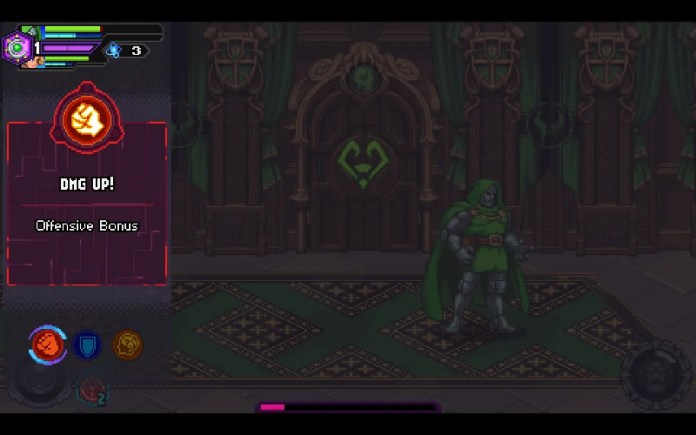
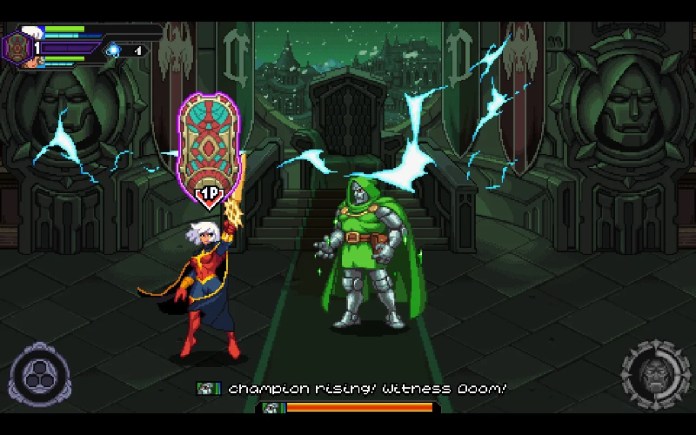
While Marvel Cosmic Invasion did add a few other characters post-launch, The Siege of Castle Doom marks the game’s biggest update to date. It adds in two beloved characters, the Invisible Woman and Doctor Doom, as well as the titular mode dedicated to the latter. The Siege of Castle Doom mode combines the beat-em-up combat of the base game with a roguelike style, alongside a mini-narrative focused on Doctor Doom’s activities during the main story. The DLC is a great addition to the Cosmic Invasion formula, even if it sometimes suffers from the same length and replayability problems as the base game.
The first thing you will notice about the new DLC are the new characters. They are unlocked from the very beginning of the game, regardless of your progress in the campaign. Both characters are extremely powerful in very different ways. Invisible Woman can fire a constant stream of projectiles that do quick damage at both short and long ranges. Her projectile allows her to trap enemies in a little bubble, while her special ability unleashes a devastating attack at close range. The attack also instantly turns her invisible, a mechanic that can also be triggered by dashing and allows her to be completely invulnerable for a short time.
As for Doom, he has all the power you would expect from one of Marvel’s most iconic antagonists. He utilizes a mix of hand-to-hand combat and magical abilities to destroy his enemies. His projectiles do damage over time to opponents, while his ultimate can clear out an entire room with a brutal electrical attack. Both characters are fantastic additions to the roster of Cosmic Invasion, and fit right in. Plus, while they do not have any new cutscenes in the main story, they do have unique dialogue for each of its levels. Even if their role in the base game is fairly minimal, the two truly come into their own with The Siege of Castle Doom.
The Siege of Castle Doom is a very unconventional roguelike mode. It focuses on Doctor Doom, attempting to gather power that would allow him to combat the base game’s main villain, Annihilus. In doing so, he threatens reality itself, so it is up to you to stop him. Similarly to the main game, you pick two characters that you can switch back and forth between, and use to summon assists. Unlike the main game, though, the way in which you progress through Castle Doomstadt is drastically different.
Essentially, you must clear out rooms throughout the castle in order to collect batteries from enemies. Each battery fills up one of three charges on a Stabilizer, with each filled charge giving you access to a new stat upgrade. Those upgrades allow you to customize your Technical prowess, as well as your Offense and Defense. Some allow you to adjust the amount of healing you can collect, your melee damage, and your defense against projectiles, among others. Once you collect three charges of the generator, you advance to the next floor and get one step closer to a final battle against Doctor Doom itself.
As you progress further, Doom is getting closer to realizing his plans. The more damage you take and the longer it takes for you to progress through Castle Doomstadt, a meter known as the Siege Gauge will charge over time. With each stage of the Siege Gauge, enemies become stronger and more capable of defeating you in seconds. If the Siege Gauge is completely filled, you lose, and your run comes to an end. However, collecting batteries can decrease the Siege Gauge. When you fill up all three stages of the Stabilizer, you come face to face with Doom for a thrilling final battle that puts all your skills to the test.
The Siege of Castle Doom mode is extremely fun. It offers a challenge that strikes the right balance between being brutal yet fair, thanks to the upgrades you can collect. In addition, the rooms you advance through offer even more perks that will be instrumental in your journey. For example, some may offer you health or abilities that you can use in combat, while others may give you infinite resources for a limited-time. It is up to you to use your understanding of the game’s characters and mechanics to advance through Castle Doomstadt. It is a gameplay loop that is consistently thrilling, and honestly had me far more engaged than I was with the base game.
That said, the sense of progression after each run is fairly negligible. Rather than getting access to permanent upgrades that give you a sense of accomplishment when you finish a run, regardless of whether it ends in failure in success, a majority of the upgrades you get are used to add further difficulty and modifiers to your experience. While it is a cool unlock in theory, its one that does not really feel rewarding. Even the new equipment that you can unlock is a minor upgrade, as the equipment that you get access to throughout a run is completely randomized.
Furthermore, there is not much replayability when you beat a run for the first time. The ending of each run is exactly the same, and is unchanged regardless of which character you pick. Plus, there are not really any new unlocks aside from new color schemes for the characters you beat The Siege of Castle Doom with. Since the runs are fairly short and do not really offer many rewards or changes after once completed, I never really had a reason to play more runs. The abundance of bugs where the game would just freeze, or my run would be ruined by an enemy that was completely inaccessible, certainly did not help matters.
These frustrating oversights are truly unfortunate, considering just how much fun The Siege of Castle Doom mode is. Still, the DLC as a whole is a fantastic addition to Marvel Cosmic Invasion. Despite its oversights, the fun new characters and exciting gameplay of the new mode genuinely improves the base game in a way that I did not think was possible. Whether you already own the base game or have been waiting for an excuse to jump in, The Siege of Castle Doom is an absolute must-play.
Disclaimer: Dotemu provided a PC (Steam) copy of Marvel Cosmic Invasion – The Siege of Castle Doom for review purposes.
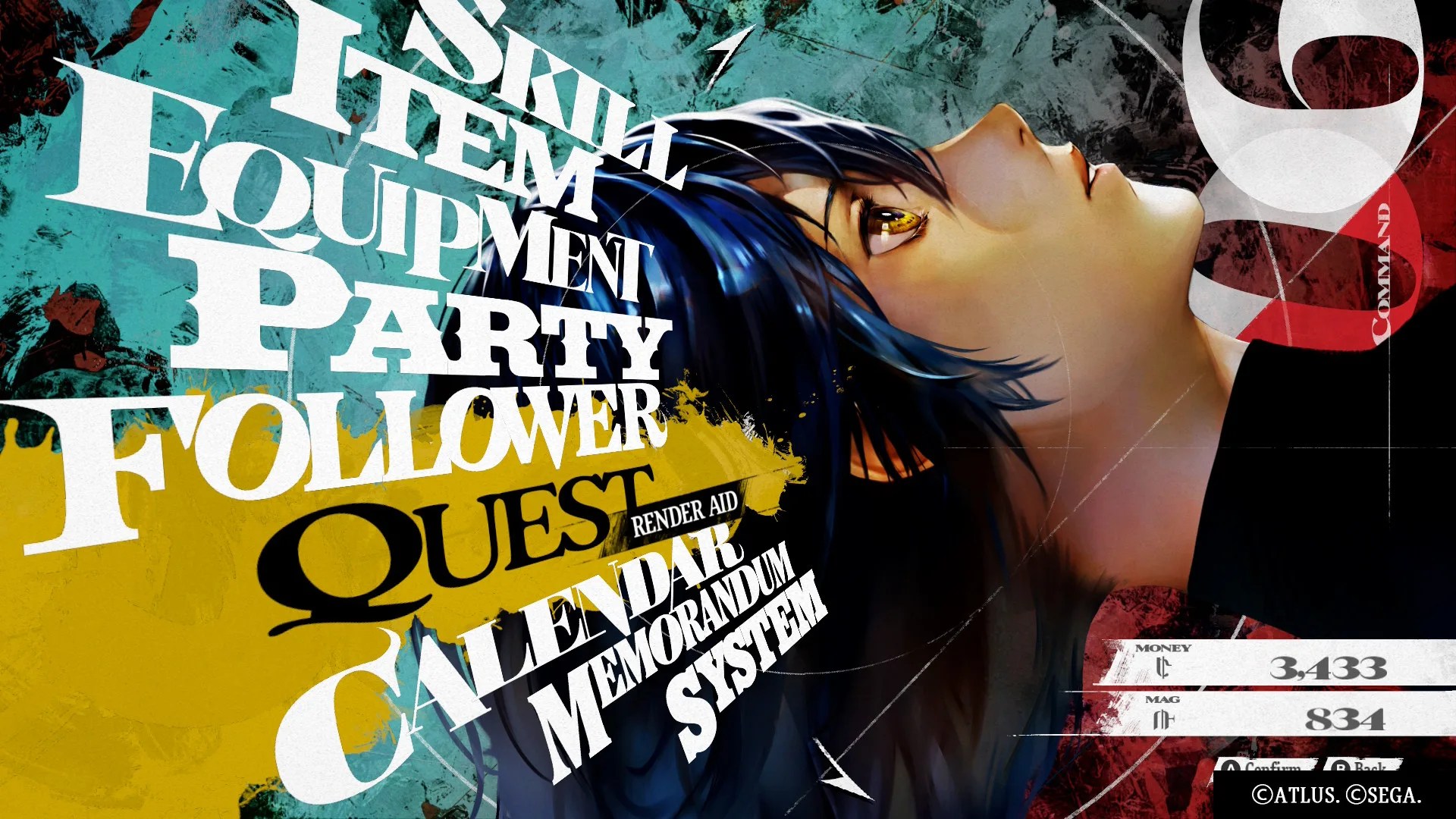
Metaphor: ReFantazio is the epitome of a fantasy RPG, and in my eyes, the game delivered on the hype and anticipation that its status as “Project Re Fantasy” warranted after several years of development. However, there was always a thought that I had while playing the game back in 2024—I seriously wished this experience was on Nintendo Switch. My wishes have been answered with the Nintendo Switch 2 version of Metaphor: ReFantazio, and while this port isn’t perfect, there’s no monkey’s paw or caveat with this one.
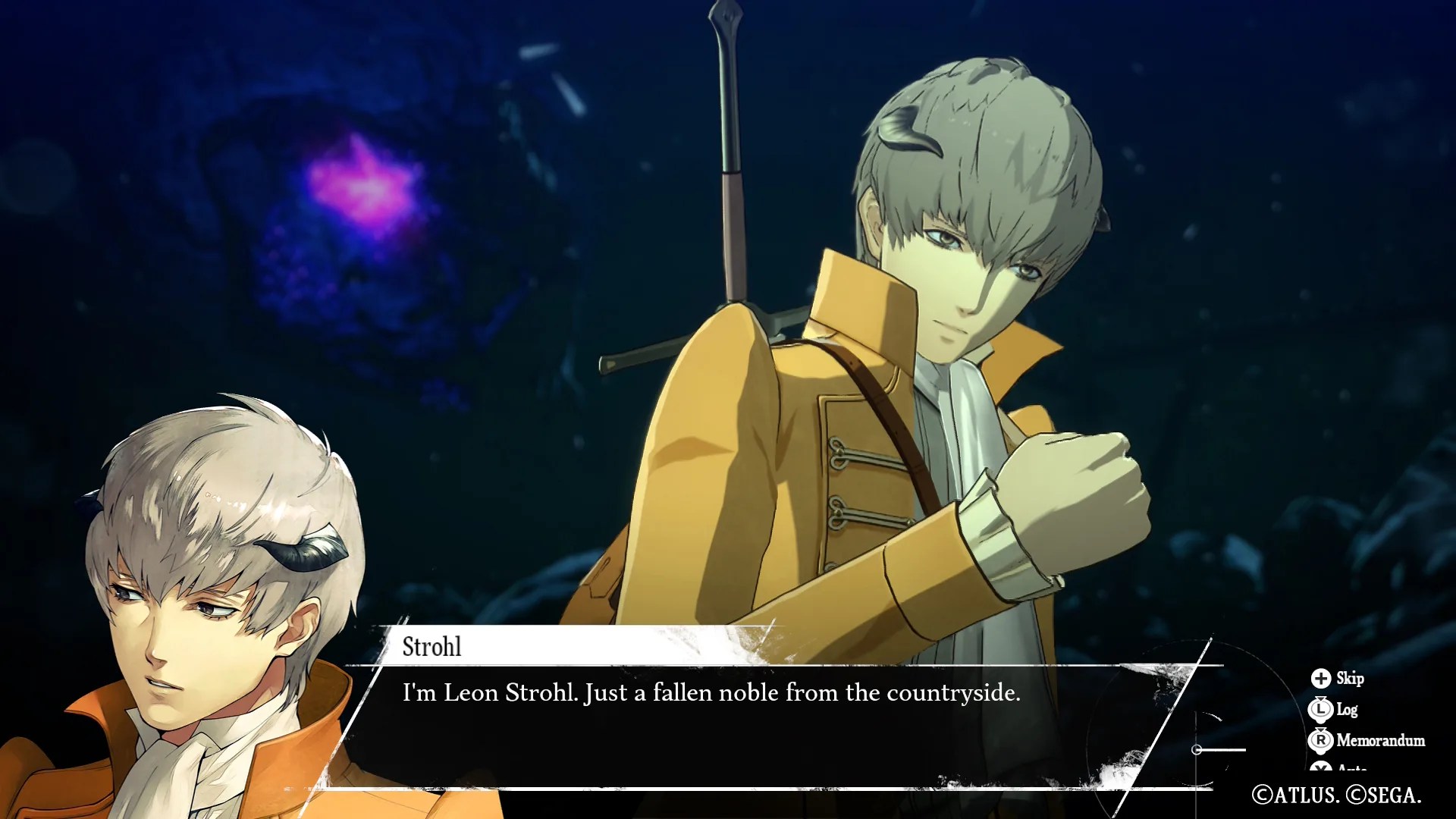
First and foremost, I highly recommend checking out my original 4,000-word review of Metaphor: ReFantazio on Final Weapon if you want a more in-depth look into the game and my experience with it. To sum it up, Metaphor: ReFantazio is exactly what I wanted in a fantasy RPG at the time. The game offers an intriguing story with a very well-written antagonist, a captivating sense of wonder and adventure, and engaging gameplay that brings some twists to what I enjoy so much about the Shin Megami Tensei combat system. Studio Zero really outdid themselves with a new IP like this, and it’s one that ATLUS is still celebrating the success of to this day.
Metaphor: ReFantazio for Switch 2 is a Really Solid Port
The Nintendo Switch 2 version of Metaphor: ReFantazio is exactly what I expected—a really solid port that holds up well visually with performance that varies on the instance you’re playing through. To be fair, the PlayStation 5 version also had plenty of issues with its performance, never quite hitting a locked 60 FPS unless in very limited cases. On Nintendo Switch 2, the frame rate is unlocked and rarely never drops under 30 FPS, with several areas and dungeons hitting frame rates somewhere in the 40s and 50s. Personally, I had no problem with this since it’s not a hitchy or stuttering port by any means, but I can see why someone would have an issue with this.
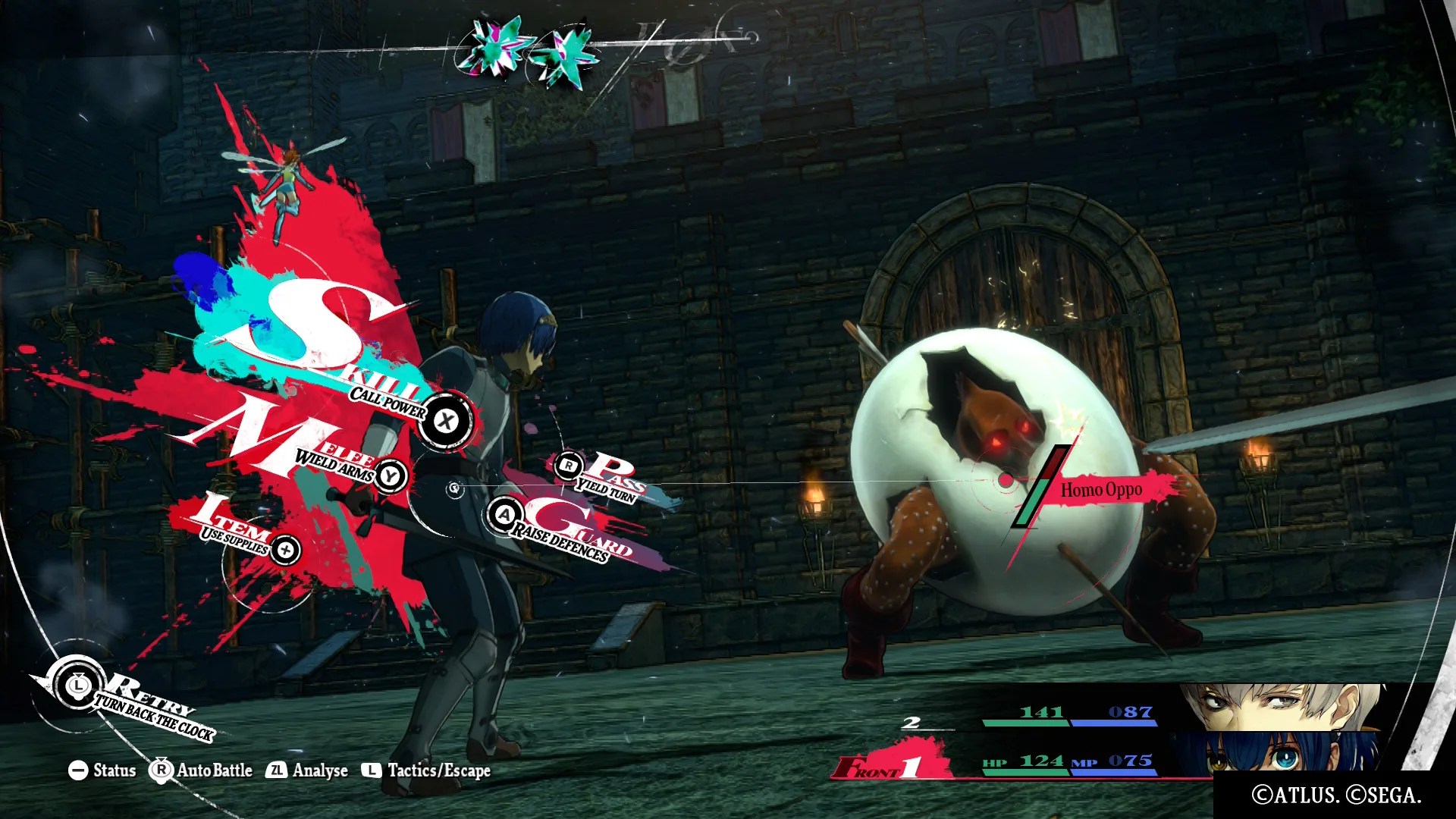
Metaphor: ReFantazio includes “Performance,” “Balanced,” and “Graphics” pre-sets, all of which can be selected at any time from the settings menu for both docked and handheld modes. The game looks at its best in Graphics mode with the frame rate going down to 30 FPS. I found that Balanced wasn’t far off in terms of visual quality, so I kept it on that pre-set the whole time to get a smooth frame rate at or above 30 FPS at all times. Metaphor: ReFantazio looks good on Switch 2, but objects and characters have this jagged and shimmering coat to them if they’re a little further away from you. I’m not exactly sure what’s the cause of this, but I’m guessing it’s a bug. As expected, docked mode mitigates this issue and offers the most clear image quality across its pre-sets.
In handheld mode, this issue is more noticeable since you’re closer to the screen compared to playing in docked mode on a 4K TV at a distance. However, the severity varies depending on the specific scene. For example, if you’re standing in downtown Grand Trad, you’ll notice that many of the details close to you are very clean and sharp while buildings in the distance have that aforementioned issue. Performance mode makes those jagged lines on textures and character models look even worse due to the lower image quality, so I recommend Balanced or Graphics in handheld mode. Thankfully, the game’s stunning UI and artwork look really good in any graphics mode you choose.
That being said, I really enjoy playing Metaphor: ReFantazio on Switch 2. I’d prefer to play it this way since the game runs and feels good to play in both handheld and docked mode with the added convenience factor. In motion, Metaphor: ReFantazio looks just as I remembered it being back when I first played it, and that’s due to the game’s incredible art direction. There’s definitely room for improvement though, as a game like Persona 3 Reload was able to hit 60 FPS with post-launch optimizations. In regards to gameplay, I’ve always thought that ATLUS’ Megaten titles were tailor-made for portable systems, and that still stands with the gameplay system of Metaphor: ReFantazio.
As for Switch 2 specific features, Metaphor: ReFantazio doesn’t support Joy-Con 2 mouse controls, but the game does support touch screen inputs and swiping. You can touch the screen to advance dialogue, press on button prompts on the UI to perform its actions such as opening a map or saving the game, or swipe up and down menu options. It’s rather limited in what it can do, but I can see it have its uses here and there in handheld mode. Haptic feedback is also supported in the form of HD Rumble 2, which is the standard for most games on the platform.
It’s Still an Instant Classic
Metaphor: ReFantazio is still the game I know and love for its many qualities, all of which are preserved and uncompromised on Switch 2. While the technical issues are certainly noticeable, it can and should be addressed in the game’s post-launch patches, which ATLUS is already working on. These issues weren’t nearly enough to make it an outright inferior version of the game—it looks and feels really great to play in handheld and docked modes. If anything, this version compelled me to play through Metaphor: ReFantazio again and optimize the time I spend in dungeons and bonding with the many characters in the game.
Metaphor: ReFantazio is a lengthy game that you can easily pour 100 hours, since there are so many locations to explore and moments to experience in the story. It feels like an adventure the entire way through, and in every sense, Metaphor: ReFantazio lives up to its description as a fantasy RPG. The premise of the Royal Tournament, the various tribes, and the lore behind the United Kingdom of Euchronia all make Metaphor: ReFantazio’s world feel vast and well-thought-out. The game also has a meaningful message that makes it feel worthwhile to play through to the very end.
You can get immersed in this game real easily, and if you’ve played Persona and Shin Megami Tensei already, that sense of familiarity will engross you even faster. The game’s action-based field combat complements the Archetypes, time management system, and Press Turn system that are all derivative of ATLUS’ past works. As ATLUS’ 35th anniversary title, Metaphor: ReFantazio lives up to the company’s legacy while offering so much that makes this IP stand out on its own. From the incredible music to the gauntlet runner you use to explore the world, so much of what makes Metaphor: ReFantazio special is also what it can call its own.
If you enjoy playing ATLUS games and somehow haven’t played Metaphor: ReFantazio yet, playing it and experiencing Studio Zero’s vision of a fantasy RPG is a no-brainer at this point. Fortunately, you can do so on all platforms for free with the Metaphor: ReFantazio Prologue Demo. It’s a good way of testing out the Nintendo Switch 2 version and its Balanced pre-set through the early game hours, and you can pick up from where you left off with save data transfers.
Metaphor: ReFantazio is available now for PlayStation 4, PlayStation 5, Xbox Series X|S, and PC via Steam and Microsoft Store. The Nintendo Switch 2 versionwill launch on November 12 in the Nintendo eShop digitally and physically (Game-Key Card) at retail.
Disclaimer: ATLUS provided a Nintendo Switch 2 copy of Metaphor: ReFantazio for review purposes.
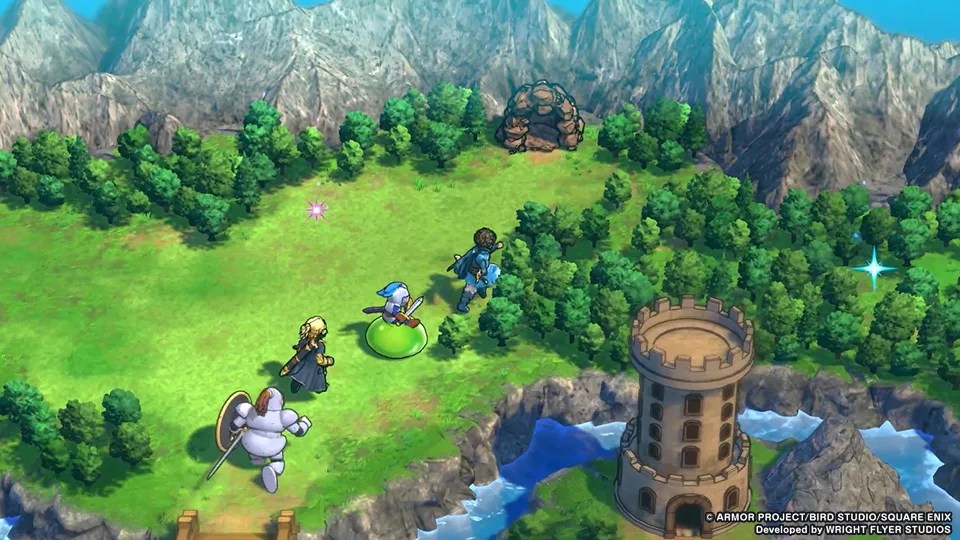
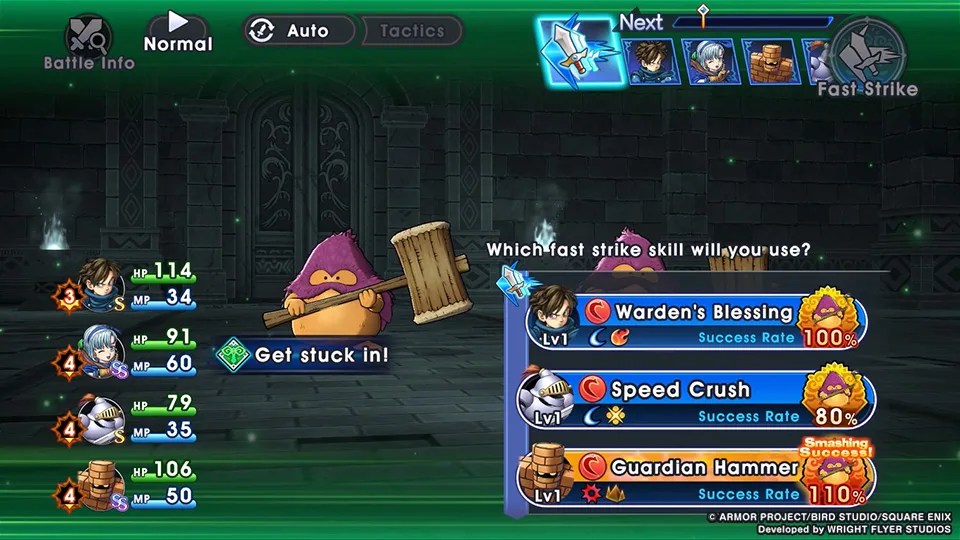
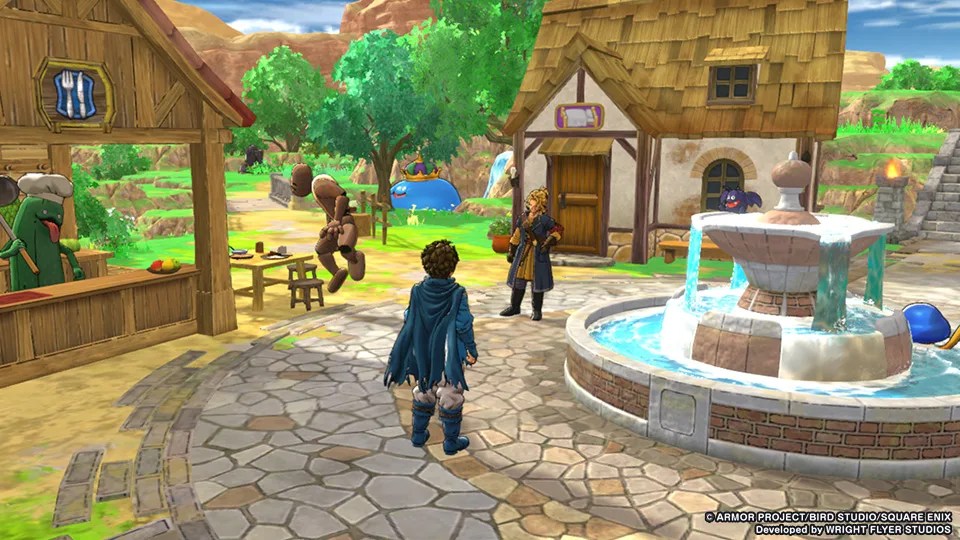
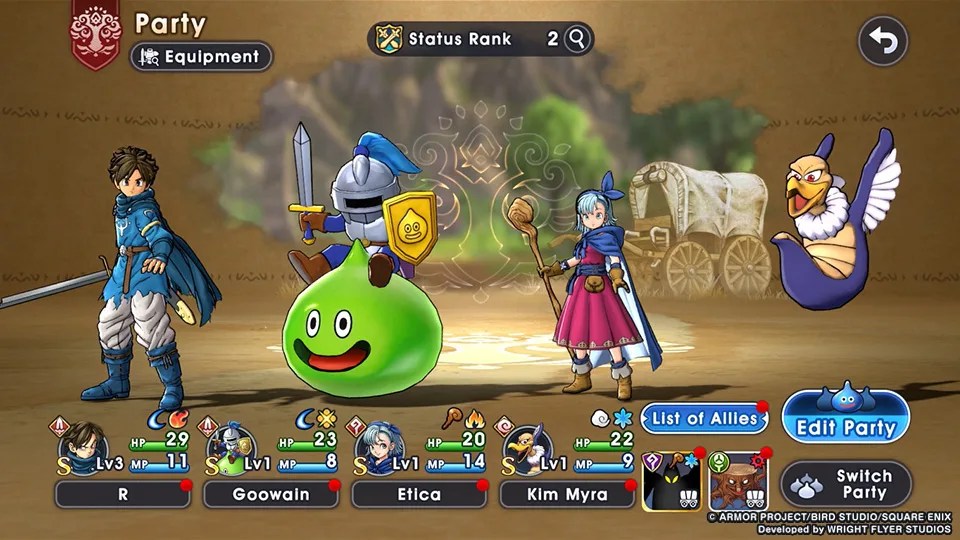
Square Enix has released its official reveal trailer for new turn-based mobile RPG Dragon Quest RPG The Cursed Tree and the Chosen Isle, confirming a 2027 worldwide release for Android and iOS. Developed by Heaven Burns Red developer Wright Flyer Studios (WFS), Dragon Quest RPG The Cursed Tree and the Chosen Isle is described as a “classic Dragon Quest adventure” that lets players “wander far and wide, take on the monsters in your path and put your tactics to the test in turn-based battles.”
The staff of the game includes:
General Director: Yuji Horii
Character Design: Akira Toriyama
Music: Koichi Sugiyama
Development: WFS, Inc. / Wright Flyer Studios
Planning and Production: SQUARE ENIX CO., LTD.
Yuji Horii also shared the following message:
Hello, everyone. Yuji Horii here.
Our DRAGON QUEST games for smartphones have given us the chance to try out all kinds of new ideas.
With DRAGON QUEST RPG, we’ve focused more than ever on capturing that unmistakable DRAGON QUEST feeling: exploring towns, meeting new allies, gearing up and steadily growing stronger. It’s that same classic adventure, brought to your smartphone. That’s why we put ‘RPG’ in the title.
Even on busy days, there’s room for a little adventure. You can play when you have the time, make some progress and come back whenever you’re ready. We’ve made it free to play so that longtime fans and first-time adventurers alike can enjoy it at their own pace for years to come.
Day by day, you’ll venture further into the world, with an ever-stronger party by your side. Those small steps add up to a grand adventure. I hope players in Japan. and all around the world will enjoy this new DRAGON QUEST.
What’s more, a Dragon Quest RPG The Cursed Tree and the Chosen Isle closed beta test will be held from December 8 through December 15. Applications are now open until November 23, and 25,000 participants will be selected.
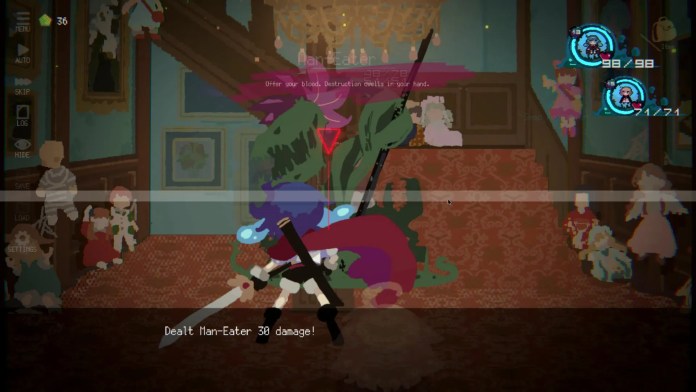
The opponent’s next attack will surely be lethal. With no way to defend against it, the situation appears to be almost hopeless. However, with one last trick up their sleeve, the protagonist and their partner narrowly avoid certain death. These moments are when Annihilated is at its peak.
Annihilated is a new, story-driven roguelite that tasks the player with helping one member of a hero party escape a mysterious dungeon. It takes a similar approach to deckbuilders like Slay the Spire while adding its own twist. The result is a charming little game with great atmosphere and gripping gameplay.
Dark Dungeons
What’s striking right away is Annhilated‘s curious tone. The character designs lean hard into the cute side of things. Their faces express specific emotions with incredible clarity, and with the exception of perhaps the Priest, none of them look particularly threatening.
However, this is juxtaposed with a rather bleak and macabre premise. The player’s entire rescue squad has perished inside a sinister dungeon, and only one member of the hero’s party can be saved. How the campaign plays out reflects this early choice.
While the core progression remains mostly the same, each hero party member represents different narrative campaigns. This impacts gameplay as well, and some characters are not as advantageous to bring along as others. In fact, the Mage outright suggests the player shouldn’t take them.
This is why I recommend starting with the Hero’s story. They generally have strong stats and can quickly recover from death, making them a tank of sorts. It seems to be the intended place for players to get comfortable with the game’s mechanics.
Search and Rescue
Anyone with roguelike/roguelite experience will quickly familiarize themselves with the structure of Annihilated. Even the recent Star Wars: Galactic Racer follows a similar structure. In Annihilated, players can select from a variety of nodes to visit, whether it be an enemy encounter, an event, or a treasure chest.
It’s simple in nature, but like much of the game, that simplicity hides the true depth that lies beneath. For example, before entering an enemy encounter, Annihilated only presents a silhouette to identify the upcoming opponent. However, by playing the game more, these silhouettes are eventually easily recognized and aren’t random at all.
The game places far more control in the player’s hands than you may initially realize, practically begging you to keep replaying. It’s deliberately designed to encourage experimentation and exploration of the mechanics. Annihilated even gives the player plenty of leeway to make this happen.
It’s a far more forgiving game than most in its vein, but I’ve also played far more dull games of a similar nature. Saves are frequent, with more slots available than one could reasonably ask for. If a boss is proving to be too much of a mountain to climb, it’s easy to turn the clock back. Perhaps it removes some of the appeal of the genre, but some may appreciate this casual-friendly approach.
Annihilated by Combat
Just because the game overlooks many player mistakes doesn’t mean there isn’t plenty to master. Annihilated is essentially a card game where the player’s hand makes up their entire deck. While there is technically no pile of cards to draw from, the break mechanic is the star of the show, and it makes up for what might be a perceived limitation.
Essentially, each card has a set number of uses. Once a card is used up, it will be destroyed, or annihilated, as one might say. Permanently parting with these tools has its benefits, too, and the player can even choose to break equipment before exhausting all of its uses.
Breaking cards can trigger various effects and deal more damage. More importantly, opponents all have a break meter that depletes as they take damage. When attacking with a card’s last use, the player can steal the enemy’s equipment and deal critical damage. What the enemy will drop is consistent and never left to chance. This opens up many compelling decision-making scenarios. Some items are not going to be worth breaking a card for, but others may require more thought.
The Timing is Right
Annihilated presents the player with two primary ways to experience its battle system. One is based on probabilities, like a typical RPG battle system. Stats purely determine how likely an attack is to hit.
However, the game’s other method of combat is far more intriguing and is likely the intended way to play. It adds a real-time component to a turn-based battle system, which requires the player to time button presses or clicks correctly. This is what I chose to go with, and I never felt compelled to switch.
What makes this system interesting is that each weapon behaves slightly differently. Some indicators move faster than others, and it’s possible to upgrade weapons to cover greater ranges, making successful hits easier. There are usually multiple points to hit, corresponding to different enemies, so there is also the challenge of correctly selecting which opponent to attack.
This leads to situations where the most optimal spot to attack may also be the most difficult to time right. It adds yet another layer of decision-making to the process of battle. Sometimes playing it safe is the better option, but when health is low and a strong attack is the only available form of defense, that risky play can be the only viable option.
Building an Atmosphere
While clearly made on a limited budget, Annihilated features an appealing aesthetic throughout. The art direction combines the look of a classic RPG with a hand-drawn style that’s not afraid of thick line work. The game can look cute one moment and fill the player with dread the next.
It’s not outright a horror game, but spooky elements add intrigue to the narrative. The story can feel cryptic and a bit disjointed to start, but it compels the player to figure out what is going on in this dungeon. It’s not quite as eerie as Shinonome Abyss, another roguelike I reviewed earlier this year, but it can come close at points.
The translation is mostly serviceable, but it has questionable moments. This can make the game harder to learn, as I wish some card descriptions had more clarity, but trial and error also does the job.
What there isn’t in quantity, Annihilated makes up for with quality in its soundtrack. The music plays often enough to make one familiar with its melodies, but never to the point of irritation. In fact, one battle theme in particular almost had me grooving in my chair.
Annihilated is a Macabre but Charming Roguelite
It might take a little while before Annihilated‘s intricacies become apparent to the player, but once it does, there’s no going back. It’s a blast playing around with the tools provided and seeing what works. There are undeniable intrinsic rewards the more the game is played.
Is it the best in the genre? Absolutely not, but it does manage to make a strong argument for itself. With an engaging gameplay twist and an intriguing cast, Annihilated is definitely worth checking out for its low price point at $16.99.
Bandai Namco has announced that free-to-play Digimon mobile card game DIGIMON ALYSION has surpassed 200,000 pre-registrations for Android via Google Play and iOS via App Store worldwide. To celebrate reaching 200,000 pre-registrations, Bandai Namco has revealed the pre-registration milestones for DIGIMON ALYSION, which include several rewards.
The following rewards will be distributed when the pre-registration milestones are met:
Pre-registration for DIGIMON ALYSION is available now across 49 countries and regions, including Japan and North America. The game is currently planned to release by the end of 2026 for Android and iOS. At launch, the game will support Japanese, English, Simplified Chinese, Traditional Chinese, and Korean language options.
As previously announced, DIGIMON ALYSION is set in the world of the DIGIMON LIBERATOR webcomic and light novel with a new story mode, an original cast of characters, and digital versions of Digimon Card Game cards called “DigiAly,”
Here’s an overview of the new title, via Bandai Namco:
Bringing the deep and expressive gameplay of the Digimon Card Game to mobile devices and blending that gameplay with the world and story of the DIGIMON LIBERATOR webcomic and light novel, DIGIMON ALYSION is set to be a fun and rewarding experience for casual Digimon fans and competitive TCG players alike!
Manga Box has announced that a new TV anime adaptation of Izumi’s My Death Flags Show No Sign of Ending light novel series will premiere in 2027. Mitsuya Otosu, the author of the My Death Flags Show No Sign of Endingmanga adaptation, released a new illustration to celebrate the announcement.
Izumi launched the original story on the Shosetsuka ni Naro (Let’s Be Novelists) website in 2014. Takarajimasha publishes the series with illustrations by Achiki.
Otosu launched the manga adaptation on the Manga Box smartphone app in 2020, and 12 compiled book volumes have been released thus far. The 13th compiled book volume releases on November 29. One Peace Books publishes the series in English.
Here’s an overview of the manga series, via One Peace Books:
Normal college student Kazuki Hirasawa finds himself inside the body of Harold Stokes, an evil character in the world of Kazuki’s favorite game, Brave Hearts. The problem is, if the game’s events go as they should, he’ll one day find himself defeated by the hero’s party. Will he be able to find a path to survival and avoid his many death flags using the incredible power of Harold Stokes’s body and his own knowledge of the game? Join Harold in this magnificent manga adaptation of the work that won the 3rd Shosetsuka ni Naro Contest.
Kodama has announced that Keisuke Itagaki’s Baki Hanma manga is getting an official print release in English in July 2027. More details about the English print release of Baki Hanma will be revealed at a later date.
Kodama describes the story of the manga:
The fight Baki has spent his entire life preparing for is finally within reach.
Yujiro Hanma is the strongest creature on Earth. His son intends to take that title from him. In the third arc of Keisuke Itagaki’s legendary martial arts saga, Baki seeks out opponents who defy every limit of human strength, from the prison powerhouse Biscuit Oliva to the prehistoric warrior Pickle. Each confrontation brings him closer to the battle fans have been waiting for. Every punch, every broken bone, every impossible victory has led to this.
Fans can also look forward to a new anime adaptation of the Baki Gaiden: Retsu Kaioh wa Isekai Tensei Shitemo Ikkō ni Kamawan (Baki Side Story – Kaioh Retsu Doesn’t Mind At All If He Gets Reincarnated in Another World) spinoff manga. Eiji Mutsui, Keisuke Itagaki, and Daisuke Ihara launched the manga in Akita Shoten’s Monthly Shōnen Champion magazine in 2020.
Imagineer and SUCCESS Corporation have announced that Medabots Classics Plus is coming to PC via Steam with its Kabuto Ver. and Kuwagata Ver. this December in Japan. Each version of Medabots Classics Plus will be available for 5,478 yen on Steam.
Medabots Classics Plus launched on November 12, 2020 for Nintendo Switch in Japan.
Here’s an overview of the title from Steam, via Gematsu:
A historic collection of eight games from Medabots series.
This collection includes the five numbered games in the series, from Medabots to Medabots 5: Susutake Mura no Tenkousei, as well as Medabots Navi, Medabots G, and Medabots Two: CORE. Players can enjoy a diverse range of genres, spanning RPG, strategy RPG, and action.
While the original appeal of the games remain unchanged, the collection introduces convenient features like the ability to save and load at any time, a Robattle skip feature, and a high-speed mode. It also supports online battles and parts trading between both the Kabuto Ver. and Kuwagata Ver.
This is the definitive Medabots series collection.
Included Titles
Medabots (Game Boy, 1997) – RPG
Medabots 2 (Game Boy Color, 1999) – RPG
Medabots 3 (Game Boy Color, 2000) – RPG
Medabots 4 (Game Boy Color, 2001) – RPG
Medabots 5: Susutake Mura no Tenkousei (Game Boy Color, 2001) – RPG
Medabots Navi (Game Boy Advance, 2001) – Strategy RPG
Medabots G (Game Boy Advance, 2002) – Action Game
Medabots Two: CORE (Game Boy Advance, 2002) – RPG
Imaginer will also release Medabots S for iOS and Android worldwide on January 21, 2027, and pre-registration is now available. The game is known as Medarot S: UnlimitedNova in Japan.
Patch notes for Super Mario Party Jamboree update 2.4.0 may be read below, via Nintendo’s support website.
Super Mario Party Jamboree Update 2.4.0 Patch Notes
General
The following updates have been made when playing the game on Nintendo Switch 2:
GameShare using GameChat is now available for the Nintendo Switch 2 Edition.
Note: If you select “GameShare” on the title screen, you will now be able to select “Friends via GameChat”.
Maps and rules have been added as options for GameShare in the Nintendo Switch 2 Edition.
The following updates have been made when playing the game on Nintendo Switch 2 and Nintendo Switch:
Fixed other issues to improve the gameplay experience.
Released on July 24, 2025, Super Mario Party Jamboree Nintendo Switch 2 Edition + Jamboree TV offers new content and minigames. New minigames will support the new mouse controls, enhanced rumble, sound recognition, and camera features. There’s also the Bowser Live mode and Carnival Coaster modes.
In Final Weapon’s review of Super Mario Party Jamboree: Nintendo Switch 2 Edition + Jamboree TV, we described it as “one of the best Mario Party games ever with a mediocre collection of updates that feel like gimmicks for the most part. The puzzling decision to split updates across the Switch and Switch 2 content only adds to the overall feeling that this is a channel I can’t recommend tuning into unless you’re the biggest of Mario Party fans.”