The official website for the anime adaptation of Chie Shinohara’s Red River (Sora wa Akai Kawa no Hotori) shōjo manga has revealed a new promotional video and the main visual for the anime’s second cour. The video previews the anime’s new opening theme song, “Akatsuki no Hoshi” (Morning Star), by Nana Mizuki.
Wataru Katō as Kail Muršili (later King Muršili II)
Hiroki Nanami as Satoshi Himuro and narrator
Aya Uchida as Queen Nakia
Shōya Chiba as Zannanza Hattušili
Tomoaki Maeno as Ilbani
Kōji Yusa as Urhi
Kōsuke Toriumi as Prince Mattiwaza
Tomohiro Ōno as Kikkuri
Shiki Aoki as Hadi
Natsumi Kawaida as Ryui
Misato Matsuoka as Shala
Haruki Ishiya as Kash
Junya Enoki as Rusafa
Shinichirō Kamio as Mittannamuwa
Sōma Saitō as User Ramses
Shun Horie as Juda Haspasrupi
Nana Mizuki as Ursula
Kōsuke Kobayashi directs the anime at Tatsunoko Production. Yoriko Tomita oversees the series scripts, and Kenji Fujisaki is the character designer. Historical researchers for the anime include Kimiyoshi Matsumura and Daisuke Yoshida, who are members of the Japanese Institute of Anatolian Archaeology for the Middle Eastern Culture Center in Japan. Yoshihisa Hirano is composing the music, while Hiroto Morishita is the sound director. Team Kawadon is credited for sound production. Matsuyama will perform the new ending theme song “flow feat. Yūko Andō.”
Shinohara first serialized the manga from 1995 to 2002 in Shogakukan’s Shōjo Comic (Sho-Comi) magazine. VIZ Media released the manga in English in 2024, and 28 volumes were published.
Here’s an overview of the manga’s first volume, via VIZ Media:
Yuri, a pretty Japanese girl, is ecstatic after passing her college entrance exam and having her first kiss with her childhood friend-turned boyfriend. However, her luck soon changes. She starts to notice that water becomes agitated whenever she goes near it. One night, hands appear out of a puddle on the street and drag her into the water! Transported to an ancient village in the Middle East, she is then captured by armed troops and taken to the Queen’s palace for a human sacrifice.
The official website for the anime adaptation of Minoru Toyoda’s Draw This, Then Die! (Kore Kaite Shine) manga revealed that the anime will receive a second season. The announcement was made following the broadcast of the first season’s 12th and final episode on Friday.
Hiroaki Akagi directed the anime series at Shin-Ei Animation. Hiroko Fukuda oversaw the series scripts and wrote the scripts along with Aki Itami and Kanichi Katō. Takekazu Segawa served as the character designer. Tatsuya Kitani performed the opening theme song “Isho,” while Regal Lily performed the ending theme song “Conifer.”
Additional staff includes:
Color Key Artist: Kumiko Yanagisawa
Art Director: Reiji Kasuga
Compositing Director of Photography: Shigemitsu Hamao
Editing: Aya Hida
Music: Hiroaki Tsutsumi (MIRACLE BUS)
Sound Director: Tatsuhiro Amano
Sound Production: Bit Grooove Promotion
Toyoda (Love Roma) launched the manga in Shogakukan’s Monthly Shonen Sunday magazine in November 2021. The series is also available on Sunday Webry.
Lastly, here’s an overview of Kore Kaite Shine, via MyAnimeList:
Ai Yasumi, a first-year high school student living on Izu-Oshima, loves manga more than anything. When she learns that her long-admired, yet long-inactive, favorite manga artist Hoshi no Rei will be exhibiting at COMITIA, she sets off on a journey to Tokyo.
What she doesn’t expect, however, is that a fateful encounter at the event will change her life forever.
“How does one become a manga artist?” Ai steps into the world of manga creation—a path she thought she understood, yet knows so little about. This is the story of a girl taking her first steps down the road to becoming a mangaka.
The YouTube channel for the Code Geass franchise has released a new teaser trailer for Code Geass Star Chaser Aspal (Code Geass Hoshi Oi no Aspal), a new anime set to premiere in 2027. A new promotional video for the upcoming anime was also revealed.
Kazuya Nomura is directing the new Code Geass Star Chaser Aspalanime. Mado Nozaki is in charge of series scripts, Rolua is the character designer, and Yoshi. is the Agarmatha designer. Junbun Lin handles background and special effects, and Ichinogi designed the title logo.
A revival screening event for a 13 films in the Code Geass series, titled “CODE GEASS 20th Anniversary Retrospective: Road to CODE GEASS 20th Year,” began on January 6, 2026. The three Code Geass: Lelouch of the Rebellion films, the five Code Geass: Akito the Exiled films, Code Geass Lelouch of the Re;surrection, and the Code Geass: Rozé of the Recapture films are being screened in order through June 25, 2026, in Japan.
Despite my overwhelming love of the superhero genre, I have never been the biggest fan of stories involving the X-Men. While I’ve watched all the movies and read several comics, something about the stories themselves never quite clicked for me. Still, there were plenty of exceptions to my lack of immediate interest, chief among them being the character of Wolverine. His role in the X-Men films of the last few decades, as well as in various cartoons and video games released throughout the years, has made him the most famous member of the team by far. So, when Insomniac Games announced that it was making a Wolverine game, I believed it was a match made in heaven.
The first trailer for Marvel’s Wolverinehad me unbelievably excited, and further trailers only increased my anticipation. The prospect of a Wolverine game by Insomniac that balanced the tone of Logan with hack-and-slash gameplay sounded incredible. After all, Insomniac has proven to be capable of making great superhero games thanks to its work on the Marvel’s Spider-Manseries. Despite the five years of anticipation and a somewhat divisive release, I was extremely eager to play Marvel’s Wolverine for myself when it finally released. Unfortunately, Marvel’s Wolverine is one of the most disappointing superhero games I have played in quite some time, mainly due to its poorly written narrative and lackluster gameplay loop.
A Failed Origin Story
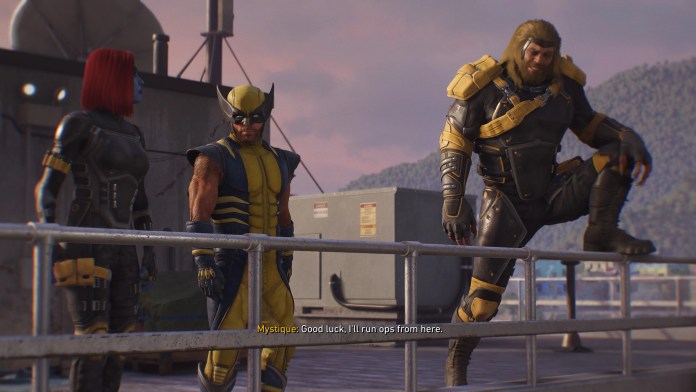
Marvel’s Wolverine takes place in the same universe as Spider-Man, but unlike the average Wolverine story, the X-Men don’t currently exist yet. In fact, most of the world is completely unaware of the existence of mutants. However, there are still figures eager to stamp them out by any means necessary. One such threat is Bolivar Trask, the CEO of a fiercely anti-mutant corporation, who has just captured a mutant by the name of Nathaniel Essex. Essex just so happens to be the leader of Team X, a small strike force of mutants comprised of Mystique, Sabretooth, and of course Wolverine. The game starts with you, as the titular character, saving Essex from Trask.
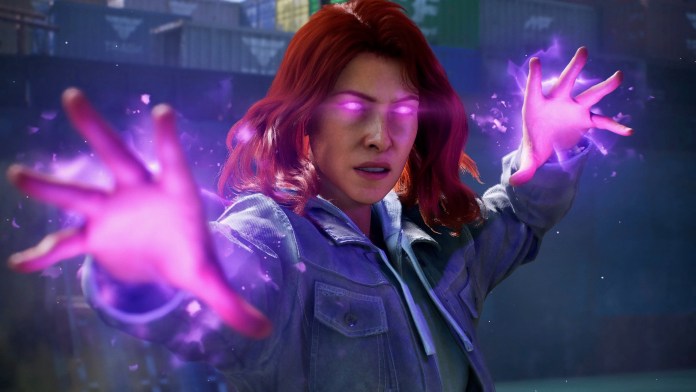
As the game progresses, Wolverine’s world is shaken by the arrival of Jean Grey, a fellow mutant who inspires him to be a better ally to mutants. His growing infatuation with Jean is frequently hit with obstacles, though, such as the consistent threat of Trask and his new army of Sentinel robots, the mysterious group known as The Hand, as well as Essex’s own sinister nature. All the while, Wolverine is forced to overcome his animalistic nature as he tries to protect both mutants and humans alike, especially as a mysterious voice in his head goads him into embracing the rage within.
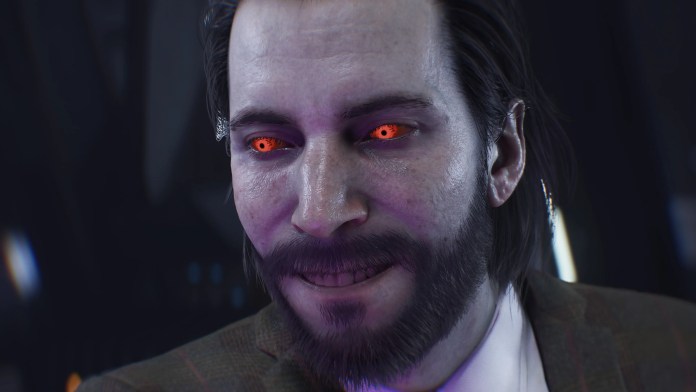
The narrative of Marvel’s Wolverine had a lot of potential to be truly great. The use of characters like Sabretooth, Nathaniel Essex (also known as Mr. Sinister), and Jean Grey should have made for a great Wolverine story, even without the use of the X-Men. The voice performances of the characters highlight that potential, as these are easily the best part of the game. Krizia Bajos, Troy Baker, Brett Gipson, and Jason Spisak in particular do amazingly as Jean Grey, Essex, Sabretooth, and Trask, respectively. I would be remiss if I did not mention Liam McIntyre as Wolverine, who especially shines in the moments where the character’s rage takes center stage.
Yet, the great performances are not enough to distract from the story’s messiness, which is a result of the game’s poor writing and pacing. The former primarily applies to the dialogue and characters. Jean Grey, for example, does not really have much of a personality of her own, and rather, she exists only to further Logan’s story. Specifically, she has no character flaws or traits that distinguish her from Wolverine himself. The two never argue or have differences in the way they approach their shared goal of saving mutantkind. As for their love story, while they do have some chemistry thanks to the performances of their voice actors, a third-act twist ruins any potential interest I had in their interactions due to just how convoluted the reveal is.
Then, there’s Wolverine himself. In most other interpretations, Wolverine is a character that ranges from being a cowboy-esque figure to an anti-hero with a heart of gold, one that favors action over words. Here, though, he is making constant quips in much the same way a character like Spider-Man would. Wolverine constantly talks in the middle of battle, throwing out wisecracks while rarely showing the edge that has defined him in the past. Worse still, the other characters treat him as though he is the Wolverine that more people are familiar with. He often describes himself as someone who doesn’t talk much, while others tell him that he doesn’t care about anything. Despite those comments, these words do not coincide with how he actually acts in-game, creating an odd disconnect between the dialogue and the characters themselves.
Speaking of other characters, the use of a supporting cast that is traditionally known to be villains to the X-Men is a cool idea in theory. In execution, it falls short due to their lack of meaningful development. For instance, Nathaniel Essex starts the game out as a kind figure and leader who genuinely wants the best for mutants everywhere. However, at a certain point his personality does a complete 180. There is no slow devolution of his morals; one mission he is warm and kind, and the next, he is almost comically cruel. The same lack of cohesive development applies to every character, as they all frequently change motivations and personalities at the drop of a hat.
Part of the character’s inconsistencies can be attributed to the pacing. The first act focuses on Trask and his Sentinels, but once that act ends, the danger that the character represented is shrugged off in favor of introducing the Hand. Then, in the final act, the Hand are brushed off in much the same way as Trask was. There is very little connective tissue between the game’s three acts, and to make matters worse, the aforementioned third act plot twists only make it harder to follow what is really going on.
It is hard to be sympathetic to a character literally named “Mr. Sinister.”
Beyond the poor pacing and writing, the worst part of the narrative of Marvel’s Wolverine is how derivative it feels of Insomniac’s other Marvel games. For instance, one of Wolverine’s key allies throughout the story ends up being a major antagonist in the third act. This is now the fourth time Insomniac has used such a trope, as it has used the exact same concept in Marvel’s Spider-Man, Miles Morales, and Spider-Man 2. Characters have none of the intensity and rage that you’d expect, and even if they curse more often due to the M-rating, they act more like the sort of characters you would see in Spider-Man‘s supporting cast.
There is nothing unique about the story of Wolverine. At its best, it is an attempt to apply the writing style of the Spider-Man games to the story of the most famous mutant, all without understanding the fundamental differences between the two. At its worst, it is a poorly paced mess that throws a bunch of random ideas together with little to no cohesion or well-written characters to make it work. Annoyingly, the gameplay of Marvel’s Wolverine is just as flawed.
Going Through The Motions
When I think of how a Wolverine video game should play, a few things come to mind. The use of the healing factor as a key mechanic, alongside the character’s signature claws lending themselves to a hack-and-slash-style game, feels like a no-brainer. The gameplay should also be fast-paced, and above all, extremely violent. The first gameplay trailer for Marvel’s Wolverine had me and many others deeply excited, since it seemed to hint that these elements would be a fundamental part of its combat mechanics. In reality, this latest game from Insomniac is slow and mindless, especially with how often it tried to handhold me through basic mechanics.
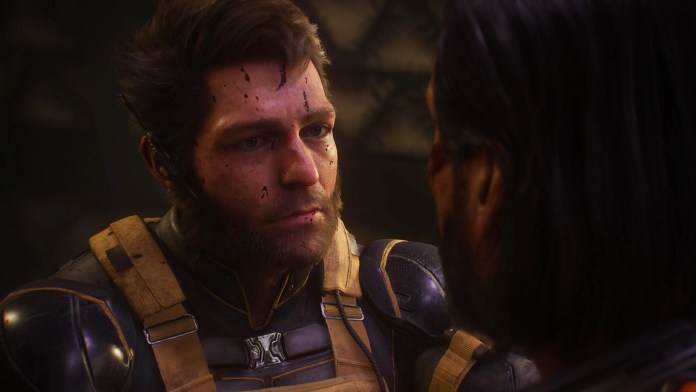
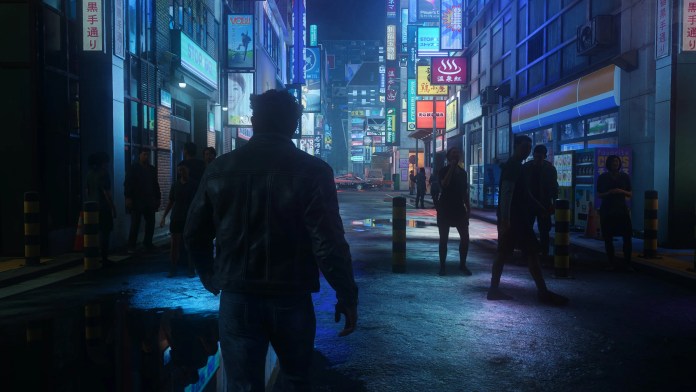
To start with, there’s the world of Wolverine. Unlike Spider-Man, Wolverine will visit four major key locations throughout the game: Telambang, Canada, Madripoor, and Japan. These are not open hubs that you can freely explore; instead, they are backdrops to the game’s 30 levels. Granted, the visuals of each locale are beautiful, especially in the few moments of exploration you get. On the subject of visuals, though, a lot of the facial models for the game’s key characters look off. There is a slight uncanniness to them, mainly due to how they clearly try to mimic the face of the actor performing the motion capture for the role. Wolverine’s face in particular is a poor imitation of Liam McIntyre’s face, likely due to the limitations of the game’s engine.
In regard to the level design itself, it is frustratingly repetitive. Each level is very linear and does not really allow for broader exploration. While most of these levels are comprised of combat encounters, there are several segments where you are doing small traversal puzzles. These range from parts where you have to move at a snail’s pace around an environment as part of a story sequence, or where you have to chase a certain figure across the map. While some of the motorcycle segments add some nice variety, these sequences are largely identical to each other.
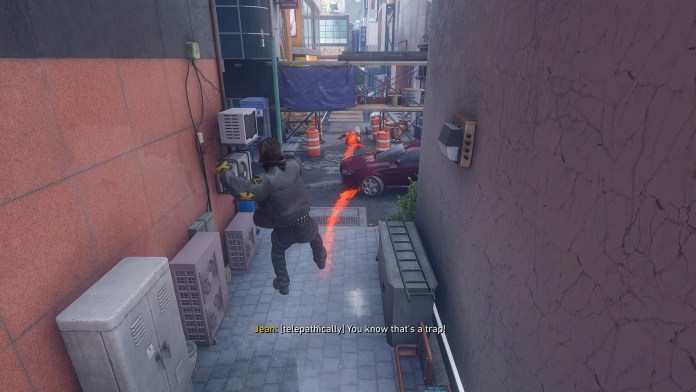
Having to chase enemies in back-to-back levels quickly got exhausting, especially since it often killed the game’s overall pacing. These are made even worse by just how frequently the game would try to hold my hand the moment I deviated from an objective for even a second. For instance, when I was trying to explore an area before I progressed to the next area, Wolverine kept remarking to himself that “I should keep moving.” In addition, the use of guides like a blue stream that guided me to my next objective, as well as tutorials that would constantly explain the same mechanic over and over again, was more irritating than helpful. Annoyingly, I did not even have the option to turn off these features.
I don’t think I need orange gas to find the clearly visible red ninja running around Japan.
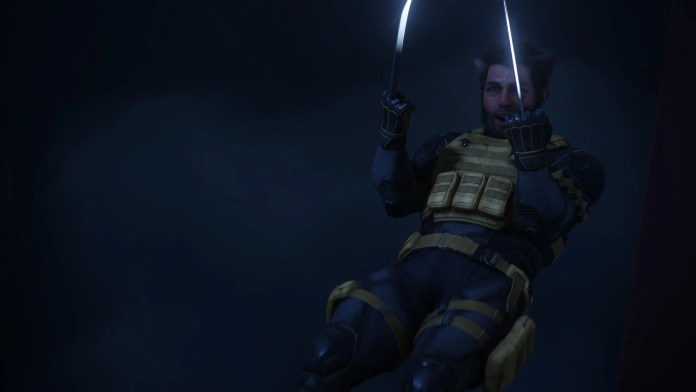
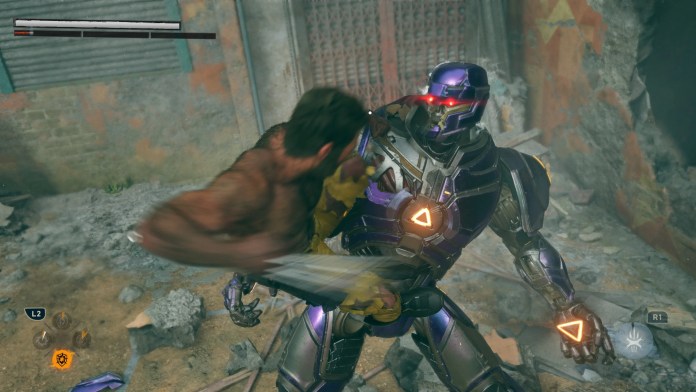
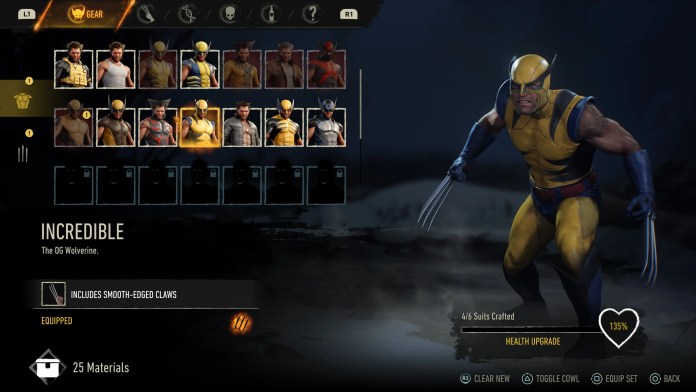
Then, there’s the combat, which is easily the best part of the game. It is at its best when you play it on the hardest difficulty, and you have to master the use of both Wolverine’s healing factor and six claws. The occasionally visceral nature of combat was fun to play around with at times, which was certainly helped by the abundance of costume options. My favorite detail is how the more damage you take, the more your costume is torn apart. Yet, the combat’s high moments are not enough to distract from its several major flaws.
Slashing enemies often lacks any real impact. It feels more like you are cutting into hard steel, rather than slashing through human bone. This is likely due to the consistent use of android or robotic enemies, which comes with the side effect of less of the brutality that I had been hoping for. Plus, each encounter often felt mindless. Even on the hardest difficulty, I rarely died at all, and I instead found myself just pressing the square button over and over again without putting any thought into what I was doing.
In terms of the bosses, they range from being too easy to being too spongy; the latter is particularly frustrating as it only further emphasized the combat’s lack of weight. There are plenty of additional challenges that can be completed to get more upgrades, but having to do traversal and other smaller combat scenarios to get those upgrades quickly got old. The game also has stealth sections, but they are hindered by the same handholding problems as the rest of the game. Namely, enemies and their positions are visible at all times while in stealth, which removes any of the challenge that could be present.
Additionally, I encountered quite a few bugs and glitches. These were thankfully fairly minor, such as collision glitches where characters would glitch into a wall or float in mid-air. There were one or two more major bugs, such as how the game would sometimes fail to register parry inputs. Moreover, while it may not be a bug, it is frustrating how there are several quick-time events that complete themselves automatically, even if I pressed an entirely different button than the one on-screen. While these do not single-handedly ruin Marvel’s Wolverine, they are some of the many reasons why I did not find much enjoyment with this game.
Overall, so much of Wolverine‘s gameplay lacks any meaningful depth. Every component of the game feels lifeless, with the lackluster combat and the exploration only being the tip of the iceberg. While there were some moments where I had fun with Marvel’s Wolverine, these were few and far between. By the time the credits rolled, I was relieved to be done, a feeling that genuinely saddened me considering how much I’ve loved Insomniac’s prior Marvel games.
The Dark End of the Street
Ever since 2018, I have loved Insomniac’s Marvel games. Marvel’s Spider-Man is a near-perfect masterpiece thanks to its brilliant story and gameplay. Spider-Man: Miles Morales may not have the same narrative depth as its predecessor, but the modified setting and gameplay changes more than make up for it. Spider-Man 2 is fantastic as a result of the perfected gameplay and exciting story moments, even if the third act falters a bit. These three games may not be perfect, but they are still worthy adaptations of their respective characters. So, the thought that the same developers would be the first to bring Wolverine to the gaming world since 2009 seemed like a recipe for perfection. Needless to say, I was extremely infuriated with the finished product.
The narrative of Wolverine is a cluttered mess. While the performances of the game’s characters do shine, the poor writing of said characters is likely to frustrate anyone regardless of whether they are a fan of the original comics or not. The protagonists and antagonists lack any development or depth, and instead, frequently change motivations at the drop of a hat. The fast-paced pacing and absurd third-act plot twists further highlight the story’s incoherence.
The gameplay is equally all over the place. Yes, the background visuals look great in some parts, but the facial models look uncanny in a very distracting way. The linear nature of each level means that it is hard to appreciate the bright spots of the graphics, as I was constantly forced into doing the same activities over and over again. The shallow combat loop and Wolverine‘s tendency to flash tutorials and guidelines the moment I strayed off the beaten path meant that the gameplay was more obnoxious than fun.
Marvel’s Wolverine had all the building blocks necessary to be one of the best superhero games of the 2020s. As a result of the poor implementation of those blocks, it is instead one of the most mediocre games in the genre as of late, in spite of its few high moments. While the prospect of Marvel’s Spider-Man 3 was my most anticipated game, as it is now, my excitement for the future of Insomniac’s work on the Marvel property is lower than ever. I can only hope that it is able to address these problems in whatever their next game is. In the meantime, I sadly doubt that I will have the motivation to replay Marvel’s Wolverine anytime soon.
Disclaimer: Marvel’s Wolverine was reviewed on PlayStation 5.
Red Art Games has released three physical editions of Super Bomberman Collection for PlayStation 5, Switch, and Xbox Series X (with the latter being exclusive to Europe). The Collector’s Edition will be available on October 16, while the Switch 2 Collection will be available on October 30.
The editions are available throughout North America and Europe, as well as via Red Art Games itself. The three editions are as follows:
The collection released in February 2026 and includes Super Bomberman, Super Bomberman 2, Super Bomberman 3, Super Bomberman 4, Super Bomberman 5, Bomberman, and Bomberman II. It also added Super Bomberman: Panic Bomber W in a post-launch update. The collection is available on Nintendo Switch, Nintendo Switch 2, PlayStation 5, Xbox Series X|S, and PC via Steam for $19.99. Final Weapon reviewed the collection and gave it a 4.5/5.
We described it as a game that “finally brings these classic titles to multiple modern platforms. Although the emulation of the titles suffers from slight input latency and lacks any sort of online functionality outside GameShare, this is a fantastic grab for both enthusiasts who have been wanting to re-experience the series as they remember it and for newbies who have always wanted to see these amazing games but lacked the console to do so.”
The official website for the Duel Masters LOST~Danzai no Shōnen~ (Duel Masters LOST: The Sentencing Boy) anime revealed new cast members and the ending theme song ahead of the anime’s premiere. Tsukuyomi performs the ending theme song “Tuitachi feat. Yoshino.”
The anime will feature a returning cast, including Nina Tamaki as “Lost Kōzaki.”
The Duel Masters LOST: The Sentencing Boy anime will feature four episodes, which premiere every other week on Fridays at 9:00 p.m. JST starting October 9.
Riki Fukushima returns to direct the new anime at J.C. Staff and SMDE, with animation production supervision by Yūji Matsukura. Yōichi Katō returns to oversee the series scripts, Chikara Hashizume returns to design the characters, and Go Sakabe returns to compose the music.
Duel Masters is a multimedia project that initially started in 1999. The first anime series aired in 2002. Over the years, several new manga, anime, and merchandise have been released as part of the massive project. The first chapter of Duel MastersLOST, the latest subseries in the twenty-five-year-old franchise, released on February 1, 2024. Part 5 of the Duel Masters LOST manga series is in the works.
RideonJapan has announced Mercenaries Grace: Black Feather and the Golden Right Arm, the newest entry in the Mercenaries Saga series. It will release for PlayStation 5, Nintendo Switch, and PC via Steam first in Japan in November, with an English release planned for a later date.
In this new entry, players will form a mercenary company with a cast of characters that they can upgrade by either leveling up or equipping unique skills and gear. Players control characters with different roles on grid-based and battle across different stages that are quarter-view maps. Some of the Fighters include those that specialize in close-range attacks, Gunners proficient in long-range attacks, and Priests who heal and support allies.
The game will use a chess/shogi-style turn-based system in which one allied unit moves and is then followed by one enemy unit. The usual strategy of moving all of your allies before the enemy gets a turn does not apply, however, which means that players must consider the risk of an immediate counterattack with every move. RideonJapan will reveal more details about Mercenaries Grace: Black Feather and the Golden Right Arm at a later date.
Last year, Flyhigh Works, RideonJapan, and Esquadra released another of the Mercenaries Saga games, Mercenaries Lament: Requiem of the Silver Wolf, on PC (Steam). It is also available now for Nintendo Switch, PlayStation 4, and PlayStation 5. The following Mercenaries Saga series of strategy RPGs are available as well on PC via Steam:
Bandai Namco has released the “101 Overview” trailer for Ace Combat 8: Wings of Theve ahead of the game’s release. The new overview trailer for Ace Combat 8: Wings of Theve gets players up to speed on what the game offers, including modes and the game’s story.
Ace Combat 8: Wings of Theve launches on October 2 for PlayStation 5, Xbox Series X|S, and PC via Steam. Pre-orders are available now for $69.99, and Ace Combat 8: Wings of Theve players will receive a digital port of Ace Combat Zero: The Belkan War as a pre-order bonus alongside an unlocked playable in-game F-14A aircraft.
Final Weapon previously published a preview of Ace Combat 8: Wings of Theve and an interview with both developers Manabu Shimomoto and Kazutoki Kono.
The Steam page describes the game as follows:
Step into the cockpit and take flight as an elite pilot across stunning skies. Enter intense dogfights, eliminate threats, and rise through gripping missions to earn your wings in this game developed by PROJECT ACES, the acclaimed team behind the franchise.
Campaign Mode showcases stunning visuals with dynamic multi-layered cloudscapes that capture the majesty of living skies. Feel the rush of fast-paced arcade-style gameplay while deploying powerful weapons to dominate the battlefield.
Beyond the chaos in the air, exhilarating first-person scenes reveal your pilot’s story through breathtaking cinematics. Experience the pressure of command, the weight of decisions, and the bonds forged in battle. Between missions, bond with your squad members, rise to meet adversity, and prove yourself as a true ace.
The Witcher 3: Wild Hunt Remastered includes the Hearts of Stone and Blood and Wine expansions and a plethora of new features, including improved combat and mounting, a massive graphical overhaul, PlayStation 5 Pro support, Nintendo Switch 2 exclusive features, a new shading model, AMD FSR and NVIDIA DLSS 4.5 support, and so much more.
CD Projekt Red is not only collaborating with Blizzard to bring The Witcher 3: Wild Hunt Remastered and Songs of the Past to Battle.net, however. Players who purchase the expansion on Blizzard’s platform will unlock a special Geralt-inspired skin in Diablo 4, with further details to be revealed at BlizzCon in September.
During The Game Awards 2024, CD Projekt Red officially unveiled The Witcher IV, which will star Ciri as the playable protagonist instead of Geralt. The Witcher IV is being developed in Unreal Engine 5 with a targeted release date for 2028.
A 35-year-old gets a restart in life when he’s reborn in a game in the anime adaptation of Hamuo and Mo’s Hell Mode – The Hardcore Gamer Dominates in Another World with Garbage Balancinglight novel series. As Season 2 marches onward, Final Weapon has everything you need to know about the Hell Mode anime, including release dates for new episodes and the weekly schedule.
In the story of Hell Mode, Kenichi Yamada spends his life playing every MMORPG he could. When given the change to try out a never-ending game with a “Hell Mode” that raises the difficulty and offers more level ups, he obviously takes up that offer. When he selects the “Summoner” class, he finds himself reborn as a baby named Allen, son of a family of serfs. With his memories and wits of the real world, he sets off to conquer Hell Mode and free his new family.
Hell Mode Season 2 Release Dates, Exact Premiere Time and Schedule
New episodes of Hell ModeSeason 2 will release on Fridays at 9:30 a.m. PT / 12:30 p.m. ET on HIDIVE. Hell Mode Season 2 will run for 13 episodes this season with English subtitles and an English dub.
Here are the release dates and schedule for Hell Mode (subject to change):
Season 1
Episode 1 – January 9 – OUT NOW
Episode 2 – January 16 – OUT NOW
Episode 3 – January 23 – OUT NOW
Episode 4 – January 30 – OUT NOW
Episode 5 – February 6 – OUT NOW
Episode 6 – February 13 – OUT NOW
Episode 7 – February 20 – OUT NOW
Episode 8 – February 27 – OUT NOW
Episode 9 – March 6 – OUT NOW
Episode 10 – March 13 – OUT NOW
Episode 11 – March 20 – OUT NOW
Episode 12 – March 27 – OUT NOW
Season 2
Episode 1 – July 10 – OUT NOW
Episode 2 – July 10 – OUT NOW
Episode 3 – July 17 – OUT NOW
Episode 4 – July 24 – OUT NOW
Episode 5 – July 31 – OUT NOW
Episode 6 – August 7 – OUT NOW
Episode 7 – August 14 – OUT NOW
Episode 8 – August 21 – OUT NOW
Episode 9 – August 28 – OUT NOW
Episode 10 – September 4 – OUT NOW
Episode 11 – September 11 – OUT NOW
Episode 12 – September 18 – OUT NOW
Episode 13 – September 25 – OUT NOW
New episodes of Hell Mode will premiere at the following times (subject to change):
Pacific Daylight Time: 9:30 a.m. PDT
Mountain Daylight Time: 10:30 a.m. MDT
Central Daylight Time: 11:30 a.m. CDT
Eastern Daylight Time: 12:30 p.m. EDT
Greenwich Mean Time: 4:30 p.m. GMT
OP/ED, Cast and Staff
Romanha Marshmallow performs the second opening theme song “○✕△□,” and ChoQMay performs the second ending theme song “Firetail.”
Atarayo
Kaya
Atarayo performs the first opening theme song “Haku,” and singer Kaya performs the first ending theme song “Sanctuary.”
The Japanese cast includes:
Mutsumi Tamura as Allen
Mayu Iizuka as Krena
Tasuku Hatanaka as Dogora
Sayaka Senbongi as Cecil
Hideo Ishikawa as Rodan
Sayaka Ōhara as Theresia
Makoto Koichi as Mash
Tomokazu Sugita as Butler Von Granvelle
Shōya Chiba as Mikhail Granvelle
Marie Miyake as Thomas Granvelle
Akio Ōtsuka as Zenoff
Takahiro Miyamoto as Carnell
Takahiro Sakurai as Helmios
Reiji Kawashima as Keel
Kiyono Yasuno as Sophialohne
Hikaru Midorikawa as Volmaar
Miyu Tomita as Meruru
Taketora as Dverg
Shinichirō Miki as Theodojiil
Masato Tamagawa directs the anime at Yokohama Animation Lab. Daishiro Tanimura is in charge of the series scripts, and Kei Tsushima is the character designer. Misaki Tsuchida, Moyu Kanazaki, Junko Nakajima, Kanada Sakuma, Reiko Abe, Kaho Sawada, BeauDamian, and Tsugumi Tanaka are the music composers.
Hell Mode is streaming on HIDIVE in the U.S., Canada, U.K., Ireland, Australia, and New Zealand. In Japan, the anime is streaming on the ABEMA, d Anime Store, U-NEXT and Anime Hōdai services and airing on Tokyo MX, MBS, and BS NTV.
What is Hell Mode About?
Hamuo released the novel on the Shōsetsuka ni Narō website in November 2019, and it’s still ongoing. Earth Star Entertainment began publishing the series in print in July 2020. In October 2020, Tetta launched the manga on Comic Earth Star.
J-Novel Club releases the novel and manga digitally in English, and Yen Press publishes the English print edition. J-Novel Club describes the story as follows:
“‘Level up even while offline’?! That’s not a game on ‘easy mode’—that’s just an AFK game!” The online game Yamada Kenichi had been playing religiously is shutting down its servers, leaving him with a void in his heart.
He looks for a new game to fill it, but everything he finds is way too easy. The kind of game he likes—the kind punishing enough to make players want to spend thousands of hours on it—just isn’t around anymore.
“What’s this? ‘You are invited to a game that will never end.’” Kenichi stumbles upon an untitled game, one promising incomparable challenge with unprecedented potential. Without hesitation, he selects the “Hell Mode” difficulty.
Lo and behold, he finds himself reincarnated in another world as a serf! Now called Allen, he sets out to unlock the secrets of his mystery-laden Summoner class; without the convenience of walkthroughs, game guides, or online forums, he must grope his way to the top of his new world!