


Last year, there were quite a few games I wanted to play, but never got a chance to because of just how many new releases there were. Whether it’s major Game of the Year-nominated releases or smaller indie titles, my goal going into 2026 was to set aside some time to catch up on the experiences I missed, as I await the releases of some of the really exciting games. The first, and most enticing one to me, was Vampire: The Masquerade – Bloodlines 2.
I’d been wanting to play the original Vampire: The Masquerade – Bloodlines for years, but a lack of hardware that could run the game without crashing has prevented me from playing it. So, when I found out that a sequel was in development, I had hope that this would improve on the high expectations that many had from the original, while providing a good point of entry for new fans of the series. Despite the numerous delays and how long it took for me to play the game for myself, I was still optimistic about how it would come together.
After finally playing Vampire: The Masquerade – Bloodlines 2 for myself, however, I was sadly very disappointed in the finished product. While the gameplay was fun, the lackluster narrative and frustrating lack of the mechanics that made the original so enticing in the first place prevented me from enjoying the game to its fullest, even as someone who never played its predecessor.
A Neo-Noir Mystery

You start Bloodlines 2 as an ancient vampire known as Phyre, but to the rest of the world, they go by the moniker “The Nomad.” As soon as you boot up the game, you choose whether you’d like your interpretation of Phyre to be either a man or a woman. After tearing through and feeding on the city’s police department, a mysterious voice echoes in your head. He introduces himself as Fabien, a detective at the Seattle Police Department, and a vampire himself.
Phyre, once she gets her bearings, must grapple with the reality of being in modern-day Seattle and quickly adapt to the expectations of the Camarilla, the ruling vampire party. The Camarilla manages Seattle and upholds “The Masquerade,” the system that requires vampires to stick to the shadows and not expose their activities to the average human. Soon, though, multiple mysteries arise as a dark presence threatens to tear down the Masquerade, the Camarilla, and Seattle itself. Phyre and Fabien must work together to solve these mysteries, find the monster hiding behind the scenes, and stop them once and for all.

The narrative premise for Bloodlines 2 is really compelling. I’ve always really enjoyed Neo-Noir stories in films; the way it blends classic detective mysteries with a more modern, darker tone has always led to some brilliant stories across the medium. The use of the genre here feels surprisingly natural, mainly due to the dynamic between Fabien and Phyre.
Fabien, despite being a younger vampire compared to Phyre, feels like the classic noir detective archetype. He speaks with a slight transatlantic accent, similar to Columbo or Phillip Marlowe, and wears a badge hat and overcoat. However, you never see him in person, as before the events of the game, he was murdered in a grisly fashion. Alongside playing as Phyre, you also play as Fabien in select segments where he relives his memories and unravels the truth of what’s really going on in Seattle.

You will meet multiple other key characters along your journey. One of the first is the former Prince of Seattle, Lou Graham. Graham is a haughty socialite who hasn’t given up any power despite no longer holding the position of Prince. The current Prince, Ryong Choi, gives you a majority of your main tasks throughout the game and appoints you as the new Sheriff of the city. There’s also Safia, the aloof scientist who is deeply fascinated with the history of The Nomad, and countless more.
All of the characters are memorable and easy to fall in love with, due to their distinctive personalities and the way their stories can evolve through the dialogue options you choose. For instance, you can choose to antagonize Graham or follow her in her schemes, and both will result in completely different endings. Further, you can also romance certain characters, such as Safia and certain NPCs, who can help to teach you new vampiric skills and provide you with side quests.

However, despite the great premise and characters, Bloodlines 2 has several major issues that prevent it from reaching the same heights as other RPGs. For starters, there’s the writing. Certain characters, particularly Fabien, tend to “quip” and make snide remarks at the least appropriate times. For instance, there’s a point where you need to find a set of missing fingers for a disembodied hand in order to complete a puzzle. Once you do, Fabien pitches in with “Well, now. Gotta hand it to you.”
These often diminished the Neo-Noir tone and atmosphere, and took me completely out of the experience. There are also some truly odd pop culture references as you wander around Seattle, particularly on some of the banners. However, this issue is minuscule compared to the biggest one of all, which applies to both the narrative and the gameplay: the lack of meaningful RPG elements.
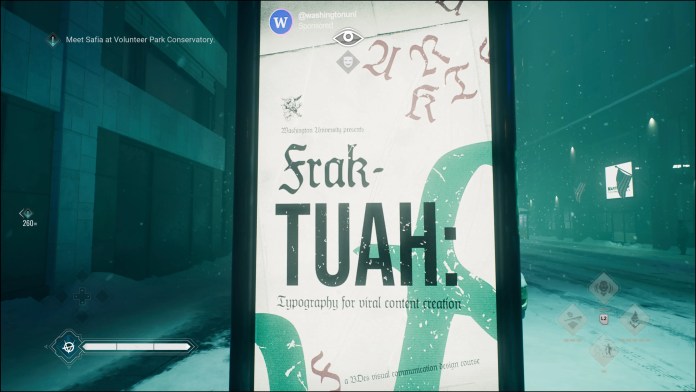
The original Vampire: The Masquerade walked the line between being an immersive sim and an RPG. What this meant is that the game featured emergent possibilities in gameplay that allowed each run to be completely different due to a rich sandbox, while the story could go in numerous different directions due to the decisions you organically make, rather than a simple yes or no button prompt. Bloodlines 2 throws this all out the window.
Take the dialogue, for instance. Depending on what you say to certain characters, a prompt will appear that says that they either liked, disliked, were irritated, or amused by your words, among other things. That said, based on what I witnessed, even if you antagonize or charm the characters around you, the effect it has on the way those characters perceive you is negligible at best.

The same issue applies to the romances. The NPCs you can romance throughout the game have no impact on the narrative. Whether you choose to woo Safia or the “trainer” NPCs, neither matters in the grand scheme of things. I chose the former, for instance, and I would’ve loved it if certain moments in the narrative had been altered to reward you for your decision, but no such thing occurred.
That, to me, was the biggest disappointment: I never once felt like my choices mattered or had any bearing on the plot. There were countless moments where I felt like it would’ve been rewarding for you to be able to stop certain characters from dying, or convince others to help you out despite their antagonism through just dialogue. Instead, I constantly felt like I had no control or impact on the narrative and the way it played out.

In any other game, this wouldn’t be an issue. However, these features are the bare minimum in other RPGs and immersive sims that Bloodlines 2 is based on, including its very own predecessor. Dishonored is one such game, and every time I’ve played an entry in the series, I discover something new that I didn’t know was possible.
Based on the expectations I had for Bloodlines 2, plus what I heard about the original Bloodlines, I was let down by how the game handled its RPG mechanics in the narrative. Sadly, this issue also applies to the gameplay.
A Limited RPG
When you pick up and play a western RPG, like Deus Ex, Cyberpunk 2077, Baldur’s Gate 3, or The Witcher, you expect a certain degree of replayability and freedom. Whether it’s due to the builds you can create, the playstyle you emphasize, or the choices you make, no playthrough of the aforementioned games is exactly identical to another. This also applies to the original Vampire: The Masquerade – Bloodlines. Sadly, though, this is not the case with Bloodlines 2.
To start with, I did really enjoy the choice that the game presents at the beginning, where you can choose which vampire clan your Nomad is part of. There’s the Toreador, the fast-moving celebrities who can charm their opponents and turn them against each other, the brutal and anarchistic Brujah who prioritize fighting with their bare hands, the stealth-focused Banu Haqim, and the enigmatic Lasombra. I personally picked the Brujah, but the differences in play style, abilities, and customization are one of the few aspects of this game that make me want to play it again at some point.

Further, the moment-to-moment gameplay feels great. For the most part, it emphasizes melee combat and forces you to use your abilities to their fullest potential. You can choose to either sneak around and slowly pick off enemies or jump right into the line of fire to pick a fight with as many opponents as possible. As the Brujah, I would often get in close and forego stealth entirely, and the thrill of defeating enemies with brute force, all while using my abilities to attack multiple at once, felt great.
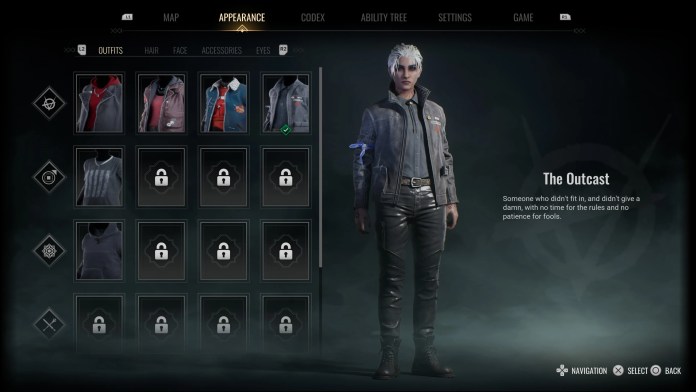
However, much like with the narrative, the options you have to alter your gameplay experience meaningfully between playthroughs are severely lacking. For starters, while I did like the differing costumes based on what clan you picked, I wish I could’ve altered the way my character looked beyond some simple hairstyle and make-up choices. I know this wasn’t the case in the original game, but Phyre is a character who feels like a blank slate dictated by the player, yet I never felt like I had any control over how she looked.
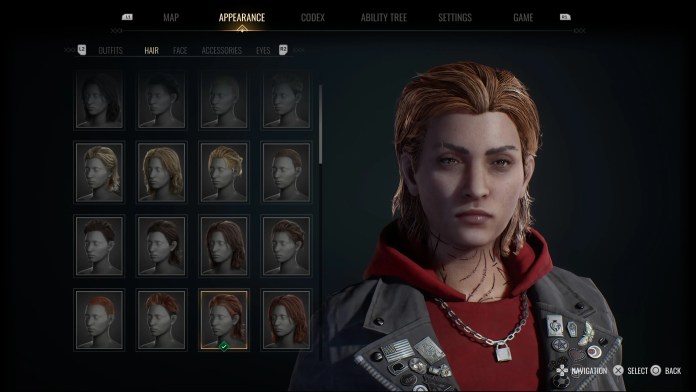
While the different playstyles that each clan emphasizes are cool, the one you pick doesn’t feel like it matters when you interact with other elements of the world. Maybe it’s just because I picked the Brujah, but I wish there were more dialogue options and gameplay possibilities depending on your choice of clan.
An example of this is how Cyberpunk 2077 has a lot of opportunities in both gameplay and story for your lifepath to become relevant. That said, it’s worth noting that the Lasombra does have an outfit that changes the way NPCs interact with you, which makes you wonder why the other clans don’t have their own unique outfit that grants this feature as well.
The main issue with Bloodlines 2‘s gameplay is how lifeless the world feels. While the visuals look nice, and traversal options that allow you to glide through the city and run around while doing your best to avoid suspicion, it all feels so empty. While the major characters are great, the non-important NPCs feel limited in the way they interact with the player. The side quests they offer even drag on and do nothing to enhance the story or world of the game.

As a whole, unlike other entries in the genre, the sandbox that Bloodlines 2 offers regarding its characters, mechanics, world design, and customization feels more focused on action rather than actual “role-playing” elements. While it does make for a game that is fun in theory, it’s not quite what I wanted from the overall experience.
A Disappointing Follow-Up

Easily, one of my favorite genres in all of gaming is the immersive sim. I’ve always been fascinated with how dynamic the gameplay and narrative feel, and how each playthrough can differ if you make even the smallest adjustment to your playstyle has always led to some of my favorite moments in the entire medium.
People have always recommended the first Vampire: The Masquerade – Bloodlines as one of the best entries in the genre, so when the sequel was finally released, I hoped it would at least meet the expectations set by its predecessor, if not surpass them. I couldn’t have been more disappointed by the finished result.
Bloodlines 2 is by no means a bad game. The gameplay formula and melee combat feel fantastic, and I never got tired of tearing through the various enemies throughout the game. Further, the narrative does a fantastic job of adapting the Neo-Noir genre into the Vampire: The Masquerade universe. That said, when you think about the aforementioned expectations, everything else comes up short.
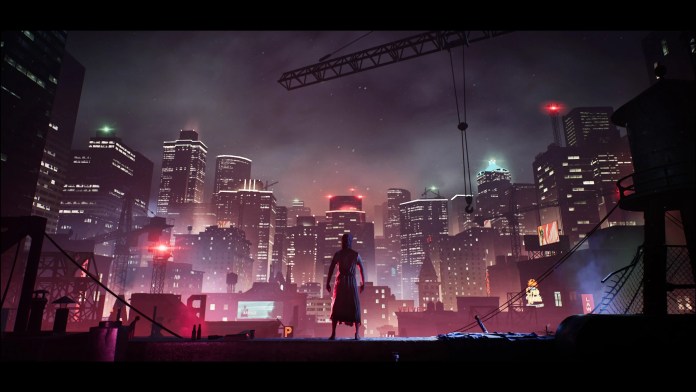
The overall writing diminishes the tension and atmosphere that the game so delicately crafts. The customization options feel limited, even if they are building off of the same limitations as the original. Most of all, the RPG aspects of Bloodlines 2 are extremely lackluster. The amount of control and variety that the sandbox should allow for simply isn’t present, and the narrative and gameplay feel shockingly linear despite the genre.
While I did have fun with my time in Vampire: The Masquerade – Bloodlines 2, I felt myself saddened by just how much it strayed from the immersive sim formula. I really hope that the upcoming DLC packs emphasize the RPG features more than the action-focused gameplay, but as of right now, I don’t really have as much of a desire to replay Bloodlines 2 as I do other entries in the genre. For better or for worse, my greatest takeaway when the credits rolled was that I wish I had played the original game instead.
Disclaimer: Vampire: The Masquerade – Bloodlines 2 was reviewed on the PlayStation 5.

