GKIDS and TOHO animation released a new teaser trailer for the Jujutsu Kaisen: Execution (Jujutsu Kaisen: Execution – Shibuya Incident x The Culling Game) compilation film, which includes the first two episodes of the upcoming Jujutsu KaisenSeason 3 – The Culling Game Part 1 anime. The film premieres first in Japanese theaters on November 7 with IMAX.
GKIDS will bring Jujutsu Kaisen: Execution to theaters in North America on December 5 with Japanese voice-overs and English dubs. Jujutsu KaisenSeason 3 – The Culling Game Part 1 follows up with its premiere in January 2026. The third season will stream on Crunchyroll worldwide, excluding Asia, with new episodes premiering same-day as Japan.
The Japanese voice cast includes:
Junya Enoki as Yuji Itadori
Yuma Uchida as Megumi Fushiguro
Daisuke Namikawa as Choso
Megumi Ogata as Yuta Okkotsu
The anime’s staff includes:
Director: Shota Goshozono
Series Composition and Script Writer: Hiroshi Seko
Character Design: Yosuke Yajima and Hiromi Niwa
Deputy Director: Yosuke Takada
Art Director: Junichi Higashi
Color Design: Eiko Matsushima
CG Producer: Yusuke Tannawa
3DCG Director: Daisuke Ishikawa (Monster’s Egg)
Director of Photography: Teppei Ito
Editor: Keisuke Yanagi
Music: Yoshimasa Terui
Music Producer: Yoshiki Kobayashi
Sound Director: Yasunori Ebina
Sound Production: dugout
Animation Studio: MAPPA
What’s more, Starforge Systems has launched its all-new Jujutsu Kaisen 0 Limited Edition PC collection featuring components with artwork from the popular anime film. The Starforge Systems Jujutsu Kaisen 0 PC bundle ($2399.99) is the all-encompassing headliner of the collection with a custom PC, desk mat, and wall art. The new PC bundle includes an AMD RX 9070 XT 16GB GPU, AMD Ryzen 5 7600X CPU, and a custom UV printed case. The wall art and desk mat are available separately for $59.99 and $49.99 at starforgesystems.com, along with a PC case bundle.
A new promotional video and key visual for the TV anime adaptation of Hey’s Kamiina Botan, Yoeru Sugata wa Yuri no Hana manga were revealed to introduce Chang Chin-Lan. Maki Kawase will be playing the role of Chang Chin-Lan in Kamiina Botan, Yoeru Sugata wa Yuri no Hana, which premieres in April 2026.
Takashi Sakuma directs the anime at Soigne with Shuntarō Tozawa as the assistant director. Kou Yoshinari is the character designer, and Yūsuke Matsuo and Miyachi are the main animators. In addition, Yōko Yonaiyama is in charge of series scripts, and Kana Hashiguchi is the music composer.
Hey launched the Kamiina Botan, Yoeru Sugata wa Yuri no Hana manga on Akita Shoten’s Manga Cross website in March 2019. What’s more, Akita Shoten published the manga’s first compiled book volume back in January 2020, and the sixth volume shipped on March 18, 2025.
Lastly, here’s an overview of the ongoing manga series, via MangaDex:
Kamiina Botan is a 20-year-old college student. At the welcome party for the dorm she was assigned to, the dorm leader Ibuki gives her a highball to drink and she becomes tipsy, leading to her involvement with Ibuki from now on… A tipsy teasing girl’s comedy!
The main cast of JoJo’s Bizarre Adventure: Part 7 – Steel Ball Run includes:
Shōgo Sakata as Johnny Joestar
Yōhei Azakami as Gyro Zeppeli
Kaito Ishikawa as Diego Brando
Rie Takahashi as Lucy Steel
Kenta Miyake as Steven Steel
The staff of the anime includes:
Directors: Yasuhiro Kimura & Hideya Takahashi
Series Director: Toshiyuki Kato
Series Structure: Yasuko Kobayashi
Character Designer: Daisuke Tsumagari
Music Composer: Yugo Kanno
Sound Director: Yoshikazu Iwanami
Animation: david production Inc.
VIZ Media describes the manga as follows:
Riders from around the world gather in the Wild West for the race of the century! Johnny Joestar, a former jockey paralyzed from the waist down, comes to spectate, and momentarily regains the ability to walk while watching a duel fought by Gyro Zeppeli. Desperate to learn more about this power, Johnny joins the race alongside Gyro and embarks on the most epic and bizarre race to ever cross the American frontier!
Hirohiko Araki is currently penning and writing part nine of JoJo’s Bizarre Adventure, titled The JOJOLands. Further, the latest JoJo’s Bizarre Adventure anime, titled Stone Ocean, is streaming on Netflix.
Touhou Project is quite the franchise, with its reach and influence spreading wide. What started as a series of bullet hell shoot ’em ups has become one of the more prominent faces in the genre. It’s reach expands beyond Japan as well, with Touhou Project having prominence across internet culture, even to people who have not played games in the series. I haven’t played much of the series, but I’ve still experienced some of it just being online growing up. Well, now I can say I’ve finally played a Touhou Project game in Fantasy Maiden Wars – DREAM OF THE STRAY DREAMER –.
Fantasy Maiden Wars is a tactical RPG and a fan game that retells/reinterprets different arcs into a single cohesive story. You start with either Reimu Hakurei or Marisa Kirisame and get joined by other characters from the series. Customize the skills of your characters, upgrade them, and tackle this huge adventure how you see fit. While this is a strong premise—and there’s clear passion for the series on display—Fantasy Maiden Wars doesn’t do enough to gloss over the many issues it has.
An Incident in Gensokyo
Fantasy Maiden Wars takes place in the world of Gensokyo. A harmful scarlet mist has spread across the land, and no one knows why. A teacher from the human village Keine Kamishirasawa visits the shrine seeking assistance, sensing calamity. They decide to investigate the mist in hopes of finding the source and hopefully stopping it. Along the way, the party grows as they meet new friends, foes, and other interesting characters.
While the scarlet mist incident is the start of the story, it’s a pretty small part of the game. Fantasy Maiden Wars can be split into four major acts that retell and reinterpret different storylines to fit one big narrative. This is one of the places the game starts to fall apart for me. For the first half of the game, I was getting invested, but when the third act started, I started to enjoy the direction the game went less and less.
The third act feels twice as long as it should be, and the longer it dragged on, the more annoyed I became. This sadly carries over into the final act as well, which is a shame because it has some good moments, but it’s not enough to bring it back. For the last third of the game, I found myself counting the minutes until it was finally over. While I am not too familiar with the source material, I can feel the passion in this adaptation. Sadly, it isn’t enough to save it.
The Inhabitants of Gensokyo
While the story in Fantasy Maiden Wars fell flat for me, one thing that didn’t was the roster of characters. I couldn’t help but root for the main cast, and I even got invested in their personal arcs. I picked Reimu as my protagonist and enjoyed watching her personal story, as well as Keine’s. Even if she wasn’t the protagonist, I still liked Marisa’s story and want to see how her route plays out. I’m amazed at how well many characters work, given that the game has more than 70 playable characters.
With each new act, new characters are introduced, and I liked most of them. Cirno and the fairies became favorites of mine, even if they act like children. The residents of the Scarlet Mansion became characters I wanted to root for, even if they caused the starting incident. Reisen and the rest of the Moon Rabbits were a delight, even if their introduction was when the story started going downhill. Even when I disliked the story, it still sprinkled in character moments that gave me the willpower to finish the game. With so many characters, I’m impressed I didn’t dislike any, and the roster made me interested in checking out their respective games.
Fight or Retreat
Fantasy Maiden Wars is a tactical RPG through and through. Combat consists of turn-based tactics gameplay when you work to complete a core objective, which usually involves defeating an enemy. On your turn, you decide what actions your team will do: moving, attacking, or helping each other. There are a few extra systems that try to give the game a layer of depth, but it’s your standard tactics gameplay for the most part. I enjoy tactics games, so I was having a good time, but like the story, it started to falter in the second half.
The main objective of most battles is to defeat a specific enemy. Most of these enemies have multiple phases using something called spell cards. When they activate their spell card, it highlights a specific area of the map, and you have a set number of turns before a big attack happens. If you can beat the enemy before it goes off, you will stop the spell card and collect it. In the beginning, this was a fun addition to the combat, and I was enjoying the extra challenge. The problem begins when these stop being fun and start becoming tedious.
After your first couple of spell card encounters, you start fighting enemies that have more than one. At first, these are fun and do a good job of making battles feel important. That feeling goes away when most fights end in a multi-spell card battle. It becomes annoying when you have to start beating an enemy five times to finish a fight. This gets really bad in the second half of the game. There is another way to deal with spell cards, but it’s equally as tedious to pull off. Since spell cards are on a timer, you can wait for them to pass. I ended up doing this for the last couple of battles, and it really soured my experience, which is a shame because it was fun at the start.
Another issue I have is how slow battles are. You have to move everyone on your team, and when it gets large, it becomes a slog to manage them all in battle. There is no way to speed up combat outside of holding a single button. You also have to keep holding it, so using it on your turn isn’t really an option. Also, if you are holding it and dialogue starts, be ready to miss it. I wish battles were more streamlined, especially as your team grows larger.
A Fantastic Soundtrack
While I have my share of issues with Fantasy Maiden Wars, I have nothing but praise for the music and visuals. Story scenes all have nice backgrounds, and each character has a good portrait as well. All the attacks are fully animated as well, and some are quite the spectacle. These are a delight to watch, and I found myself constantly impressed with them. Anytime a character got a new attack, I immediately had to check it out.
Most of my Touhou experience has been the music, and I have always liked it. Unsurprisingly, one of the best aspects of Fantasy Maiden Wars is the music. There isn’t a single track I dislike, and it’s nearly impossible to find a singular favorite. With over 200 tracks, it’s impressive how good this soundtrack is. The game even lets you collect the music and listen back to it, which is something I did while writing this review. I can’t praise the music enough, and if anything brings me back to the game, it would be that.
Mixed Thoughts on Fantasy Maiden Wars
There is one last issue I have with Fantasy Maiden Wars is fixable, at the very least. At the time of this writing, the game may crash if you try to adjust settings, so I couldn’t play in full screen, adjust the volume, or even change the difficulty. I was still able to play the game, but this is an annoying issue I hope to see resolved. Even after a fix, I would still have trouble recommending this game to most, but this would be a step in the right direction.
I loved the game’s characters, and the music and aesthetic of the game is excellent. Once more, Fantasy Maiden Wars – DREAM OF THE STRAY DREAMER – started out strong, and I was having a good time until second half wore out its welcome. The love and passion are evident, but there needs to be more polish and less tedium in combat and the overall game. I wanted to enjoy Fantasy Maiden Wars – DREAM OF THE STRAY DREAMER – more, despite the sigh of relief I let out when the credits rolled.
Disclaimer: Phoenixx provided a PC (Steam) key of Fantasy Maiden Wars – DREAM OF THE STRAY DREAMER – for review purposes.
There is something to be said about the rise in the practice of minimalist storytelling in video games. It certainly feels like many developers aim to create a sense of wonder and intrigue that will draw the audience into being invested in the story’s unfolding events without resorting to exposition at every turn. When paired with the right tone, atmosphere, and gameplay, this can be an extremely effective tool.
Keeper, the latest game from the acclaimed developers at Double Fine, attempts to adopt this minimalist style by creating one of the most beautiful game worlds I’ve seen in quite a while. However, it fails to find an emotional core that makes you care about what is happening inside it, despite its beauty. A significant part of this is due to its extremely short runtime, with the game taking less than five hours to complete. The dull gameplay and puzzle design that fill most of that time don’t help either, only improving in the final hour and a half when the story finally kicks into gear. In the end, it’s hard to see Keeper as anything more than a gorgeous tech demo rather than a fully realized game.
Keeping Watch
When I first started my adventure through the world of Keeper, I was immediately invested. Honestly, it’s hard not to be with how absolutely gorgeous every location is. The creative director of Keeper, Lee Petty, primarily has worked as an art director on Double Fine’s titles, and it shows. This might be one of the best, if not the best, looking games I’ve played all year. Every location and character oozes with creativity and charm that brings them all to life. You can tell a ton of work and care went into creating this world, which makes it all the more baffling that, after only a couple of hours, I found myself growing increasingly bored and uninterested. I don’t know if I’ve ever wanted to love a game so much only to be let down so hard by it.
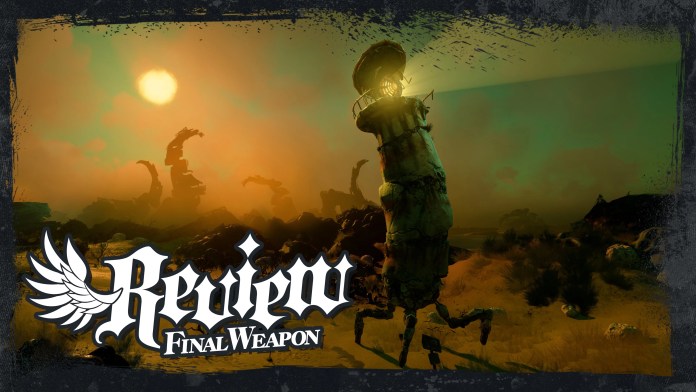
You play the game as an unnamed lighthouse that one day awakens, grows legs, and befriends a passing bird named Twig. After becoming accustomed to its new mobility, the lighthouse begins to walk around and discovers that it can rejuvenate dead plants with its light and dissolve some corrupted material that is overtaking sections of the world. In addition, you can send Twig to turn cranks and pick up objects in the environment.
While this gameplay loop sounds great, I found Keeper’s pacing agonizingly slow. You’ll spend nearly half the game’s runtime slowly wandering as the lighthouse shines its light on objects and works with Twig to turn cranks. The puzzle design is so simple and repetitive that I found myself just begging for the game to throw some sort of curveball at me. Thankfully, the game tries to mix things up in the latter half, but despite the promise of a major shift in gameplay, it largely reuses the same mechanics in a different context.
Keeper just didn’t do enough to compel me to actually become invested in the game after the initial impressions of its beauty fade. The storytelling suffers from being too ambiguous, providing barely any infromation to grasp the narrative or form any emotional connection to it. The game attempts to build a relationship between Twig and the lighthouse, but its short runtime makes that bond feel forced, leaving little room for their friendship to really feel convincing.
These faults trickle down to the lore and worldbuilding Keeper can provide. All the lore and background information I gained, outside of a few murals I stumbled upon, came from the game’s achievements. If you thoroughly explore each area, you will eventually discover hidden alcoves where shining your light on a flower reconstructs a broken statue. Finding these unlocks achievements that provide only a sentence or two of lore about the world. I can understand the minimalist approach Double Fine attempted, but I found it an odd design choice that makes it that much harder to become invested in the game’s story.
The Need for More
Despite these gripes, the game does pick up in the last hour, however. Without getting into spoilers, the final stretch of Keeper completely changes up its gameplay in a way that feels fresh and genuinely fun to play. It was disappointing to see how brief this section was in comparison to the rest of the game, as it was the first time I found the gameplay to truly feel engaging. This leads to my main criticism of the game: it feels too much like an experimental release, something I fear players might simply call a “tech demo.” It’s difficult to explain without getting into spoiler territory, but this critique mostly revolves around the gameplay additions near the end.
The aforementioned shake-up to gameplay was surprising and exciting, as I did not see it coming. Double Fine completely flips the formula on its head, or so it seemed. Despite offering a vastly different experience, the gameplay loop was ultimately the same, and I found that quite disappointing. Continuously, the game introduces unique ideas, but it fails to capitalize on them or pull the player in when it matters. As a result, Keeper comes across as a distinctive yet unrefined project, with many pieces resembling early concepts born from Double Fine’s brainstorming sessions.
This design philosophy with Keeper is what makes it feel like an experiment rather than a full experience. It feels as though Double Fine had a couple of ideas for a few games and decided to experiment with them, and Keeper is what came out of it. If the lighthouse segment of the game were more fleshed out and the team added more puzzles and lore for the world, it could have been its own unique and fun experience. Similarly, if the boat section were just a part of a bigger gameplay cycle where you sailed the world and explored islands, it would be far more engaging than including the repetitive light-shining mechanic as a way to link the areas. At the very least, this base gives me some hope that Double Fine will take the good parts of Keeper and find a way to implement them in a more interesting and fully realized game.
A Mixed, Disappointing Outing
It pains me so much that I didn’t enjoy Keeper as much as I wanted to. I love Double Fine as a studio, as I think the team is one of the most creative and interesting developers working today. You can tell a tremendous amount of care went into the visuals and that the development team loved creating this world, but there’s just not much beneath all that beauty.
With a runtime of under five hours, it may also be challenging for some to justify the $30 price tag. Even with all that said, I really want Double Fine to return to this world and give it the game it deserves. There’s so much potential here, and if the team builds on it by telling a new story within this world and its inhabitants, it could become something truly special. I would love to see a full-scale RPG in this setting, even though I know that is a pipedream.
In the end, Keeper is an imaginative and beautiful bore of a game. I won’t say it’s bad, as Double Fine is too talented a studio to make a truly bad game, but the team misses the mark with Keeper. I find it to be a project that should have either been expanded on or reworked into something that takes advantage of its beautiful world and the creative minds behind it.
Disclaimer: Xbox and Double Fine provided a PC (Steam) copy of Keeper for review purposes.
IO Interactive has released physical-only Hitman: World of Assassination 25th Anniversary Box limited edition for PlayStation 5 at select retailers for $49.99. Hitman: World of Assassination 25th Anniversary Box includes an exclusive shadowbox, a special visual for the PS5 game case, four celebrity DLCs (The Undying, The Drop, The Splitter, and The Banker), and a collectible Lenticular Art Card celebrating the franchise’s legacy.
What’s more, IO Interactive announced a special livestream on October 21 at 9:00 a.m. ET / 3:00 p.m. CET via the official Hitman Twitch channel, During the livestream, the developers will take a look back at franchise’s 25-year legacy and appearances from surprise guests.
Hitman World of Assassination is available now on Nintendo Switch 2, PlayStation 4, PlayStation 5, Xbox One, Xbox Series X|S, and PC via Steam. The Switch 2 version includes the main campaign, Contracts mode, Escalation, and Elusive Targets. It also features the Freelancer game mode and all Hitman 2 and 3 expansion content. In total, players can expect more than 100 hours of content, along with future updates and content developed by IO Interactive.
Hitman: World of Assassination is also available on iPhone 16 models, iPhone 15 Pro and iPhone 15 Pro Max; iPad Pro and iPad Air (M1 chip or later), and iPad mini (A17 Pro). Each of the game’s 24 locations are available individually for $2.99. Hitman: World of Assassination is also planned to release on Mac devices with Apple silicon.
IO Interactive’s next game, 007 First Light, will launch on March 27, 2026 for Nintendo Switch 2, PlayStation 5, Xbox Series X|S, and PC via Steam and Epic Games Store. Pre-orders are available now for $69.99 with a free Deluxe Edition upgrade, and a Legacy Edition will be available for $299.99 featuring a Golden Gun figurine, Deluxe Edition DLC, and more. The Nintendo Switch 2 version of 007 First Light is a game-key card title.
In celebration of the 40th anniversary of Dragon Ball, the Dragon Ball GENKIDAMATSURI event will be held on January 25, 2026 from 9:00 a.m. JST to 6:30 p.m. JST at the Makuhari Messe in Chiba, Japan. During Dragon Ball GENKIDAMATSURI, Bandai Namco, Toei Animation, and Shueisha will make major announcements regarding the long-running franchise, according to the event’s official website.
A special “Genkida Stage” panel will be held featuring Masako Nozawa, the iconic voice of Goku, and it will be where some of the big announcements will take place. In fact, Bandai Namco has already confirmed that a new Dragon Ball game project will be revealed at Dragon Ball GENKIDAMATSURI.
A new Dragon Ball game project will be unveiled this January during the Dragon Ball Genkidamatsuri event in Japan! https://t.co/OegOvs9QAq
Moreover, Shueisha and Bandai Namco’s first Dragon Ball Store will open on November 14 at First Avenue Tokyo Station in Tokyo. The Dragon Ball Store will feature a wide range of exclusive goods and merchandise, including “must-have” items for fans.
Before a new anime announcement possible happens, fans can catch up on all 20 episodes of the Dragon Ball Daima anime series, which are streaming on Crunchyroll and Netflix with English subs and dubs. Lastly, the English dub for the anime is streaming in North America, Central America, South America, Australia, New Zealand, South Africa, Indian subcontinent and Southeast Asia.
In a newly released Konami News video, Konami announced Silent Hill 2 has surpassed 2.5 million copies sold worldwide. These sales account for digital copies sold on PlayStation 5 and PC (Steam), along with physical shipments of Silent Hill 2 worldwide. What’s more, the Silent Hill series reached 10 million copies sold.
Konami and Bloober Team’s Silent Hill 2 remake was released on October 8, 2024. Silent Hill 2 was one of the highest rated games of 2024 on Metacritic, and on January 23, 2025, Konami announced that Silent Hill 2 surpassed two million copies sold worldwide.
Final Weapon reviewed Silent Hill 2 and gave it a 4.5 out of 5 score, noting the game is “a genuine masterpiece. While there are some technical issues here and there, Bloober Team did an exceptional job with the resurrected title’s story, voice acting, gameplay, and visuals. Additionally, the attention to detail on display throughout the entire experience makes it a must-play for both returning fans as well as those who are playing Silent Hill 2 for the first time.”
The latest game in the Silent Hill series is Silent Hill f, which launched on September 25 for PlayStation 5, Xbox Series X|S, and PC via Steam, Epic Games Store, Windows, and GOG. Final Weapon reviewed Silent Hill f and gave it a 4.5 out of 5 score, noting that the game’s story is “told wonderfully and manages to convey its themes with the right amount of care, thanks to some great writing and the arc of its protagonist, Shimizu Hinako. Further, the combat-focused gameplay turned out to be surprisingly addictive, while still managing to be tense thanks to some great monster designs.”
PLAYISM and Adventurer’s Tavern announced Maid Cafe on Electric Street is coming to Nintendo Switch on February 26, 2026. In Japan, Maid Cafe on Electric Street will be available for 2,480 yen digitally and 3,850 yen physically for Switch.
A physical Maid Cafe on Electric Street Limited Edition will be available in Japan for 6,380 yen. Limited Edition contents include the limited edition box, one of four random keychains, one of four random plushies, art book, and a soundtrack CD.
Maid Cafe on Electric Street is available now on PC via Steam. Lastly, here’s an overview of the game, via the official Steam page:
Fuwa Fuwa Cafe—a maid cafe tucked away in a quiet part of Nipponbashi, and where a wonderful encounter is about to take place…
You, the protagonist, quit your job at an extremely toxic workplace and find yourself at a run-down maid cafe, where a cute maid named Shiro works.
At first, you only agree to become the new manager because it conveniently met all your urgent needs, but soon the colorful maids Miyu, Favna, and Honoka join in. And as you spend time with them and meet the people of Electric Street, both you and the cafe will gradually liven up once more.
As the manager of Fuwa Fuwa, you’ll live in Nipponbashi, Osaka and spend time with your favorite maid… or maids. Go shopping, watch a movie, go for karaoke, buy a present for a special someone… What you choose to do will affect the ending of the story.
Of course, you want to always be doing what’s best for the cafe. So maybe you should do something about the ominous voices coming from the shrine next to the cafe, or you could get the whole town involved in a large-scale campaign to bring in even more business. All sorts of events await you and the maids!
Your most important job as the manager is, of course, to manage the cafe and the maids. It’s a little harder than it sounds!
First, you’ll have to allocate work to your maids. Shiro loves serving customers, and Miyu’s a great chef… Make sure each girl is assigned the right job!
While the cafe is open, you can help out by serving customers and cheering the maids on with your special skill. And with your hard-earned money, you can go shopping, eat out, or buy merch or capsule toys for your otaku collection.
Make Fuwa Fuwa the most popular cafe in town to enjoy Nipponbashi to the fullest!
Sometimes, special customers will visit Fuwa Fuwa. Pay attention to their needs and serve them the perfect coffee! You can find coffee recipes hidden all around Electric Street, and the customers will drop hints as to what they’re looking for in your conversations.
Explore the town, collect recipes, and serve the drinks of your customers’ dreams, and maybe one day they might offer you their service as well…?
Visit stores you can find in the real Nipponbashi, such as Surugaya, Sofmap, Dragon Star, Super Potato, and Karaoke Rainbow, among the many others we’ve collaborated with.
You can collect merchandise of other indie games too, such as VA-11 Hall-A: Cyberpunk Bartender Action, GNOSIA, and Marfusha!
Go shopping, see the sights, and enjoy life in otaku heaven. But don’t stay out too late; you still have a cafe to run!
And though it’s fun to go out on your own, you could always ask one of the maids to go out with you. Uh, not go out go out… unless?
Bandai Namco announced SYNDUALITY: Echo of Ada Season 3 “Ender Busters” is now live with the new “East Amasia: Night” location, new quests, enemies, Magus companions Eine and Al, and much more. SYNDUALITY: Echo of Ada Season 3 also includes new Hideouts and Relic Recovery, Butcher Bandits, including Shadow Stalker and Heartless Kid, along with modified weapons and Cradlecoffin parts (APK equipment).
SYNDUALITY: Echo of Ada Season 3.5 will launch at a later date with the new “Polluted Forest” PvPvE zone, a new “Amasia Investigation” story chapter, a new Raid Boss, a new Cradle, and so much more, including weapons and relics. More details will be revealed at a later date.
SYNDUALITY: Echo of Ada is available now for PlayStation 5, Xbox Series X|S, and PC via Steam. The digital Deluxe Edition ($69.99) is available now with a Deluxe Drifter Pass voucher, Remake Ticket, and School Uniform. The digital Ultimate Edition costs $99.99 and includes digital Deluxe Edition contents, Ultimate Drifter Pass Voucher, and a Mystere Type Magus Production Ticket and School Uniform (Purple).
Final Weapon reviewed SYNDUALITY Echo of Ada and gave it a 2.5 out of 5 score, stating that the game is a “third-person, mech-based PvPvE with looter and extraction shooter elements. It does have potential, but it’s sadly held back by a live service format and its monetization elements. Although there’s fun to be had online, the game makes it a hassle to actually play with others, and the combat and gameplay loop can become repetitive.”