

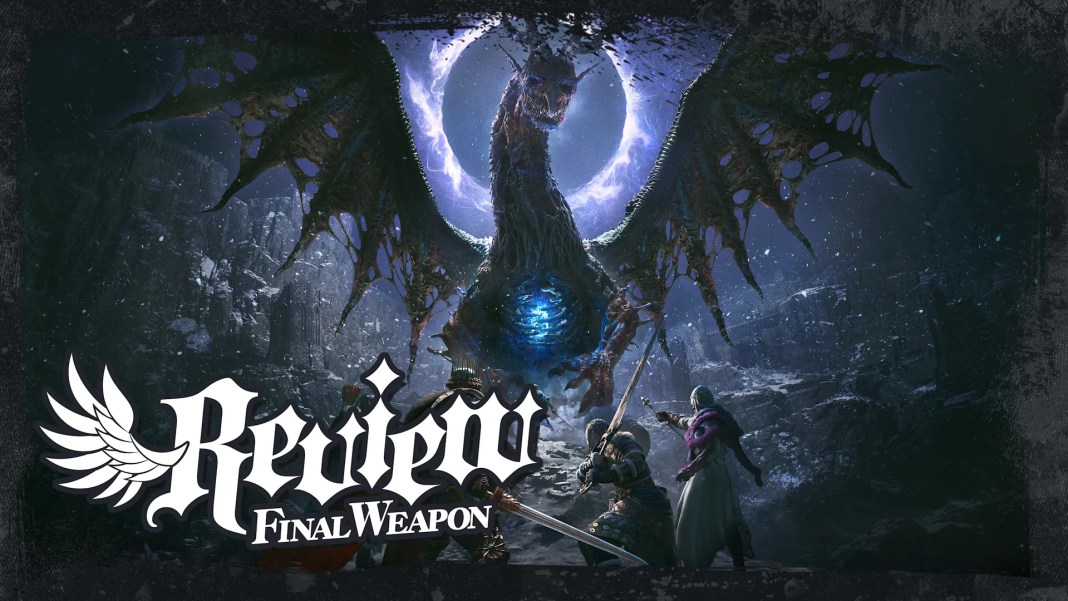
The original Dragon’s Dogma was released in 2012 for the PlayStation 3 and Xbox 360. While it received positive reviews, it also drew plenty of fair criticism. Many players felt that the game was incomplete, and many of these issues were resolved with the release of Dragon’s Dogma: Dark Arisen. The game became a cult classic, and the announcement of a sequel delighted many, but the final release wasn’t perfect either Dragon’s Dogma 2 received positive reviews but also faced many of the same criticisms as the first game, and two years later, history seems to be repeating itself with the release of Dragon’s Dogma 2: Dark Arisen.
Dragon’s Dogma 2: Dark Arisen is an action RPG from Capcom and an expanded release of the sequel. You play as the Arisen, a customizable character who embarks on a quest to slay a dragon. The Dark Arisen expansion adds a new region and story, along with gear, gameplay, and quality-of-life improvements. The amount of new content is massive and can feel like an extra game at times. That being said, how does it improve on the original release? Dragon’s Dogma 2: Dark Arisen still has its issues, but it’s also a game I couldn’t put down.
The Never-Ending Cycle of Dragon’s Dogma 2
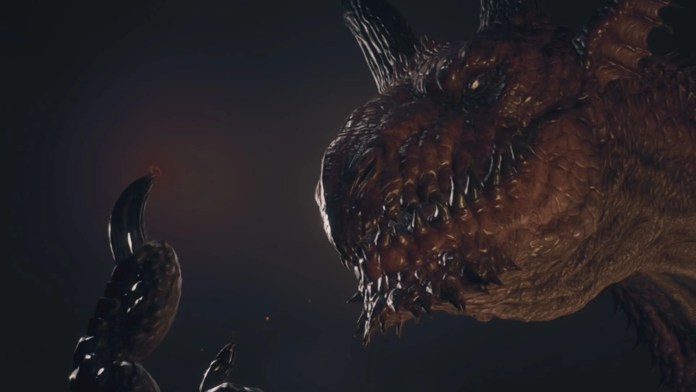
Dragon’s Dogma 2 takes place in a fantasy world split between two kingdoms. You start in a mining camp, where you create your character, who has no recollection of the past. When the camp is attacked, you escape with the help of a mysterious figure known as the Pathfinder. He tells you that you’re the Arisen and a part of a never-ending cycle of royalty and dragons. Then, you get a flashback of encountering said dragon and set off on a quest to slay it and become king.
This is easier said than done, as an imposter is claiming to be the Arisen, so you aren’t trusted. When the player gets to the town of Vernworth, they meet Brant, a captain of the palace guard. He believes you are the Arisen, but with the imposter already in the castle, the player must complete several quests to earn the people’s trust. After that, your initial plans change, and you set off for the neighboring kingdom, with your main goal unchanged. You must slay the dragon.
This story has an interesting premise and a start I enjoyed. Sadly, it stops being something I wanted to follow pretty quickly. I like the initial premise of the never-ending cycle of the Arisen, and I did like the idea of doing quests to prove who you are. While it was simple, it got me interested, but sadly after the first couple of hours, it drops all those story beats. The story becomes a generic save-the-world plot full of characters I didn’t care for and every dark fantasy story trope you can think of.
The forgettable story doesn’t necessarily hurt the game, but I did find myself wishing there was a stronger narrative I wanted to follow. It doesn’t help that the world itself also doesn’t feel that interesting or fleshed out. It’s a shame as there’s no shortage of grand set pieces to marvel at, but they fall flat because I couldn’t care less about what’s happening. I struggle to say much beyond how disappointed I was after such a strong introduction. I would’ve liked the story to be better, but at least the core game itself is fun.
It’s Still Fun

The combat system of Dragon’s Dogma 2 is pretty fun; you have two base attacks, and you can equip up to six special attacks. Your attacks vary based on your gear set and vocation. Vocations are essentially the game’s job system, and they feel pretty unique. Each one has strong skills to unlock that make combat a blast. It is fun to experiment even if you are like me and default to thief in games like this. There is one part of combat I didn’t expect to enjoy as much as I did.
Your character can grab onto pretty much anything, including enemies. This means you can throw around small enemies at each other and climb the towering ones. While I originally wrote it off, this is an essential part of combat that is both fun and comedic at times. Climbing cyclopes, griffins, and dragons adds a lot to the sense of scale and makes fights feel intense. It’s satisfying to take down an enemy you’re hanging on for dear life to, and it adds spectacle to combat encounters. You can also throw items, so mark locations where you find explosives and poisons.
While the combat is fun, what makes it and the game complete is the Pawn system. The Pawn system is the defining feature of this series, and it’s easy to understand why. Pawns are essentially NPCs you recruit to your party to help you. You can have up to three in your party at a time, including your personal Pawn that you create. You can recruit the other two Pawns by finding them in the overworld or through the rift. The rift is another plane of existence full of Pawns from different players.

Being able to recruit Pawns made by other players is a fun addition to the system and makes them feel more personable. You can rate the Pawns you recruit, and some even have requests attached. I also liked being notified when my Pawn was recruited and whenever he got a thumbs-up. To anyone who enjoyed my Beastren Pawn named Bub, thank you. I mainly had Bub be an Archer, and my other two were a fighter/warrior and a mage. Fair warning: sometimes their AI is just bad, and you’ll find yourself stuck because of it, but that didn’t happen a lot.
However, one aspect I found lacking was exploration. Dragon’s Dogma 2’s world is massive and impressive but not particularly interesting. Most locations feel the same, and I found little satisfaction in trying to explore it all. The world feels hollow, and after a while. I stopped walking from town to town unless I had to. I openly embraced the multiple fast travel systems when they became available, and started getting bored the more I had to walk between locations. This criticism also applies to the dungeons, which is a shame because I normally enjoy exploring those. Exploration just doesn’t feel rewarding outside of a few areas that don’t show up till later in the game.
A lot of my issues started to go away when I finally got past one of the endings and reached the post-game. The post-game is when the combat is at its best, and the exploration isn’t as much of a chore. This carries over to New Game Plus as well, which I immediately started as soon as I got to it. It sounds odd to say it gets better after your first playthrough, even though I was enjoying it. The game goes from good to great once you reach the endgame and the post-game, and I already want to play it again.
A Dark Arisen

Dragon’s Dogma 2: Dark Arisen is the expanded release of the game with the Dark Arisen expansion. It includes the new location Norgan, also known as the Forsaken Dominion, alongside a new story. It also adds new enemies, gear, abilities, weapons, and more. The end result is a massive expansion that easily doubled my time in the game. It also has fewer of the issues I had in the base game, though it has its own unique problems. But much like the base game, I couldn’t put it down.
You can start Dark Arisen pretty early — as soon as you start taking quests from Brant. It is harder than the base game, so I recommend waiting until New Game Plus to try it, and you can’t access it after entering the endgame. To access the expansion, talk to Captain Brant to start the quest. After some busywork, you will learn of a region in the far north called Norgan. Upon arriving in Norgan, you are immediately attacked by new enemies, but then you gain access to a nearby settlement. You learn about a new threat called the Fallen Dragon and set out to defeat it, but there’s more to it than meets the eye.
There is a lot to praise about the Dark Arisen expansion, but what surprised me most was its story. While the premise is simple, it does go places I wasn’t expecting, and I found myself wanting to see the rest of the narrative. The story feels like it has more agency than the base game, and it actually made me care about Norgan and its inhabitants. The central antagonist was also much more interesting than the ones in the base game, and felt like a real character. Some players may not like that the story is isolated and doesn’t really connect to the base game, but I think keeping it separate is for the best.

Another aspect the game excels at is Norgan itself. I adored its winter setting, and the design feels much more intentional than the base game. There are still some issues with exploration and dungeon design, but they’re much less frequent. I was also impressed with how big Norgan is, even if it’s nowhere near the size of the base game map. I actually wanted to explore more of Norgan, and I can see myself fully mapping it out in the future.
The Dark Arisen expansion also adds some new items and skills, but my favorite has to be the new loot system. When you defeat enemies, they will drop relics that you have to get appraised (for a fee), and then they will turn into different gear and items. You don’t know what item it will turn into, and it’s fun to guess or hope for something good.
While I enjoy much of this expansion, it also has its own issues. This expansion is harder than the base game, and while the difficulty wasn’t a big issue, many encounters don’t feel balanced. I had my fair share of basic enemy encounters that got out of hand, and enemy placements that felt unfair. Basic encounters felt dragged out, and I was getting more bored than anything dealing with them.
I also didn’t enjoy most of the boss fights in the expansion. They all feel like health sponges, and only one was fun. What confuses me most is that I rarely had this issue in the base game, so it feels odd that it’s a problem now. Also, my least favorite enemy in the whole game is in this expansion, which is a shame because most of the new ones are actually pretty good. The Dark Arisen expansion is still great most of the time, even if combat can get tedious.
An Impressive Port

Dragon’s Dogma 2: Dark Arisen is the game’s debut on Nintendo Switch 2. After putting so much time into the port, I’m happy to say that it’s extremely impressive. The visuals do take a hit, but I was honestly impressed by the visual fidelity it still has. In many Switch 2 ports, faces and hair can look off, but I didn’t have that issue here. There is a lot of pop-in, and while it didn’t hinder my enjoyment, it can get very noticeable.
The performance is the most impressive thing here, though. The game aims for a consistent 30 FPS, and I rarely saw it dip below that. In both handheld and docked modes, I had no issues playing. There aren’t many graphical options, though; the game has an FPS cap, the option to enable FSR 3 frame generation, and a motion blur toggle. FSR 3 worked pretty well, and I didn’t have any major issues testing it. While I would prefer more options, I’m still satisfied with this port’s performance.
While I am impressed overall, I did still run into a few issues. The game itself is still buggy, but none of the issues were game-breaking. Most of the bugs I ran into surrounded quest progression, but they were easy to fix. I also don’t like how close the camera is to your character. You can adjust this in settings, but even at max length, it was still too close for me. These issues are minor, though, as this is still a very impressive port and a great way to play Dragon’s Dogma 2.
The Cycle Ends

Dragon’s Dogma 2: Dark Arisen is a flawed but great game. While I had my fair share of issues, I could not put it down. My problems with the narrative, exploration, and bugs are easily overlooked by how fun the combat, post-game, and Pawn system is. The same goes for the Dark Arisen expansion, which has its own issues I can easily overlook.
I can recommend Dragon’s Dogma 2: Dark Arisen to most. The Switch 2 port continues to impress me as well and might be one of the best ports on the system. There is a lot here for those looking to return to the game or try it out for the first time. It may be flawed, but it’s still a lot of fun, and I look forward to playing through it again on my next New Game Plus run.
Disclaimer: Capcom provided a Nintendo Switch 2 copy of Dragon’s Dogma 2: Dark Arisen for review purposes.

