

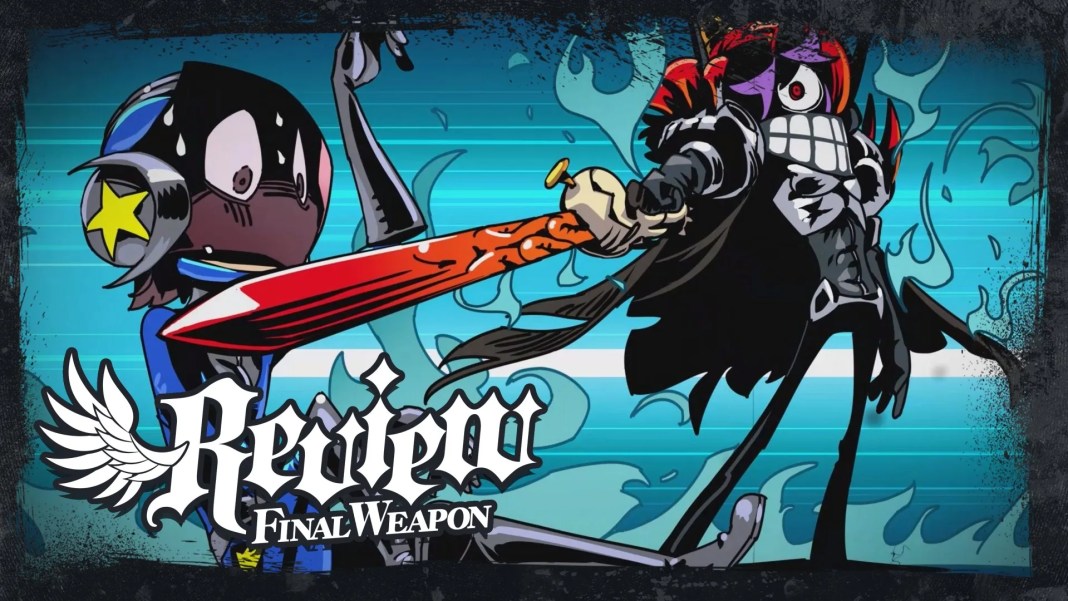
Demons’ Night Fever strangely opens with Giga Super Deathums, a demonic cat who’s turned into a baby and then sacrifices their disciples to restore some of their lost power. After a brief tutorial featuring the game’s “peon exploitation system,” the story cuts to Killshiro Katanaka, a miserably overworked man with misanthropic tendencies. Since middle school, Killshiro has been filling out a “kill note” with all the names of people he’d like to kill.
If this all sounds a little absurd, that’s by design. Demons’ Night Fever is a bizarre, lighthearted and comedic game about horrible people. Coming from Disgaea creator Sohei Niikawa, the game aims to breathe some fresh air into tactical RPGs with its evil twist on the genre. Cruelty and underhanded tactics are baked into its design philosophy, and the result is darkly comical in both narrative and gameplay terms.
Everything Must Die in Demons’ Night Fever
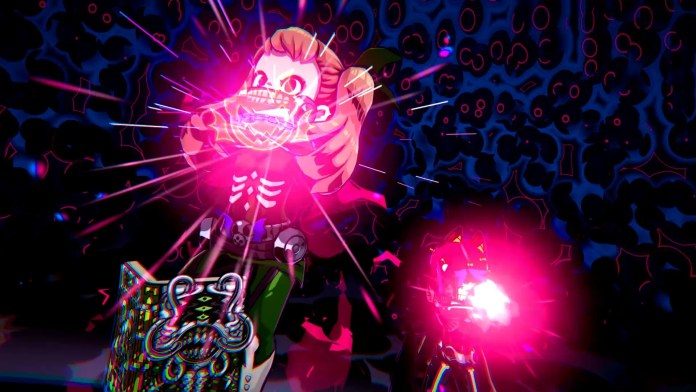
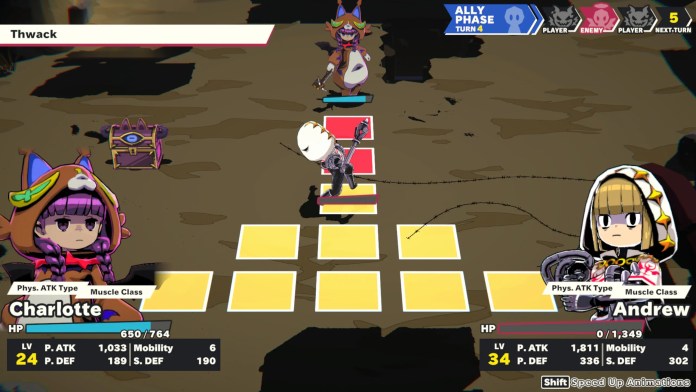
While other tactical RPGs may emphasize teamwork and caution, Demons’ Night Fever emulates what it would be like to play as an evil overlord from a Saturday morning cartoon. Every unit is disposable and should be disposed of, thanks to the peon exploitation system. Killing Killshiro’s own teammates is just another tool in the player’s arsenal, so getting too attached to any peon is an easy way to be put at a disadvantage.
Furthermore, the player cannot directly control any unit besides Killshiro. It’s reminiscent of the controversial battle system from the original Persona 3 in which party members can’t be directly controlled, but it makes plenty of sense thematically in Demons’ Night Fever. The game drills in the fact that the player character is indeed evil, and anyone serving under them wouldn’t be particularly loyal. The only thing that keeps them in check is the player’s unfeeling actions.
Despite how horrible and mean this all is, there is an undeniable sense of catharsis while playing. Did an underling move to an inconvenient spot? Just teleport them in front of an enemy and kill them. Congratulations, you just made them useful. Don’t worry, they may eventually reincarnate as a stronger unit.
Even for those who have little experience with the strategy RPG genre, it’s easy to understand the concept. It’s a game that rewards the player for being a terrible boss who mistreats their employees. Going in with that mindset is what’s needed to succeed from a gameplay standpoint.
An Unhinged Adventure

Demons’ Night Fever is odd in that its protagonist isn’t a good person or particularly likeable. Killshiro has no friends, hates people in general, and even describes himself as becoming a “full-on incel wizard” in a year. The game clearly indicates he is pathetic and hasn’t mentally progressed past middle school.
However, this all makes Killshiro the perfect main character for this story. It’s still fun to follow his character and observe his interactions with Giga Super Deathums. Despite the fact that he is working as an agent of evil, the game knows how to hint at an ever so slight sliver of humanity underneath all his cynicism and hatred. The game offsets its twisted premise with frequent comedy.
Demons’ Night Fever is a deeply unserious experience featuring plenty of outlandish scenarios and meta commentary. Taking place inside a video game constructed into a “resurrection ritual” by Deathums, death doesn’t have the permanent consequences it does in real life. To Killshiro, this is all an excuse to let loose and vent out his frustrations after being overworked by an unethical game studio.
The humor borders on obnoxious and may not be to everyone’s taste, but I often found myself chuckling out loud and freezing in disbelief at the often random and unconventional script. How much one will enjoy the story largely depends on their tolerance for the jokes. If anything, no one can accuse Demon’s Night Fever of having a boring storyline. For better or worse, it’s one of the most important elements of the game, and it arguably did more than the gameplay to keep me progressing.
The Cycle of Evil
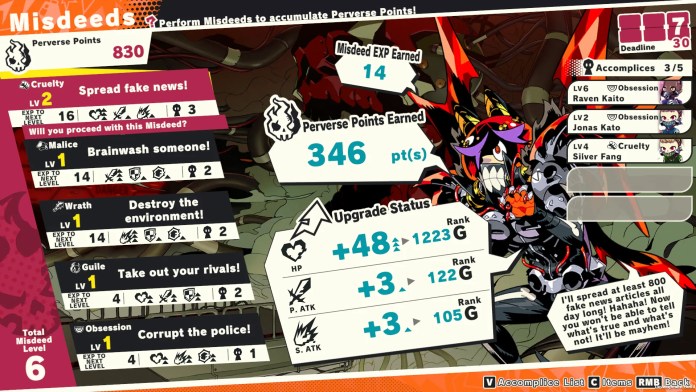
Speaking of gameplay, Demons’ Night Fever’s campaign is made up of several chapters. Each of these chapters contains a deadline to complete, and the player risks a game over by exceeding the time limit and missing the deadline. This time management system adds a layer of strategy outside of battles, and good preparation becomes increasingly more important as the player progresses through each chapter.
The first couple of chapters are relatively unchallenging, but this isn’t inherently a negative. Demons’ Night Fever works as a wicked power fantasy, and the bonkers story does a lot of heavy lifting. It’s a blast to demolish enemies with destructive powers and a lack of moral integrity.
As one might expect, the game’s mechanics gradually expand to give encounters more depth. However, Demons’ Night Fever fundamentally changes Killshiro’s playstyle instead of simply adding upon existing mechanics by the third chapter. There is a noticeable spike in difficulty in this chapter, so a lack of skill is not entirely out of the question, but it was hard to appreciate how the game changed.
Think of character action games that force the player to use a certain character over the course of a campaign, when another, more enjoyable character exists to play. The character chosen for the player might not be bad, but it’s hard not to think of the other character with their fun toolset. This is essentially what happens in Demons’ Night Fever, and it will likely be a controversial design choice among players.
Bursting With Demonic Flair
Visually, Demons’ Night Fever doesn’t push any boundaries, but its distinct art style does a good job of masking most budgetary constraints. Bold linework and shading add lots of cartoonish life to the presentation. It’s consistent and makes the entire package more cohesive as a result.
The same energy finds its way into the game’s soundtrack. It carries the devious and whimsical tone the game is going for, and almost any other kind of music wouldn’t sound quite right. While it often blends in with the background, it’s not that rare to hear a track that catches the player’s ear.
What’s a bit less impressive are the performances. Historically, there are games with far worse voice acting, but standards are much higher in that regard these days. Demons’ Night Fever could almost pass as a callback to older games with its lackluster voice direction, and sometimes it even works with the comedic tone, but the result is still awkward and stilted.
Several voice lines sound as though they were recorded after a single take. Many conversations are not natural to the ear, with strange emphasis placed on certain words. This would be less of an issue if the game didn’t place as much emphasis on its story, but it’s a key component of the experience.
Demons’ Night Fever is a Devilishly Fun Time

Demons’ Night Fever is not quite Fire Emblem, but it doesn’t need to be. Demons’ Night Fever manages to justify its existence as a fresh spin on tactical RPGs. Not too unlike Qliphah in Providence’s Shadow, another recent game published by Arc System Works, some gameplay concepts could be revisited, refined, and expanded upon in a future entry. However, what’s here is both engaging and intriguing.
This is an undeniably niche game that isn’t going to appeal to everyone, but the target audience will likely be happy with it. The comedy will likely be a make-or-break factor for many who decide to pick this up. If the jokes land, Demons’ Night Fever is worthwhile for its goofy and bizarre narrative alone. If the humor and the character still sound off-putting, the gameplay will be doing too much heavy lifting to justify a purchase. It’s a silly little story with some interesting gameplay ideas, and I hope the game finds the audience it’s looking for.
Demons’ Night Fever will be available for PlayStation 5, Nintendo Switch, and PC via Steam on October 22.
Disclaimer: Arc System Works provided Final Weapon with a Steam copy of Demons’ Night Fever for review purposes.

