Thatgamecompany, the developers behind Journey and Sky: Children of the Light, have announced a second iteration of its “thatgamejam” event. The event will start on October 24.
On October 24, thatgamecompany will launch the prompt, which it describes as “a short audio track meant to stir something in every developer who hears it. Developers of all skill levels are invited to listen closely and translate how they respond to the sound into gameplay and worlds of their own.” It notes that participants are not required to create rhythm or music games. More details will be available via the itch.io page.
The guidelines are as follows:
Dates: Submissions open October 24, 2026 at 00:00 PT and close November 7, 2026 at 23:59 PT.
Theme: A short audio track, revealed on opening day, serves as the creative prompt. It is intended as inspiration rather than a required soundtrack, and participants are not expected to make rhythm or music games.
Eligibility: Students, hobbyists and professionals are welcome to enter, solo or in teams of up to five. Games must run on Windows or Mac and use English as the default language.
Awards and prizes: Five cash awards will be presented: Best Overall (USD 3,000), Best Gameplay (USD 2,000), Best Visual Design (USD 2,000), Community’s Voice (USD 2,000) and Taptap’s Choice (USD 1,00).
Judging: thatgamecompany team members will review all entries, with finalists evaluated by Jenova Chen.
Developers in China via TapTap: Those without itch.io access can submit through the parallel TapTap portal. It runs at the same time, with the same theme release and deadlines, and entries from both portals are judged together for prize consideration.
Winners: Winners will be announced on December 22, 2026.
Community: the thatgamejam Discord is open for team-forming, Q&A and feedback throughout the jam.
Jenova Chen, CEO and Creative Director of thatgamecompany, comments on the new event: “The first thatgamejam showed us how much heart developers bring when they’re given the inspiration and space to let their creativity and skills shine.We chose a theme you hear because we thought it would be an intriguing prompt that challenges developers in a new way. Sound doesn’t need translating, and the games we make at TGC, from Journey to Sky, are about feeling something together without anyone having to explain it. We’re excited to see what creative heights developers reach when they take that feeling and turn it into play.”
During the latest edition of TYPE-MOON TIMES, TYPE-MOON and Aniplex have released a new “Rival’s Side” trailer for Fate/EXTRA remake Fate/EXTRA Record featuring characters Matou Shinji, Julius B. Harwey, Gatou Monji, Dan Blackmore, Leonardo B. Harwey, Rani VIII, and Tohsaka Rin. The trailer also previews their respective servants.
Fate/EXTRA Record will launch on January 28, 2027 for Nintendo Switch, Nintendo Switch 2, PlayStation 4, PlayStation 5, and PC via Steam. Physical pre-orders for Fate/EXTRA Record will be available through the Marvelous USA Online Store and participating retailers for Nintendo Switch and PS5, starting at $59.99 for the Standard Edition. The Nintendo Switch 2 Standard Edition will cost $69.99 with the game fully on cartridge.
A physical Limited Edition will also be available containing a copy of the game in a custom outer box, a three-disc soundtrack featuring the new score and the original Fate/EXTRA soundtrack in a Steelbook case, and an art book featuring over 100 pages of original and concept art for $89.99 on Nintendo Switch and PlayStation 5 and $99.99 on Nintendo Switch 2.
The digital Standard Edition will cost $59.99, while the digital Deluxe Edition will cost $79.99. The Digital Deluxe Edition will include the game, a digital soundtrack, a digital art book, Fate/EXTRA soundtrack DLC, and the “Servant and Player Special Outfits Bundle (Beach Style Set, Night Style Set, Festival Style Set)” cosmetic DLC.
Remedy Entertainment has announced that Control Resonant has reached 1 million copies sold. The announcement comes just under a month after its initial release date on September 24.
In a post, Remedy states “Thank you for the support. For playing, sharing, and being a part of the community.” Check out the announcement post confirming Control Resonant‘s sale milestone below:
Control Resonant is available now digitally for PlayStation 5, Xbox Series X|S, and PC via Steam and the Epic Games Store. Physical copies will be available on October 15. Collaboration merch is available via iam8bit. Final Weapon reviewed the game and gave it a 4.5/5 review. We described it as “yet another brilliant work of art from Remedy Entertainment. The story more than makes up for the 7-year long wait time, thanks to both the new and returning characters, as well as the great writing and performances. Additionally, the gameplay is consistently fun due to the compelling world and thrilling combat loop. While the occasional bugs, lack of answers to certain mysteries, and often overwhelming difficulty may be frustrating, they are not enough to detract from one of Remedy’s best games to date. I cannot wait to see what the developer does next.”
Lastly, the highlights of the most recent patch are as follows:
HIGHLIGHTS
New Game ++
You can now play an infinite number of runs of CONTROL Resonant in New Game ++
Added the Build Power number to the Loadout screen on the bottom left so that players can easily see their Power level instead of having to find it buried in the Stats & Effects menu
It’s worth saying here that if you are below the enemy level, you are going to have a tougher time with combat, so keep doing side quests, explore twisted Manhattan, and level up!
The HUD will have a little notification icon to indicate that you have new things to buy or upgrade in The Gap
Added a feature that when you pin materials you need to acquire for upgrades, you can see if these materials are available at the Vendor by looking at the Vendor icon on the Map (instead of having to go to the Vendor to see their wares)
Unknown Zone – Decreased the overall amount of combat and intensity by 10%-15%
Added a separate volume slider for radio dialogue. You can now customize the audio balance between speakers/headphones and the DualSense controller speaker
Added a new option in the Assist Mode – Power Core Charge Duration: Added a 100-300% Power Core Charge duration multiplier
Many fixes to map markers either sticking around too long or being in the wrong place and not clearing correctly. We are sure we still missed a few of these, though
Fixed a VFX issue where framerate could drop during the Artist Resonant fight when she does her special attack
Added “Mute copyrighted music” option to turn off Apocalyptica’s “Upperhand” intro credits song (It’s a great track, so why would you)
Added a Tutorial about the Rush ability removing status effects
Fixed over-saturated HDR highlights in AgX (tonemapper)
Fixed a multitude of subtitle and VO issues across the game
Several specific performance optimizations, mainly targeting PC minimum and recommended specs
Polish on all aspects of the game, including audio, dialogue timing, subtitle timing, animation, lighting, code, mission polish, UI, and so on
Added support for Razer haptics. The game will trigger many gameplay events like using melee, taking damage, etc., and trigger effects on Razer peripherals
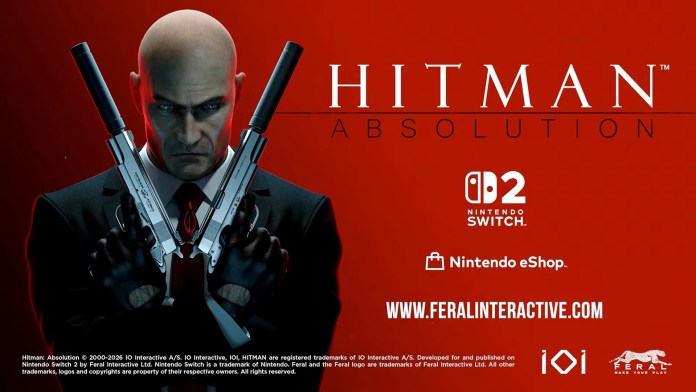
Feral Interactive has announced that Hitman: Absolution is coming to Nintendo Switch 2 on October 22. Hitman: Absolution – Nintendo Switch 2 Edition will be available at a discounted price of $29.99 (base MSRP: $39.99) through November 5, and an Upgrade Pack will be free (base MSRP: $9.99) during the same period.
The Nintendo Switch 2 version will feature higher output resolution in handheld and docked modes, a 60 FPS Performance preset, improved animations and visual effects, and Joy-Con 2 mouse support. Contracts will also be available on launch day.
Hitman: Absolution released for iOS and Android on October 16, 2025, followed by the Nintendo Switch version on November 13, 2025.
Branded a traitor and hunted by the Agency he once served, Agent 47 returns to iOS in Hitman: Absolution.
Stalk your targets through elaborate environments that reward both quick thinking and patient planning. Strike silently from the shadows, or let your silverballers do the talking — whatever your approach, each of Absolution’s 20 missions is a contract killer’s happy hunting ground.
Expertly adapted for mobile play, Absolution’s sleek touchscreen controls offer 47’s hallmark precision, with gamepad and keyboard & mouse support included for the full AAA experience on the go.
Blend into the background, kill silently, and disappear without trace, or go in all guns blazing! Absolution’s missions invite you to experiment, improvise and perfect your technique.
The story of Absolution puts Agent 47’s character under the spotlight, where both his loyalties and his conscience are put to the test.
Use Instinct Mode to identify targets, predict enemy movement, and highlight points of interest.
Use Point Shooting to stop time, mark multiple enemies, and eliminate them in a heartbeat.
Find new ways to take out your marks, complete Challenges, or take the ultimate test in Purist mode, with deadlier enemies and no help to guide you.
Razer has announced and released the Barracuda V2 Pro, a “premium wireless gaming headset.” It is available via most local and online retailers $199.99.
The features of the headset, according to the website, are as follows:
MULTI-PLATFORM AUDIO FREEDOM
Your all-in-one audio solution for multi-platform gaming is here. Meet the Razer Barracuda V2 Pro—a wireless ANC gaming headset for those who play anywhere. Designed to move with your everyday routine, unleash immersive sound, flexible connectivity, and all-day comfort wherever you go.
HYBRID ACTIVE NOISE CANCELLATION – For Distraction-Free Gaming Anywhere
Whether at home or on the move, immerse yourself in the game with Hybrid Active Noise Cancellation that helps block out distractions. Enable ambient mode with a tap for instant awareness when you need it.
VERSATILE DUAL-MODE MIC SYSTEM – With AI Noise-Cancellation and Full Band Clarity
Sound crystal-clear at your desk with a detachable Razer HyperClear Full Band Mic, or switch to dual hidden beamforming mics for seamless, hands-free calls while you’re out and about.
ULTRA-PORTABLE FOLDABLE DESIGN – With Integrated & Discreet Dongle Storage
At just 285 g, enjoy all-day comfort with a plush headband, swiveling earcups that fold flat, and built-in dongle storage for convenient mobile gaming.
SEAMLESS MULTI-PLATFORM CONNECTIVITY – With Simultaneous 2.4 GHz Wireless & Bluetooth 6.0
Keep playing even when in real-life calls. Enjoy low latency gaming audio with Razer HyperSpeed Wireless, while staying connected to your phone via Bluetooth for calls and music.
SIMULTANEOUS 2.4GHz & BLUETOOTH AUDIO
Listen in to two audio connections simultaneously and keep your game audio on when using Razer HyperSpeed wireless alongside a Bluetooth device.
RAZER TRIFORCE BIO-CELLULOSE 40 MM DRIVERS – For Rich, Lifelike Sound
Experience a fuller, more natural listening experience with unique drivers that minimize distortion and adapt quickly to dynamic audio—for uncompromising fidelity no matter where you game.
THX SPATIAL AUDIO+ – For Pinpoint 3D Positional Audio
Unlock ultimate immersion through an expanded soundstage. Activate 7.1.4 surround sound and enjoy precise overhead audio with an upgraded engine powered by the latest spatial algorithms.
The headset also has 70 hours of battery life, a 285 gram lightweight build, and memory foam cushions. In addition, the surround sound only works with select Windows devices. Those who order it now from Razer’s website will get it between October 20-22.
Digital Extremes has launched the new “Epoch Operation: Taubound” event in Warframe, available until November 17. It is described as a “monumental in-game community event uniting generations of Warframe players to work cooperatively and fuel the journey to Warframe: Tau.”
The event is comprised of two parts: a global objective to work towards and a new narrative prologue quest. The website further outlines the update:
Epoch Operation: Taubound will open a path to the Tau System with help from the Sentient Mothership, Praghasa. Facilitating your travels will require an extraordinary amount of energy on her part, so you will need to collect fuel to provide the strength she needs.
Playing as your Warframe, you will need to visit Mission nodes across Eris to collect Moonflesh for Praghasa. In exchange for this viscous resource, she will offer a number of Rewards — including a new Syandana, Armor Set and Amp Skin — as well as daily login messages for the duration of the Operation.
This event calls for the collective participation of Tenno from across the entire community.
Among Praghasa’s wares are unique Customizations like the Contegorus Armor Set, Vacis Amp Skin, and Dhampyre Syandana. You’ll also have the opportunity to trade Moonflesh for a valuable Legendary Core, a new Honoria and more.
Additional Rewards Include:
Arturos Vessel Glyph
Zioa Vessel Glyph
Neolyst Natah Glyph
Natah Neolyst Floof
Eris Mortem
Khadati Sumdali
Taubound Sigil
Epoch Operation Vessel Emblem
Naktavyre Armor Set
Haalvu
Valdur’s Syandana
Sling Stone Emblem
Arid Fear Emblem
Breeding Grounds Emblem
Rift Sigil
Spectra Vandal
Basmu Blueprint
Cortege Supulchrax Skin
Morgha Supulchrax Skin
Krios Signa
Ballroom Simulacrum
2000 Kuva
10000 Credits
100 Endo
Tauforged Crimson Archon Shard
Tauforged Azure Archon Shard
Tauforged Amber Archon Shard
Phased Clan Sigil
Glyphed Clan Sigil
Gilded Clan Sigil
Melee Fortification
Melee Retaliation
Arcane Battery
Arcane Ice Storm
Melee Afflictions
Melee Animosity
Melee Exposure
Melee Influence
Melee Vortex
Secondary Fortifier
Secondary Surge
Separate from Epoch Operation: Taubound, you will also find a new Tau Prologue Quest added to your Codex starting on October 15. This Quest is a permanent new addition to the Warframe Codex that will remain in place even after Epoch Operation: Taubound ends and can be completed at your leisure. While it is narratively connected to the limited-time event, it is not related to the Rewards or dialogue found in this Epoch Operation.
Note: You must complete The Hex and The Old Peace Quests to access the Tau Prologue Quest. This is not required to harvest Moonflesh as part of Epoch Operation: Taubound.
Check out the gameplay trailer for Warframe Epoch Operation: Taubound below:
Warframe is available now on iOS, Android, Nintendo Switch, PlayStation 4, PlayStation 5, Xbox One, Xbox Series X|S, Nintendo Switch 2, and PC via Steam. Warframe: Tau will release later this year.
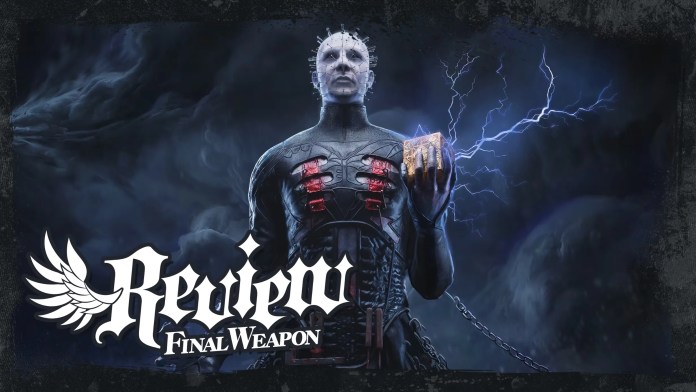
Clive Barker’s Hellraiser: Revival is a game that gave me plenty of reasons to be interested before I ever picked up the controller. With Clive Barker involved, Doug Bradley returning as Pinhead, and a mysterious puzzle box that somebody probably should have left alone, players are naturally going to interact with the mysterious object.
Unfortunately, when the Cenobites promised suffering, I didn’t realize they meant the gameplay. There were elements I enjoyed. Bruno was a highlight, and certain body-horror moments made me excited about how the game drew from the original film. However, there were also long stretches where I struggled to stay invested, along with controls and technical shortcomings that made playing more frustrating than I wanted.
Gore Over Lore
I first encountered Hellraiser at far too young an age, which may be why it stuck in my memory so well. I remember being more uncomfortable with what Frank said than with most of the creatures. For me, the psychological tension Hellraiser accomplished gave it its edge. I thought about my own father in such a situation, and that was enough to leave a lasting impact.
I came in expecting to find characters I’d enjoy, even if I don’t agree with their choices. Frank and Julia from the original movie are perfect examples. Frank is chasing pleasures the likes of which he’s never known, and Julia is simply so obsessed with having her lover back that she’s willing to do evil, murderous things. The original film even goes so far as to depict Julia in a more glamorous light with her makeup and clothes as she descends further into the depths of depravity. However, I feel like Hellraiser: Revival completely missed that kind of detail, leaning much more on gore than lore.
As a longtime Hellraiser fan, I definitely had some expectation of a great new story, even if the gameplay suffered. Yet, the gameplay suffered, and sadly, so did the lore.
Character Disconnect
Revival follows Aidan Lynch as he tries to save his girlfriend, Sunny, after opening the box and unleashing the Cenobites on her. I’ll try to keep the details spoiler-light because I think experiencing the game for yourself is better, but by a third of the way in, I still didn’t feel like I knew either character well enough to care. Not even like I feel with Frank and Julia, where I can disagree with their actions and enjoy watching those choices unfold.
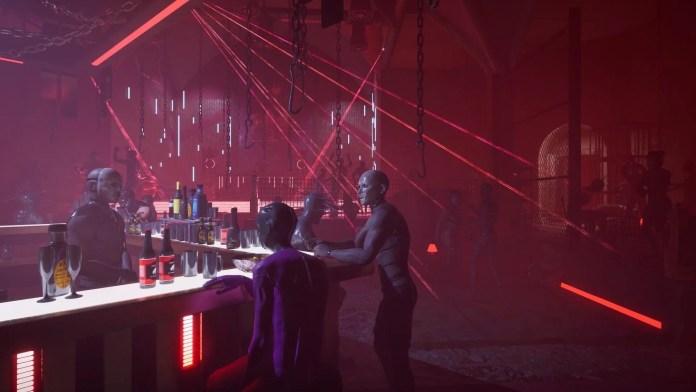
After about two hours of gameplay and what felt like a somewhat generic BDSM dungeon, mixed with gore and psychos in gimp suits, I could understand what Aidan wanted to accomplish. Still, I felt like I didn’t really know either one of these characters well enough. I knew that they were attracted to each other. The game certainly made that clear, but I wanted some interaction or background that actually made their relationship interesting, or at least mildly engaging.
The flashbacks of the two show brief scenes of physical intimacy, but nothing to connect them to. To be fair, sex can tell us plenty about fictional characters, like how they interact, how they communicate affection, or their insecurities. But the glimpses I was shown didn’t really help me understand why these people mattered so much to each other. I didn’t need their relationship to be healthy, but I wanted to understand what kept Aidan so attached to Sunny. This is still Hellraiser, but I wanted it to be enjoyable following someone as they make terrible decisions. I need to understand what makes those decisions compelling in the first place.
With Revival, I feel like they push you to understand the objective before they actually give you much connection to the people involved. Learning more plot details doesn’t automatically make this relationship interesting. I wanted the game to show me how Sunny and Aidan actually are together so I could care about what happened to them. By that point, the relationship hadn’t given me much reason to stay invested.
Pacing Issues
The opening also really struggled to make me curious about the rest of the world. The first third felt somewhat generic in my opinion. I was sneaking around enemies and moving through disturbing environments, but I wasn’t getting enough substantial Hellraiser lore to make me want to go further. The “art” Bruno makes did add some Hellraiser flair, but not enough to make me really see the Hellraiser I was looking for.
I wanted more to explore, especially since Aidan and Sunny’s relationship wasn’t holding my attention. This franchise definitely has plenty to make me curious about what people believe they’re gaining through suffering and why they pursue these experiences in the first place. But during the opening third of the game, I didn’t really feel like it gave me enough to make those questions interesting.
This further begs the question: what would persuade someone unfamiliar with Hellraiser to keep going? I already had a personal interest in it, so I could recognize things and anticipate what might appear later, but a new player wouldn’t necessarily have that kind of attachment. The game needed to give us more to enjoy about the world and gameplay rather than leaning so hard on nostalgia baiting, or making players wait for something that felt like Hellraiser in that specific Hellraiser way. At some point, my curiosity was the only thing keeping me going, and I spent a considerable amount of time somewhat patiently waiting for the game to give me a stronger reason of its own.
Bruno and Body Horror
Eventually, we encounter Bruno, and I really enjoyed this strange character and his art. His mannerisms gave me something to pay attention to, and I always wanted to hear what he’d say next. By the time I reached my first real fight with him, I finally had the classic Hellraiser reaction I had been wanting. But again, it felt like too little, too late. Most of that weight was carried by the nostalgia bait of the trophy you get after the fight, which I’ll leave for you to discover.
I enjoyed Bruno’s dialogue because he says strange, uncomfortable things like “Let’s have a kiss,” which reminded me of Frank’s “Come to daddy” line in the original Hellraiser movie. Hearing that kind of affection in such a grotesque encounter gave an uncomfortable familiarity that I enjoyed from the first film.
Bruno had a personality that made the horror around him interesting. I wanted to see what he considered an artistic achievement and understand how he thought about what he was doing. That curiosity gave me something to engage with beyond the fact that the environment looked disturbing. I really enjoyed this one particular scene where he dances around one of his victims or art projects and seems to be just having a great time.
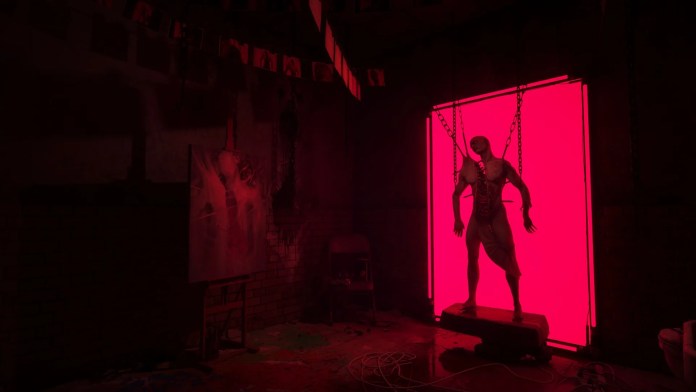
For that quintessential Hellraiser moment, there is a scene very shortly after that involves Sunny. I don’t really want to explain it because I want you to experience it on your own, but that specific imagery of her in the bed really brought me back to the grotesque, physical, visceral transformation that made the first Hellraiser such a beauty.
That moment helped me understand my problem with the earlier content. Clearly, I’m not put off by how graphic the game is, because some of the most grotesque imagery became a highlight for me. I just really wanted to feel that level of interest much earlier.
Clunky Configuration
Even so, enjoying what was happening onscreen didn’t fix my frustrations with controlling Aidan. The controls felt clunky, especially when I needed to react quickly. To be fair, I don’t expect a horror protagonist to move like an action hero, and vulnerability can help make an encounter more frightening. But I still want to feel like I can master the controls and reliably perform the action I’m attempting.
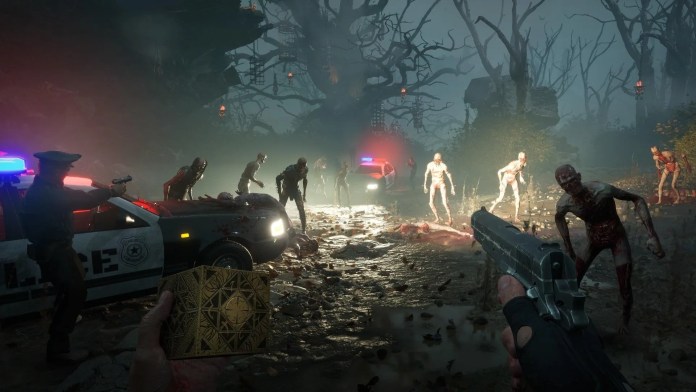
I did enjoy the Genesis Configuration giving you supernatural abilities that you can use alongside your weapons. Those powers use a resource called Suffering, with telekinesis letting you launch sharp objects at enemies and pyrokinesis allowing you to launch fire as well. This gave the box a more active role in an interactive adaptation, which is cool considering how important it is to the franchise. What got me curious was how the abilities would actually affect my decisions in the game. A power can sound exciting when it’s described, but I wanted to know whether it would change the way I approached encounters. It did in some ways, but I feel like the cooler features weren’t unlocked until so late in the game that I really didn’t have time to enjoy them. I did like that it took a resource to use, however, because it might have otherwise felt overpowered; the balancing was quite nice.
Stealth was also an interesting part of the experience, with some sections where I spent quite a bit of time quietly moving around enemies. There is nothing wrong with asking me to avoid something dangerous, but I really wanted the process to hold my attention, and it struggled to do so. What was I looking for? Was I watching their movements? Waiting for an opening? Was I worried that it was going to hear me? The inconsistency there diminished some of my excitement. Sometimes enemies would literally walk up until they were almost touching me before they would notice me, and then there were other times that it seemed like they could see me through walls. That inconsistency left stealth feeling cumbersome, to say the least.
One of my biggest disappointments with this game is that the puzzles were incredibly underwhelming, which feels particularly unfortunate for a game built around a recognizable puzzle box. To be fair, I wasn’t expecting every puzzle to stop me for half an hour, but I did want something a little more satisfying to work through. One interesting circumstance included a set of statues I had to rotate and set the Configuration inside of to unlock them. Most other puzzles offered very little beyond pushing you to look for notes or other pieces of lore that would hopefully give you a hint toward a combination for a locked cabinet or two. I enjoyed the presentation of some of the puzzles, but sadly, actually solving them wasn’t as enjoyable.
The larger encounters also varied quite a bit. For example, Bruno gave me a direct fight, while other sequences focused more on being able to quickly escape danger. I don’t need every major threat to become a typical old-school boss fight, as an enemy can be memorable simply because I barely managed to get away from it. Still, the escape-focused encounters didn’t give me the satisfaction I wanted and felt quite repetitive.
Glitches and Nostalgia
The technical performance also presented notable issues throughout the playthrough. The death animations were something that really stood out as a problem for me. They sometimes looked cheap, clunky, or glitchy. For example, Chatterer kept walking toward me after a death animation, which looked kind of silly and pulled my attention to the presentation when I should have been reacting to the danger.
There were also times when an enemy managed to kill me from behind, and the camera never gave me a useful look at what was attacking me. I would get hit, fall forward, and be left wondering what actually happened to Aidan. I would have loved for the camera to pan around during that animation so I could actually see what killed me. That isn’t to say that being surprised by an enemy can’t be frightening, but being left without a clear sense of the attacker mostly just left me irritated. I wanted the deaths to be clearer and more impactful, especially when the game seemed so committed to showing its gory side.
Still, my biggest disappointment was how heavily the game leaned on gore without enough psychological tension to keep me invested. I experienced a few jump scares, but the regular anxiety that comes with playing a horror game wasn’t there. Constant displays of suffering don’t make up for how little I cared about the characters, and they certainly don’t make up for the frustration I felt while playing. I wanted what was happening around the violence to actually affect me. I’d go so far as to say that, at times, it really felt like it borrowed heavily from Resident Evil, especially with your inventory and how you manage it. However, it didn’t execute these mechanics as well and definitely didn’t improve upon them.
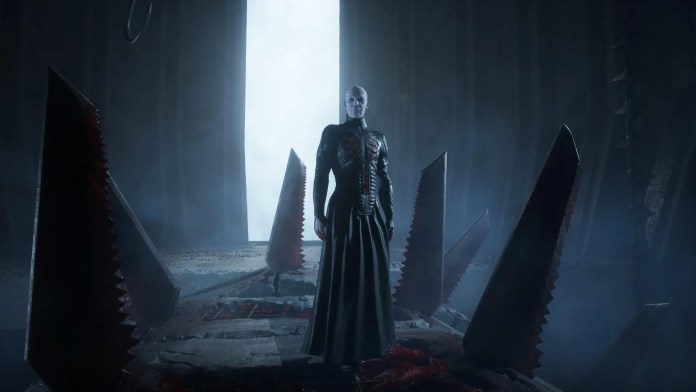
Though having Doug Bradley back on board reprising his role as Pinhead is absolutely amazing and would make any fan want to jump at this game, it really didn’t save the game from my critiques. Bradley, as always, did a spectacular job keeping the Hell Priest intimidating and interesting. However, his return wasn’t enough to keep me invested when the rest of the story was suffering.
That directly relates to how I feel about some of the moments I did enjoy. In some ways, they felt like heavy-handed nostalgia bait rather than new, interesting content that dragged me further into the world of Hellraiser. A couple of those scenes rewarded my patience and showed the game could indeed capture parts of the franchise I enjoyed, but I wanted that feeling far sooner and more consistently afterward. However, the game suffered in pacing, depth, polish, and inspiration. I wanted more original ideas from its use of the Hellraiser world, and though I wanted to enjoy it, I found myself more often frustrated than entertained.
Disclaimer: Saber Interactive provided a PlayStation 5 copy of Clive Barker’s Hellraiser: Revival for review purposes.
holo Indie and Roboqlo has announced that a Nintendo Switch 2 version of holoVillage: Our Cozy Days will release on October 22. The game is already available now on PC via Steam.
The game will cost 2,900 yen in Japan. The worldwide price points for the game are unknown. Check out the trailer confirming the launch of holoVillage: Our Cozy Days on Nintendo Switch 2 below:
Lastly, here’s an overview of the game, via Steam:
holoVillage: Our Cozy Days is a game where you can enjoy a slow and carefree rural life together with your favorite VTuber.
Join the cute chibi versions of VTuber talents from hololive Production as you develop your village, explore dungeons, build houses, and enjoy a relaxing slow life together.
Relaxing slow life with farming, mining, and fishing
In the village, you can till the fields, go fishing, craft items with collected materials, open a shop and do business… Enjoy your time freely and leisurely with hololive members in your own way.
Exciting dungeon exploration
Outside the village, enemies appear and powerful bosses await in dungeons, providing thrilling adventures for those who seek more action. Gather equipment and aim for even greater heights!
Rich housing features
Decorate your home or shop with furniture and items inspired by hololive talents to create your own unique interior or fan room. You can also upload your room to the server for others to see or visit your friends’ rooms!
hololive talents visiting the village
Familiar hololive talents appear as villagers and help you in your daily life and adventures. Rooms you create can be made public for other players to visit — and maybe even your oshi might drop by!
A wide variety of costumes
You can freely dress up your favorite hololive talents in various outfits. From casual clothes to school uniforms, even swapping outfits between talents is possible. Dress up your oshi in the outfit you love!
Multiplayer elements
A multiplayer mode where multiple players can play together is also planned. With both cooperative and mischievous play options, the way you enjoy the game expands even further!
Nacon has announced that it has delayed Edge of Memories from its November 5 release date to a new launch date of December 3. It will still launch on PlayStation 5, Xbox Series X|S, and PC via Steam.
In a press release, Nacon states “This quieter period will allow players to discover the game at their own pace and fully appreciate it,” which is an undeniable allusion to the game’s initial release date being place in the midst of The Legend of Zelda: Ocarina of Timeand Grand Theft Auto VI‘s releases. That said, an updated demo for Edge of Memories will now release in early November.
Check out the new environmental and opening trailers for Edge of Memories below:
Environment
Opening
As previously announced, NieR writer Sawako Natori played a major role in creating the story of Edge of Memories. Cédric Menendez composes the soundtrack of Edge of Memories, with a final theme by Yasunori Mitsuda (Chrono Trigger, Xenoblade Chronicles series) and vocals by Emi Evans (NieR series). Vocalist Marion Schneider (Edge of Eternity / Temtem), composer Mariam Abounnasr (Xenoblade Chronicles 3 / ONINAKI) and character designer Raita Kazama (Xenoblade Chronicles X) also contributed to the project.
Edge of Memories developer Midgar Studio was shut down after failing to secure a buyer, but all of the creative work on the game is already complete. A dedicated team is handling the technical aspects to ensure that the console and PC versions are ready. Lastly, the Steam page describes the game as follows:
The Corrosion, a plague of unparalleled proportions, has already ravaged the Astryan continent. On the other side of the world, the continent of Avaris and its nomadic peoples—so far spared from the horrors spawned by this abomination—now stand on the brink of extinction. Eline, an itinerant Soul Whisperer, relentlessly battles the force that turns the once-thriving fauna, flora and humans of this lush land into grotesque abominations. Following a mysterious encounter, a dark power awakens within her, one that may hold the key to ending this apocalypse: the ability to control the Corrosion within her own body.
But saving a world already doomed is no easy task. With the help of Ysoris, her unlikely mentor, and Kanta, shaman prince of a lost tribe, Eline must overcome the formidable adversaries standing in her way.
Arc System Works has announced that it will establish a new Tokyo Studio, known as “Takumi,” on November 2. It will specifically be located in Urban Center Shinjuku at 2-5-10 Shinjuku, Shinjuku-ku, Tokyo.
The new Arc System Works Tokyo Studio “Takumi” will be used to bolster the main studio’s development capabilities. It will also develop a new fighting game selected for the Ministry of Economy, Trade, and Industry’s (METI) “IP360” project. The project is an initiative which provides large-scale, long-term, and strategic support so that Japan can increase overseas sales of its content to 20 trillion yen by 2033. A recruitment page for the studio is now open.
Arc System Works’ most recent game, MARVEL Tōkon: Fighting Souls, is available now on PlayStation 5 and PC. It recently revealed that Thor (Jane Foster), Venom, and Jubilee will join Phoenix Cyclops in the Year 1 DLC for MARVEL Tōkon: Fighting Souls. Jane Foster will fill the role of Thor, similarly to Jason Aaron’s run on the Thor comics in 2014. She will release in winter 2027. Venom will launch alongside a new Kylntar stage in spring 2027, while Jubilee will be available in summer 2027. As for the first character in the DLC, Phoenix Cyclops, he is still on track to release on November 2.
The launch roster of MARVEL Tōkon: Fighting Souls includes Peni Parker, Storm, Magik, Danger, Wolverine, Captain America (Steve Rogers), Doctor Doom, Ghost Rider (Robbie Reyes), Iron Man, Ms. Marvel (Kamala Khan), Spider-Man (Peter Parker), Black Panther (Shuri), Hulk, Star-Lord, Green Goblin, Carnage, Blade, Loki, and Deadpool, alongside secret character The Champion.