

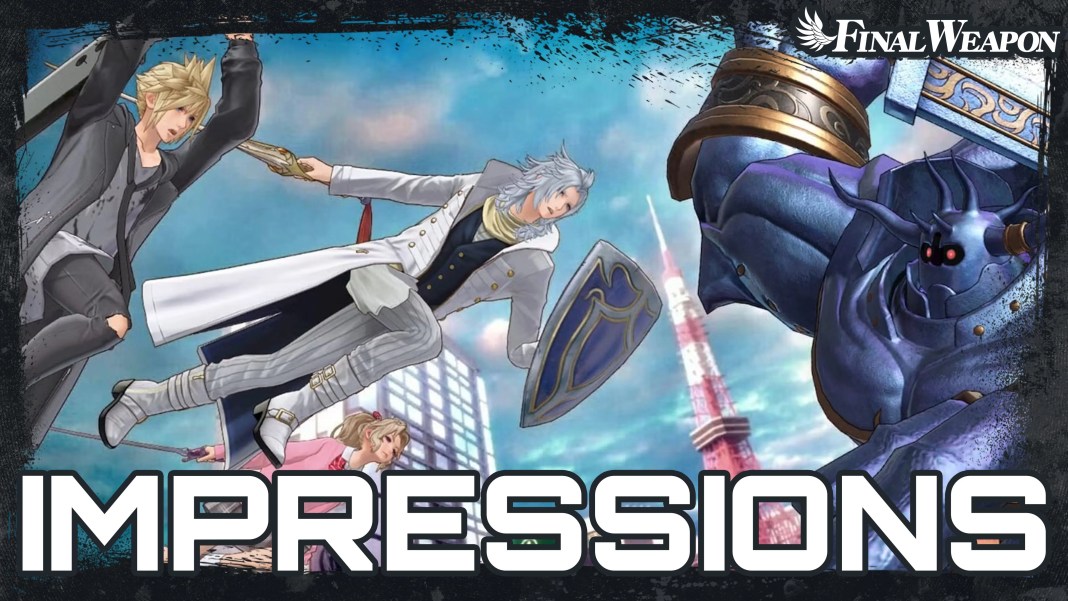
Dissidia Final Fantasy is a genuine pipe dream, a what-if all-star fighting game featuring beloved Final Fantasy characters. Its impact is strongly felt as the art direction from Tetsuya Nomura modernized many characters that came before the franchise’s 3D entries. Additionally, these designs became the standard interpretation for subsequent spin-offs. With Dissidia Final Fantasy NT‘s failure to gain momentum and the closure of Dissidia Final Fantasy Opera Omnia‘s service, the future of Dissidia was left unknown.
On October 11th, a teaser site was posted for the next Dissidia entry, specifically for mobile devices. The following Tuesday, the trailer dropped, announcing Dissidia Duellum Final Fantasy to the world. Developed by NHN Playart, this new title attempts to differentiate itself by creating a new entry point, discarding a familiar continuity in favor of a rebooted storyline. With the closed beta period ending soon, I had the chance to play through the week, and ultimately, was left conflicted.
A New Take on Classic Heroes
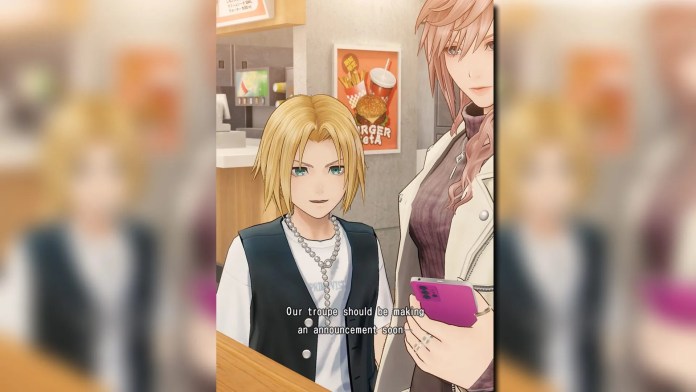
The game starts with Cloud finding himself in the void as he follows Sephiroth toward a portal. This portal leads into the streets of Tokyo during an attack that leaves anyone nearby in ruins. Cloud, finding himself outnumbered, gets reinforcements by way of the Ghosts, beings from another world who take up the fight. The current responders are led by the Warrior of Light, flanked by Lightning and Terra; additional responders are present throughout other areas. Among the fight is a bystander, Ren, who documents each battle and the daily activities from a distance.
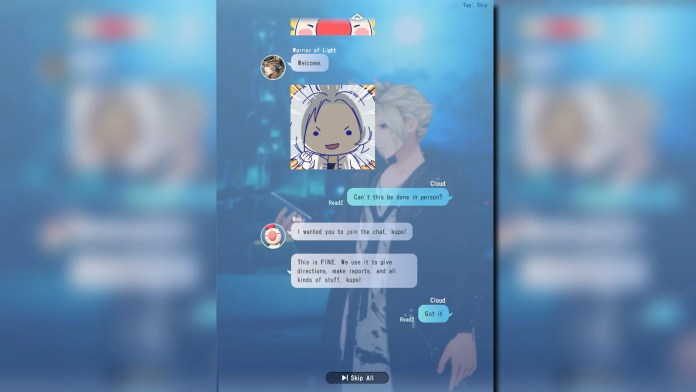
Although there are only four available cutscenes, each provides further world-building. Most of the characters are dressed in civilian clothing, blending into society as they examine the threat or find comfort. The cutscenes maintain a sense of continuity rather than being scattered and out of order. Additionally, there are message exchanges between characters, expanding on the new character dynamics and featuring cute character stickers. The way the story unfolds is much more understandable than the previous approach, and it’s very clear.
It’s not a new entry without new music arrangements that build upon the franchise’s legacy. Interestingly enough, they’re more individualized and blend two iconic songs into the characters’ themes. It’s an entirely different approach from the norm, as previously, Takeharu Ishimoto would compose one track in his style. My personal favorite is Lightning’s Theme, which perfectly blends Saber’s Edge and transitions easily into Blinded by Light’s chorus. However, most tracks follow the same EDM template, for better or worse; at least there are some standout tracks along the way.
Duellum takes a different approach by discarding the previous plotline and using aspects of tokusatsu shows. Watching characters fit in or feel out of their element is a positive aspect, along with the voice cast. The music is also a standout for different reasons, although it helps it stand out from the previous remixes. I lament, however, that the previously established interactions and relations between characters, as in Dissidia NT, were already at the end of their journeys. Although I do appreciate the focus on unfamiliar character picks, with Krile, Prompto, Rinoa, and Gaia taking center stage alongside Rikku, who is teased at the end of the trailer.
Bravery in the Light of the Crystal
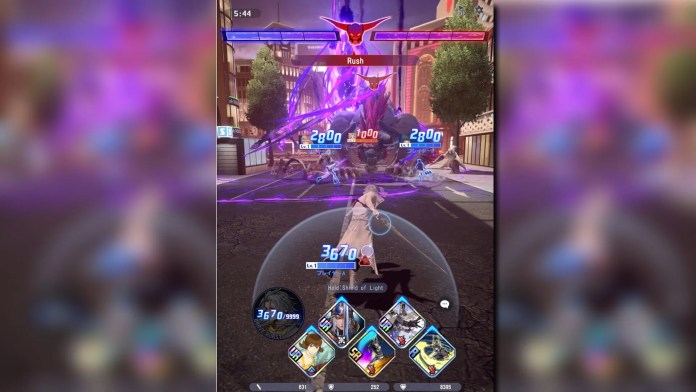
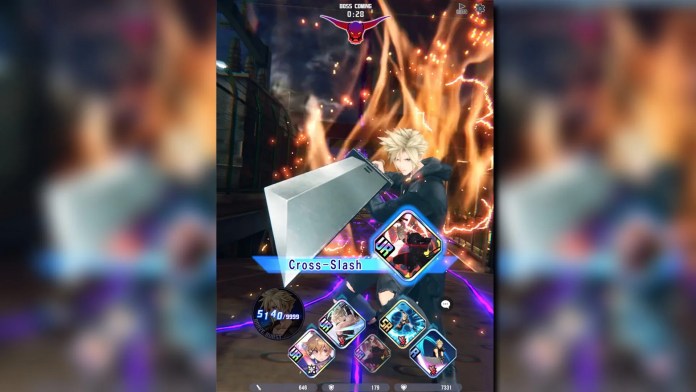
Duellum returns to the three-versus-three format of Dissidia NT, condensed into a smaller screen. By either tapping when enemies get close or swiping up abilities, the combat is the simplest yet. Each character is assigned one of four roles: Melee, Ranged, Agile, and Support. You’ll also have an elemental affinity, granting a damage buff to an ability of equal affinity. Both Job Medals and Support Abilities from other characters also provide passive buffs to the overall build.
Based in Tokyo, each battleground contains a crystal full of classic Final Fantasy monsters. With each battle cleared, a crystal is claimed, and bravery points are distributed through the team. The other way to earn bravery points is to face off and defeat members of the opposing team. At the start of the match, there’s a thirty-second timer counting down to the spawning of the boss. They’re fighting for the same objective, so that sabotage can occur at any moment.
Each boss brings a series of attacks that can affect either team, leaving an opening for a strategic counterattack and pushing the opposing team back. The only way to deal damage is through obtaining max bravery to burst and deal high amounts of attack for a short duration. If the match timer runs out, regardless of the damage dealt to the boss, it’ll end as a draw. The gameplay immediately reminded me of Gambit Prime from Destiny 2, as it’s a race to defeat a boss. Additionally, the cutscene that introduces each boss disrupts the flow of the matches, pausing everyone in place and leaving an opening for an attack.
Claim a Ticket, the Raffle is in Town
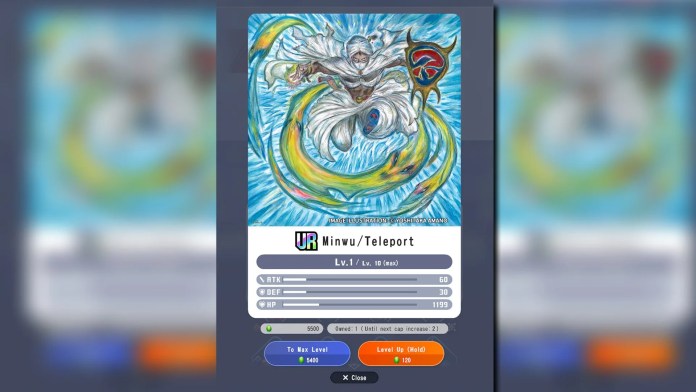
Alongside modern Square Enix mobile games, Duellum is the latest attempt at a new Final Fantasy gacha. This isn’t the first Dissidia gacha game; the systems in place have been forgiving for now, with multiple ways to gain free pulls. Players earn Mogpoints or Ability Tickets by completing dailies or weekly objectives, as well as through the Season Pass. They can be accumulated, and when a ten pull is completed, it rewards a character ticket each time. It’s worth mentioning that you are also rewarded a Character Ticket through the tutorial process, and accumulating more than five allows you to raise the probability of pulling a specific character.
Various types of abilities are based on rarity and developed through collaboration with artists who bring their unique spin to multiple characters. Additionally, there are also free ways of getting abilities through daily reset crystals that are unlocked through a timer or rewarded after a victory. When pulling for abilities, growth eggs are also acquired, as they serve as the means to upgrade every ability. Every base ability has an upgrade path up to level ten; however, if a duplicate is drawn, it then amplifies its upgrade path past level ten. I can’t help but worry that it may become more pay-to-win as a result, by constantly drawing duplicates to reach max level.
Additionally, Duellum offers a season pass that includes numerous rewards while simultaneously progressing the story. These rewards include instantly unlocking characters with their casual outfits and Icons, with each slot able to be expedited through the spending of Mogpoints. Available through the free season pass, both story cutscenes and message exchanges become accessible, providing insight into the day-to-day activities. As this is a PvP-first game, I can understand why the story is placed here, but I still can’t help but feel disappointed with the result. Similarly, the premium season pass includes special pixel icons and even classic costumes.
Ghosts Lurking Around
Dissidia Duellum Final Fantasy is the very definition of style over substance without anything to gain. Its gameplay is a pale imitation of what came before and suffers as a result, with the potential to become unfair, which is a shame because the premise alone is worth downloading, let alone exploring. Not to mention the ability to see other Final Fantasy characters, specifically villains, roam around and try to blend in.
With the survey, one can only hope that Square Enix manages to gather quality feedback to deliver a more polished experience, as this game has potential. Still, I can’t shake off the feeling that if Duellum fails, this could be the end for this iconic spin-off franchise. Instead of a new game similar to its roots, Dissidia Duellum is a gacha game that leaves behind much of what made the PSP games so special. Some charm is here, but glaring issues take away from what could be an enjoyable experience. I hope key issues can be addressed before Dissidia Duellum Final Fantasy arrives in 2026.

