REMOW has revealed the main staff of the upcoming TV anime adaptation of Kuzushiro’s The Moon on a Rainy Night manga series. A new key visual for The Moon on a Rainy Night was also revealed alongside a short interview with Kuzushiro. Like other anime series licensed by REMOW, The Moon on a Rainy Night will be streaming worldwide.
Kuzushiro, KODANSHA/”The Moon on a Rainy Night” Production Committee
Tomoe Makino directs the anime at CompTown, with Shogo Yasukawa writing and overseeing the series scripts. Ayumi Nishibata is the character designer.
The interview with Kuzushiro is available below:
When creating The Moon on a Rainy Night, what message or themes did you want to convey through the story?
Kuzushiro: Everyone carries worries and struggles that can’t be seen with the eye.
Even when two people share similar burdens, truly understanding or sharing those feelings completely can be extremely difficult—this is why communication becomes essential.
Though the protagonists are high school girls, the issues they face are ones that people encounter throughout their lives. I approached this series with the mindset of exploring those challenges alongside the characters as the story unfolds.
Do you have any elements you’d like overseas fans to pay special attention to?
Kuzushiro: The production team’s deep understanding and affection for the characters shines through every part of the anime-from their expressions and voices to the background details and direction.
I’d be delighted if you could feel that love as you watch.
Kodansha USA currently publishes Kuzushiro’s The Moon on a Rainy Nightmanga in English.
Netflix has listed the TV anime adaptation of Yūshi Ukai and Nekometal’s SHIBOYUGI: Playing Death Games to Put Food on the Table light novel series ahead of its January 7 streaming premiere. The SHIBOYUGI: Playing Death Games to Put Food on the Table anime will also be streaming on Crunchyroll, in addition to Netflix.
LIN from MADKID performs the opening theme song “¬Ersterbend” (Not Ersterbend).” Chiai Fujikawa will perform the ending theme song “Inori (Prayer).” Fujikawa wrote the lyrics of the ending theme song, and the song was composed and arranged by Seima Kondō from Elements Garden.
Sōta Ueno directs the anime at Studio DEEN. Rintarou Ikeda is in charge of series composition. Eri Osada is designing the characters, and Noriyoshi Konuma is the sound director.
Yen Press publishes the light novel series in English and describes the story:
Yuuki wakes up to find herself wearing a maid’s uniform in a strange manor. After wandering into the dining room, she comes across five other girls, each in the exact same outfit. Soon, the girls learn that the manor is brimming with lethal weapons and an array of deadly traps…and that they can only escape by playing the most gruesome of games. As the terrifying truth sets in, each girl’s face goes pale—except Yuuki’s. Why? Because this isn’t her first go-round. That’s right—Yuuki is a professional death game player who lives off the prize money she collects from winning brutal killing competitions, and she’s not about to let this chance pass her by.
LEVEL-5 has announced that FANTASY LIFE i: The Girl Who Steals Time surpassed 1.5 million copies sold worldwide as of December 29, 2025 (JST). Roughly 300,000 copies of FANTASY LIFE i: The Girl Who Steals Time were sold since this past July, when the game reached 1.2 million copies sold.
To celebrate 1.5 million copies sold, a new illustration was released, and FANTASY LIFE i: The Girl Who Steals Time is now 25% off for a limited time.
FANTASY LIFE i: The Girl Who Steals Time is available now for Nintendo Switch, Nintendo Switch 2, PlayStation 4, PlayStation 5, Xbox Series X|S, and PC via Steam. The game costs $62.58 on Nintendo Switch 2. Moreover, players can upgrade their Nintendo Switch copy to the Nintendo Switch 2 Edition by purchasing an upgrade pack for $2.59. The free “The Sinister Broker Bazario’s Schemes” DLC is available now to all players.
Lastly, here’s an overview of the game, via Steam:
Step into this Slow-Life RPG where you can freely switch between 14 unique jobs, so called “Lives,” and enjoy a carefree life in a fantasy world.
Fish, cook, shape the island to your liking, or team up with friends to battle monsters across the vast world. It’s up to you to choose what kind of Life you’ll live!
A Dragon Guides You to a Mysterious Island
You are an adventurer who sets sail with the archaeologist Edward and his team.
Following the light emanating from a dragon’s fossil, you discover an uncharted, deserted island.
A vast abyss, a dragon made of bone, and a girl’s message that begs you to save the world…
Travel between the island that thrived 1,000 years ago and the present-day island to unravel the mystery of its downfall!
14 Unique Lives to Make Yours Brighter
In this world, a “Life” is the equivalent of a job.
Each has its own characteristics and provides various ways to enjoy yourself.
Collect ingredients or materials with Gathering Lives, create weapons or cook dishes with Crafting Lives, or fight monsters with Combat Lives. You can switch between any Life at any time, creating a life that’s uniquely yours.
Shape the Island! Create Your Town!
Use Lives to gather materials and restore the island to its former glory!
Not only can you place houses and objects, but you can also alter the landscape and draw rivers and roads to create a truly unique island.
Expand your house, place some furniture, and decorate the interior however you like!
Embark on an Open-World Adventure!
Freely explore the largest continent in the series!
Climb ledges, swim across rivers and lakes, or ride on mounts – With these new actions you can explore the world without limits!
Endless Fun with Multiplayer!
Enjoy multiplayer with up to 4 players!
Invite friends to your island, explore dungeons, or find your own ways to have fun together!
If you have two controllers, you can also use the 2 Player Family Co-op feature where one player can join the adventure as your travel companion without needing to connect online!
Ippei Nara’s An Adventurer’s Daily Grind at Age 29 (also known as The Daily Life of a Single 29-Year-Old Adventurer) manga is now available on Kodansha’s K MANGA digital service. The manga was added to K MANGA ahead of the An Adventurer’s Daily Grind at Age 29 anime adaptation’s premiere on January 7, 2026 at 9:30 p.m. JST.
NEW ⚔ An Adventurer's Daily Grind at Age 29 by Ippei Nara is now available on K MANGA!
d Anime Store and ABEMA will stream An Adventurer’s Daily Grind at Age 29 in Japan, and Crunchyroll will stream the anime worldwide, excluding China and Japan.
HoneyWorks performs the opening theme song “Kimi ga Tomoshite Kureta Hikari o Ima feat. Hanon” and the ending theme song “Kimi no Tonari Kūki ga Oishii feat. Kotoha”
The cast includes:
Makoto Furukawa as Shinonome Hajime
Sayumi Suzushiro as Rirui
Shizuka Itō as Veronica
Yūki Kuwahara as Anyango
Tomohiro Ōno as Rishat
Yuna Ogata as Olive Carmen
Kaori Maeda as Natalie
Haruka Shiraishi as Cocko
Yasunori Matsumoto as Cockdole
Riki Fukushima directs The Daily Life of a Single 29-Year-Old Adventurer and oversees the series scripts at animation studio HORNETS. Yoshihiro Nagamori is the main character designer.
Lastly, here’s an overview of the anime, courtesy of Crunchyroll:
Having spent his childhood in the slums, Hajime Shinonome desperately sought strength to survive.
Now, he enjoys a peaceful and carefree life as a resident adventurer of the Komai Village.
One day, during a quest, he ventured into a dungeon and finds a young girl being partially eaten by a weakest kind of monster, a slime!
The girl’s name was Lirui. Having been abandoned by her parents, she had no place to go and entered the dungeon alone in order to stay alive. Hajime couldn’t just leave her there, so he took her back to the village to live with him!
Kagura Games has partnered with Alicesoft and MangaGamer to bring the Rance RPG series to Steam for the first time ever. Rance 01 + 02, Rance 03, Rance IX, Rance X, Rance Quest Magnum, Rance IV, and Sengoku Rance will be coming to Steam, with more updates and announcements for the Rance series to come at a later date.
Here’s an overview of Rance 01 + 02, via the official Steam page:
Rance 01 – Quest for Hikari
Story
Rance has been traveling around with his faithful mage companion, Sill Plain, but now he has a new purpose in mind. His target this time—or rather, his destination—is the wealthy Kingdom of Leazas.
Hikari, the daughter of a noble family who attended Paris Academy there, has gone missing, and Rance has taken up the quest to find her.
Gameplay
Investigate Hikari’s whereabouts in adventure mode, then delve into dungeons as you progress through the story. Uncover clues, side plots, and perhaps even powerful items by talking to everyone you meet. Dungeons are represented by cards, and you must choose your cards carefully to find treasure and avoid traps, because a card could be hiding anything when it’s face down. Combat involves a wide variety of weapons, shields, and items all represented as “chips.” Bet chips to perform attacks, and manage your combos and cooldowns wisely to defeat powerful foes.
Rance 02 – The Rebellious Maidens
Story
The peerless warrior Rance is a great fighter, a quick thinker, and a man of powerful luck. These qualities alone would mark him as a hero for the history books, but unfortunately, he has no interest in using his talents for world peace or justice, and acts only on his own desires. Now the town of Custom is in danger, and who else will take a stand to help them but our hero, Rance (and his helper Sill). Now that Rance is on the job, Custom is saved! …Or is it?
Gameplay
The town of Custom is imperiled by four witches, and it’s Rance’s job to stop them. Explore Custom in adventure mode, interacting with its residents, stocking up on items, and preparing for battle. Once you’re suitably prepared, delve into the dungeon surrounding Custom, avoiding traps, solving puzzles, and fending off monsters as you search for the witches. Form new alliances and trample anyone who stands in your way as you explore and uncover the mystery surrounding the witches’ origins.
Team ARCANA has announced 2D fighting game Daemon Bride: Additional Gain is coming to PC via Steam on December 30 for 2,980 yen. There will be a 10% discount on Daemon Bride: Additional Gain until January 14, 2026 to celebrate the game’s launch on Steam. Moreover, the game will support English and Japanese language options.
Daemon Bride: Additional Gain is the first ever home port of the arcade version, and players can expect smooth online battles, thanks to the implementation of rollback netcode. Moreover, the game includes boss character Dies Irae Deus as a competitive play-only playable character, Training mode, and the “Primer of Duel” guidebook. The game also supports 16:9 and 4:3 aspect ratios, along with high resolution via custom upscaling.
Here’s an overview of the game, via the official Steam page:
In 2025, the popular arcade game “Daemon Bride” is back on Steam!
A fighting game depicting the battle between 17 angels and demons.
Enjoy high-speed, deep battles with flashy bullets and powerful special moves.
In addition, the rollback-compatible net code allows for smooth online battles.
Angels, demons, and humans.
The destinies of each are intricately intertwined, and Tokyo becomes the stage for the battle.
The opening bell is the oath of the contract. In sealed-off Tokyo, the contract holders dance
Over the years, I’ve played countless games throughout a wide variety of different genres. Yet there’s always been one genre I could never bring myself to enjoy: sports games. I never cared for the emphasis on realism and the often overly-simplistic nature of the gameplay you’d find in the EA Sports franchises, for instance. Granted, there are exceptions, such as those that lean more toward a cartoonish and over-the-top style, or those that use the emphasis on realism to do something unique and undeniably fun.
When I got the chance to play despelote, I wasn’t really sure which category it would fit into. Rather than emphasizing multiplayer, it is a uniquely single-player story that highlights the life of one of the game’s developers, Julián Cordero, as he grew up in Ecuador in the midst of them finally qualifying for the World Cup.
The premise is unique, for sure, but I wondered how the game would play. Would it be fun? Would the narrative be interesting, regardless of whether you’re interested in football/soccer or not? After a few hours, I found myself pleasantly surprised by despelote, despite some of its mechanical flaws.
A Fateful Moment In Ecuadorian History
despelote takes place in 2001, a year before the 2002 World Cup. This event matters as its the entire crux of the narrative, as it focuses on a boy by the name of Julián growing up in Ecuador as the country is on the cusp of winning five games in order to qualify for the event for the first time ever. Of course, much of the game focuses on the obsession of Julián, and the many characters scattered throughout his neighborhood in Quito, towards soccer (or football, as it’s known in most parts of the world, including Ecuador).
The narrative of despelote is fairly simple in the grand scheme of things. It focuses primarily on Julián as a child in 2001, running around school, making friends, and always with a football beneath his feet. He struggles to stay engaged with his family, as all he can think about is football, whether it’s playing it or watching it. This means some friction between him and his mother, as well as his sister.
That friction only continues in certain scenes where you get a glimpse of Julián in 2009, where he’s an older teenager with far more responsibilities and a greater desire to ignore all of them. The story cuts back and forth between these two eras of time, but mostly focuses on the 2001 era and the importance of the 2002 World Cup as a framing device. In between so-called chapters, a narrator provides insight into Ecuador’s progress in the qualifying matches.
A scoreboard appears, showing the number of points the country needs to qualify, as the narrator gives commentary on the general public’s reaction and excitement around the event. It’s really compelling, and helped to immerse me not just in Julián’s headspace, but also in the culture and era that despelote is working to convey. It also helps that all of the dialogue, whether it’s from the narrator, Julián, or any of the NPCs, is entirely in Spanish.
Part of the reason this device works so well is because its uplifted by a great presentation. The visuals use very striking colors, with each character being illustrated by a bright light, while the backgrounds are illuminated by various warm and cool tones. Additionally, the style is akin to the craft of using ben-day dots, like an old comic book, to create one singular image.
Occasionally, the game will use live-action footage or a more traditional 3D rendering, and these moments are a shocking contrast from the rest of the style. When they appear, it expertly conveys the significance of a moment in Julián’s life, whether its the moment Ecuador finally qualifies for the World Cup, or in which the narrator, Julián Cordero himself, reflects on the importance that a certain park in Quito had on his life. It adds to that feeling of immersion and creates this overall nostalgic feeling, regardless if you’ve never played a second of football in your life.
The presentation and narrative of despelote more than succeed in its goals. However, that brings us to the gameplay, which sadly isn’t as strong as the rest of the game.
A Foul
For most of despelote‘s gameplay, while the game isn’t very long, you will be doing the same things over and over again. Whether that’s running around a small neighborhood in Quito or kicking a ball around a park, this will usually be all you are doing for the entire 2-hour runtime. In theory, this may not be a bad thing. After all, it’s not as though the game has a huge asking price, and it creates a greater emphasis on the narrative and visuals.
Even in such a short runtime, though, the repetition of the gameplay quickly became frustrating. Admittedly, I was actually pretty surprised at the free range of motion that I had with controlling Julián. I was expecting a few moments of gameplay, briefly connected by the narrative. Instead, you could run around the neighborhood, interact with friends, and of course, play football. The novelty quickly wore off, however, as the linearity of each task became apparent.
Each chapter follows the same format: the narrator provides an overview of Ecuador’s qualifying match progress, which then transitions into a segment that follows Julián being allowed to run loose and play football, often in a very specific park. You interact with a few kids to either pass the ball to each other, try to hit a few bottles perched on a hedge, or find another object to use as a substitute ball.
Initially, these segments are charming. It’s fun seeing the interactions between these young kids, whose entire world revolves around this sport and nothing else. The aforementioned presentation only adds to that charm, especially in a segment where you run from a teacher and try to play football in the aforementioned park. But in the next segment, you meet with those kids and try to play football in the same park. In the next segment, you do the same thing, and this constantly repeats until the credits finally roll.
There are some changes to the pattern here and there, such as when you have to check your watch and make sure you arrive back at your house at a certain time, or towards the end, when you’re watching Julián’s sister and playing hide-and-seek with her. These moments are few and far between, though, and while those disruptions did come as a fun surprise, they were often undercut by the next segment, forcing you to do the same thing again.
It doesn’t help that the actual controls for kicking the ball around feel somewhat off. Rather than a specific button to kick the ball, you need to flick the stick in the direction you want the ball to go, as if you are controlling Julián’s legs. The result is a truly bizarre control scheme where you are trying to keep the ball in front of you and kicking it in the direction you need to go, all without knowing how high the ball is going to go and at what speed. There’s a moment where you need to kick a cone off the top of a trash bin, and I couldn’t quite figure out what the right way to knock it down was, due to how strange the controls were.
That said, what slightly undercuts these frustrations is how low-pressure everything feels. Even if you don’t click with the controls, even if you don’t enjoy the monotony of the gameplay, you can just run around, and eventually it will switch to the next story segment. That feeling applies to the aforementioned moments where the game slows down and doesn’t focus on kicking a ball around.
The best parts of the game are those that focus entirely on moments between Julián and his family. One of my favorite sections in the game is when Julián is taken to a party comprised mostly of adults, so he hides under the table with his sister as they both talk and play pretend. It then cuts to a moment in the future, where the two are doing the exact same thing again, in the middle of a party where everyone else is drinking.
It brought me back to a forgotten era of my own past: a time when all I wanted to do was hide away from all the adults and create my own space. It also helps that the game’s final half-hour works extremely well and serves as a great capstone to the experience. Despite despelote‘s problems, that is its greatest strength: its ability to transport you to a different era in time and reconnect you with your childhood, even if it vastly differs from Julián’s.
A Charming Look At The Past
I vividly remember, back when I was a kid, a time when my elementary school teachers literally stopped class to watch a match during the 2010 World Cup. While I don’t remember the exact match, I know that a good majority of the teachers and students were from the UK, while several students were from the US, so tensions were certainly high as we watched the match, and both teams were eventually eliminated from the competition. Playing despelote connected me to that memory, which is only a small part of how amazing the experience is.
It’s certainly a flawed game, with repetitive gameplay and strange controls, but the narrative and presentation more than make up for it. The premise of focusing on the life of one of the game’s developers through the lens of his love for football in the midst of Ecuador qualifying for the World Cup in 2001. Additionally, the unique visual style and segments that break the repetition by emphasizing small moments in both 2001 and 2009 add so much charm and personality to the entire experience.
If you never had an era in your life where football meant anything to you, then despelote may not be able to elicit the same reaction from you as it did for me. However, if you like short and sweet indie games and grew up watching the World Cup over the years, then I highly recommend giving this game your time. As for me, I am happy to have seen Julián Cordero’s story brought to life, and I am glad to have found a sports game that goes beyond the monotony of the genre to deliver a truly beautiful narrative journey.
Disclaimer: Panic Inc. provided a Nintendo Switch copy of despelote for review purposes.
Nana Futami is having a rough life as a manga artist in A Mangaka’s Weirdly Wonderful Workplace, but she has the chance to turn things around when her editor comes through to help. As the novice shojo manga artist prepares to finally publish her work, Final Weapon has everything you need to know to keep up with A Mangaka’s Weirdly Wonderful Workplace, including the anime’s weekly schedule and release dates for all episodes.
In A Mangaka’s Weirdly Wonderful Workplace, Nana’s stress makes her stomach hurt as she’s forced to push the deadline for her first chapter. To make matters worse, she’s not making progress on storyboards, and she’s gaining weight from midnight snacking. However, she might be able to pick things back up with the help of an editor and some new friends.
A Mangaka’s Weirdly Wonderful Workplace Release Dates, Exact Premiere Time and Schedule
New A Mangaka’s Weirdly Wonderful Workplace episodes will release on Mondays at 5:00 a.m. PST / 8:00 a.m. EST on Crunchyroll. Episodes will be released with English subs. A Mangaka’s Weirdly Wonderful Workplace is expected to have 13 episodes this season.
Here are the release dates and schedule for A Mangaka’s Weirdly Wonderful Workplace (subject to change):
Episode 1 – October 6 – OUT NOW
Episode 2 – October 13 – OUT NOW
Episode 3 – October 20 – OUT NOW
Episode 4 – October 27 – OUT NOW
Episode 5 – November 3 – OUT NOW
Episode 6 – November 10 – OUT NOW
Episode 7 – November 17 – OUT NOW
Episode 8 – November 24 – OUT NOW
Episode 9 – December 1 – OUT NOW
Episode 10 – December 8 – OUT NOW
Episode 11 – December 15 – OUT NOW
Episode 12 – December 22 – OUT NOW
Episode 13 – December 29 – OUT NOW
New episodes of A Mangaka’s Weirdly Wonderful Workplace will premiere at the following times (subject to change):
Pacific Standard Time (PST): 5:00 a.m.
Mountain Standard Time (MST): 6:00 a.m.
Central Standard Time (CST): 7:00 a.m.
Eastern Standard Time (EST): 8:00 a.m.
Greenwich Mean Time (GMT): 1:00 p.m.
OP/ED, Cast and Staff
Sizuk performs the ending theme song “Thankful,” and HoneyWorks and HaKoniwalily perform the opening theme song “Zettai Shōsan (Absolute Praise).”
The cast includes:
Yūko Natsuyoshi as Nana Futami
Sora Amamiya as Kaede Satō
Miku Itō as Mizuki Hazama
Yū Kobayashi as Arisa Nashida
Miharu Hanai as Nekonote
Eriko Matsui as Tōko Kakunodate
Iori Saeki as Shiori Asakura
Mamiko Noto as Ren Takizawa
Kikuko Inoue as Wakako Tatsunami
Sumire Uesaka as Nagomi Hayachine
Saori Hayami as Yuzuki Hazama
Kaoru Suzuki directs the anime at Voil. Mio Inoue is handling series scripts, while Kana Miyai is designing the characters. Kei Haneoka and Hironori Doi are composing the music, while Pony Canyon is responsible for music production. Ryō Tanaka is the sound director.
Where Can I Watch A Mangaka’s Weirdly Wonderful Workplace?
Crunchyroll is streaming A Mangaka’s Weirdly Wonderful Workplace in North America, Central America, South America, Europe, Africa, Oceania, the Middle East, CIS and Indian Subcontinent. In Japan, the anime is airing on the AT-X, Tokyo MX, BS Asahi, and Iwate Menkoi channels, along with the DMM TV, Lemino, U-NEXT, Anime Times, and Anime Hōdai streaming services.
What is A Mangaka’s Weirdly Wonderful WorkplaceAbout?
Kuzushiro’s A Mangaka’s Weirdly Wonderful Workplace manga was first published as a one-shot in Kodansha’s Kiss magazine in February 2019, and then serialized in Kodansha’s Comic Days app and website in May 2019.
Lastly, here’s an overview of the series via MyAnimeList:
New shoujo manga artist Nana Futami works hard every day while being supported by Kaede Satou, her female editor who is older than her, and Mizuki Hazama, her assistant.
According to the girl herself, she sometimes drums up intense daydream delusions of occupational illness! A working girl’s comedy set in the entertainment industry, brought to you by an author who always draws various girls.
In Famitsu’s 2026 developer ambitions feature, Konami producer Motoi Okamoto revealed that the company is aiming to release one Silent Hill game per year. There are unannounced games in the works, and Konami and Okamoto aim to continue the excitement around the Silent Hill series with new updates.
“Following the release of Silent Hill 2 in October 2024, we were able to deliver Silent Hill f in September 2025, and the Silent Hill series has begun to get back on track,” Okamoto told Famitsu. “Including both announced and unannounced titles, we’re aiming for a release pace of about one title per year. I’m not sure how much of that we’ll be able to realize, but I’ll continue to do my best as producer of the Silent Hill series. Ideally, we’d like to keep excitement around the Silent Hill series going at all times. We’re working hard to share new updates, so I’d appreciate it if you could wait just a little longer.”
Silent Hill f, the latest game in the series, is available now for PlayStation 5, Xbox Series X|S, and PC via Steam, Epic Games Store, Windows, and GOG. The staff of Silent Hill f includes producer Okamoto, scriptwriter Ryukishi07, composers Akira Yamaoka and Kensuke Inage, and character and creature designer kera. Suzie Yeung stars as protagonist Hinako in the English dub.
Final Weapon previously reviewed Silent Hill f and gave it a 4.5 out of 5 score, noting that the game’s story is “told wonderfully and manages to convey its themes with the right amount of care, thanks to some great writing and the arc of its protagonist, Shimizu Hinako. Further, the combat-focused gameplay turned out to be surprisingly addictive, while still managing to be tense thanks to some great monster designs.”
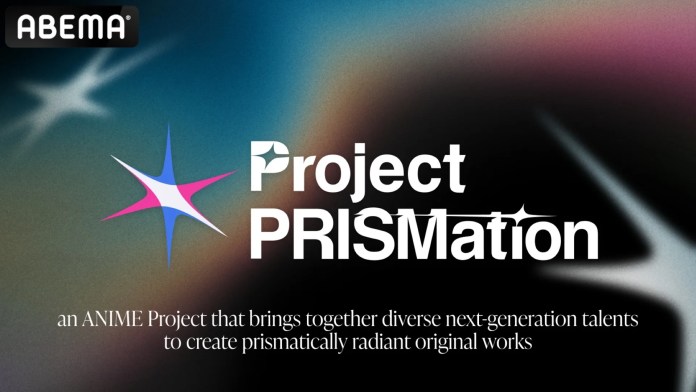
ABEMA has announced the launch of an new project titled Project PRISMation, a new initiative that sees the TV streaming platform collaborate with the next generation of anime creators to produce new and original anime series. The initial lineup for Project PRISMation celebrates three creative groups from across Asia, each with distinct and bold art styles.
Project PRISMation includes Thailand-based creator Zemyata, independent Japanese animation collective Uguisu Kobo, and Vietnam-based duo rapitus, consisting of Ra Pis and Tus. Zemyata and Ugiusu Kobo will be producing new original pilot films for their new anime projects, while rapitus is collaborating with ABEMA on a new video inspired by their Gluttomy viral short. All three works will premiere over three consecutive weeks, starting January 16, 2026 on ABEMA and official Project PRISMation social media channels.
Here’s the release schedule:
Friday, January 16, 2026: Poppin-Play Kitchen — Original Concept, Director, Script
& Animation: Zemyata
Friday, January 23, 2026: Gluttomy — Original Concept, Director, Script & Animation: rapitus
Friday, January 30, 2026: The Horrors’ Horror Home — Original Concept & Animation: Uguisu Kobo / Director: Rushio Moriyama / Screenplay: Yuya Matsuzaki
Here’s an overview of each work, courtesy of ABEMA:
“Welcome back, Boys and Girls!”
Step into the delightfully doll-like world of Poppin-Play Kitchen!
Your adorable hosts, P-chan, C-chan and U-Chan, are dead ready to give you a culinary adventure of a lifetime!
Left at the mercy of larger-than-life Stage Hands, impossible recipes, and an invisible audience, can our lovely hosts survive this bizarre cooking show? …Or will they ‘POP’ under pressure?
Appel, a hardworking scholarship student, arrives at an elite private high school
ready to embark on his new academic journey. However, what awaits him is unforeseen chaos.
Enter the mysterious pink-haired twins, Glista and Glyde, who have taken a burrowi
ng interest in Appel. They’re sweet, bright, and wiggling their way into every part of his life.
As his quiet routine begins to unravel, will Appel uncover the true nature of the
twins to keep his life from rotting away?
The line between intrigue and madness is razor-thin, and the worm is already at the core of the apple.
An ancient vampire who has thrived on human blood for centuries meets a modern Jap
anese wraith spreading curses through television screens. These two beings, transcending the boundaries of East and West, forge a covenant of love that births a daughter inheriting their blood and terror…
The vampire dad… Dracule!
The wraith mom… Sayako!
And their daughter… Alice!
(Don’t forget the mysterious cat, Dark Matter!)
Welcome to the spine-chilling, hair-raising home drama of the Horrors family, wher
e every day is a scream!
Project PRISMation will be expanding its collaborations beyond 2026, starting with public submissions for original concepts and works from Japan and abroad in May. Through the new initiative, ABEMA fulfills its ongoing commitment to bring value to the anime industry with a philosophy that “great IP is born from creators’ passion and creativity.”




 Part of the reason this device works so well is because its uplifted by a great presentation. The visuals use very striking colors, with each character being illustrated by a bright light, while the backgrounds are illuminated by various warm and cool tones. Additionally, the style is akin to the craft of using ben-day dots, like an old comic book, to create one singular image.