An office worker gets a second chance at life as a goblin in the aptly-named anime series So What’s Wrong with Getting Reborn as a Goblin?. Final Weapon has everything you need to know about So What’s Wrong with Getting Reborn as a Goblin?, including the weekly schedule, release dates and timing for new episodes, and much more about the anime.
The story of So What’s Wrong with Getting Reborn as a Goblin? focuses on Akira Yagami, an office worker who gets rewarded for giving his life yo save a child. He awakens in another world as a weak goblin, but he has a unique skill that extends his lifespan decades past that of normal goblins. In addition, Akira can now inherit the abilities of fallen goblins. His quest to become the strongest goblin begins now.
So What’s Wrong with Getting Reborn as a Goblin? Release Dates, Exact Premiere Time and Schedule
New episodes of So What’s Wrong with Getting Reborn as a Goblin?will release on Mondays at 6:00 a.m. PT / 9:00 a.m. ET on Crunchyroll. Episodes will be released with English subs. So What’s Wrong with Getting Reborn as a Goblin? will feature 12 episodes in total.
Here are the release dates and schedule for So What’s Wrong with Getting Reborn as a Goblin? (subject to change):
Episode 1 – October 5 – OUT NOW
Episode 2 – October 12 – OUT NOW
Episode 3 – October 19 – OUT NOW
Episode 4 – October 26 – OUT NOW
Episode 5 – November 2 – OUT NOW
Episode 6 – November 9 – OUT NOW
Episode 7 – November 16 – OUT NOW
Episode 8 – November 23
Episode 9 – November 30
Episode 10 – December 7
Episode 11 – December 14
Episode 12 – December 21
New episodes of So What’s Wrong with Getting Reborn as a Goblin?will premiere at the following times (subject to change):
Pacific Standard Time: 6:00 a.m. PST
Mountain Standard Time: 7:00 a.m. MST
Central Standard Time: 8:00 a.m. CST
Eastern Standard Time: 9:00 a.m. EST
Greenwich Mean Time: 1:00 a.m. GMT
OP/ED, Cast and Staff
Sou performs the opening theme song “Hello,” and AHUB performs the ending theme song “Chiisana Bokura (Little Us).”
The main cast includes:
Kikunosuke Toya as Akira
Yōko Hikasa as Karen
Azusa Tachibana as Chloe
Banjō Ginga as Simon
Sayumi Suzushiro as Eirene
M.A.O as Dike
Wakana Kuramochi as Eunomia
Natsuki Hanae as Albert
Hiro Shimono as Izuiizu
Yukari Tamura as Tenchi Kaibyaku
Junko Takeuchi as Sandaime Hanzō (Hanzō III)
Mariya Ise as Nanadaime Hanzō (Hanzō VII)
Rin Mizuki as Rokudaime Masamune (Masamune VI)
Momoko Seto as Hachidaime Echigoya (Echigoya VIII)
Yūko Sanpei as Shodai Hanzō (Hanzō I)
Anna Nagase as Rokudaime Hanzō (Hanzō VI)
Yukina Shutо̄ as Shodai Kinokuniya (Kinokuniya I)
Kentarō Tone as Yondaime Echigoya (Echigoya IV)
Yumiri Hanamori as Rokudaime Echigoya (Echigoya VI)
Yume Miyamoto as Nanadaime Echigoya (Echigoya VII)
Natsumi Hioka as Yondaime Masamune (Masamune IV)
Minami Takahashi as Godaime Masamune (Masamune V)
Hikaru Tōno as Shodai Hokusai (Hokusai I)
Hiroyuki Yoshino as Sandaime Hokusai (Hokusai III)
Ryūta Kawahara directs the anime at BAKKKA. Yūichirō Momose handles the series scripts, Hiroyuki Saita is the character designer, Hiroto Morishita is the sound director, and Takenoko Boy composes the anime’s music at INCS Toenter. Maika Hosoda is the art director, Naomi Kiyota is the color key artist, Tsukasa Matsui is the compositing director of photography, while Yūji Oka is the editor.
Where Can I Watch So What’s Wrong with Getting Reborn as a Goblin?
Crunchyroll is streaming So What’s Wrong with Getting Reborn as a Goblin? in North America, Central America, South America, Europe, Africa, Oceania, the Middle East, CIS, Indian Subcontinent and Southeast Asia. In Japan, the anime is airing on the Tokyo MX, BS11, Sun TV, and AT-X channels alongside streaming services like ABEMA and Prime Video.
What is So What’s Wrong with Getting Reborn as a Goblin?About?
Nazuna Miki and artist Tsukasa Araki launched the manga on Shueisha’s Tonari no Young Jump website in 2020. Shueisha publishes the series in print in Japan, and Yen Press publishes the series in print in English.
Yen Press describes the series as follows:
Nice guys finish last—no one knows that better than office worker Akira Yagami, who loses his life after jumping into oncoming traffic to save a child. But death is not the end for our selfless hero, as he is reincarnated in another world—not as a human, but as a goblin! Normally, goblins only live for seven days, but thanks to Akira’s unique skill, he’s got eighty years to leave his mark on the world! Eager to make the most of his time, he starts stocking up on skills left and right, and one fateful day, he comes upon the Archfiend himself, who offers him the power to make anyone he defeats eternally loyal to him! With the world in the palm of his hand, how will he choose to use his newfound powers…?
Lewis Carroll’s Alice in Wonderland has been retold countless times over the years, but none of the adaptations are quite like Dive in Wonderland, one of the latest works from renowned anime studio P.A. Works. In fact, Dive in Wonderland is the first Japanese theatrical animated adaptation of the iconic novel, and the film has its own unique messaging that really makes it stand out. Dive in Wonderland isn’t perfect, but it’s an interesting change of pace among the anime releases this fall season, and it’s quite a wholesome film, too. Now, Crunchyroll Anime Nights presents a very limited opportunity to check out Dive in Wonderland in the U.S.
Editor’s note: this review contains minor spoilers for the Dive in Wonderland film going forward.
The story of Dive in Wonderland begins on a note that hits closer to home than you might expect. Lise Azumino (VA: Nanoka Hara) is a university student who is down on her luck, unable to find a job just like her equally unlucky friends. To pass the time and leave her doubts on pause, she enjoys playing mobile games and hanging out with her friends, but she’s generally feeling lost in life. However, opportunities in life can come when you least expect it, and in Lise’s case, she gets a letter from her late grandmother (VA: Keiko Toda), inviting her to visit one of the projects she was working on before her passing.
Dive in Wonderland is a Solid, Modern Take of the All-Time Classic
Lise’s grandmother passed before she could see her Wonderland theme park fully realized, but Lise has the opportunity of a lifetime to leave some of her woes behind and get a fresh new perspective on life by seeing what her grandma’s dream looks like. In actuality, the Wonderland theme park isn’t ready yet, but it’s VR program is. With the guidance of Kou Urai (VA: Shōtarō Mamiya), an executive who worked under Lise’s grandmother, Lise will be fully immersed in Wonderland with the use of a special wireless headset of sorts. However, if you’ve read Wonderland, this place can be quite unpredictable to venture into. Lise’s smartphone turns into a poisoned apple, which White Rabbit (VA: Kappei Yamaguchi) confiscates for the Queen of Hearts (VA: Mayu Matsuoka) to look into.
Dive in Wonderland takes a vastly different approach to the typical Alice in Wonderland story while still respecting the source material. Lise meets Alice through a whimsical short trial, and the two set out on an adventure that’s basically led by Alice’s own curiosity. That same curiosity gets them into some tricky situations, but it’s mostly lighthearted and follows the mythos of Alice in Wonderland. What’s more, this VR rendition of Wonderland is so immersive that you forget Lise is technically in a simulation. It has a watercolor- and storybook-style aesthetic that you would come to expect with the fairy tale.
Alice is a really cute companion for Lise, and while she doesn’t have a personal gauge for danger, she does bring out a pleasant side of Lise. Without spoiling anything more, Alice is the type of person that Lise really needed to speak to when she needed it the most. She’s a lively character, and really, she’s one of the only characters that really develops as the film goes on alongside Lise. That’s by design, though. The rest of the characters, such as White Rabbit, Caterpillar, and Queen of Hearts, do have roles in the story, but they’re more of an obstacle or ancillary piece of development in the film’s various chapters.
While the music of Dive in Wonderland is nothing to write home about, it certainly fits the Alice in Wonderland setting. As expected from P.A. Works, the film’s animation quality is really good, and the film manages to evoke a sense of wonder and charm that’s slightly reminiscent reminds me of Studio Ghibli films. I wouldn’t say the quality is up there with high-budget anime films these days or even that of the recent The Irregular at Magic High School film, but I’d say its definitely good enough on the big screen or on a home theater setup.
That being said, Lise and Alice’s friendship kept me watching to see what’s going to happen next — all the way to the very end. Dive in Wonderland has a beautiful message that can be interpreted differently from person to person. After all, we have different means of escapism from the hardships of life. Lise’s case is realistic while putting a technological twist on the Carroll’s timeless tale, and overall, Dive in Wonderland is a good, feel-good film that is fit for all ages, despite the lack of an English dub.
As part of the Crunchyroll Anime Nights program, Dive in Wonderland is screening in theaters throughout the United States and Canada for one-day-only on November 16
Disclaimer: Crunchyroll provided access to Dive in Wonderland for review purposes.
A love-struck witch can’t help but make a potion for his crush’s love interest in the new romance anime of the season, Hello, I Am a Witch and My Crush Wants Me to Make a Love Potion!. Final Weapon has everything you need to know about Hello, I Am a Witch and My Crush Wants Me to Make a Love Potion!, including the weekly schedule, release dates and timing for new episodes, and much more about the anime.
The story of Hello, I Am a Witch and My Crush Wants Me to Make a Love Potion! focuses on Rose, a lone witch who lives quietly by a lake. She is asked by a knight to brew a love potion for someone else. Although she’s heartbroken, she’s determined to spent every moment with him while gathering ingredients. Every day, Rose finds herself clinging closer to him.
Hello, I Am a Witch and My Crush Wants Me to Make a Love Potion! Release Dates, Exact Premiere Time and Schedule
New episodes of Hello, I Am a Witch and My Crush Wants Me to Make a Love Potion!will release on Mondays at 5:30 a.m. PT / 8:30 a.m. ET on Crunchyroll. Episodes will be released with English subs. Hello, I Am a Witch and My Crush Wants Me to Make a Love Potion! will feature 12 episodes in total.
Here are the release dates and schedule for Hello, I Am a Witch and My Crush Wants Me to Make a Love Potion! (subject to change):
Episode 1 – October 5 – OUT NOW
Episode 2 – October 12 – OUT NOW
Episode 3 – October 19 – OUT NOW
Episode 4 – October 26 – OUT NOW
Episode 5 – November 2 – OUT NOW
Episode 6 – November 9 – OUT NOW
Episode 7 – November 16 – OUT NOW
Episode 8 – November 27
Episode 9 – November 30
Episode 10 – December 7
Episode 11 – December 14
Episode 12 – December 21
New episodes of Hello, I Am a Witch and My Crush Wants Me to Make a Love Potion!will premiere at the following times (subject to change):
Pacific Standard Time: 5:30 a.m. PST
Mountain Standard Time: 6:30 a.m. MST
Central Standard Time: 7:30 a.m. CST
Eastern Standard Time: 8:30 a.m. EST
Greenwich Mean Time: 1:30 p.m. GMT
OP/ED, Cast and Staff
Centimillimental performs the opening theme song “Kanawanai (I Can’t Compare),” and Rainy performs the ending theme song “Mada Uso ni wa Naranai (It’s Still Not a Lie).”
The anime’s cast members include:
Mikako Komatsu as Rose
Hiro Shimono as Tien
Akira Sekine as Villaura
Yōhei Azakami as Harij
Keizō Kusakawa directs the anime at studio diomedéa. Wataru Watari oversees the series scripts, and Masakazu Ishikawa is the character designer. Yayoi Tateishi is the sound director, Hayato Matsumura is the composer, and Heart Company are credited for music production.
Additional staff members include:
Art Setting: Maho Takahashi
Art Director: Scott MacDonald
Color Setting: Yuki Hayashi
CG Director: Yudai Takahashi
Director of Photography: Hiroaki Asano
Editor: Toshihiko Kojima
Music Producer: Shigeru Saitō
Where Can I Watch Hello, I Am a Witch and My Crush Wants Me to Make a Love Potion!?
Crunchyroll is streaming Hello, I Am a Witch and My Crush Wants Me to Make a Love Potion! worldwide, excluding Japan and China. In Japan, the anime is airing on the MBS, AT-X, BS11, and BS NTV channels alongside various streaming services, including d Anime Store and U-NEXT.
What is Hello, I Am a Witch and My Crush Wants Me to Make a Love Potion!About?
Eiko Mutsuhana first released the novel on the “Shōsetsuka ni Narō” website in April 2019, the series ended in March 2020. Futabasha then began publishing the story in print with art by Vient in October 2019. Futabasha published the second volume in March 2020.
Kamada’s manga adaptation runs on Kadokawa’s ComicWalker website. The manga is published by Yen Press under the English title Hi, I’m a Witch, and My Crush Wants Me to Make a Love Potion. Yen Press publishes the series in English.
Cross Infinite World releases the novels digitally and describes the story as follows:
The Good Witch of the Lake’s four-year crush ended in heartbreak with a single request from the object of her affections! Wanting to increase what little time she has with Royal Knight Harij, Rose sends him on a wild-goose chase for the ingredients but gets more than she bargained for when the grumbling knight starts visiting her every day…to feed her?
This is the heartwarming story of a shut-in witch and an arrogant, straitlaced knight whose romance starts from a love potion.
The Tales of series has spent more than three decades building adventures around people who travel together. Its battles have changed, its worlds have grown, and its presentation has moved from sprites to elaborate 3D environments. However, the appeal of watching a group of strangers become companions has remained even after all these years. Tales of Eternia occupies an important place in that history. Its return offers a chance to revisit an early expression of the ideas that still define the franchise, with a more complete English presentation and considerably less friction along the way.
Eternia’s Long Road Back
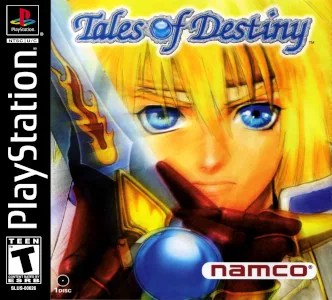
The series began with Tales of Phantasia on the Super Famicom in December 1995, combining a fantasy adventure with action-oriented battles. Later, Tales of Destiny was released on the PlayStation in 1997, further building upon that foundation. Not long after, Tales of Eternia arrived in Japan on November 30, 2000, as the third main entry in the franchise. The game solidified that aforementioned foundation with a three-disc adventure, Mutsumi Inomata’s character designs, and expanded use of voiced storytelling. The Tales of identity it created led to later games continuing to expand and explore different approaches to 2D and 3D combat.
By comparison, Eternia’s journey in overseas markets was considerably less straightforward. North America received the PlayStation game in 2001 under the name Tales of Destiny II, despite its standalone story. The confusion only heightened when Japan received an actual Tales of Destiny 2 on PlayStation 2 in 2002. Different names also concealed differences in presentation, such as how the earlier English releases omitted the conversational skits that helped develop the Japanese game’s cast.
The next major version of Tales of Eternia arrived on PSP in Japan in March 2005, adapting the adventure to widescreen portable play. Europe and Australia received that edition in 2006 under the Eternia title, giving those audiences their first taste of the RPG. At the same time, though, the portable conversion dropped the PlayStation version’s battle multiplayer, with some early European UMD copies even suffering from a progression-blocking freeze. Budget reissues extended the game’s shelf life, and the PSP edition received a Japanese digital release in November 2013. Access improved in stages, but the game remained tied to older hardware.
That brings us to 2026, with the release of a proper remaster of Tales of Eternia. This remaster is particularly valuable, as it is built from the PSP edition, and reached Japan on October 15 and Western markets on October 16 across Nintendo Switch, Switch 2, PlayStation 4, PlayStation 5, Xbox Series X|S and PC. The remaster gives players access to the same adventure without navigating its earlier regional release differences.
Bandai Namco’s broader remaster effort deserves recognition here. In the past, producer Shuhei Tamakoshi outlined an initiative intended to bring more entries to current platforms as preparations allow. Following Tales of Graces f Remastered, Tales of Xillia Remastered, and Tales of Berseria Remastered, returning to Eternia further has given the initiative some more life as it starts to encompass its much older 2D catalog. With Eternia, the revised English presentation and numerous adjustable systems give that commitment practical substance. The project still has gaps to address, but making more of the franchise’s history accessible is worthwhile work.
Two Worlds and a Language Barrier
The adventure itself begins with an image that is still immediately compelling, even after all these years: two worlds facing one another across the sky. Reid and Farah live in Inferia, where their ordinary lives are interrupted by the arrival of Meredy, a girl from Celestia whose language they cannot understand. Seeking help from their childhood friend Keele leads them toward a much greater problem. The two worlds are threatened by the Grand Fall, and preventing their collision requires a journey in search of the Greater Craymels.
The catastrophe heightens the stakes, while the language barrier gives the opening to this story’s personality. Meredy arrives with urgent knowledge and encounters people whose assumptions about her world stand in the way of understanding her. Reid’s reluctance, Farah’s determination and Keele’s intellectual confidence make that encounter a source of friction within the group. Their different responses give the larger journey a human scale.
That central quartet is a core part of Eternia’s appeal. The characters may fit into recognizable tropes, but their relationships have room to develop through disagreements, uncertainty, and everyday conversations. The story’s traditional structure gives those changes a clear direction, even when the broader plot follows familiar paths. The emphasis becomes less evenly distributed beyond the core group, however, and supporting party members do not receive the same attention.
For English-speaking players, the restored skits are easily one of the remaster’s most meaningful additions. These short conversations make space for humor, reactions, and relationships outside the demands of the main plot. A revised English script and newly recorded dub accompany their return, with Japanese voices also available. The Japanese and earlier English editions gave their audiences different amounts of character material, so the significance of this release depends partly on which version someone remembers. The remaster brings those experiences closer together, and it is such a delightful experience.
Finding Depth in 2D Combat
Combat provides another reason to revisit Eternia beyond its historical importance. The Aggressive Linear Motion Battle System places the party and its enemies on a side-view battlefield, combining direct control with commands for companions. Normal attacks lead into techniques, guarding and positioning affect survival, and different attack directions matter when dealing with enemies above or ahead of the player. The limited space makes coordination particularly important.
Reid and Farah develop different physical proficiencies, while Keele and Meredy’s magic depends on the distribution of Craymels and the combinations produced through Fringing. Equipment, formation and companion strategies give experimentation a purpose. Beneath its approachable opening, Eternia offers a combat system that rewards attention to how the party works together.
However, rougher qualities of the original game are still present. Allies, enemies, and effects can bunch together until the action becomes difficult to read. Companion behavior sometimes needs intervention, and hidden technique conditions make parts of the system harder to understand than they should be. Players accustomed to later Tales games may also find the single-plane movement restrictive. The depth is there, but the game does not always communicate it clearly or present it comfortably. For people who started the franchise with the 3D games like me, it’s an odd first experience, but it proves an interesting and strategic challenge layer to it.
Dungeons, Detours, and Minigames
Exploration follows the familiar rhythm of towns, world-map travel, and dungeons. Cooking, hidden recipes, optional encounters, and side events supply reasons to investigate beyond the next destination. Dungeon puzzles give individual locations their own personality, though unclear paths and awkward object positioning can interrupt that variety. The setting is more imaginative than some of the spaces used to explore it: stretches of the overworld feel sparse, and settlements do not always provide enough interaction to make their different cultures really stand out.
Minigames produce a similar mixture of variety and frustration. Their presence gives the journey a moreplayful quality, but the controls can become an obstacle, particularly in sequences that demand precise movement, such as rafting. The remaster’s skip and retry options make troublesome activities easier to accommodate. Still, they are not fully able to make what is an already awkward activity any more enjoyable.
Setting Your Own Pace
Many of the most useful improvements address the game’s quality of life. Autosave, quicker recovery, faster travel, adjustable encounter frequency and battle retries reduce time spent repeating routine tasks. Objective and time-limited event indicators make it easier to follow the journey and notice opportunities that once demanded a guide. Players can also adjust progression and make use of faster auto battles. Together, these options make the prospect of returning to an older RPG feel like a far more manageable commitment.
The freedom to choose matters: reducing encounter frequency can preserve the pleasure of fighting while giving exploration more breathing room. On the other hand, stronger progression boosts offer a quicker route through familiar material, although they can also weaken the need to engage with the combat systems. The guidance options help with missed directions, though linearly following every marker can change the pleasure of organically exploring a location of your own volition. Still, the remaster overall benefits from allowing players to decide which conveniences suit their expectations.
The Remaster on Switch 2
Eternia’s visual identity also benefits from choice. Its backgrounds, character art and animated sequences preserve a style that belongs to its original era. The remastered treatment can make parts of the image more approachable on modern displays, but the smoothing is uneven, and cleaner objects or interface elements do not always sit naturally beside the older artwork. As such, the game’s inclusion of an alternative graphics mode is very much appreciated. The soundtrack and animated cutscenes contribute further to the adventure’s personality, even if the world map looks a little plain.
I spent a good amount of time with the US Switch 2 version in English, and it felt like a solid, straightforward port. The game runs with 4K output in docked, 1080p in handheld, and up to 60 FPS. The bigger reasons to revisit Eternia are shared across platforms: a fuller English version and the freedom to smooth out some of the original’s rougher edges. 60 FPS is certainly welcomed and necessary for a remaster.
There are still limits to its preservation, however. The PSP foundation means the PlayStation game’s battle multiplayer remains absent, although many fans might simply not care for it at this point. The remaster also lacks the old English dub and a 4:3 aspect ratio as an option. Those omissions matter when considering how completely this edition represents its earlier forms, even if the restored English content and convenience features make a strong case for playing it today.
An Adventure Worth Revisiting
Tales of Eternia Remastered’s attempts to give one of the franchise’s most formative entries the opportunity to find a wider audience have several incredible high points and a few frustrating low points. The game’s central relationships, distinctive battle systems, and imaginative setting provide reasons to care beyond recognizing its influence on later games. On the other hand, its repetitive encounters, uneven exploration, and awkward interactions explain why historical importance alone cannot settle its value as a modern purchase. If you are unsure if you will enjoy a game that focuses more on preserving the original’s low points, you may be better off waiting for a discount.
Regardless, Bandai Namco and TOSE have managed to make a substantial contribution to the act of preservation by returning this adventure with a fuller English presentation and enough flexibility to ease many of its old frustrations. While the quality of Eternia is still somewhat rooted in the era that produced it, the work of this remaster makes that era easier to revisit. Above all, the remaster does a great job in giving new players a much clearer opportunity to decide if Tales of Eternia still holds up after over 25 years.
Disclaimer: Bandai Namco provided a Nintendo Switch 2 copy of Tales of Eternia Remastered for review purposes.
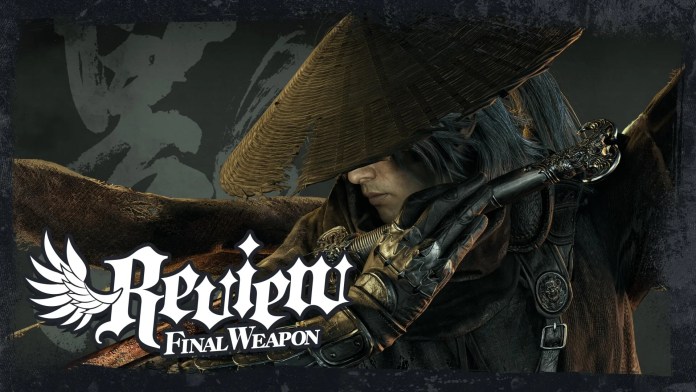
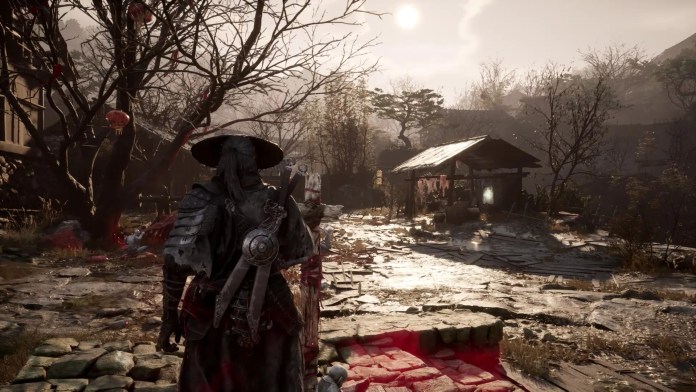
The town’s streets are cramped yet deserted, and rain pours down on the labyrinth of shops and stairways, making everything wet. After entering Pangzhen, the fourth region of Phantom Blade Zero, I realize the game has completely enveloped me with its gorgeous scenery and fast, flashy action.
This new title is a surprise coming from a studio with no prior experience making big-budget games. Phantom Blade Zero is S-Game’s most ambitious project to date, and it shows in its production value and presentation. What’s shocking is how the studio managed to pull this all together and make it appear as if it was made by a team of veteran developers.
Phantom Blade Zero is The Best of Both Worlds
It would be disingenuous to say Phantom Blade Zero doesn’t borrow a few concepts from Soulslikes, but it certainly isn’t one either. It also incorporates the spectacle of a character action game such as Ninja Gaiden without the complexity or depth associated with them. Instead, the game occupies a middle ground between the two action subgenres.
Normally, this would be a risky approach to take, as it can result in a mess of ideas. For example, Black Myth: Wukong, another big-budget Chinese action title, tried something similar, and while it received positive reception, the experience was underwhelming for me. It failed to truly capture what I enjoyed about Soulslikes and character action games with its messy level design and combat lacking satisfying impact.
For the first few hours of Phantom Blade Zero, I was skeptical. I was worried it might similarly lack focus with its mechanics and environments. The game opens with an easy boss encounter, followed by a cinematic sequence of events requiring mostly basic inputs from the player. I was concerned if this would be representative of the experience 15 hours later.
Fortunately, Phantom Blade Zero is designed with intent. It’s a giant theme park ride, bringing the player from one thrill to the next. “Density” is the word that kept appearing in my mind as I played. There is rarely a dull moment as the protagonist, Soul, slices up the game’s numerous enemies and bosses.
A Careful Balance
The game makes a quickly noticeable distinction from the average Soulslike with how it approaches checkpoints. Usually, when resting at a designated spot, enemies in the surrounding area will respawn. This is not the case in Phantom Blade Zero, and it changes the dynamic of the formula entirely.
Enemies stay dead once they are defeated. At first, this might not seem correct, as it defies the status quo. However, the intent behind this design choice became clear as I progressed.
The permanent loss of opponents keeps the game’s momentum intact. Usually, the gameplay loop of the average Soulslike eventually has the player running around and dodging enemies that are mostly a drain on resources if engaged with. Instead, Phantom Blade Zero always encourages players to seek out combat encounters.
The finite number of opponents makes grinding impossible, so the player is constantly seeking out new territory to gain the necessary points to upgrade Soul’s abilities and equipment. Most of the game’s playtime is spent experiencing new areas instead of backtracking through the same environments over and over. It’s an impressive feat considering how much content there is.
A Branching Path
From the moment it was revealed, it was obvious Phantom Blade Zero was going to be a graphical showcase. The game’s environments are brimming with detail, and the lighting paints over the geography in a believable manner while still setting a gloomy mood. However, it’s one thing to make an area pretty to look at, and it’s another to make it enjoyable to explore.
This is where I took the greatest issue with Black Myth: Wukong. The environments in that game were full of invisible walls and did a poor job of naturally guiding the player. Phantom Blade Zero suffers from neither of those problems.
Thought and care have been placed in every one of the game’s various locales. What might seem very linear at first eventually opens up and heavily rewards curious players. While it’s easy to follow the main objective, plenty of interesting content and useful tools will be missed by doing this.
Phantom Blade Zero incorporates a Metroidvania approach to some of its level design, with various paths and areas being gated by secondary weapons known as Phantom Edges. There is a rather large incentive to revisit old regions later in the game with these tools, as many treasures are locked behind these gates. While the level design is never particularly complex, it’s varied, dense, and never tedious.
Slashing With Soul
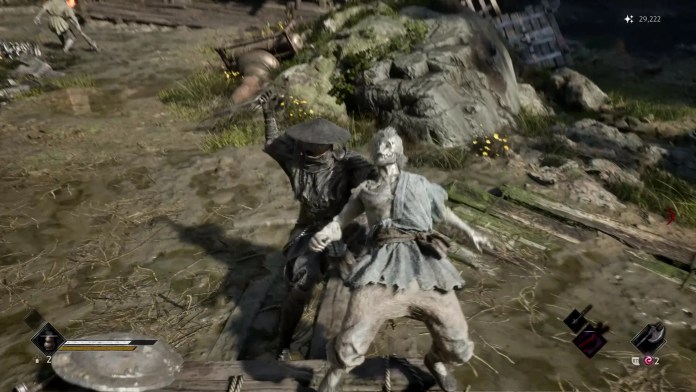
Of course, the combat is what will draw the attention of most, and it’s likely the game’s greatest strength. Above all else, the animations are what make Phantom Blade Zero‘s fighting a joy to experience. In fact, S-Game consulted Hong Kong actor and martial artist Donnie Yen for motion capture performances, and the results speak for themselves.
The game looks and feels like a Wuxia film with plenty of exaggerated choreography and lightning-fast movements. If one were to squint, they might be convinced they can see the wires protruding from the characters as they make gravity-defying leaps. All of this manifests from a succession of quick, responsive inputs on a gamepad.
The animations are of such a high quality that telegraphing is rarely an issue, if ever. Opponent attacks are varied, but I can’t think of any instance where I had difficulty reading them. Fights can get a little tricky when juggling multiple enemies at once, but this becomes a much more manageable task when keeping them all in view.
If Soul dies, it’s the player’s fault. The game almost always feels reasonable in what it asks out of the player. However, if a particular section is proving to be too challenging, this can easily be mitigated by exploring more. The game is eager to provide players with several different tools to help tackle specific scenarios.
Variety is the Spice of Combat
Whatever Phantom Blade Zero lacks in depth in combat, it makes up for it with variety. The player will find their arsenal of weapons growing rapidly as they progress, but don’t be fooled by the quantity. Many of these blades provide distinct tactics and opportunities for skill expression.
For example, I often found myself using the Outlaw Warblade, a weapon that uses the player’s health as a resource. Heavy attacks consume HP, but assuming the enemy doesn’t manage to hit Soul afterward, the health is recoverable. Light attack combos have a healing effect and can restore the health expended on a heavy attack.
It adds a layer of risk and reward to battles, but can be an incredibly reliable weapon when used correctly. However, it does come with a catch. The weapon’s healing capabilities require the player to draw blood from Soul’s enemies. For opponents that don’t bleed, such as puppets, the Outlaw Warblade instantly becomes a much less effective tool.
This was almost the game’s way of telling me to switch things up and experiment with Soul’s toolkit. This can easily be done by refunding the resources spent on weapon upgrades at any checkpoint. As most weapons add something unique to Soul’s playstyle, there is very little reason not to take advantage of this.
Phantom Blade Zero Has Quantity and Quality
Phantom Blade Zero features many boss fights, but that wouldn’t mean very much if only a few of them stood out. Shockingly, these encounters are incredibly consistent and memorable. Sure, many bosses follow the attack pattern recognition formula of soulslike bosses, but it’s easy to get them wrong.
If attacks are too oppressive, they can keep the player waiting their turn for an unnecessarily long time. If a boss is not aggressive enough or can be taken down quickly, the fight can feel underwhelming. Luckily, Phantom Blade Zero hits a sweet spot with most of its encounters.
Bosses can be very aggressive and kill Soul in the blink of an eye, but it rarely feels unfair. This is because the player has access to strong defensive options that can quickly open the opponent up to oppressive combos from Soul. When it’s the player’s turn, it’s also their turn to bully the boss.
This makes it so even when a fight is proving to be considerably challenging, it’s never hopeless. Even in losing battles, Soul still looks cool and composed while unleashing a frenzy of strikes before meeting death. In battles with continuous defeat, I never felt frustration or the need to take a break because of this.
A Story Questionably Told
Phantom Blade Zero has an engaging narrative hook. Soul is fatally stabbed in the heart after a battle, but is given one more chance at life. He is offered a tainted heart that will kill him in 66 days unless he can do something about it.
While this premise presents something the player could easily emotionally attach to, the game loses focus quickly. Soul is often too busy adhering to the rule of cool to care about his mortality. What ensues is a series of disjointed lore pieces that eventually start coming together, but it ultimately impedes the game’s flow.
The issue isn’t so much the content of the story, but the storytelling itself. The various bits of text and random cutscenes clash with the game’s need to otherwise be constantly moving forward. The developers clearly care a lot about the world they made here, but it’s not packaged in a way that’s digestible for wide audiences.
I understand that Phantom Blade isn’t a new series. The franchise technically began with an RPG Maker indie game from 2010 named Rainblood: Town of Death. However, the series never targeted such a wide audience before, and the game can often seem as though it expects players to already be familiar with its world. Curiously, this ultimately weighs as a smaller issue, which is a testament to Zero‘s overall quality.
An Unreal Engine 5 Showcase
I played Phantom Blade Zero on a PC with an RX 9070 XT, so I can’t speak to a lower-spec experience, but I encountered few issues. With ray tracing disabled, the game’s lighting still looks fantastic while achieving a largely stable 60 frames per second. There were a few occasions where I experienced strange performance dips, but simply restarting seemed to fix the problem.
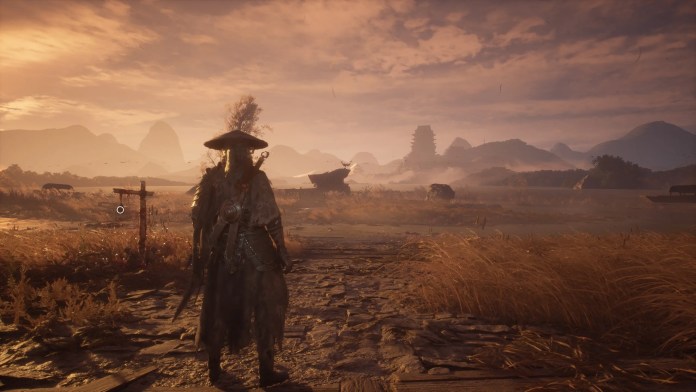
What impresses me most is the strong art direction on display. With enough of a budget, it’s easy to make a game that looks technically impressive. However, Zero‘s environments have a painting-like quality to them that indicates the level of care that went into the visual presentation.
The game isn’t afraid to use vibrant colours to contrast with the often quiet, sombre atmosphere maintained as a baseline for the adventure’s tone. Some spots demand the player pause and catch a glimpse of the sun’s glow, or observe the falling red leaves piling up on the ground. This wasn’t slapped together carelessly with a mix of random assets.
I’ve seen many Unreal Engine 5 games that fail to establish a visual identity, but Phantom Blade Zero is not among them. The amount of detail in each of the game’s various regions is jaw-dropping. The game simultaneously manages to achieve a sense of density and expansiveness, which I can’t imagine was an easy accomplishment.
Phantom Blade Zero is an Action Thrill Ride
Phantom Blade Zero may not compete with the most in-depth real-time combat systems. Level design found in other games has impressed me more. However, Phantom Blade Zero handles enough of its most important components consistently well. It exceeds the sum of its parts, especially in part due to its variety.
While I may have been initially skeptical, the game sank its hooks into me the more I played. Soon into the playthrough, I was playing to see what the region Soul would travel to next, or what the next boss encounter might be. It’s a fantastic action title with a sea of meaningful content and little filler.
The staff for the anime adaptation of Kenta Shinohara’s Witch Watch manga has confirmed that Witch Watch Season 2 will premiere in 2027. A new key visual for Witch Watch Season 2 was also unveiled on the anime’s official X (formerly Twitter) account.
The first season of the Witch Watch anime is streaming now on Crunchyroll.
HashiMelo performs the opening theme song “Tokihanate!” for the second cour, while Yutori performs the ending theme song “Tsuki to Watashi no Kakurenbo.”
Who-ya Extended performs the story’s Uron Mirage opening theme song “Bitter end,” and ALI performs the Uron Mirage ending theme song “FLASHBACK SYNDROME.”
The anime’s cast and staff include:
Cast
Ryōta Suzuki as Morihito Otogi
Rina Kawaguchi as Nico Wakatsuki
Tomori Kusunoki as Nemu Miyao
Kōhei Amasaki as Kanshi Kazamatsuri
Kaito Ishikawa as Magami Keigo
Yūki Wakai as Miharu Kiryū
Yōhei Azakami as Rui Fujiki
Ryōko Shiraishi as Utsuro Akitsuki
Hiroyuki Yoshino as Oboro Namisaki (Uron Mirage)
Hiro Shimono as Sagiri Kusama (Uron Mirage)
Tomokazu Sugita as Zack Balun (Uron Mirage)
Hōchū Ōtsuka as Fuwa (Uron Mirage)
Ami Koshimizu as Honoka Shirafuji (Uron Mirage)
Staff
Director: Hiroshi Ikehata
Assistand Director: Masao Kawase
Studio:Bibury Animation Studio
Series Script: Deko Akao
Character Design: Haruko Iizuka, Kaishū Sugimura and Yuki Sawa
Morihito Otogi is a high schooler with the strength of an ogre. Life is peaceful until his childhood friend and witch-in-training, Nico Wakatsuki, moves in. Nico is excited about their reunion and makes Morihito her familiar. Now, he must focus on his mission to protect Nico from prophesied dangers. Their mystical, problem-filled days are about to begin!
Capcom has announced that Cleanser Man is the winner of the Mega Man: Dual Override “Robot Master Design Contest.” As such, artist iregyuradabii‘s design will be one of the boss battles in Dual Override when it releases in spring 2027.
In a press release, Capcom describes Cleanser Man as a “cleaning robot with an obsession for pristine beauty. Fueled by an extremely sensitive dirt sensor, Cleaner Man’s ideal world is one without a speck of dust. However, his devotion to cleanliness has a cost. His aggressive scrubbing causes great damage to global landmarks and historic works of art. This fixation has caused the public to view him as more of a threat than a helping hand. Furious and feeling misunderstood, Cleanser Man seizes control of trash processing facility and uses it to pollute the environment with hopes of forcing the world to appreciate the importance of cleanliness.”
Check out the trailer confirming Cleanser Man as the winner of the Mega Man: Dual Override “Robot Master Design Contest”:
Furthermore, check out more pictures of Cleanser Man below:
Play as Proto Man alongside Mega Man in the newest title in the mainline series. Proto Man, the wandering warrior, fights with his versatile shield-based fighting style and powerful close-quarters attacks, offering a distinct gameplay experience from Mega Man’s ranged firepower! Players can equip Custom Chips to personalize their playstyle by mixing and matching abilities. Mega Man and Proto Man can also unleash an all-new Override form, blasting beyond limits to defeat the formidable Robot Masters.
Bandai Namco hosted its DigiAly Times livestream for upcoming free-to-play Digimon mobile card game DIGIMON ALYSION, revealing a new card pack and more pre-registration rewards. Shu Uchida (voice of Kanata Hondo) and Fairouz Ai (voice of Varner Dragunogh) also competed in a game of DIGIMON ALYSION and shared their quick thoughts.
The DigiAly Times livestream revealed some new cards from the newly announced pack [BD-04]GREAT LEGEND, which is the fourth pack coming to DIGIMON ALYSION following [BD-01]NEW EVOLUTION, [BD-02]ULTIMATE POWER and [BD-03]UNION IMPACT. Players can also look forward to the limited-time battle event, “Battle Carnival Dukemon Ver.”, at launch.
During the livestream, it was confirmed that the Discord server launch campaign reached 10,000 members. Once the server reaches 15,000 members, all players will receive five BD-04 Tickets. In addition, a new pre-registration milestone at 450,000 players was also confirmed.
The following rewards will be distributed when the pre-registration milestones are met:
“Anyone can have fun playing it,” said Uchida after her match with Fairouz. “After playing Today, I really felt that’s what makes DIGIMON ALYSION so appealing!”
Fairouz added, “The game shows you which cards can be played where, so you can play without worrying!”
Pre-registration for DIGIMON ALYSION is available now across 49 countries and regions, including Japan and North America. The game is currently planned to release by the end of 2026 for Android via Google Play and iOS via App Store worldwide. At launch, the game will support Japanese, English, Simplified Chinese, Traditional Chinese, and Korean language options.
As previously announced, DIGIMON ALYSION is set in the world of the DIGIMON LIBERATOR webcomic and light novel with a new story mode, an original cast of characters, and digital versions of Digimon Card Game cards called “DigiAly.”
Xbox has released the new “XBOX – The 25th Anniversary Magazine,” a free digital magazine that aptly celebrates the brand’s momentous anniversary. It highlights the history of Xbox, alongside teasing new information about its future.
Some of the most notable excerpts include how, according to Xbox Vice President of Next Generation Jason Ronald, “Project Helix is designed to be the ultimate gaming machine – one that removes all the barriers of play that have historically existed. I’m able to bring four generations of my XBOX library and progression with me and have it available instantly.” He also states that “Helix is designed to be a console capable of playing games from your PC. It is not a PC that can also play console games.” More details will likely be available about the platform next year.
Recently, Xbox released a new update for the Xbox Series X|S and Xbox One that adds classic boot-up animations. Players can now choose to select the start-up videos from the original Xbox or Xbox 360 instead of the default options. You can select the option in the “Startup” sub-menu in the “System” settings. Players can choose the animations from the Xbox One, Xbox One X, Xbox Series X|S, “We Are Xbox”, the original Xbox, Xbox 360 (2005), and Xbox 360 (2010). The update will be available for all players on both platforms throughout the day. The release is part of the ongoing 25-year anniversary celebrations for the Xbox brand.
Xbox has released a new update for the Xbox Series X|S and Xbox One, which adds classic boot-up animations. Players can now choose to select the start-up videos from the original Xbox or Xbox 360 instead of the default options.
The option can be selected in the “System” menu then in “Startup.” Players can choose the animations from the Xbox One, Xbox One X, Xbox Series X|S, “We Are Xbox”, the original Xbox, Xbox 360 (2005), and Xbox 360 (2010). The update will be available for all players on both platforms throughout the day. The release is part of the ongoing 25-year anniversary celebrations for the Xbox brand. Check out the different options below:
We’re bringing back the original XBOX boot-up animation for all XBOX Series X|S and XBOX One players, along with two additional XBOX 360 boot-up animations!
This update will be rolling out throughout the day and thank you for being part of 25 years of XBOX. pic.twitter.com/V9SKMZTtPR
Recently, Xbox announced 21 more games that are available with the backward compatibility program on PC, including Xbox Game Pass titles The Elder Scrolls III: Morrowind and Grabbed by the Ghoulies. As previously announced, each title is available for purchase on PC, and the games are already playable for those who own them on Xbox One and Xbox Series X|S.