


The Tales of series has spent more than three decades building adventures around people who travel together. Its battles have changed, its worlds have grown, and its presentation has moved from sprites to elaborate 3D environments. However, the appeal of watching a group of strangers become companions has remained even after all these years. Tales of Eternia occupies an important place in that history. Its return offers a chance to revisit an early expression of the ideas that still define the franchise, with a more complete English presentation and considerably less friction along the way.

Eternia’s Long Road Back
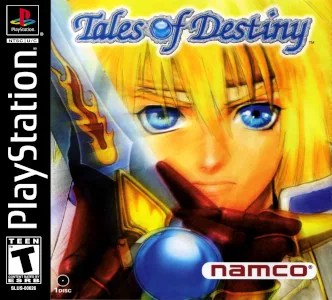
The series began with Tales of Phantasia on the Super Famicom in December 1995, combining a fantasy adventure with action-oriented battles. Later, Tales of Destiny was released on the PlayStation in 1997, further building upon that foundation. Not long after, Tales of Eternia arrived in Japan on November 30, 2000, as the third main entry in the franchise. The game solidified that aforementioned foundation with a three-disc adventure, Mutsumi Inomata’s character designs, and expanded use of voiced storytelling. The Tales of identity it created led to later games continuing to expand and explore different approaches to 2D and 3D combat.

By comparison, Eternia’s journey in overseas markets was considerably less straightforward. North America received the PlayStation game in 2001 under the name Tales of Destiny II, despite its standalone story. The confusion only heightened when Japan received an actual Tales of Destiny 2 on PlayStation 2 in 2002. Different names also concealed differences in presentation, such as how the earlier English releases omitted the conversational skits that helped develop the Japanese game’s cast.
The next major version of Tales of Eternia arrived on PSP in Japan in March 2005, adapting the adventure to widescreen portable play. Europe and Australia received that edition in 2006 under the Eternia title, giving those audiences their first taste of the RPG. At the same time, though, the portable conversion dropped the PlayStation version’s battle multiplayer, with some early European UMD copies even suffering from a progression-blocking freeze. Budget reissues extended the game’s shelf life, and the PSP edition received a Japanese digital release in November 2013. Access improved in stages, but the game remained tied to older hardware.

That brings us to 2026, with the release of a proper remaster of Tales of Eternia. This remaster is particularly valuable, as it is built from the PSP edition, and reached Japan on October 15 and Western markets on October 16 across Nintendo Switch, Switch 2, PlayStation 4, PlayStation 5, Xbox Series X|S and PC. The remaster gives players access to the same adventure without navigating its earlier regional release differences.
Bandai Namco’s broader remaster effort deserves recognition here. In the past, producer Shuhei Tamakoshi outlined an initiative intended to bring more entries to current platforms as preparations allow. Following Tales of Graces f Remastered, Tales of Xillia Remastered, and Tales of Berseria Remastered, returning to Eternia further has given the initiative some more life as it starts to encompass its much older 2D catalog. With Eternia, the revised English presentation and numerous adjustable systems give that commitment practical substance. The project still has gaps to address, but making more of the franchise’s history accessible is worthwhile work.
Two Worlds and a Language Barrier
The adventure itself begins with an image that is still immediately compelling, even after all these years: two worlds facing one another across the sky. Reid and Farah live in Inferia, where their ordinary lives are interrupted by the arrival of Meredy, a girl from Celestia whose language they cannot understand. Seeking help from their childhood friend Keele leads them toward a much greater problem. The two worlds are threatened by the Grand Fall, and preventing their collision requires a journey in search of the Greater Craymels.
The catastrophe heightens the stakes, while the language barrier gives the opening to this story’s personality. Meredy arrives with urgent knowledge and encounters people whose assumptions about her world stand in the way of understanding her. Reid’s reluctance, Farah’s determination and Keele’s intellectual confidence make that encounter a source of friction within the group. Their different responses give the larger journey a human scale.

That central quartet is a core part of Eternia’s appeal. The characters may fit into recognizable tropes, but their relationships have room to develop through disagreements, uncertainty, and everyday conversations. The story’s traditional structure gives those changes a clear direction, even when the broader plot follows familiar paths. The emphasis becomes less evenly distributed beyond the core group, however, and supporting party members do not receive the same attention.
For English-speaking players, the restored skits are easily one of the remaster’s most meaningful additions. These short conversations make space for humor, reactions, and relationships outside the demands of the main plot. A revised English script and newly recorded dub accompany their return, with Japanese voices also available. The Japanese and earlier English editions gave their audiences different amounts of character material, so the significance of this release depends partly on which version someone remembers. The remaster brings those experiences closer together, and it is such a delightful experience.
Finding Depth in 2D Combat
Combat provides another reason to revisit Eternia beyond its historical importance. The Aggressive Linear Motion Battle System places the party and its enemies on a side-view battlefield, combining direct control with commands for companions. Normal attacks lead into techniques, guarding and positioning affect survival, and different attack directions matter when dealing with enemies above or ahead of the player. The limited space makes coordination particularly important.

Reid and Farah develop different physical proficiencies, while Keele and Meredy’s magic depends on the distribution of Craymels and the combinations produced through Fringing. Equipment, formation and companion strategies give experimentation a purpose. Beneath its approachable opening, Eternia offers a combat system that rewards attention to how the party works together.
However, rougher qualities of the original game are still present. Allies, enemies, and effects can bunch together until the action becomes difficult to read. Companion behavior sometimes needs intervention, and hidden technique conditions make parts of the system harder to understand than they should be. Players accustomed to later Tales games may also find the single-plane movement restrictive. The depth is there, but the game does not always communicate it clearly or present it comfortably. For people who started the franchise with the 3D games like me, it’s an odd first experience, but it proves an interesting and strategic challenge layer to it.
Dungeons, Detours, and Minigames
Exploration follows the familiar rhythm of towns, world-map travel, and dungeons. Cooking, hidden recipes, optional encounters, and side events supply reasons to investigate beyond the next destination. Dungeon puzzles give individual locations their own personality, though unclear paths and awkward object positioning can interrupt that variety. The setting is more imaginative than some of the spaces used to explore it: stretches of the overworld feel sparse, and settlements do not always provide enough interaction to make their different cultures really stand out.

Minigames produce a similar mixture of variety and frustration. Their presence gives the journey a moreplayful quality, but the controls can become an obstacle, particularly in sequences that demand precise movement, such as rafting. The remaster’s skip and retry options make troublesome activities easier to accommodate. Still, they are not fully able to make what is an already awkward activity any more enjoyable.
Setting Your Own Pace
Many of the most useful improvements address the game’s quality of life. Autosave, quicker recovery, faster travel, adjustable encounter frequency and battle retries reduce time spent repeating routine tasks. Objective and time-limited event indicators make it easier to follow the journey and notice opportunities that once demanded a guide. Players can also adjust progression and make use of faster auto battles. Together, these options make the prospect of returning to an older RPG feel like a far more manageable commitment.

The freedom to choose matters: reducing encounter frequency can preserve the pleasure of fighting while giving exploration more breathing room. On the other hand, stronger progression boosts offer a quicker route through familiar material, although they can also weaken the need to engage with the combat systems. The guidance options help with missed directions, though linearly following every marker can change the pleasure of organically exploring a location of your own volition. Still, the remaster overall benefits from allowing players to decide which conveniences suit their expectations.
The Remaster on Switch 2
Eternia’s visual identity also benefits from choice. Its backgrounds, character art and animated sequences preserve a style that belongs to its original era. The remastered treatment can make parts of the image more approachable on modern displays, but the smoothing is uneven, and cleaner objects or interface elements do not always sit naturally beside the older artwork. As such, the game’s inclusion of an alternative graphics mode is very much appreciated. The soundtrack and animated cutscenes contribute further to the adventure’s personality, even if the world map looks a little plain.

I spent a good amount of time with the US Switch 2 version in English, and it felt like a solid, straightforward port. The game runs with 4K output in docked, 1080p in handheld, and up to 60 FPS. The bigger reasons to revisit Eternia are shared across platforms: a fuller English version and the freedom to smooth out some of the original’s rougher edges. 60 FPS is certainly welcomed and necessary for a remaster.
There are still limits to its preservation, however. The PSP foundation means the PlayStation game’s battle multiplayer remains absent, although many fans might simply not care for it at this point. The remaster also lacks the old English dub and a 4:3 aspect ratio as an option. Those omissions matter when considering how completely this edition represents its earlier forms, even if the restored English content and convenience features make a strong case for playing it today.
An Adventure Worth Revisiting
Tales of Eternia Remastered’s attempts to give one of the franchise’s most formative entries the opportunity to find a wider audience have several incredible high points and a few frustrating low points. The game’s central relationships, distinctive battle systems, and imaginative setting provide reasons to care beyond recognizing its influence on later games. On the other hand, its repetitive encounters, uneven exploration, and awkward interactions explain why historical importance alone cannot settle its value as a modern purchase. If you are unsure if you will enjoy a game that focuses more on preserving the original’s low points, you may be better off waiting for a discount.

Regardless, Bandai Namco and TOSE have managed to make a substantial contribution to the act of preservation by returning this adventure with a fuller English presentation and enough flexibility to ease many of its old frustrations. While the quality of Eternia is still somewhat rooted in the era that produced it, the work of this remaster makes that era easier to revisit. Above all, the remaster does a great job in giving new players a much clearer opportunity to decide if Tales of Eternia still holds up after over 25 years.
Disclaimer: Bandai Namco provided a Nintendo Switch 2 copy of Tales of Eternia Remastered for review purposes.

