

The town’s streets are cramped yet deserted, and rain pours down on the labyrinth of shops and stairways, making everything wet. After entering Pangzhen, the fourth region of Phantom Blade Zero, I realize the game has completely enveloped me with its gorgeous scenery and fast, flashy action.
This new title is a surprise coming from a studio with no prior experience making big-budget games. Phantom Blade Zero is S-Game’s most ambitious project to date, and it shows in its production value and presentation. What’s shocking is how the studio managed to pull this all together and make it appear as if it was made by a team of veteran developers.
Phantom Blade Zero is The Best of Both Worlds
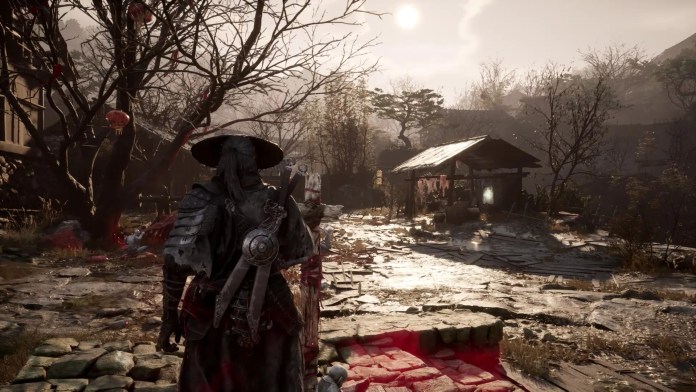
It would be disingenuous to say Phantom Blade Zero doesn’t borrow a few concepts from Soulslikes, but it certainly isn’t one either. It also incorporates the spectacle of a character action game such as Ninja Gaiden without the complexity or depth associated with them. Instead, the game occupies a middle ground between the two action subgenres.
Normally, this would be a risky approach to take, as it can result in a mess of ideas. For example, Black Myth: Wukong, another big-budget Chinese action title, tried something similar, and while it received positive reception, the experience was underwhelming for me. It failed to truly capture what I enjoyed about Soulslikes and character action games with its messy level design and combat lacking satisfying impact.
For the first few hours of Phantom Blade Zero, I was skeptical. I was worried it might similarly lack focus with its mechanics and environments. The game opens with an easy boss encounter, followed by a cinematic sequence of events requiring mostly basic inputs from the player. I was concerned if this would be representative of the experience 15 hours later.
Fortunately, Phantom Blade Zero is designed with intent. It’s a giant theme park ride, bringing the player from one thrill to the next. “Density” is the word that kept appearing in my mind as I played. There is rarely a dull moment as the protagonist, Soul, slices up the game’s numerous enemies and bosses.
A Careful Balance

The game makes a quickly noticeable distinction from the average Soulslike with how it approaches checkpoints. Usually, when resting at a designated spot, enemies in the surrounding area will respawn. This is not the case in Phantom Blade Zero, and it changes the dynamic of the formula entirely.
Enemies stay dead once they are defeated. At first, this might not seem correct, as it defies the status quo. However, the intent behind this design choice became clear as I progressed.
The permanent loss of opponents keeps the game’s momentum intact. Usually, the gameplay loop of the average Soulslike eventually has the player running around and dodging enemies that are mostly a drain on resources if engaged with. Instead, Phantom Blade Zero always encourages players to seek out combat encounters.
The finite number of opponents makes grinding impossible, so the player is constantly seeking out new territory to gain the necessary points to upgrade Soul’s abilities and equipment. Most of the game’s playtime is spent experiencing new areas instead of backtracking through the same environments over and over. It’s an impressive feat considering how much content there is.
A Branching Path
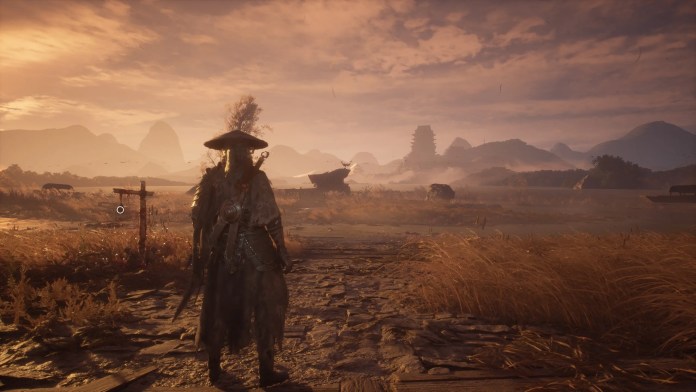
From the moment it was revealed, it was obvious Phantom Blade Zero was going to be a graphical showcase. The game’s environments are brimming with detail, and the lighting paints over the geography in a believable manner while still setting a gloomy mood. However, it’s one thing to make an area pretty to look at, and it’s another to make it enjoyable to explore.
This is where I took the greatest issue with Black Myth: Wukong. The environments in that game were full of invisible walls and did a poor job of naturally guiding the player. Phantom Blade Zero suffers from neither of those problems.
Thought and care have been placed in every one of the game’s various locales. What might seem very linear at first eventually opens up and heavily rewards curious players. While it’s easy to follow the main objective, plenty of interesting content and useful tools will be missed by doing this.
Phantom Blade Zero incorporates a Metroidvania approach to some of its level design, with various paths and areas being gated by secondary weapons known as Phantom Edges. There is a rather large incentive to revisit old regions later in the game with these tools, as many treasures are locked behind these gates. While the level design is never particularly complex, it’s varied, dense, and never tedious.
Slashing With Soul

Of course, the combat is what will draw the attention of most, and it’s likely the game’s greatest strength. Above all else, the animations are what make Phantom Blade Zero‘s fighting a joy to experience. In fact, S-Game consulted Hong Kong actor and martial artist Donnie Yen for motion capture performances, and the results speak for themselves.
The game looks and feels like a Wuxia film with plenty of exaggerated choreography and lightning-fast movements. If one were to squint, they might be convinced they can see the wires protruding from the characters as they make gravity-defying leaps. All of this manifests from a succession of quick, responsive inputs on a gamepad.
The animations are of such a high quality that telegraphing is rarely an issue, if ever. Opponent attacks are varied, but I can’t think of any instance where I had difficulty reading them. Fights can get a little tricky when juggling multiple enemies at once, but this becomes a much more manageable task when keeping them all in view.
If Soul dies, it’s the player’s fault. The game almost always feels reasonable in what it asks out of the player. However, if a particular section is proving to be too challenging, this can easily be mitigated by exploring more. The game is eager to provide players with several different tools to help tackle specific scenarios.
Variety is the Spice of Combat
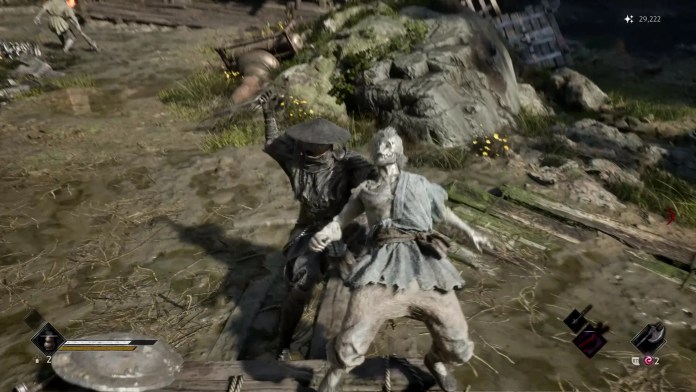
Whatever Phantom Blade Zero lacks in depth in combat, it makes up for it with variety. The player will find their arsenal of weapons growing rapidly as they progress, but don’t be fooled by the quantity. Many of these blades provide distinct tactics and opportunities for skill expression.
For example, I often found myself using the Outlaw Warblade, a weapon that uses the player’s health as a resource. Heavy attacks consume HP, but assuming the enemy doesn’t manage to hit Soul afterward, the health is recoverable. Light attack combos have a healing effect and can restore the health expended on a heavy attack.
It adds a layer of risk and reward to battles, but can be an incredibly reliable weapon when used correctly. However, it does come with a catch. The weapon’s healing capabilities require the player to draw blood from Soul’s enemies. For opponents that don’t bleed, such as puppets, the Outlaw Warblade instantly becomes a much less effective tool.
This was almost the game’s way of telling me to switch things up and experiment with Soul’s toolkit. This can easily be done by refunding the resources spent on weapon upgrades at any checkpoint. As most weapons add something unique to Soul’s playstyle, there is very little reason not to take advantage of this.
Phantom Blade Zero Has Quantity and Quality

Phantom Blade Zero features many boss fights, but that wouldn’t mean very much if only a few of them stood out. Shockingly, these encounters are incredibly consistent and memorable. Sure, many bosses follow the attack pattern recognition formula of soulslike bosses, but it’s easy to get them wrong.
If attacks are too oppressive, they can keep the player waiting their turn for an unnecessarily long time. If a boss is not aggressive enough or can be taken down quickly, the fight can feel underwhelming. Luckily, Phantom Blade Zero hits a sweet spot with most of its encounters.
Bosses can be very aggressive and kill Soul in the blink of an eye, but it rarely feels unfair. This is because the player has access to strong defensive options that can quickly open the opponent up to oppressive combos from Soul. When it’s the player’s turn, it’s also their turn to bully the boss.
This makes it so even when a fight is proving to be considerably challenging, it’s never hopeless. Even in losing battles, Soul still looks cool and composed while unleashing a frenzy of strikes before meeting death. In battles with continuous defeat, I never felt frustration or the need to take a break because of this.
A Story Questionably Told

Phantom Blade Zero has an engaging narrative hook. Soul is fatally stabbed in the heart after a battle, but is given one more chance at life. He is offered a tainted heart that will kill him in 66 days unless he can do something about it.
While this premise presents something the player could easily emotionally attach to, the game loses focus quickly. Soul is often too busy adhering to the rule of cool to care about his mortality. What ensues is a series of disjointed lore pieces that eventually start coming together, but it ultimately impedes the game’s flow.
The issue isn’t so much the content of the story, but the storytelling itself. The various bits of text and random cutscenes clash with the game’s need to otherwise be constantly moving forward. The developers clearly care a lot about the world they made here, but it’s not packaged in a way that’s digestible for wide audiences.
I understand that Phantom Blade isn’t a new series. The franchise technically began with an RPG Maker indie game from 2010 named Rainblood: Town of Death. However, the series never targeted such a wide audience before, and the game can often seem as though it expects players to already be familiar with its world. Curiously, this ultimately weighs as a smaller issue, which is a testament to Zero‘s overall quality.
An Unreal Engine 5 Showcase

I played Phantom Blade Zero on a PC with an RX 9070 XT, so I can’t speak to a lower-spec experience, but I encountered few issues. With ray tracing disabled, the game’s lighting still looks fantastic while achieving a largely stable 60 frames per second. There were a few occasions where I experienced strange performance dips, but simply restarting seemed to fix the problem.
What impresses me most is the strong art direction on display. With enough of a budget, it’s easy to make a game that looks technically impressive. However, Zero‘s environments have a painting-like quality to them that indicates the level of care that went into the visual presentation.
The game isn’t afraid to use vibrant colours to contrast with the often quiet, sombre atmosphere maintained as a baseline for the adventure’s tone. Some spots demand the player pause and catch a glimpse of the sun’s glow, or observe the falling red leaves piling up on the ground. This wasn’t slapped together carelessly with a mix of random assets.
I’ve seen many Unreal Engine 5 games that fail to establish a visual identity, but Phantom Blade Zero is not among them. The amount of detail in each of the game’s various regions is jaw-dropping. The game simultaneously manages to achieve a sense of density and expansiveness, which I can’t imagine was an easy accomplishment.
Phantom Blade Zero is an Action Thrill Ride

Phantom Blade Zero may not compete with the most in-depth real-time combat systems. Level design found in other games has impressed me more. However, Phantom Blade Zero handles enough of its most important components consistently well. It exceeds the sum of its parts, especially in part due to its variety.
While I may have been initially skeptical, the game sank its hooks into me the more I played. Soon into the playthrough, I was playing to see what the region Soul would travel to next, or what the next boss encounter might be. It’s a fantastic action title with a sea of meaningful content and little filler.
Phantom Blade Zero is available now for PlayStation 5 and PC via Steam, and the game has sold over 4 million copies within its first three days of launch.
Disclaimer: S-Game provided Final Weapon with a Steam copy of Phantom Blade Zero for review purposes.

