

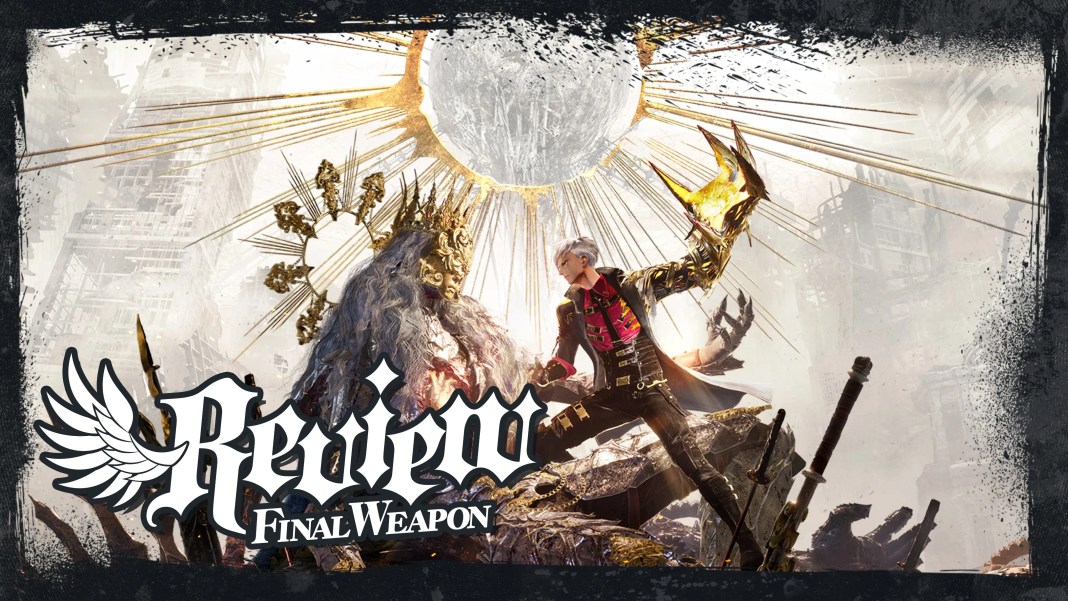
Soulslike games are tremendously popular in the broader gaming industry. Unfortunately, they never mixed well with my tastes. I’m someone whose main experience with the genre has been Dark Souls with my friend, and that’s pretty much it. The act of dying over and over again is something that was never really too appealing to me. Still, it’s never been a dealbreaker, as what’s always piqued my interest with this genre is the worldbuilding – how the world blends gameplay and environment into one compelling story.
When Bandai Namco released the first Code Vein back in 2019, it wasn’t on my radar, and came and went without me paying too much attention. Even still, I was impressed by the unique look and ideas the game had to offer. Jumping into the sequel, I was worried that I would suffer from my lack of knowledge of the Soulslike genre and of the franchise. My fears were soon quelled by how different Code Vein II is, yet even still, new problems arose that were impossible to ignore.
Journey through the Past

At first, I wasn’t too interested in the plot of Code Vein II, despite how much I loved the concept of time travel in media. The game’s premise revolves around going back in time to different eras and earning the trust of five heroes. This is because, in the present, they’re all encased in cocoons that are causing damage to the world. Once you’re able to find a key that can unlock their seal, it’s up to the player to kill them all before an energy known as the resurgence fully awakens and ends the world. Sounds interesting at first, but it didn’t immediately jump out at me. That quickly changed upon going to the past and meeting the heroes.
Compared to the characters from the present, everyone from the past sections stood out, thanks to their unique quirks and personalities. Some had way more development than others via incursions, which are the player looking at the memories of companions that either pertain to the current mission or show why a character is who they are. These moments are where the game’s storytelling truly shone. Anytime an incursion appeared, I knew there would be some phenomenal voice acting and writing. Meanwhile, anytime I had to return to the present and speak with anyone there, they went on the same spiel: “Don’t interfere too much with the past; we are doing this to save the world.” They beat you over the head with the plot while having nothing of note to say.
One of the aspects of Code Vein II that I enjoyed the most was the way you can affect the story. When a hero is slain, their soul is put to rest, but due to the bond you held with each of them, a small remnant remains. With this, you can go back after your original meeting to change history, instead of letting the past stay on course. Changing the past affects certain areas of the present. An empty sanatorium is now operational again, as the moment that caused it to fall no longer happens. It made changing the past such a fulfilling experience as you’re helping the world reach a brighter tomorrow.

One of the most beloved features of the original Code Vein was how in-depth the character creator was. That’s no different in Code Vein II, as you can spend countless hours fine-tuning your Revenant Hunter to be whoever or whatever your heart desires. An aspect of the character creator that surprised me is the option to change the time of day and weather. This is usually saved for the game’s photo mode, but you are able to see how different weather affects the player model before the game even starts, which I thought was a nice touch.
I struggle with creating characters to play, as the freedom to choose so much can be overwhelming. But with this game, the way everything is sectioned off makes it an easy experience. This made it clear that the team behind Code Vein II put care into this part of the game, so much so that the character creator was the main focus of the game’s demo.
An Empty Yet Busy World

The overworld at first is just the small island of MagMell, where you’ll learn the basic fundamentals of the game. But as you continue, it grows, and soon the game will have you exploring a destroyed city, a dreary forest, or even an open frontier. The simple ambiance of the fallen world you explore makes it so interesting. A camp standing strong with people in the past turned into an empty base filled with sorrow and desolate churches once filled with survivors. These places make the world much more gripping, as they give you small glimpses into what it once was.
As you might expect, a world this large would be difficult to travel on foot. Luckily, the game mitigates this by giving you a motorcycle early on. Just being able to drive or glide around and take in the world’s ambiance is so relaxing. The bike has difficulty turning on corners, but since most of the game doesn’t require you to turn, it’s not too much of an issue. Though, since the motorcycle does get easily destroyed by enemies or fall damage, you have to be a bit careful. However, it’s also quickly repaired, so there’s no need to get it fixed at a shop or something.
As expected from a game that has a wide-open world to explore, the map is blank at the start. Thankfully, you don’t need to climb a tower or do a minigame to unlock it. Instead, Code Vein II requires you to find and destroy map jammers. Most remain stationary, but one or two are attached to enemies. Once the map is fully opened up, you see how large and varied each part is. Unfortunately, there are issues with this system. If you want to go to a specific area on the map, you drop a pin. At first, it works fine, but once you enter areas with caves or rocky terrain, these stop being useful. I kept going to spots on the map, only to discover the place I needed to go was either above or below me, which made roaming for upgrades or materials difficult.

The combat of Code Vein II will likely feel familiar to those who have played other soulslike games, as it forces you to dodge and weave while finding openings to land attacks. What’s most interesting about the game, though, is the Jails and Formae mechanics. Formae, to sum it up, are weapon skills; these are foundational to making your attacks more than simple slashes. After enough damage, an enemy gains stagger, and this is when Jails shine. Jails are a special gear that restores the energy Formae require, while also dealing massive damage.
I found the overall gameplay systems of Code Vein II to be fun. I struggled at times, but when I did, it was mostly due to my errors, either misinterpreting an enemy’s tell or dodging too early. It took me a while to grasp which Jails and Formae complemented my playstyle, as I’m someone who can get impatient pretty quickly, and kept switching between those available to me. During my playthrough, I used these mechanics at inopportune times, leading to my character getting injured or even dying. However, once I got the hang of it, I found a super compelling gameplay loop that combines the knowledge of Souls games with fresh, fun mechanics. This experience was even further elevated with the game’s soundtrack. I was blown away by how incredible certain songs can be.
Code Vein II also features a wide variety of unique dungeons, and while fun, these can start to outstay their welcome. A few go on for way longer than needed, with there being plenty of cases where I would reach another part of an already long dungeon and just wish it would be over already. Some dungeons even feel as if they have bosses that are only there to pad out the game’s length. It doesn’t help that if you die, you start at a previous save point and are required to complete that section all over again with the enemies back. Fortunately, most of the main story dungeons don’t have this issue, but those needed for the other endings do. This made Code Vein II feel like it is dragging its feet and begging you to keep playing.
The Glaring Cracks

Above all else, my biggest gripe with Code Vein II is the frame rate. As you travel the world, the weather can randomly change and rain, which causes a slowdown. At first, it only affected the overworld, then it got much worse. When fighting one of the heroes, they summoned orbs, and my game began slowing down rapidly. In a section set in the past, you reclaim a stronghold for one of the heroes. There, I ran into a large number of enemies, and having too many enemies on screen causes the frame rate to slow to a crawl. Another section where this occurred was a cave, where the game stuttered for a few seconds after killing all enemies and opening a door. Code Vein II never crashed on me, fortunately, but a game of this scale and price having this many issues is simply not acceptable.
One surprising thing I noticed was the lack of overworld boss fights. There are strong enemies scattered all over, but none are boss encounters. Some of these are bosses that tie into side quests, but once they’re gone, there’s no more to fight; no second tries or anything, which feels strange. Code Vein II is a game where you constantly improve and grow stronger, and I would have preferred numerous bosses to test my strength against beyond the main story.
I expected more to do around the world to take a break from the action. Maybe this could have been a minigame or two, but the most you get are the hot springs, which were interesting but often lacked substance. Perhaps if there were some dialogue between companions you’ve made, or characters giving thoughts on the current section of the game, this could have been an interesting addition, but nothing stood out. I’m sure some will enjoy their time at the hot springs, but I chose to drive around and find some more items.

Code Vein II features a total of three endings, with each of them achievable on one save file. After clearing the endings, I felt that the game could have been done with only two endings: the second and third. When I cleared the main ending of the game, I felt disappointed with the lackluster conclusion. Was that really it? As the credits ended and the main menu popped up again, those suspicions were proven right. Once back to the menu, one of the heroes will point out a new option to continue the story, which had me thinking: why was this the first ending players experience?
If you want me to keep playing, why have the game end that way? When I achieved the second ending, the game felt more complete and left me satisfied. If I just decided to skip the continue option and put the game away, I would’ve been much more negative on Code Vein II. Personally, I’m glad I continued, but others who left after rolling credits missed out on a much better ending. Once I cleared the second, a new option was presented for a third ending, but at this point, I did not bother. I was tired of all the issues Code Vein II threw at me, so I finally stopped playing.
More Relief Than Reward

Code Vein II has so much potential, but it has just as many issues. The gameplay is nice and solid, with the Jails and Formae being an absolute blast to customize. However, only a few characters stood out throughout the game, and while those who did were a highlight, they weren’t enough to keep me engaged with the narrative.
I had a great time at the start, but as the game went on, those performance issues and gameplay shortcomings made any enjoyment I had lessen. Bit by bit, my enjoyment of Code Vein II slowly drained thanks to the consistent frame rate issues, the tediously long dungeons, and the padding-like narrative bits that felt like they only existed to extend the game’s length. By the time I finally finished Code Vein II, I was more relieved that it was over than anything else.
Disclaimer: Bandai Namco provided a PlayStation 5 copy of Code Vein II for review purposes.

