

Ten years ago, Undertale was released and changed the way we think about indie games forever. While there had been indie games that had gone viral with an impact before it, such as Five Nights at Freddy’s or Shovel Knight, the way that Undertale lit a fire in the indie genre can’t be underestimated. It got people into the RPG genre and the broader gaming medium, created lifelong fans that are still following Toby Fox’s work, and still has an effect on other games and the whole world.
When Toby Fox created Undertale, he made no secret of the games that inspired its formation. Earthbound, Yume Nikki, Touhou, Cave Story—all of these titles influenced the DNA of Undertale, from its battle mechanics to its lore, and even its sense of humor. One notable game that is always mentioned is OFF from Mortis Ghost. Launched in 2008 and made in RPG Maker, this game was translated for free from French to English. OFF has a peculiar art style, a dark tone, and a classic RPG Maker vibe and feel to it.
Earlier this year, and completely out of nowhere, Fangamer announced that the game would be getting a remaster in 2025. The new version features new content, an overhauled battle system, new quality-of-life improvements, graphical updates, and even a brand-new soundtrack, featuring contributions from Toby Fox itself. As someone who had only briefly played the game as a child and has invested dozens of hours in Undertale and Deltarune, I am thrilled to say that after eight hours, OFF is a fantastic game I can easily recommend to any RPG fan.
Purify the World
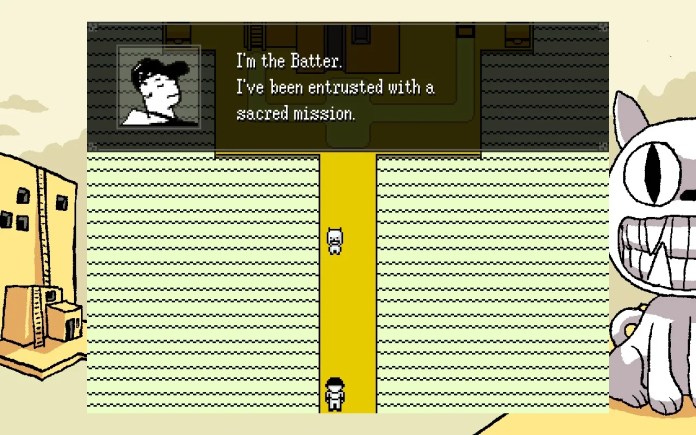
OFF starts on a fairly abrupt note. After being asked to enter your name, you’re then thrust into the perspective of “the Batter,” who’s on a sacred mission to “purify the world.” He claims that he’s accompanied by you, the player, as he even goes so far as to use your name. Very early on, you meet a mysterious cat by the name of The Judge, who helps to introduce you to the world, as well as provide a tutorial of the mechanics.
This is how OFF builds its premise: through subtlety. As you traverse the three zones and defeat spirits as part of the Batter’s sacred duty, you are drip-fed details about the game’s world. For example, you quickly learn about the peculiar elements that are key to the world’s operation. While you’d expect these elements to be something like earth, fire, water, or something along those lines, instead, you have smoke, metal, plastic, meat, and sugar.
Each explanation of the elements is accompanied by a little quote from the Elsen, the main NPCs of the world, stating why that specific element is important. For instance, for meat, the Elsen you encounter states that “without meat, people would have nothing to eat, and they would devour each other.”
The dynamic introduced with the elements helps to support my favorite part of OFF: its tone. Going into this game, especially knowing about its Undertale influences, you might expect a game with a mostly light-hearted tone that occasionally dips its toes into darker territories. This is far from the case, as this is a game that immediately struck me with just how grim the tone gets. There are moments where OFF genuinely veers into Silent Hill levels of darkness, and it was so compelling throughout the entire game.
There are a few notable examples of this that stuck out to me. At one point, halfway through the game, you encounter a cat who has been possessed by one of the Queen’s Guardians, who serve as the antagonist force for the majority of the game. When the boss is defeated, the cat unfortunately dies with it. In the next Zone, you see Zacharie, the game’s shopkeeper, wearing a new cat mask.
Many interpreted it as a reference to the Judge, as he’s out of action during this section of the game, but personally, I interpreted it as the dead cat’s face. There are even references to Zacharie’s other mask, which emulates a Toad, also being inspired by his defeat of a monster we never meet, known as The Toad King. Either way, it’s such an uncomfortable image that genuinely made me wince, but it helped to further solidify that dread that OFF specializes in.
What helps that tone is the new music. While I do miss some of the original battle themes, namely the initial battle theme called “Pepper Steak,” I absolutely adore the new renditions. Even the replacement to the original battle theme, titled “White Meat,” is fantastic, partly due to composer Toby Fox’s aforementioned reverence for the source material.
The fact that each Zone has its own unique battle theme is especially great. In general, Zone 3 is the most haunting part of the game, partly due to the music and the aforementioned tone. There were so many parts where my heart was genuinely pounding as I navigated the dangerous hallways, trying to avoid enemies.
Further, the way that OFF shows the truth of one of its key elements, sugar, is horrifying in ways that I absolutely refuse to spoil, even after seventeen years. All I’ll say is the build-up to the eventual reveal is handled so well, especially as you see the way that sugar impacts the Elsen around the Zone.
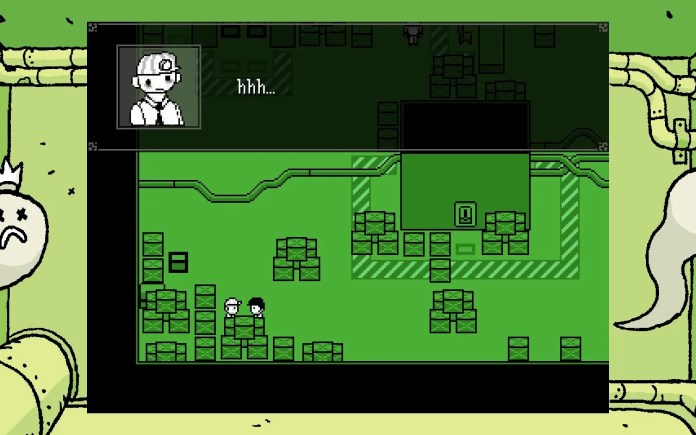
The characters are great too, and further help to establish this world. Zacharie is this oddity of a shopkeeper who is clearly more than meets the eye. The same applies to The Judge, who serves as a guide for the Batter. Later, though, he fulfills his title in ways that I’m sure will come as a surprise to many.
There are also the aforementioned Queen’s Guardians, who are all realized perfectly. Dedan is an abusive boss who is constantly berating everyone around him, Japhet is this weird megalomaniacal bird creature, and Enoch seems to fit this gentle giant role until he quickly proves that he is anything but gentle. Each serves as a great foil to the Batter as they all have more depth than you may expect, especially in the late game.
As for the Batter himself, he’s easily the most fascinating character in the entire game. He’s not entirely a blank slate, as, unlike most RPG protagonists, he does have his own commentary to give to specific situations. He doesn’t really have a personality, though; instead, he feels more like a zealot, devoted to the cause of purification at the expense of everything else. He’s an interesting figure, and I can’t wait to dig deeper into his backstory.


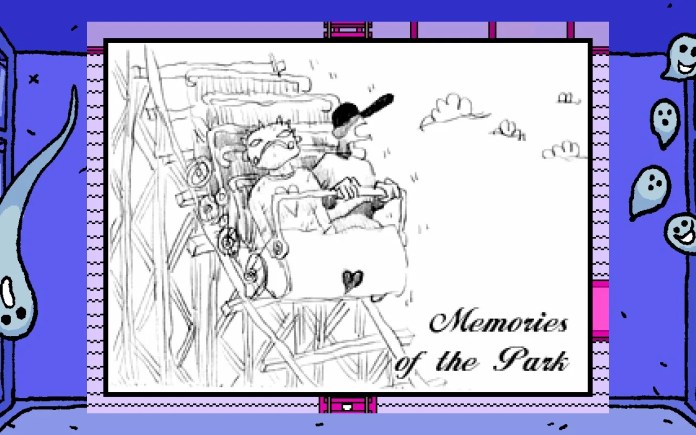
Don’t be mistaken, however, that the game is composed entirely of dark tones at the expense of everything else. There are still some moments of levity. Zacharie’s odd method of talking is definitely a light in the darkness, as are the truly bizarre Elsen. There are even some pretty great sight gags that are encountered throughout the gameplay, with one example being a picture being taken on a lackluster rollercoaster of the Batter and a statue of Zacharie.
As a whole, the way OFF weaves its dark tone with brief moments of levity is genius. I can see where Toby Fox pulled from with Undertale, but I also adored how OFF clearly has its own identity that Fox didn’t pull from too much. At times, the game feels like a psychological horror title, and I love it for that. Plus, the new content additions in the remaster have me so excited to eventually dive into a second run, and will undoubtedly be a treat to new and old fans alike.
At OFF‘s core, though, it is still a turn-based RPG, so how does it handle that element of its design? Thankfully, thanks to new quality-of-life improvements and a foundation that still holds up after seventeen years, OFF‘s gameplay is consistently fun and never fails to be anything other than extremely satisfying.
Batting Has Never Felt So Good
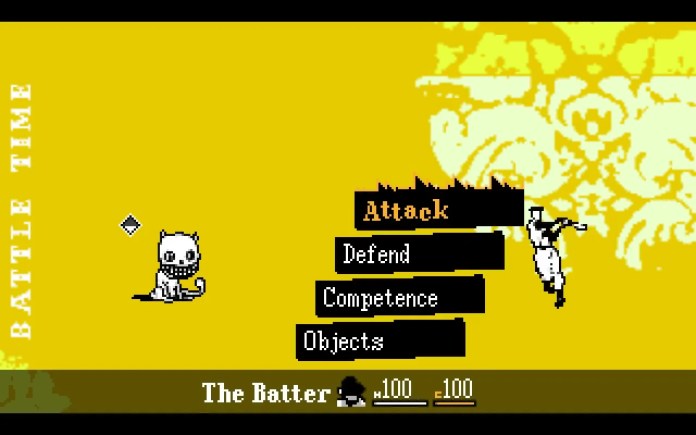
OFF‘s gameplay is about what you’d expect from an RPG originally made in RPG Maker. Every time you start a battle, you have four options: attack, defend, competencies, and objects. Objects are your items, competences are your skills, and both attack and defend are self-explanatory. There is a brief countdown after every attack that both you and your opponents must abide by before hitting the next attack. Once that countdown ended, it became a matter of picking the right attack or skill to use at the right moment.
There are some aspects that differentiate it from others in the genre. Namely, with the party members being simple rings called Add-Ons that only exist to attack and have no background, dialogue, or personality whatsoever. As a whole, though, this is a fairly barebones RPG. The remaster keeps that foundation intact, and personally, I’m really glad it did.
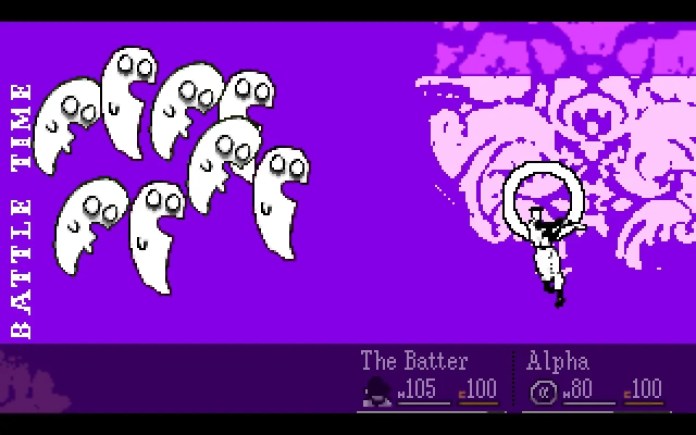
Each battle in OFF is short, simple, yet unbelievably satisfying. Some of the encounters are random, while some are triggered just by walking into the enemy on the map. Despite the fact that I’m usually not a fan of random encounters, the pacing of battle is done so well that I never had a moment where I went “get me out of this fight.” The pacing between fights is also great, as there are no points where you will need to grind to get more EXP to succeed in a boss fight.
The flow of combat is smooth as butter. You’re constantly asked to use different skills and items to heal yourself in the heat of battle, so you’re never asked to press the same button over and over again mindlessly. The boss battles in particular are a fun challenge where you have to exploit the weaknesses of enemies with the appropriate skills, all the while making sure your party members are healed appropriately. Plus, the occasional critical hits that appear during battle further create this great sense of euphoria, especially when you see those damage numbers reach the 100s.
I never ended up dying at any point in the game, which may sound like a drawback, but to me, it was a sign of just how fun the combat was. I never really felt like the game was too easy, as during the aforementioned boss fights, my heart was racing from beginning to end. It all clicked in just the right way, making the combat perfectly satisfying, despite it not introducing anything radically new for the genre compared to, say, Undertale.
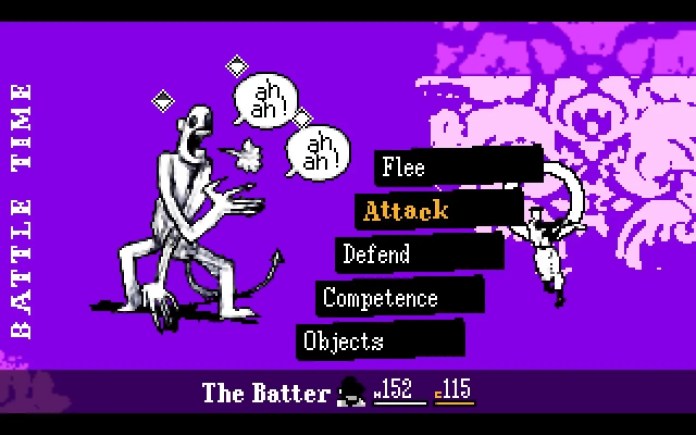
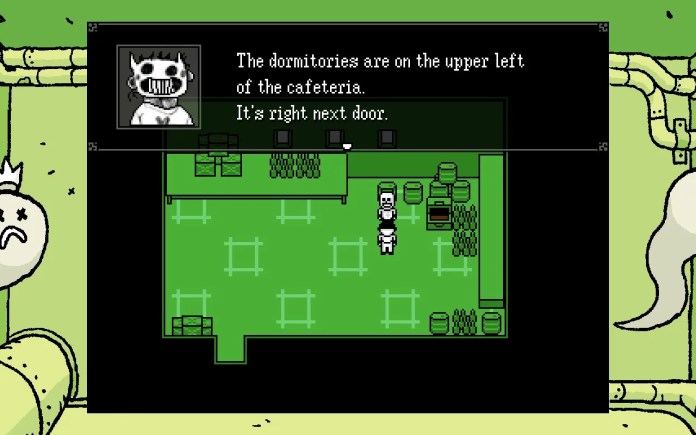
The new improvements to the remaster certainly help to make the gameplay more seamless. The UI has been completely overhauled: while before, you couldn’t see the timer for when enemies could attack, now you see it in the form of a small diamond next to their sprites. You can also adjust battle speed and difficulty if you find yourself having trouble with the combat. You can even add some dynamic backgrounds that you can unlock during gameplay, which is a great touch. Speaking of settings, you’re gonna be spending a lot of time in the menu throughout the entire game.
As you open more treasure chests and unlock new armor/weapons, you will need to micromanage the different statistics of each member of your party. The process of constantly switching out accessories every time you get a new item and selling the ones that are no longer in use can sometimes get a bit tiresome. Thankfully, there are also options to immediately equip an accessory as soon as you purchase it.


While I did enjoy a great portion of OFF‘s gameplay loop, there was one portion that didn’t quite have the same appeal: the puzzle sections. There are multiple puzzles you encounter throughout the game, some of which are really enjoyable, while others drag a little bit too long. I really liked the ones in the early game, where you are given a set of numbers and what appears to be a keypad, and you simply have to enter the numbers as if you’re typing on a rotary phone.
I especially liked the puzzle that, in the original game, required you to look at the game’s files. Here, it instead has a display of an image from the “real world” containing the code, which is a great touch. There was another really fun puzzle that gives you numbered tiles in an area that you have to follow in order to progress. If you stray from the path, you get a combat encounter. These were fun, but some of the other puzzles overstayed their welcome. In particular, the puzzles in Zone 3, where you have to check each and every single door and talk to every single NPC to find a very specific code, were exhausting.
I also kind of wish there were more indications on where players could find the brand-new content in the game. I tried to explore every nook and cranny, and I didn’t even come close to finding any of the new boss fights. It’s hard to be too upset at that aspect, though, especially since it gives me an excuse to play the game a second time. Still, it’s a bit frustrating, especially for those who played the original game and are playing the remaster just to encounter these new bosses.


At the end of the day, though, these are all nitpicks. OFF is still a fantastic experience from start to finish, regardless of whether you’re looking at its gameplay or narrative, even after seventeen years.
A Legacy That Still Lasts
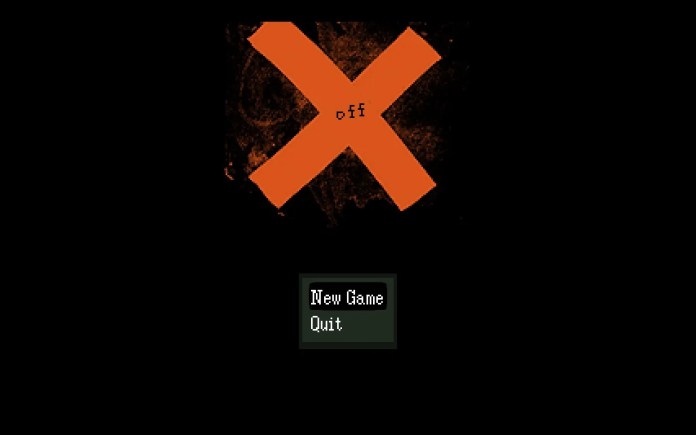
Even after all these years, it’s hard to deny the legacy that OFF has left behind. While many simply describe it as the game that inspired Undertale, it was far from the only game that built off of the RPG’s legacy. Omori is another such example of a game with an aesthetic, tone, and gameplay that is directly based on the one offered by OFF. From an outsider’s perspective, it may be hard to imagine that this underrated small French game in 2008 would have such a profound impact. However, after playing it myself, I finally understand why this game has reached the hearts and minds of developers and fans alike.
OFF ticks all the boxes of being an incredible RPG. The narrative is brilliant, filled with the right amount of complexity and subtlety that you would want from a game like this. The tone frequently dips into darker territories, but it doesn’t feel depressing, thanks to the brief moments of levity from the game’s characters. There are so many great examples of worldbuilding throughout, and if you’re in the mood to dive deeper into the game’s secrets, there are plenty of great incentives for you, thanks to the remaster and the addition of new content.
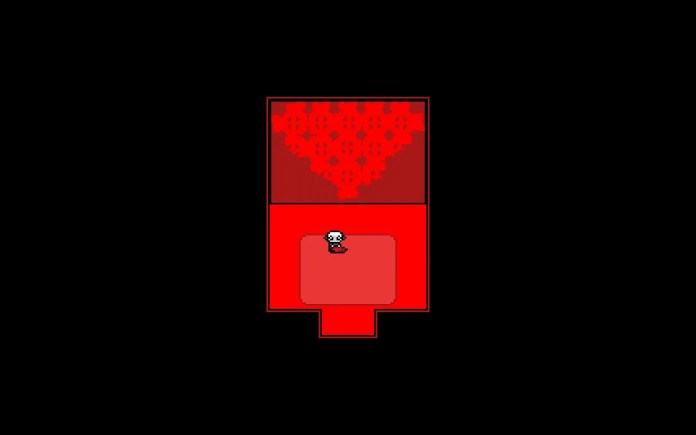
Further, the gameplay of OFF is also great fun. The pacing of battle feels just right, and I never felt like I had to grind EXP in order to succeed in battle. While I never died throughout, it was more because of how fun it was to master the flow of using the right skills and right healing items at the right time, rather than the game being too easy. Plus, although I wish that the puzzles were a bit less frequent and there were better ways to access the new content additions, the overall quality-of-life and gameplay improvements more than make up for it. At the end of the day, I just want to go back and play the game again to find those new additions.
That is the true master stroke of OFF‘s design. While other games that are remastered for the modern era have design elements that don’t hold up as well all these years later, OFF would’ve still managed to have lasting power even if it were released in its original form from 2008. All the new additions are a great bonus that makes the game even more accessible to new audiences. If you’re a fan of Undertale, Omori, or the broader RPG genre, then OFF is absolutely a must-play. Now that it’s on Steam and Nintendo Switch, there is no excuse not to give this game a shot. Trust me: you won’t regret it.
Disclaimer: Fangamer provided a PC (Steam) copy of OFF for review purposes.

