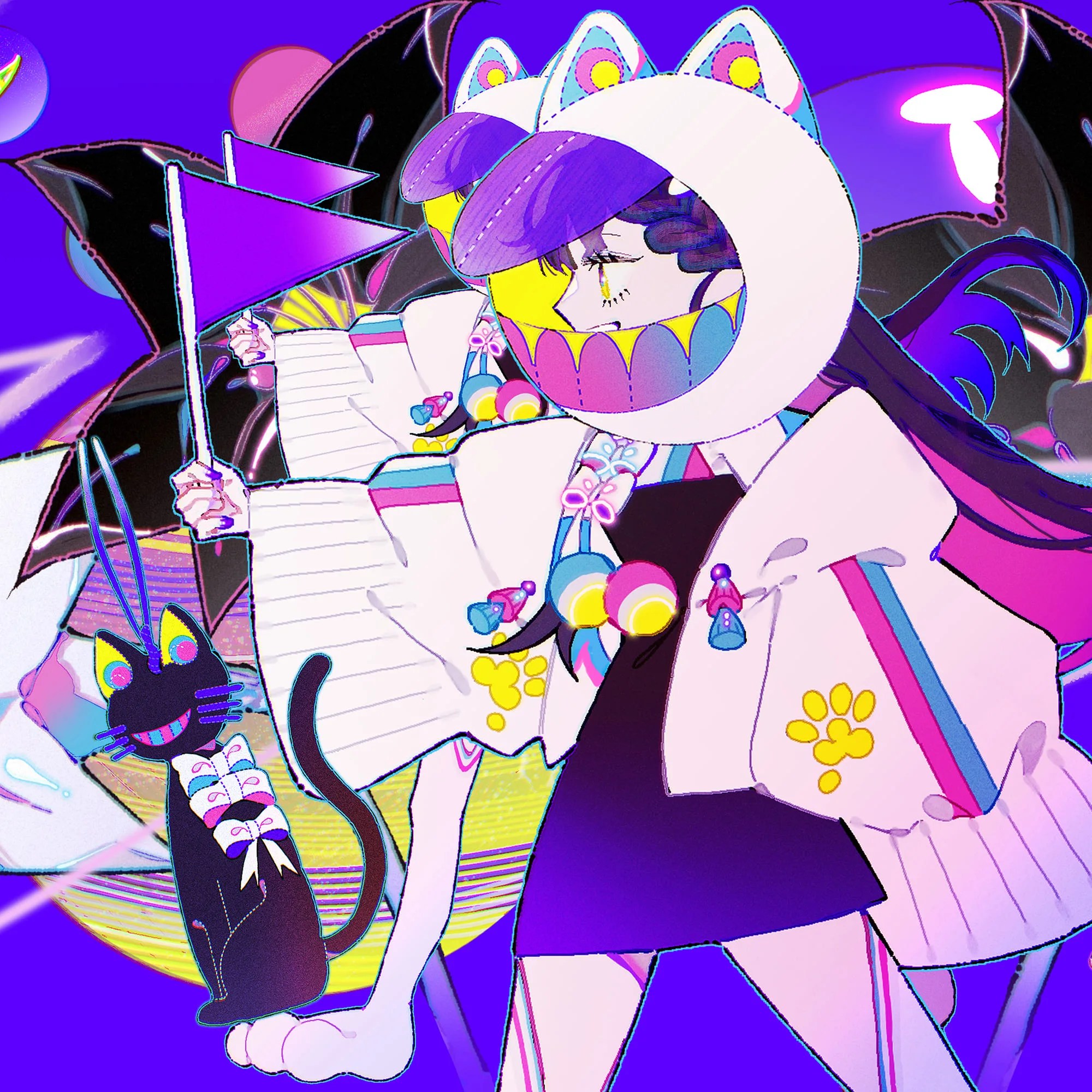
A lovestruck demon can’t fulfill his job after meeting the enemy party’s priestess in the exciting anime adaptation of Suisei’s There Was a Cute Girl in the Hero’s Party, So I Tried Confessing to Her light novel series. Final Weapon has everything you need to know about There was a Cute Girl in the Hero’s Party, so I Tried Confessing to Her, including release dates for new episodes and the weekly schedule.
There was a Cute Girl in the Hero’s Party, so I Tried Confessing to Her protagonist Youki is reincarnated as a mid-tier demon entrusted to crush the hero’s party. However, once he saw the priestess Cecilia, his resolve wavered and he fell in love with her almost instantly. This will be a story about how the most unlikely love may flourish.
There was a Cute Girl in the Hero’s Party, so I Tried Confessing to Her Release Dates, Exact Premiere Time and Schedule
New episodes of There Was a Cute Girl in the Hero’s Party, So I Tried Confessing to Her will release on Tuesdays at 8:00 a.m. PT / 11:00 a.m. ET on Crunchyroll. There Was a Cute Girl in the Hero’s Party, So I Tried Confessing to Her will have a total of 13 episodes this season with English subtitles .
Here are the release dates and schedule for There Was a Cute Girl in the Hero’s Party, So I Tried Confessing to Her (subject to change):
Episode 1 – January 6 – OUT NOW
Episode 2 – January 13 – OUT NOW
Episode 3 – January 20 – OUT NOW
Episode 4 – January 27 – OUT NOW
Episode 5 – February 3 – OUT NOW
Episode 6 – February 10 – OUT NOW
Episode 7 – February 17 – OUT NOW
Episode 8 – February 24 – OUT NOW
Episode 9 – March 3 – OUT NOW
Episode 10 – March 10 – OUT NOW
Episode 11 – March 17 – OUT NOW
Episode 12 – March 24 – OUT NOW
Episode 13 – March 31 – OUT NOW
New episodes of There Was a Cute Girl in the Hero’s Party, So I Tried Confessing to Her will premiere at the following times (subject to change):
Pacific Daylight Time: 8:00 a.m. PDT
Mountain Daylight Time: 9:00 a.m. MDT
Central Daylight Time: 10:00 a.m. CDT
Eastern Daylight Time: 11:00 a.m. EDT
Greenwich Mean Time: 3:00 p.m. GMT
OP/ED, Cast and Staff
Yoshino
Hiyori Omiya
Yoshino performs the opening theme song “Lavish!!” and Hiyori Omiya performs the ending theme song “Kimi Kōryaku Game (Capturing You Game).” Momo Sakurai (from ≠ME), Aimi Ozawa (from ≒JOY), and Iori Noguchi perform the special ending theme song “YES! Summer Love.”
The cast includes:
Kōhei Amasaki as Yōki
Kana Hanazawa as Cecilia
Ryōhei Kimura as Yūga
Yuko Natsuyoshi as Mikana
Toshiki Masuda as Duke
Minami Tanaka as Seek
Iori Noguchi as Happiness
Ayumu Murase as Raven
Momo Sakurai as Shike
Aimi Ozawa as Misaki
Yasutaka Yamamoto is the chief director of the There was a Cute Girl in the Hero’s Party, so I Tried Confessing to Her anime at animation studio Gekkou. Tomonori Mine is the director, Yukie Sugawara is writing and overseeing the series scripts, and Mina Ōsawa is the animation character designer.
Additionally, Satoru Kōsaki and MONACA are composing the music, and Ryō Aizawa is the producer at Starry Cube. Kairi, the author of the manga adaptation, is credited for the original work of the anime.
Where Can I Watch There Was a Cute Girl in the Hero’s Party, So I Tried Confessing to Her?
Crunchyroll is streaming There Was a Cute Girl in the Hero’s Party, So I Tried Confessing to Her in North America, Central America, South America, Europe, Africa, Oceania, the Middle East, CIS, Indian subcontinent and Southeast Asia. In Japan, the anime will be airing on Tokyo MX, HBC, RKB Mainichi Broadcasting, and BS11.
What is There Was a Cute Girl in the Hero’s Party, So I Tried Confessing to Her About?
Finally, here’s a synopsis for the series, via Crunchyroll:
Reincarnated as a mid-tier demon, Youki had one job: Crush the hero’s party. Then he saw the party’s priestess, Cecilia, and fell for her hard. Now this lovestruck demon vows to confess his feelings, even if it means betraying the Demon King. Will love bloom between these two sworn enemies?
Throughout the last few decades, countless beloved gaming franchises have been left unfinished. While some are left to fade into history, others are lucky enough to get sequels that try to continue their story after years of waiting. But how does one even carry out the task of continuing a franchise that has lain dormant for over a decade? How do you make something new that satisfies the near-impossible expectations of fans, while also trying to appeal to newcomers?
Personally, while there have been many right and wrong answers to this question, the response that has irked me the most is the act of creating a prequel. To continue a narrative left incomplete by going backwards always felt like a copout. As such, when I first found out about Legacy of Kain: Ascendance, I was extremely concerned. Even though I was a relatively new fan of the franchise, the thought of a continuation to the cult classic series that opted to tell a story before the events of Soul Reaverin a 2D platformer format, rather than the 3D action-adventure experience of its predecessors, wasn’t all too appealing to me. That’s especially the case considering the core creative team of the original games is notably absent.
After playing and beating Legacy of Kain: Ascendance for myself, I’m sad to say that my fears were quickly proven correct. The narrative pales in comparison to the Shakespearean quality of previous entries, the gameplay is poorly designed, and overall, the game itself lacks a cohesive identity, making for one of the most frustrating experiences I’ve had in a game in recent memory.
Something New, Something Old
Legacy of Kain: Ascendance takes place before the events of Soul Reaver, and primarily focuses on the perspective of a new character: Elaleth. Elaleth is a vampire seeking revenge against her brother, Raziel, the protagonist we’ve come to know and love from Soul Reaver all the way to Defiance. Elaleth’s rage against her brother, however, dates all the way back to his days as part of the vampire hunter faction known as the Sarafan.
As Elaleth seeks to restore the love of her life, Mathias, she begins to weave the threads of fate that lead to the events of the main series. This includes influencing Kain, the series’s other protagonist, to resurrect Raziel into a vampire. She soon returns to Raziel’s life to convince him to make amends and help her to accomplish her task. The results of this request will have far-reaching consequences for not just the lives of the three protagonists, but for the fate of Nosgoth itself.
At first, I thought the idea of Raziel having a secret sibling was compelling. However, there were several issues that quickly became apparent and diminished the narrative’s overall appeal. For starters, there’s the writing. The main games have always possessed a poetic quality to each line of dialogue, with conversations between Raziel and Kain becoming some of the most memorable in the medium. Without the lead writer and director, Amy Hennig, working on Ascendance, it was never going to have that same quality. Yet, the finished result still manages to fall short of expectations.
Dialogue between Elaleth and new character Ky’set’syk is chock-full of heavy-handed exposition and a casualness that doesn’t fit the dark gothic setting. This also applies to the dialogue that you hear in combat. At one point, I heard someone shout “they fly now?!” in response to Elaleth’s ability to fly. It was a strange reference to an infamous line from Star Wars: The Rise of Skywalker, and one that immediately broke my immersion. The quotes from Elaleth in particular feel like they’re from an entirely different franchise.
Thankfully, dialogue from Raziel and especially Kain often retains the same eloquent quality as prior games. The moments where the two of them talk feel closer to the experience of those titles, which is certainly helped by the fact that Michael Bell and Simon Templeman reprise their roles as both Raziel and Kain, respectively. Yet, something essential still feels like it’s missing. I soon realized that this was due to not just the writing of the story, but also the way that it plays out.
The Legacy of Kain series has always been a series driven by the concept of fate and powerful forces controlling the destinies of the main protagonists. Introducing Elaleth as the sister to Raziel isn’t a bad idea in theory. His past for a majority of the games is left as a mystery, and filling in the blanks for a new entry makes a lot of sense. The choice to make her responsible for Raziel’s fate and all of the events leading up to SoulReaver, though, feels remarkably forced.
The continuous setup of Elaleth as a new protagonist that caused Raziel to undertake his climactic journey, which holds the power to defy death and influence fate, feels contrived. It removes any agency previously placed upon either Kain or Raziel, and downplays the core concept at the heart of the Legacy of Kain games: self-determinism. It doesn’t help that both characters are outplayed at every turn by Elaleth, which contradicts their ability to outsmart even Gods in later entries.
While there are a few moments towards the end where I was hooked back into the story, the abrupt final act immediately ended any and all interest. Elaleth’s motivations and goals change at the drop of a hat as she goes from wanting to destroy him to wanting to protect him. The change feels jarring and lacks any of the turmoil that her character goes through in the original comic. As such, by the time the credits rolled, I found myself wondering aloud: “Is that it?”
Ascendance adapts the story of the recent comic, Legacy of Kain: Soul Reaver – The Dead Shall Rise. Many fans of the franchise aren’t too fond of the comic, and after reading both the comic and playing its adaptation, I understand why. I’m a relatively new fan of the Legacy of Kain series, and by the end of Ascendance, I found myself being disappointed.
I doubt this is the continuation many were hoping for, as not only does it go back to an era of the universe that has already been explored at length, but it also strays from the appeal of the original game with lackluster writing and characters. Most fans are primarily invested in the Legacy of Kain franchise due to its rich storytelling, rather than its gameplay. Yet, if the storytelling of Ascendance falls short, then what does that say for the new 2D platformer style? Unfortunately, my issues with the game only magnified tenfold as I played more of this strange game.
Incoherent and Frustrating in Equal Measure
The gameplay and presentation of Legacy of Kain: Ascendance are odd, to say the least. Previous games have had platforming elements, but for the most part, the core mechanics emphasized puzzle-solving and combat just as much as jumping from one area of the map to another. This latest entry instead switches genres to a 2D action platformer, a change that feels remarkably random. This strangeness persists in the game’s visual style.
As you explore the world of Nosgoth, characters are rendered in a pixelated art style, similar to a game like Celeste. However, there are segments where the game suddenly switches to PS1-esque visuals. There are also fully animated cutscenes, while others are still images. These different visual elements, while aesthetically pleasing, often clash, making for an art style that often lacks any cohesive identity.
The platforming itself is often extremely frustrating. Enemies act inconsistently, with some staying completely stationary even after several attacks, while others dart around the screen like they’re from a Soulslike. I sometimes found myself struggling to react to their attacks due to their tendency to overwhelm my player character. Others fly at slow speeds, yet due to their small stature and high damage capabilities, they were quickly able to knock my health down to zero. It certainly didn’t help that they’d frequently attack me while I was jumping from one platform to another, halting my momentum.
Moreover, there is also an overabundance of obstacles, such as cannons that constantly fire projectiles. These are often placed on every platform, leading to moments where I had finally gotten past a difficult platforming challenge, only to be greeted by something that quickly set me back to the last save point. The fact that these projectiles could go through walls only heightened my frustrations, as there were several points where I died in ways that were borderline unfair, even by the genre’s standards.
What am I even looking at?
These problems, by themselves, would be bad enough. Worse still, though, are the abundance of technical issues. For one, the constant frequency of opponents on screen at a time would often cause frame drops. Sometimes, when I’d press a button to jump or dash, the input would be delayed significantly. Furthermore, in some cases, they wouldn’t even register at all, which would often mean the difference between life and death.
There are smaller issues, too, that only compounded with the rest of the game’s problems. While some games allow you to freely pause and adjust your experience via the options, Ascendance will only let you change your settings in the main menu. Once you go to the main menu, though, your progress on the level you’re currently on completely resets. Additionally, while the soundtrack from Celldweller sounds fantastic, it doesn’t really fit the gameplay loop.
When trying to slowly traverse a dark cave and outmaneuver the different enemies and obstacles, the constantly looping heavy metal anthem would only distract me from fulfilling my goal. Even something as innocuous as the collectibles lacks any meaningful incentive. Having to overcome some of the hardest platforming challenges in the entire game, only to get a lore codex that offers no meaningful reward and provides worldbuilding that I already knew from the other games, quickly made me stop going after the collectibles altogether.
As a whole, Legacy of Kain: Ascendance‘s gameplay and presentation are deeply irritating and rife with flaws that undermine the few good ideas present. While I’ve had my frustrations with previous entries in the franchise and other platformers in general, this was the first experience in a while where I quickly realized that I wasn’t having fun at all. That, to me, is the most depressing part of the entire Ascendance experience.
The Coin Falls Flat
Not that long ago, I became invested in the Legacy of Kain franchise for the first time. What started as a series that I had barely heard of quickly became one that I was genuinely fascinated by, thanks to its captivating story and a fairly fun gameplay loop. After playing the remake of Defiance, I was genuinely excited to see where Legacy of Kain would go next. However, with the release of Ascendance, all of that enthusiasm has come crashing down.
The narrative barely reaches the quality of the previous entries, thanks to poorly written dialogue, characters that are messily forced into the world, arcs of the previous protagonists, and retcons that retroactively ruin the series’ themes. The gameplay is polluted by frustrating design choices, an incoherent presentation, and numerous smaller issues that only heighten the aforementioned low points. Both key aspects are messily handled and contributed to one of the infuriating experiences I’ve ever had in a game, let alone a platformer.
Yes, there are a few bright spots that I noticed throughout the short runtime of Legacy of Kain: Ascendance. The different visual styles all look great, with the PS1-esque format in particular looking fantastic. The writing of both Kain and Raziel in particular still manages to capture the eloquent quality of the previous entries, and the fact that most of the original voice cast reprise their roles is a nice touch. However, these few high moments are overshadowed by the rest of the game’s low points.
I really wanted to enjoy Legacy of Kain: Ascendance. Having to return to a series that hasn’t had a new entry in years is a near-impossible task, as you have to satisfy both new and old audiences alike. There is no possible way to please everyone, and someone is always going to be left disappointed. Yet, even with those low expectations in mind, this is categorically one of the more disappointing attempts I’ve seen at continuing a comatose franchise. While I was once hopeful for the future of the Legacy of Kain series, if Ascendance is any indication of where it could go next, maybe it’s better if it stays in the past, unfinished and untouched.
Disclaimer: Crystal Dynamics provided a PlayStation 5 copy of Legacy of Kain: Ascendance for review purposes.
The genre of roguelikes has exploded in the past few years. Fantastic games such as Megabonk and Vampire Survivors have captivated so many with hard-to-put-down gameplay loops and charming visuals. I lost hours of my time playing through games like those, and Last Man Sitting is another game that has the potential to fill that niche.
Last Man Sitting is heavily inspired by the early 2000s era, with the look and feel emulating the time. It makes me feel a bit nostalgic, as I was a kid growing up with technology changing at a rapid pace. I remember the TV being filled with movies and video games about cool robots and also extreme sports. Ultimately, the developers DoubleMoose decided to combine aspects of both into Last Man Sitting.
At times, I found Last Man Sitting to be an absolute blast, but, unfortunately, elements like weapon and boss design, combined with a need for more content, left me very mixed.
The Robot Uprising
Last Man Sitting drops you in with a simple premise: the starting character is an accountant when the office building is taken over by an army of robots. It’s up to the small group of resistance fighters led by a girl named Rumi to destroy them all and maybe score a promotion in the process. The plot is paper-thin with hints of a grander story.
Last Man Sitting is more focused on delivering nonstop action and what I assume will be a fantastic PVP mode over a single player experience. It’s a shame because the idea of an early 2000s company overwhelmed by a robot uprising is interesting, but the game goes nowhere with it, ending with little fanfare when the final boss is defeated.
The gameplay loop is incredibly simple: choose an employee, weapon, and chair, then head to one of eight floors to get rid of robots. Last Man Sitting starts slowly with a few robots, but as it goes on, the gameplay can get hectic. On the final floor, I found myself swimming in robots and machine parts flying everywhere, with the game even slowing down at times due to all the carnage.
Metallic Madness
I started with a Minigun and eventually unlocked weapons like the whip, mop, or even shotgun, with the game having a total of 12 weapons to try. Unfortunately, half of the weapons feel as if they are just a better version of an already existing weapon, which ultimately cuts down on the variety. In the end, I stuck to the Minigun and its secondary model as it felt more satisfying ripping through each robot than with weapons that need to be up close or require a charge. The game would’ve benefited from having items popular during the era turn into weapons to make it feel even more authentic to the time period.
One of the more intriguing parts of Last Man Sitting is how it tries to shake up the combat. Every so often, quests pop up via a landline phone, and they are pretty simple, such as popping balloons and cleaning up trash that I assume are leftovers from office parties, or protecting “executives,” which, when complete, give a legendary unlock that can even change how a chair’s ability works. While useful after a few rounds, I only saw five or six unique quests, which was very limited, and when each round can have up to three quests spawn, I tended to see the same ones over and over again. Another mix-up to the gameplay is random effects, with the best being Termination Time, which is when a storm-like effect rolls in, causing you to get cornered into a small circle to fend off robots for a limited time. It made me think of when and how to use my abilities wisely, and when to stop robots from entering the space so I wouldn’t be overwhelmed.
Last Man Sitting also has the very chairs that players move around on, affecting how the game plays. Each gives a different ability to try out, with my personal favorite being the slam dunk, which, when combined with certain level-up upgrades, turns it into a flying meteor of destruction. A chair starts with only one slot for upgrades, but as the game goes on, you unlock up to four slots with upgrades ranging from common to legendary.
Each provides a simple boost, whether it’s health regeneration or making certain elemental powers that are gained when leveled up stronger. But the absolute best are legendary, which honestly change the game; they range from using a chair’s ability twice to giving massive health in turn for no healing drops. At the end of each round, points are totaled from money picked up to robots destroyed, and up to three upgrades can be unlocked via randomized pick, meaning sometimes you’ll gain a legendary and others it’s all common.
Content 404
Last Man Sitting is fun, but after you defeat the final boss on eight floor, there isn’t much left to do. Sure, it is fun to go back and play previous levels on harder and harder difficulties, but outside of some upgrades, that’s it. I was hoping for an endless mode or maybe a new hidden stage, but I was left disappointed. It doesn’t bring down the enjoyment I had for the game; in fact, it left me sitting there wanting more. Sure, there’s a PVP mode available at launch, but I’m not confident that it will be everyone’s fill.
One aspect of the game I find quite underused is the rail grind system, which allows for fast travel between stages, making the nonstop action even faster. At first, it is really fun and has so much potential, but after a while, due to the cramped space of each floor, I quickly forget about them, only really using them if it’s a do-or-die scenario.
What also felt very lackluster were the boss encounters; each floor is only a few minutes long, and when the timer reaches both the halfway mark and zero, a boss pops up. While they’re supposed to be large and intimidating, most of the time, I was way too overpowered and defeated them without noticing. They stood no real threat, and for a game about a robot uprising, that’s a real shame. In between a few floors, there are extra bosses to encounter that are story-related, but as stated earlier, they pose no real threat.
Even the final boss, who has an incredibly cool and unique design, falls short in this department. Something occurs that gives you the perception that things are about to get much harder, but the boss still melted under my bullets, leaving me very underwhelmed.
After the Mayhem
Last Man Sitting has the bones of a fantastic action roguelike, which cannot be understated. The gameplay is fantastic and led me to lose track of time, mowing down robots left and right. That being said, the amount of content available at the moment left me wanting more; the weapons weren’t all that different, some systems are underutilized, and the shortcomings in boss design leave me very mixed. The slowdown and audio bugs I encountered also don’t exactly help my feelings here.
I’m hopeful that DoubleMoose Games will iron out some of these rough patches soon, but as it stands, I’m not sure some players will likely be able to look past the shortcomings here. Often, I had a great time with Last Man Sitting, but when the clock struck zero and the final stage ended, I was left wanting much more.
Disclaimer: Raw Fury provided a PC (Steam) copy of Last Man Sitting for review purposes.
Nintendo has revealed the patch notes for Mario Kart World update 1.6.0, which is available now on Nintendo Switch 2. Mario Kart World update 1.6.0 introduces Bob-omb Blast to Battle mode, adjusts performance of Bullet Bill and boomerang items, and applies several bug fixes.
The distance Bob-ombs can be thrown depends on how long you hold the L Button.
Adjusted the performance of Bullet Bill.
Increased their range of lateral movement.
It is now easier to follow a shortcut route immediately after using Bullet Bill.
Increased Bullet Bill’s speed on parts of the Bowser’s Castle, Starview Peak, and Rainbow Road courses.
Adjusted the performance of the boomerang.
Reduced the boomerang’s range.
Reduced the number of consecutive throws allowed.
Adjusted the probability of items that can be obtained from item boxes during races.
Adjusted the invincibility time after spinning or crashing during a race so that it varies depending on the character and vehicle.
The heavier the weight, the longer the invincibility time.
Made it so that you won’t get crushed by things, such as Thwomps, while spinning or crashing.
It is now possible to be hit by lightning and Spiny Shells immediately after being crushed by things, such as Thwomps.
Made it so that things like Bob-ombs and Bananas don’t bounce on top of the vines of Ivy Piranha Plants.
When playing Single Player or 1p during Online Play and Wireless Play, up to two warnings will be displayed when items like Red Shells or Spiny Shells come from behind.
Shortened the time until the roulette stops to determine the course in Online Play and Wireless Play.
Fixed Issues
Fixed an issue where the starting position would sometimes be incorrect.
Fixed an issue where cows and other creatures that appeared through Kamek’s magic would fall through the ground.
Fixed an issue where the display of Wiggler that appeared through Kamek’s magic would sometimes be incorrect.
Fixed an issue where Thwomps or Rocky Wrench would appear in Airship Fortress or in the cannons in the race leading to Airship Fortress.
Fixed an issue where the character would sometimes disappear from view when looking in the rearview mirror after using a Mega Mushroom.
Fixed an issue where you could not return to a point before the Ivy Piranha Plant when using Rewind after transforming into a Bullet Bill.
Fixed an issue where the item slot would not display correctly after using Boo and returning to Free Roam.
Fixed an issue in Knockout Tour where players who passed through a checkpoint after the first-place player had already reached the goal would not be eliminated, even if their rank was outside the predetermined cutoff.
Fixed an issue in Time Trials where the display of stacked tires would sometimes appear incorrectly.
Fixed an issue in Free Roam where a fleeing Nabbit would fall through the ground.
Fixed an issue in Events where scores were not displayed on the results screen during practice.
Fixed an issue where the screen display would sometimes become distorted after selecting Change Character in Free Roam in Online Play.
Fixed an issue in Knockout Tour and Online Play where rankings would sometimes be incorrect after passing through checkpoints.
Fixed an issue where the selected event would disappear when a communication error occurred after selecting Online Play.
Fixed an issue in Online Play and Wireless Play where rivals using Bullet Bill sometimes appeared not to be transformed.
Fixed an issue where the final results were not displayed after spectating in Knockout Tour in Online Play or Wireless Play.
Fixed an issue in Knockout Tour where the player being spectated would not change after that player was eliminated.
Fixed an issue where the gliding distance could be excessively long during the race from Airship Fortress to Dry Bones Burnout.
Fixed an issue where using the Feather while jumping in Shy Guy Bazaar during races from Airship Fortress or Wario Stadium to Shy Guy Bazaar could cause you to go off course.
Fixed an issue where doing a wall ride in Shy Guy Bazaar during races from Airship Fortress or Wario Stadium to Shy Guy Bazaar could cause you to go off course.
Fixed an issue in Bowser’s Castle where players could crash while driving over lava with a Dash Mushroom.
Fixed an issue in Salty Salty Speedway where players would sometimes fall through the ground after being hit by lightning and shrinking.
Fixed an issue when in a battle on DK Pass where you would sometimes not be returned to the course after using a Feather and ending up outside the course.
Fixed an issue where using a Mega Mushroom near the fence in Dino Dino Jungle could cause you to be returned to the course.
Fixed an issue in Koopa Beach where some buoys were buried in the ground.
Fixed an issue in Mario Circuit where using a Mega Mushroom could cause the player to get stuck on a fence.
Fixed an issue in Mario Circuit where players could sometimes be returned to the course when riding on a wall of blocks.
Fixed an issue where players would sometimes be returned to the course when driving along the wall near the starting point of Faraway Oasis.
Fixed an issue where Bloopers sometimes appeared dark in replays of Rainbow Road.
Fixed an issue in Rainbow Road where Spike Balls that appeared through Kamek’s magic would sometimes move erratically.
Fixed an issue where using the Feather to take a shortcut on Rainbow Road could sometimes cause incorrect final rankings.
Fixed an issue where you would sometimes recover too far ahead if you fell off the course while gliding on Rainbow Road.
Time Trials ghosts that have encountered this issue may be removed from View Rankings without notice.
Fixed an issue in the race from Wario Shipyard to Starview Peak where players could sometimes fall off the course while taking a shortcut.
Fixed an issue where using a Mega Mushroom near the fence in Wario Stadium could cause the player to fall off the course.
Several other issues have been addressed to improve the gameplay experience.
Clear River Games and Tatsujin have announced that shoot ’em up revival game Truxton Extreme is coming to Nintendo Switch 2, PlayStation 5, Xbox Series X|S, and PC via Steam and GOG on July 30 for $24.99. Truxton Extreme is the first entry in the Truxton series in 38 years.
A Digital Deluxe Edition will be available for $29.99, and a physical edition will be available for $49.99 for Switch 2 and $39.99 for PlayStation 5 and Xbox Series X|S. A Truxton Extreme Thunder Master Edition will also be available with a a special box, an O-sleeve, an A5 hardcover art book, an A5 manga style soft cover manga, original soundtrack on a 2-disc CD jewelcase and a lenticular card. Early purchases for the Thunder Master Edition include a bonus Pipiru Plushie while supplies last.
Lastly, here’s an overview of the game, via Steam:
It’s On Like Truxton!
Truxton Extreme delivers white-hot shooter thrills for masters and novices alike. Take down hordes of alien invaders with your Power Shot, Truxton Beam, Thunder Laser, Homing Shot, Star‑mine Shot, and more! Don’t forget to breathe as you face off against gigantic bosses in the ultimate battle for humanity’s survival
Retro Fury, Modern Firepower
The game’s content, sound, and visuals have all evolved since the 80s. Truxton Extreme is now fully rendered in 3D while preserving the series’ iconic design. Staring insect-like faces, writhing metal tentacles, long mechanical serpents, glowing eye-like lights, and spikes… In Truxton Extreme, you’ll face your worst nightmares—and blow them to pieces!
A Soundtrack to Save the World
Truxton has always been famous for its soundtrack, and Truxton Extreme is no exception. Original mastermind Masahiro Yuge returns with an explosive new score, packed with excitement and atmosphere. Experience iconic Truxton tracks reimagined from the original games alongside brand-new music. It’s the best of both worlds!
Together or Alone?
There are multiple ways to enjoy Truxton Extreme. The main mode is Story, where you follow three characters, level up as you go, and experience the narrative through an epic (and animated) manga series. For traditionalists, there’s Arcade, and if you want more firepower, Team will let you play together with a friend and share your lives and score. Then there’s a blistering score-attack Arena, Training and Tutorial too!
The Master of Unlocking
Do you love unlocking bonus content in games? Well, it’s your lucky day! In Model Viewer, you can check out the enemies you’ve defeated. And don’t forget to visit the mysterious Pipiru Village, home of all the cute Pipiru creatures. What happens when you evolve their home…?
The Piano Programmer with Laser Dreams
Truxton was conceived by Masahiro Yuge during his time at Toaplan, with the goal of creating a scrolling shooter where muscle memory was key. But Yuge wasn’t just a programmer, he was a classically trained pianist, bringing a unique and critically acclaimed approach to game design
Milan Records and renowned singer-songwriter Kenshi Yonezu have released a new vinyl featuring the opening and ending theme songs of Chainsaw Man – The Movie: Reze Arc, “IRIS OUT” and “JANE DOE feat. Hikaru Utada.” The IRIS OUT / JANE DOE vinyl is available starting at $29.98 at various online stores.
Three remixes for Chainsaw Man opening theme song “KICK BACK” by Hudson Mohawke, Frost Children, and TOMGGG are also included on the Chainsaw Man – The Movie: Reze Arc vinyl. The music is pressed onto a single black 45 RPM vinyl, which is housed in a sleek single-pocket jacket with a fold-out insert and an illustration by Yonezu.
The cast and staff of Chainsaw Man – The Movie: Reze Arc includes:
Japanese Voice Cast
Denji / Chainsaw Man: Kikunosuke Toya
Reze: Reina Ueda
Makima: Tomori Kusunoki
Power: Fairouz Ai
Aki Hayakawa: Shôgo Sakata
Pochita: Shiori Izawa
Beam / Shark Fiend: Natsuki Hanae
English Voice Cast
Denji / Chainsaw Man: Ryan Colt Levy
Reze: Alexis Tipton
Makima: Suzie Yeung
Power: Sarah Wiedenheft
Aki Hayakawa: Reagan Murdock
Pochita: Lindsay Seidel
Beam / Shark Fiend: Derick Snow
Staff
Original Story: Tatsuki Fujimoto
Director: Tatsuya Yoshihara
Screenwriter: Hiroshi Seko
Character Designer: Kazutaka Sugiyama
Assistant Director: Masato Nakazono
Sub Character Designer: Souta Yamazaki, Shun
Main Animator: Shoichi
Action Animation Director: Sota Shigetsugu
Art Director: Yusuke Takeda
Color Designer: Naomi Nakano
Color Script: Riku
Editor: Masato Yoshitake
Music: Kensuke Ushio
Distribution: TOHO
Production: MAPPA
Maximum The Hormone performs the the insert song “Hawatari Nioku Centi [2-hundred-million-Centimeter-long-blades] (70% Unlocked edit).”
The Chainsaw Man Assassins Arc anime is currently in the works with no confirmed release date. In the meantime, fans can read all 232 chapters of Tatsuki Fujimoto’s Chainsaw Man manga on Manga Plus overseas and Shonen Jump+ in Japan.
The Comic Market Committee have announced that the Comic Market (Comiket) 109 convention will be held on December 29 to 31 as a three-day event. Comic Market 109 will mark Comiket’s return to the three-day event format nearly 5 years after the COVID-19 pandemic, ensuring anime, manga, and gaming fans have an extra day to explore the event.
📢Comic Market 109 (C109) is going to be held December 29-31, 2026.
After 7 years we are back to more than 2 days with strong participation from circles and limited space available while Tokyo Big Sight is being partially renovated. Set your calendars and book your flights! pic.twitter.com/dd7bW6xUSF
— Comic Market Committee (International) (@comiket_intl) March 24, 2026
Comiket 109 will be held at the Tokyo Big Sight venue, but East 4-6 Halls will be unavailable due to renovations. Before then, Comiket 108 will be held from the same venue on August 15 to 16 with East 4-6 Halls also being unavailable.
Comiket 107 was previously held from December 30 to 31, 2025 at the same Tokyo Big Sight venue. The event commemorated the 50th anniversary of Comic Market, which was first held on December 21, 1975. Tokyo Big Sight’s East Halls 1-3 were not open for exhibiting spaces for Comiket 107.
Comiket 106 was held from August 16 to August 17, 2025, and it drew in 250,000 attendees across both days. The event drew in 120,000 people on the first day and 130,000 people on its second day. Comiket 106 had nearly 22,700 exhibiting spaces across its duration, which is a decrease from the near 29,000 spaces that were available during Comiket 105. This is due to ongoing renovations at Tokyo Big Sight’s East Halls 1-3.
The staff of AnimeJapan 2026 confirmed that the event reached a new attendance record of 156,000 attendees across its two public days on March 28 to 29 at the Tokyo Big Sight. AnimeJapan 2026 brought in roughly 3,600 more attendees than last year’s AnimeJapan, which was the previous attendance record holder at 152,400.
The AnimeJapan 2026 event featured over 130 exhibitor booths, which is another record high. There were four main stages with stage programs highlighting some of the year’s biggest anime releases, including One Piece, JoJo’s Bizarre Adventure Steel Ball Run, and Mushoku Tensei: Jobless Reincarnation Season 3. The event also had a Cosplayers World area and Family Anime Festa, with the former being held indoors and outdoors.
AnimeJapan 2027 and AnimeJapan 2028 will move to Osaka. For the first time ever, AnimeJapan 2027 will be held outside Tokyo at the Intex Osaka convention center from March 27 to 28 next year. It will follow the same business and public days format, with the precise venue for business days being “under review.”
“‘AnimeJapan,’ which has been held in Tokyo for the past 13 years as ‘one of the world’s largest anime festivals,’ will be held in 2027 in Osaka—a city that has long flourished as a gateway for international trade and will welcome visitors from around the world for the Expo 2025 Osaka, Kansai, Japan,” the AnimeJapan committee said on the official website. “With the support of the Osaka Convention & Tourism Bureau, AnimeJapan will showcase the appeal of animation to the world from Osaka and strengthen Japan’s content industry, with the anime industry at its core.”
Crunchyroll has announced the English dub cast and crew for the TV anime adaptation of Syundei’s Go for It, Nakamura! manga, which premieres on April 1.
The English dub cast and crew of Go for It, Nakamura! includes:
English Dub Episode 1 Cast
Nasim Benelkour as Nakamura
Patrick Pedraza as Hirose
Emi Lo as Hamaoka
Morgan Berry as Kana
Gillian Lange as Kawamura
Katie Wetch as Masako
Weston Loy as Mukai
Nate Grizzly as Oomori
Peyton Howard as Otogiri
Dalton Tindall as Takeuchi
Julie Shields as Female Teacher
Doug Jackson as Male Principal
Students: Dayeanne Hutton, Meg McClain, Kelly Greenshield, Vanessa Benoit, Cheyenne Haynes, Monica Piskor, Trisha Mellon, Kimmie Britt, Jamie Lee, Lacey Deline, Dalton Walker, Matthew Elkins, Conner Allison, Brandon Allan Majella, Brayden Medlin, Sambob Park
English Dub Episode 1 Crew
Voice Director: Jad Saxton
Producer: Susie Nixon
Adaptation: Heather Walker
Mixer: Rickey Watkins
Engineer: Seth Aulds
Go for It, Nakamura! premieres on April 1 at 24:30 JST (April 2 at 12:30 a.m. EST) on Tokyo MX, Tochigi TV, Gunma TV, BS11, and Hulu in Japan. Hulu will stream a double-episode premiere in Japan, and Crunchyroll will stream the Go for It, Nakamura! anime in North America, Central America, South America, Europe, Oceania, the Middle East, and CIS as it airs in Japan.
Yasuyuki Okamura and Kento Nakajima perform the opening theme song “Shunpatsuteki ni Koi Shiyо̄ (Let’s Fall in Love Instantly).” Senri Oe performs the insert song “Glory Days,” and Princess Princess performs the insert song “Sekai de Ichiban Atsui Natsu.”
The anime’s cast includes:
Chiaki Kobayashi as Okuto Nakamura
Yuki Sakakihara as Aiki Hirose
Takuya Eguchi as Sou Otogiri
Fairouz Ai as Hifumi Kawamura
Yukihiro Nozuyama as Kota Takeuchi
Atsushi Tamaru as Ryou Mukai
Makoto Koichi as Yuka Hamaoka
Yume Maihara as Masako Okuda
Tsubasa Sasa as Tsukasa Omori
Kappei Yamaguchi and Junko Takeuchi are also a part of the cast, but their characters have not been revealed yet.
Aoi Umeki directs the anime, writes the scripts, and designs the characters. Drive is animating the series, Naoki Yoshibe is the assistant director, and Yasuko Aoki (Studio Monado) writing and overseeing the series scripts. Ayana Tsujita is the music composer.
Other staff members include:
Concept Director: Tetsuya Tatamitani
Art Director: Cheon Bok Lee (Studio Blue)
Color Design: Harue Ono (MAD BOX)
Director of Photography: Yū Wakabayashi (ENISHIYA)
Visual Director: Toshitaka Kanda
Editing: Yūsuke Ueno (Yanagi Editing Room)
Color Script: Yue
Prop Design, 2D Works: Ayumi Nagaki
Costume Design: Yumi Nakamura
Sound Director: Yoshikazu Iwanami
Syundei launched the Go for It, Nakamura! manga in December 2014. The series is still ongoing with the sequel manga, Go for It Again, Nakamura!, which launched in June 2017. Seven Seas Entertainment publishes the series in English. Lastly, here’s a synopsis of the series, via Seven Seas:
Nakamura is a shy boy who falls in love at first sight with one of his classmates–his dreamy high school classmate, Hirose. But there’s a problem: they haven’t met yet. And Nakamura is a total klutz who might bungle things before they even begin!
Square Enix has released character preview trailers for upcoming Dissidia Duellum Final Fantasy playable characters Onion Knight (VA: Jun Fukuyama) and Iroha (VA: Inori Minase). Onion Knight and Iroha will be added to Dissidia Duellum Final Fantasy this April, followed by Firion, Balthier, Rikku and Clive Rosfield in the coming months.
Square Enix has released the Dissidia Duellum Final Fantasy original soundtrack on Amazon Music, Apple Music, and other music distribution services. Featuring original tracks and arranged fan-favorites, the original soundtrack of Dissidia Duellum Final Fantasy was composed by Final Fantasy XIV and Final Fantasy XIV sound team member Takafumi Imamura.
Here’s an overview of the new title, via Square Enix:
Warriors from the Final Fantasy (FF) series assemble in modern-day Tokyo to save the world from destruction in Dissidia Duellum Final Fantasy.
Fight in 3-versus-3 battles where two teams fight monsters and clash in a race to defeat the powerful boss faster than the enemy team!
Legendary FF Characters
Fight as one of several legendary FF warriors like Warrior of Light, Cloud, Lightning, and more, and take on the role of either Melee, Ranged, Agile, or Support. Choose the character that matches your playstyle and work as a team to take on powerful monsters!
More characters will be added over a period of time.
Exhilarating Action
Acquire various abilities and unleash them in battle to gain the upper hand. Customize your loadout from an array of abilities, including numerous newly drawn illustrations by a stellar team of artists.
Easy-to-Learn Controls
Play with simple controls anywhere and on-the-go!
Change the control scheme to one that suits you best from various control settings.
Modern Story
Explore a new Dissidia story unfolding in modern-day Tokyo with Final Fantasy warriors brought to life with full Japanese voice acting and beautiful cel-shaded graphics. Get a glimpse into their daily lives and interactions with one another by watching chat messenger episodes.
Customization & Community
Show off your style by outfitting Final Fantasy characters in their original looks or new clothes fit to roam around the modern world! Collect original and arranged music tracks from your favorite FF games, edit your profile, chat with other players, and join the ultimate Final Fantasy community!