


Splatoon is a franchise that I have been captivated by ever since the first entry was initially revealed at E3 2014. The core multiplayer premise of playing as a squid-kid hybrid tasked with working with three other players to cover an entire map with more ink than your opponents was such a breath of fresh air compared to any other multiplayer shooter at the time. As of 2026, three mainline Splatoon games have been released, each of which continues to maintain the creativity that has defined the series since the very beginning, thanks to a winning combination of fun gameplay, charming worldbuilding, and a great variety of single-player and multiplayer options.
However, as time has passed, I’ve found myself hoping that Splatoon 4 would take a new leap forward away from the typical 4v4 multiplayer and short campaign levels. As such, when Splatoon Raiders was revealed instead of the next mainline entry I was hoping for, I was not sure what to think. While the emphasis on single-player rather than multiplayer seemed like an innovative departure, the gameplay shown off in the trailers did not seem as exciting as I was hoping for.
When I had the chance to play it for myself, I was concerned that this would be the first Splatoon game that I would end up not liking. Thankfully, I was wrong, as Splatoon Raiders has perfected the series’ formula with gameplay and charm that is better than ever before, even if the narrative and visuals take a bit of a step back.
Raiders of the Lost Island
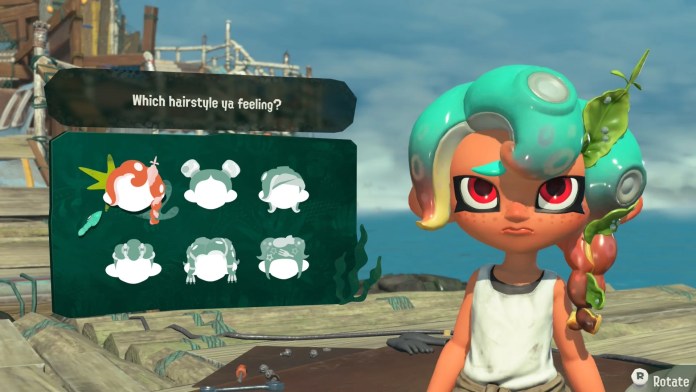
Splatoon Raiders focuses on the returning Deep Cut idol group from Splatoon 3 as they seek to explore the newly discovered Spiralhite Islands. Their quest for treasure quickly goes awry when a storm causes their vehicle to crash onto the islands. You play as their Mechanic, a fully customizable character that is unique from other Splatoon protagonists due to their engineering skills. Together with Deep Cut, the four of you must work together to uncover the mysteries of the Spiralhite Islands, defeat all the Salmonids standing in your way, and hopefully snag some treasure along the way.
Unlike prior Splatoon games, the narrative premise of Raiders is not all that interesting. Rather than being propelled by a mystery tied to Mammals or an underground conspiracy that builds upon the surprisingly rich lore of the franchise, the secrets of the Spiralhite Islands are not as enticing. In general, the way the story progresses lacks any excitement, despite this being a single-player-focused experience. Every time you beat through a set of levels, you do not get a cutscene that deepens the mystery. Instead, you get a few interactions with Deep Cut and more of the world to explore.

That being said, the focus on Deep Cut rather than a rich lore-filled story actually works to Raiders‘ benefit. You will frequently talk to the members of the idol group that further develop their personalities. For example, Shiver is quick-witted and somewhat sarcastic, while still clearly caring for the Mechanic in all of their interactions together. Every member of the group gets time to shine, both in the core narrative and in the smaller dialogue exchanges on your hideout. It gives the game some much-appreciated charm, and allows Deep Cut to stand out in ways that Squid Sisters and Off the Hook never could.
The visuals, though, are unfortunately more of a mixed bag. On the one hand, the areas that you visit on your continued quest for treasure have more variety compared to other Splatoon campaigns. In particular, the late game has a snow-themed area with ice physics and surfaces that cannot be covered in ink, which was a treat to look at. Furthermore, the cutscenes are also the best they have ever been. The way that each member of Deep Cut and the Mechanic act further builds their personality, and their dynamic animations help to bring that to life.

Yet, the visuals of Splatoon Raiders do not do anything particularly new compared to other entries, which is especially a shame considering the increased power of the Nintendo Switch 2. The visual identity is largely the same as Splatoon 2 and 3, and those who are not as familiar with the series likely will not be able to see any difference between Raiders and any other Splatoon game. In addition, there are quite a few examples of enemies popping in out of nowhere, which distracts from the moment-to-moment gameplay.
As a whole, Splatoon Raiders does not really feel like a Nintendo Switch 2 game. The visuals do not provide as much of a leap forward as you would perhaps expect from the first new Splatoon game on a console that is truly “next-gen.” However, even though the visuals and narrative do not have the level of importance that long-time fans of the series may hope for, Splatoon Raiders more than makes up for it with the absolutely incredible gameplay loop.
Do the Impossible
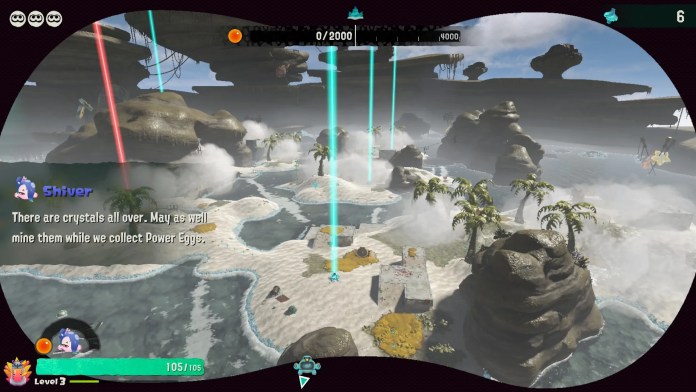
Splatoon Raiders has, by far, the best version of the series’ gameplay loop to date. This starts with how the game has more in common with a looter shooter than the platforming and puzzle-solving of other Splatoon story modes. Each level is a “raid” that asks you to collect as much treasure as possible, albeit in different forms. Some focus on collecting Spiralhite Shards from deposits via the new drill bot that any member of Deep Cut can use, each of whom offers unique perks in combat, as well as more vertical movement in platforming. Other raids will pit you against powerful Salmonids to acquire some ancient relics. You are constantly acquiring loot, though, no matter what type of mission you embark on. This goes beyond the shards and relics you acquire, and extends even to the weapons.
Usually, Splatoon campaign levels force you to use a specific weapon in each level in order to test how quickly you can change your playstyle to fit the situation. In Raiders, you instead collect weapons of varying rarities and power levels throughout your journey, each of which will be familiar if you have sunk a lot of time into the franchise. Splattershots, blasters, stringers, and sloshers all make a return, but which weapon you choose will depend entirely on your own preference, rather than being the result of a playstyle being forced upon you. Even still, I ended up naturally trying out all sorts of weapons that I never even bothered to use in the multiplayer of other entries, just so I could maximize my efficiency in each raid.

Once you’ve collected the collectible weapons and copious amounts of shards on a raid, you go back to put it all to good use. There are plenty of options for how best to utilize your loot: for example, you can upgrade your hideout to be even bigger, which gives you more crafting options. From there, you can upgrade your weapons to be even more powerful or enhance your HP and weapon damage, among other things, with skill points that you unlock every time you level up.
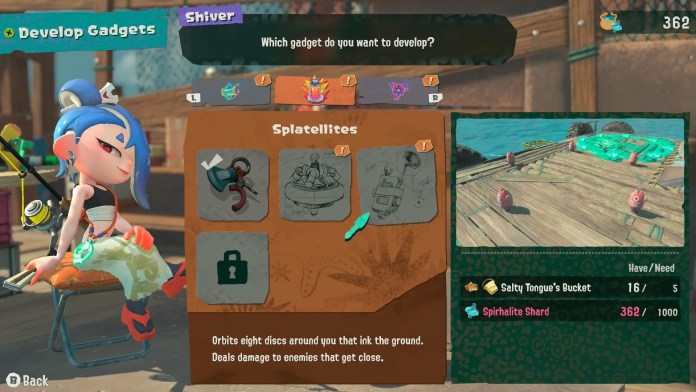
The most notable new addition to the Splatoon formula, bought thanks to the various bits of loot you acquire, is gadgets. Right from the beginning of the game, you get access to one of three ink tanks: Speed, Power, and Tactical. Each comes with a unique layout of gadgets that you can purchase, which fill the role of the sub-weapons. The best choice of tank will once again depend entirely on your playstyle, as you may end up enjoying the power-focused gadgets like the axe-shaped Splatchet, or you might prefer the grappling hook-esque Flywire provided by the Speed Tank.
Regardless of which you choose, each gadget, weapon, and upgrade will be instrumental in taking on the waves of powerful Salmonids you will encounter in each raid. They are just as powerful and hard to defeat as their counterparts in Salmon Run, but with far more variants than ever. You will fight Salmonids that fire lasers at you from across the arena and others that can corner you and defeat you with ease. Some levels really ramp up the intensity of difficulty, such as those which require you to collect a certain amount of power eggs before time runs out.
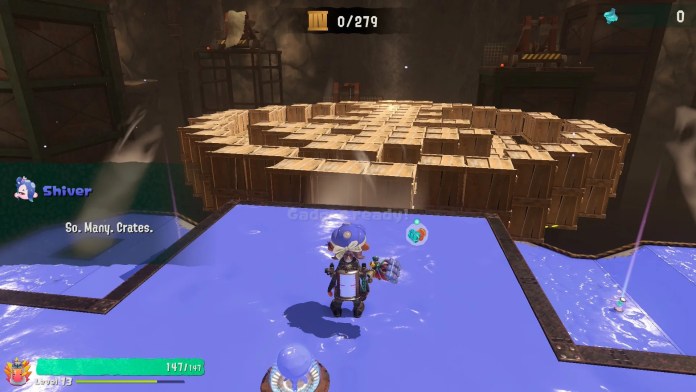
That challenge only continues with the challenge levels found by collecting compasses in the main raids. These do limit your loadout to a specific gadget or weapon, testing your mastery of each. One level, for instance, leaves you with a very weak Splattershot that can only be used to ink your path forward in a winding labyrinth populated with various Salmonids. Another makes you use the Meteor Mitt to destroy over 200 boxes in quick succession. The occasional difficulty spikes are manageable due to just how fun the gameplay is.
The emphasis on player choice and customization feels like such a natural extension of the mechanics introduced throughout the franchise thus far. The gadgets and emphasis on collecting loot like weapons, then going back right back to do another raid, never gets old because of the various builds you can create, as well as just how satisfying it feels to defeat enemies in your path. The feeling of slowly inking your opponents or defeating a wave right before time runs out constantly had me wanting to play Raiders again and again and again. Even the boss fights are constantly thrilling, partly due to their unique designs, and partly due to that aforementioned pristine gameplay.
There is a lot of content packed into Splatoon Raiders. Beyond the customization and level types, there is also a rich post-game that ramps the challenge up even further with new levels and “Spicy” difficulty options on pre-existing levels. In addition, there are local and online co-op options for those still hoping to get their Splatoon multiplayer fix, as well as a wide variety of collectibles scattered throughout each level. One of my favorite additions is the inclusion of a “bond system” with each member of Deep Cut, where you will get unique interactions with each member depending on how often you bring them into battle.
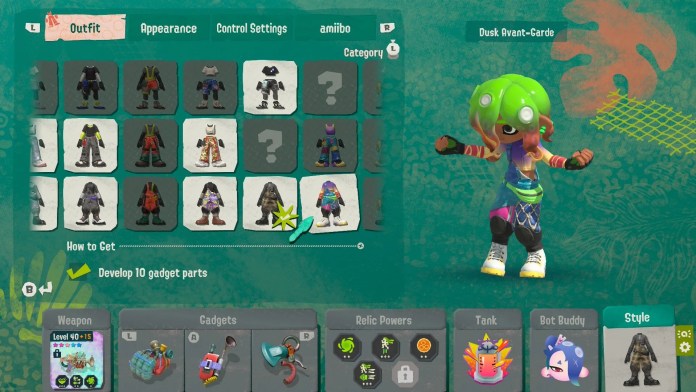
Quite frankly, my only real issue with the customization options is the lack of good cosmetics. You occasionally unlock costumes after completing certain tasks, but these lack the personality that you find in the many stores in both Splatsville and Inkopolis. I do wish there were more ways to individually give yourself pants, a jacket, and hatwear rather than being stuck with a specific outfit. I also wish the outfits had a bit more visual personality to them, as their look seems more geared towards function than form.
While it does seem fitting considering that you are playing as a Mechanic, I still wish there were a few more options for costumes, so that I could have more ways to “spice up my look,” so to speak. Still, the overall replayability and customizable gameplay experience makes this the best take on the Splatoon formula to date, and one that makes me extremely excited to see where the series goes next.
One Small Step Into the Future (…or the Past?)

When Nintendo first showed off Splatoon in 2014, I knew from the beginning that this would be a game that I was going to fall in love with. The creative concept, unique character designs, and brilliant soundtrack immediately hooked me. I was all too happy to buy the game when it would release a year later for the Wii U. Ever since, I have continued to follow the series with eager interest, hoping for the day when a new entry would come along that recaptured the excitement that I felt 12 years ago. While Splatoon Raiders may not have completely scratched that itch, it has come closer than any other entry thus far.
The charming animations and dialogue help to bring Deep Cut to life in ways that I never thought possible, and even give the player character a personality in their own right. The gameplay formula has been honed to perfection, thanks to the customization options, new features, and continued emphasis on satisfying “gunplay.” Even though I was almost sad to see the game come to an end, I was more than relieved when I found out about the expansive post-game, and I cannot wait to dive back into another raid.

That isn’t to say that Splatoon Raiders is a perfect experience. The lack of worldbuilding or narrative propulsion is a bit of a shame, considering prior campaigns were packed with major expansions to the franchise’s lore. Additionally, the visuals are quite disappointing, considering it does not do anything particularly unique in comparison to prior entries and has a frustrating amount of pop-in. As a whole, even though the gameplay is only possible due to the increased horsepower of the Nintendo Switch 2, Raiders still does not really feel like the next-generation leap that you might expect from the first Splatoon game on the hardware.
Still, this is an absolutely fantastic spin-off. Raiders more than justifies the lack of multiplayer thanks to just how brilliant the campaign. Most of all, it makes me incredibly excited to see where Splatoon goes next. With Splatoon Raiders clearly testing out a variety of unique new mechanics that may make a return at a later date, plus the victory of “Team Past” in Splatoon 3‘s last Splatfest, Splatoon 4 could end up being that exciting new frontier that will recapture the excitement I felt at the series’ beginning. Still, I will always be grateful to Splatoon Raiders for making me more eager than ever to see where said new frontier might lead.
Disclaimer: Splatoon Raiders was reviewed on a Nintendo Switch 2.

